

The Reason Bamboo Whisks Can Be So Expensive
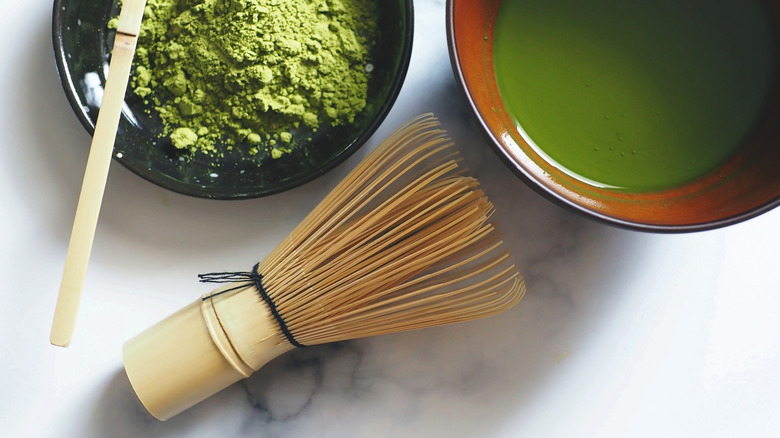
Today, matcha is the latest viral sensation, populating the pages of everyone from baristas and mixologists to health and wellness influencers. If you've been effectively influenced and are looking to dive into the matcha latte trend yourself, you should know that good matcha requires proper tools. Part of that process is using a traditional bamboo whisk called a chasen to make a luscious green froth out of the powdered tea and boiling water. Choosing the right matcha whisk is important, but traditional bamboo whisks can cost a pretty penny. We checked in with tea sommelier and founder of the tea and coffee blog Oh, How Civilized, Jee Choe, to get her insight as to why bamboo matcha whisks can be so pricey.
"Bamboo whisks are handmade, one by one, which can make them expensive," Choe explains. Nevertheless, the investment is worth it. You may think that a regular whisk will do the trick, but there's a good reason you should use a bamboo whisk instead of metal when making matcha, and that's because they're just better at getting the job done. "The bamboo whisk is effective in whisking matcha so that it can create a smooth microfoam with tiny, even bubbles," the tea sommelier adds. "Most other methods of matcha preparation can't produce the same level of smoothness in the froth."
How much do bamboo whisks cost and how to choose the right one
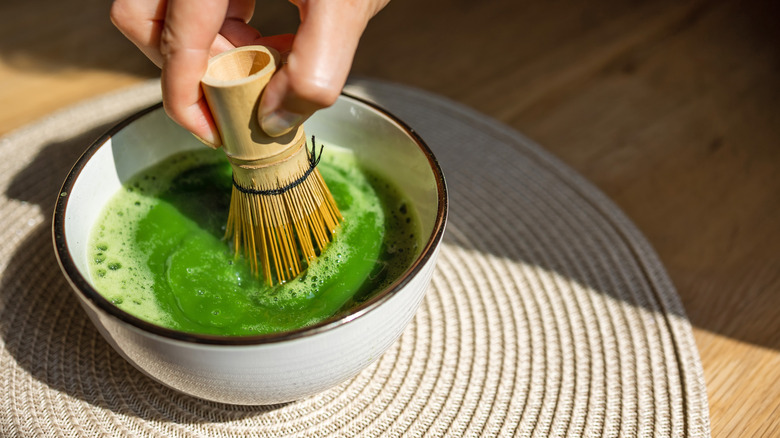
There is a wide spectrum of costs with different bamboo matcha whisks, but you can expect to pay around $20 on the low end and all the way up to $80 or more on the higher end. To understand that huge range in pricing, it helps to know that not all bamboo whisks are the same. "There are three variations of whisks: 80, 100, and 120 prongs," Choe explains. "The more prongs there are in a whisk, the more expensive it is." Despite that, investing in a more expensive whisk with more prongs objectively improves your matcha quality. Choe adds, "The more prongs a whisk has, the more tiny bubbles it can create in the matcha froth, giving it a finer and velvety mouthfeel." When considering what kind of matcha whisk to start with, Choe recommends the 80-prong variety because "it's widely available and more affordable."
But the right tools do not make a perfect matcha alone. Technique is important, too. Whether you're making a DIY matcha latte or incorporating matcha into your next cocktail, the first step is a smooth and silky tea foam. The most effective whisking technique is to quickly move your wrist in the shape of an "M" or a "W" to break up any powdery clumps and evenly incorporate air throughout the frothy matcha mixture. Once you've got the method down, it's time to craft your own delicious matcha beverages. Last year, we consulted Choe for the ultimate expert-approved method for making iced matcha lattes, so you can enjoy café-quality matcha lattes at home.