

Why This Everyday US Appliance Is Nearly Nonexistent Abroad
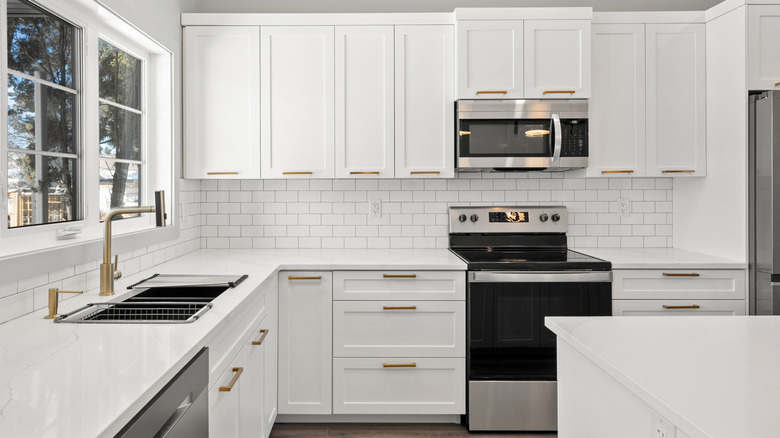
Invented all the way back in 1927, the garbage disposal is now a staple in most American kitchens. A 2020 Consumer Reports survey of 1,000 adults suggests that more than half of households in the U.S. have one of these food waste grinders installed under the sink. However, elsewhere in the world, you would be hard-pressed to find one. Less than 6% of U.K. households have garbage disposals. In Canada, that number is less than 3%. And they are even banned in many European countries. So, why is it that this appliance that is so popular in the U.S. is so absent abroad? Well, there are a few reasons, but in general it comes down to environmental concerns and insufficient plumbing and wastewater management facilities.
To fully understand the reason that garbage disposals are uniquely American, we first need to explain how they work. A garbage disposal is a small appliance that sits directly below the drain of the sink. Inside the device is an electric grinder that pulverizes food waste. Once the food waste is turned to a near-liquid state, it is flushed from the device with water from the tap, and the waste continues on through the sewer to the water treatment facility. When you understand exactly how it works, you can begin to see where the problems might creep in, both in terms of adding stress to a delicate utility and potentially creating negative environmental outcomes down the line.
How garbage disposals tax water treatment facilities
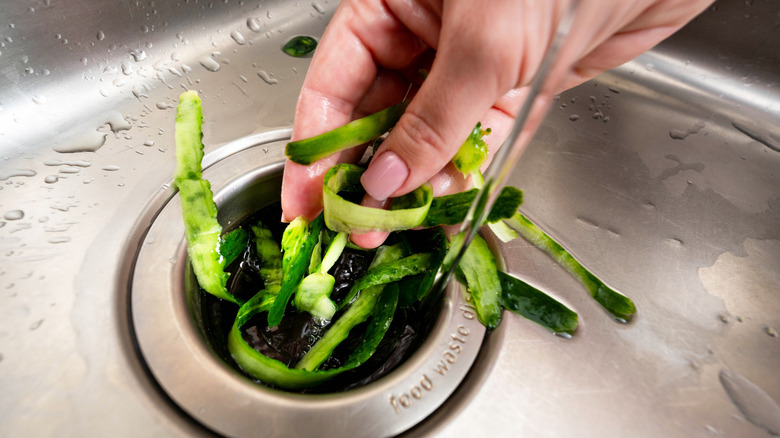
It isn't hard to imagine how garbage disposals put additional strain on wastewater management systems. In settings where food scraps are collected in the sink using a strainer, they end up in the garbage bin. In systems where garbage disposals are commonplace, large amounts of food end up in the water. All of this organic material needs to be sorted out of the water before it can be treated, leading to large build-ups of organic sludge. This sludge is typically removed from the system and transported to a landfill, but it can cause problems, particularly when the wrong sort of scraps enter the system.
There are some foods that you should never put down the garbage disposal, both for the health of your own appliance and the overall sewer system. There are some veggies that you should keep out of your garbage disposal to keep it functioning well, like those that are particularly fibrous, but the real concern comes with putting fat into the system. You should always think twice before putting meat in the garbage disposal, as the fat can clog your pipes or collect down the line and create a phenomenon called a "fatberg" — a portmanteau of "fat" and "iceberg" — that looks like it sounds and wreaks havoc on the sewer system at large.
With these concerns in mind, it is not hard to understand why many parts of the world, particularly those where the plumbing is older or less robust than that of the U.S., would see garbage disposals as a nuisance better avoided — and the concerns don't end with infrastructure.
Environmental impacts of garbage disposals
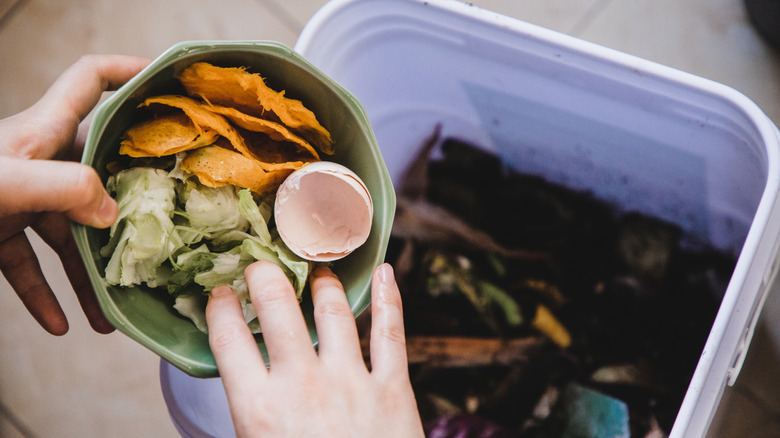
If the question is between tossing your food scraps into the trash can or sending them down the garbage disposal, there is an environmental argument to be made for the in-sink option. It does use a bit of water to get rid of the scraps, but it doesn't require a garbage truck to come and haul the scraps away. In fact, in some places, the sludge removed from the system is used as fertilizer or to create biogas that can be used for energy production. For the most part, however, it just ends up rotting in a landfill like it would otherwise. Additionally, the process by which it is ground up can add significant amounts of nitrogen to the water, which wastewater treatment typically does not remove. This excess nitrogen in the water can cause algal blooms and dead zones in our waterways.
The best solution for dealing with these food scraps is to avoid sending them to the landfill at all. There are myriad ways that you can repurpose kitchen scraps at home, such as making stocks, fermenting extra vegetable bits, and dehydrating them into flavorful powders. But another option, and one that is becoming more popular as a municipal service around the world, is composting. You can compost at home, but many cities are making this unnecessary with programs that specifically collect organic waste and take care of the messy bit for you. These composted materials are then used as natural fertilizer, feeding those nutrients back into the soil rather than letting them wash out to sea.