

15 Kitchen Decor Ideas To Give Your Space A Country Feel
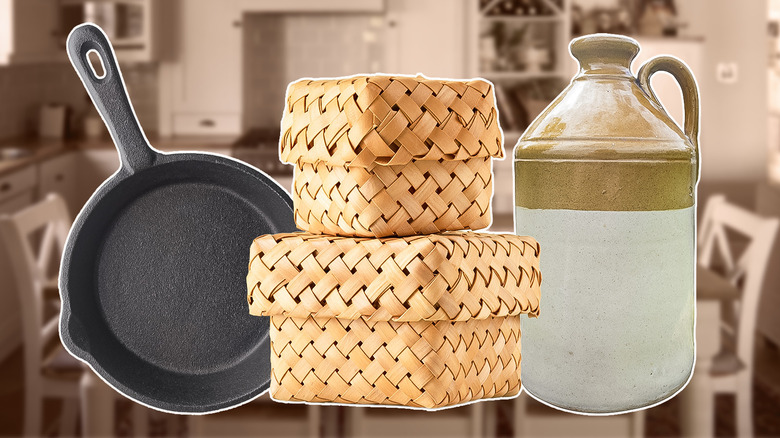
There are endless reasons to give your kitchen a country-inspired update. Perhaps you have been looking to recreate the forgotten magic of leisurely gatherings around your grandma's kitchen table, or are looking to break free from the clinical sterility of modern, cookie-cutter kitchens. Or perhaps you want your kitchen to say that every nook and cranny has been lovingly curated over time — a task made easier if you are armed with the ultimate guide on how to design a country kitchen.
If you'd like to be transported to the Provençal countryside when you walk into your kitchen for your morning coffee, the good news is that you don't need to invest in a full-blown remodel. Surjit Singh Namli, crfounder and creative director of Artique Designs, believes that the right decor changes can help you nail the polished-yet-practical aesthetics of country kitchens. The best part? Country-style living favors decorative flourishes that can also work as functional workhorses — think rattan baskets for organization, wooden trays for countertop displays, and decorative plate racks for ease of access. Who's ready to get started?
Rattan baskets
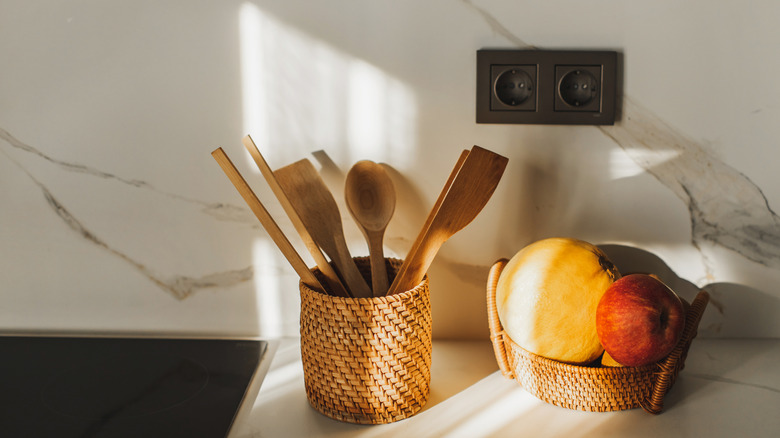
Handcrafted elements and country kitchens are a match made in design heaven. There are several kitchen organization hacks that can make mealtime a breeze, and chief among them is your choice of baskets. If you are looking to inject some warmth into the space, it helps to turn to the honeyed hues of rattan.
"Rattan baskets are the definition of form meeting function in a country kitchen," creative director Surjit Singh Namli says. In his experience, the natural texture of this eco-friendly material can add a welcoming warmth and tactile element to the kitchen. For those looking to invite the farmcore movement into their kitchen, rattan serves as a more organic alternative to conventional plastic or metal storage containers. It also serves as a low-maintenance option that won't require any cleaning efforts beyond a quick swipe with wet wipes.
When adding rattan baskets to your country kitchen, you will want to consider the silhouette carefully. While circular shapes serve as a nod to tradition, you will find that rectangular options can minimize wastage of space when stacked on shelves. "Use larger, lidded versions to store root vegetables or linens, and smaller open baskets for fresh bread or herbs," Singh Namli says.
Mason jar display
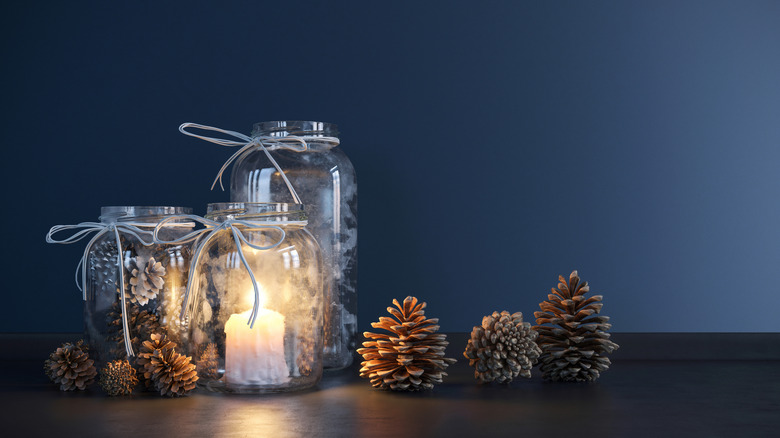
Whether designed as a miniature terrarium or filled with battery-operated votive candles, there are endless ways to use your extra mason jars as DIY party decor. Within the rustic confines of a country kitchen, this versatile staple can serve as a worthy candidate for carrying forward your design narrative.
Named after John L. Mason, who first patented glass jars with screw-on caps in 1858, there is something about the sight of these humble glass jars that evokes a sense of nostalgia for simpler times. Surjit Singh Namli agrees that they are indispensable within a country kitchen, "Mason jars are little workhorses, perfect for storing pantry staples like grains or pulses while doubling as casual vases for garden blooms."
For creating visual harmony, he recommends grouping together jars of varying heights on an open shelf. You can then fill these with dried herbs and spices for a charming, apothecary-inspired display. Not quite sure what to do with all those mismatched jars lying around idly? Put them to use by coloring the inside of the jar with acrylic paint for a cohesive finish.
Fresh flower arrangements
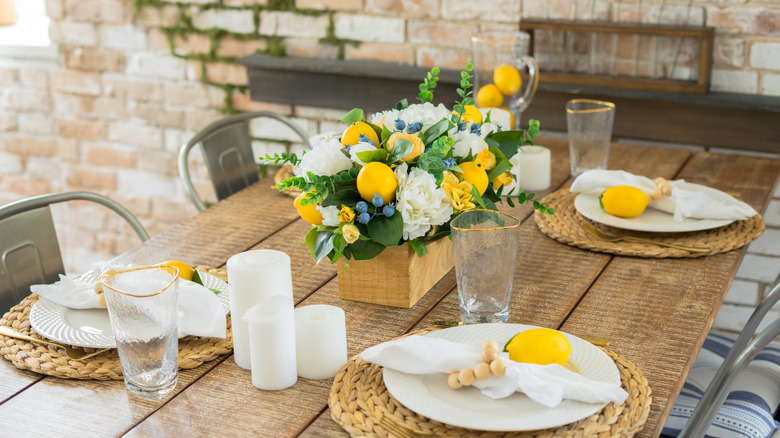
The greatest success of a country kitchen design lies in bringing nature indoors — a task that is simplified with the help of fresh florals. After all, there is something about the sight of joyous, cascading blooms that can instantly transport you to the idyllic countryside.
"In a country kitchen, flowers should feel like they've been gathered from just outside the door. Think sunflowers, lavender, wild daisies, or hydrangeas," Surjit Singh Namli says. He recommends grouping these into stoneware jugs or vintage enamel pitchers as opposed to pristine crystal vases. "This keeps the look humble and charming," he says.
If you don't have the time for a crash course in floral artistry, it helps to follow the standard 3-5-8 rule. Start by opting for three focal flowers in different colors and sizes. These will then be teamed with five stems of greenery and eight filler flowers to create a visually balanced design. This simple color rule will also help you get the most out of flowers in your kitchen: Strategically choose hues that are coordinated with the accent colors of this space. Consider teaming roses with red appliances or yellow tulips and buttercups to bring out your backsplash design.
Botanical wall art
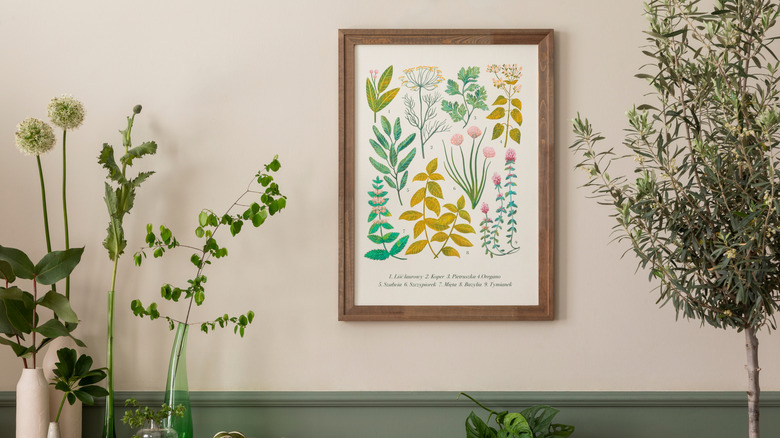
With interest in mindful living seeing an uptick, it comes as no surprise that nature-inspired decor is highly coveted as a cozy finishing touch. Country kitchens, specifically, are a celebration of nature's many marvels, and botanical wall art is your license to blur the lines between the indoors and outdoors.
Having initially started out as a way for scientists to document plant species, botanical prints today hold great allure for nature enthusiasts. Surjit Singh Namli says, "Botanical art in a country kitchen works best when it evokes a nostalgic feel, featuring pressed flower prints, vintage botanical illustrations, or watercolors." When creating a sleek minimalist kitchen, you may find yourself leaning toward earthy neutrals and muted hues. Bold pops of forest green or terracotta will appeal to those who don't mind a bit of color in their kitchen.
Once you have found the design of your dreams, where should it go in your kitchen? Singh Namli has found that hanging botanical art above the breakfast nook can easily lend character to the space. You can also use verdant artwork to optimize any blank stretches of wall along the hallways leading to the kitchen, or position it opposite a window to bounce natural light around the room.
Cast iron cookware display
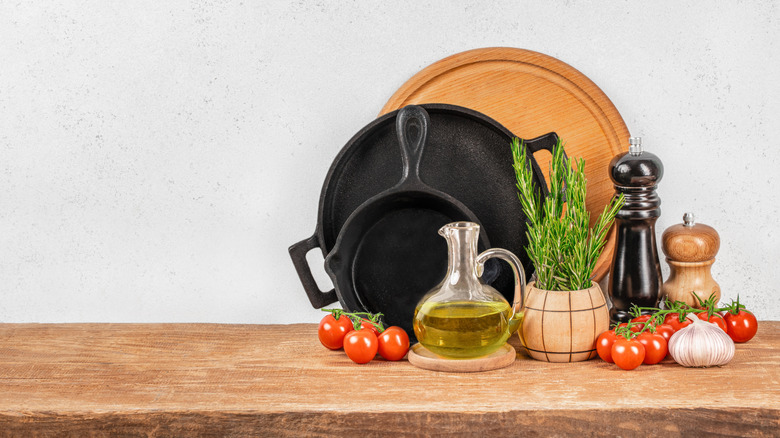
There is so much to know about cast iron cookware, including the fact that it was invented in 220 A.D. in China. But instead of hiding away your collection in dusty cabinets or hutches, you'll want to give it pride of place in your kitchen as a decorative display.
Given the longevity of cast iron cookware, it adds a passed-down-through-the-generations vibe that is central to the charm of a country kitchen. And if you were to quiz Surjit Singh Namli on the prime reason for using it as a statement decor piece, he'd advise you to think about the visual impact it can create. "Cast iron's dark, matte finish adds visual weight and anchors lighter elements in the room," he says.
The density of cast iron cookware makes it heavier to handle than your average non-stick pans. This means that you can't sling it on any idle hook in the kitchen and call it a day. "Use a sturdy wall-mounted rail or a reclaimed wooden shelf with hooks," Singh Namli says. You can also lean into the industrial finish of this cookware by hanging it from S-shaped hooks placed on an old-school iron pipe or rod. "Position it above an island or stove so it's both accessible and eye-catching," he adds. Hoping to truly add a homely finish to the space? Use the flat base of a hanging skillet for pinning up a handwritten recipe with a magnet.
Overhead copper rack
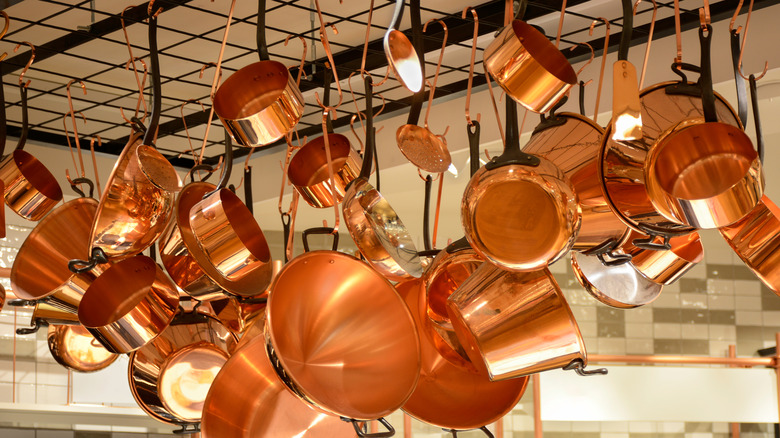
The allure of an overhead copper rack is such that it has become a mainstay at Martha Stewart's country estates. "My daughter — who always hated them — just put one up because she finally realizes how much easier it is to find what you're looking for!" she said to Country Living.
And it is easy to see why. Functional items that can double as decor serve as the sweet intersection where country-style living truly thrives. Storing copper pots and pans on an overhead rack makes for an easy and elegant solution for freeing up crucial inches of cabinet storage, while the burnished glow of the copper can breathe fresh life into the neutral hues of a country kitchen.
For those working on a budget, an old copper pipe with S-shaped hooks serves as an effective stand-in for more expensive ceiling-mounted grid racks. "To style it cohesively, mix in a few well-loved utensils or vintage ladles alongside your pots; don't make it look too perfect. A bit of wear makes it feel authentic," Surjit Singh Namli says.
Decorative plate racks
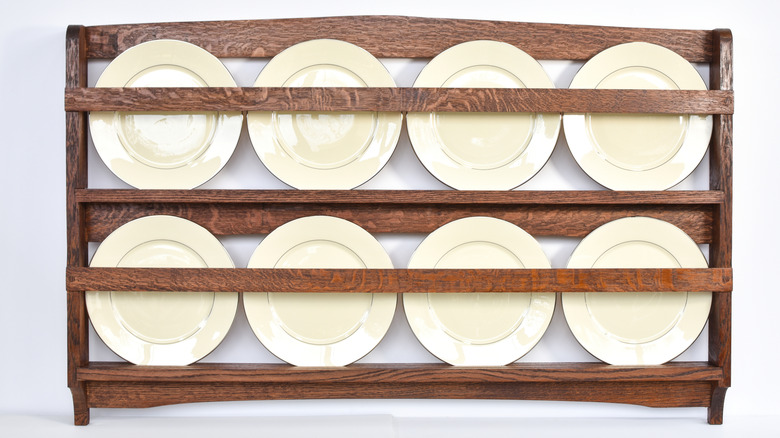
If your precious china is tucked away out of sight in a cabinet as you read this, you might want to remedy that. "Plate racks are a gentle nod to tradition," Surjit Singh Namli says. There is the functional appeal of hanging a plate rack within easy reach above the sink, but a statement plate rack can instantly draw the eye and serve as the focal point of a country kitchen.
Beyond the space above the sink, there are several other spots that can benefit from the addition of a plate rack, such as the area near the breakfast nook to minimize back-and-forth to the kitchen on busy mornings. If you have been itching to display your collection, you'll want to bookmark Gwyneth Paltrow's extended plate rack.
When looking to fill up this newly acquired real estate, Singh Namli recommends starting with everyday plates in muted hues. You can then add patterned or heirloom pieces — remember to keep your eyes peeled for country-approved designs, such as hand-painted florals or subtle ginghams. "The mix keeps it from looking staged, while still telling a story," he says.
Vintage pitchers
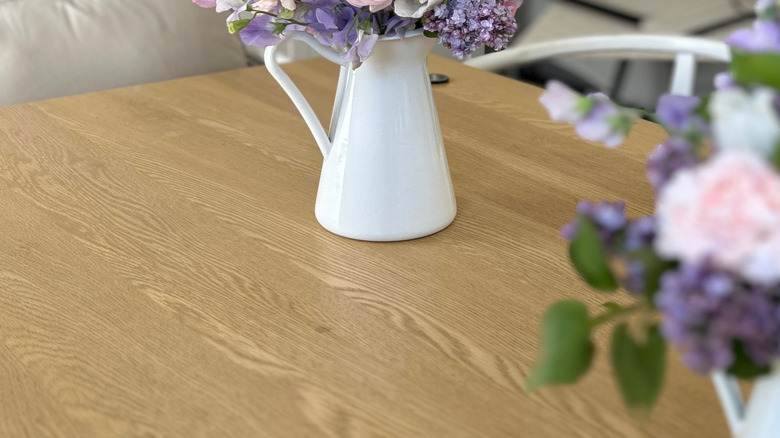
When shortlisting ideas for country kitchen decor, you won't want to sleep on the quaint appeal of vintage pitchers. They're timeless yet budget-friendly additions that can be found at flea markets and thrift shops. Look for pitchers featuring hand-painted patterns or ones sporting an aged finish — even indentations or a slightly chipped exterior can add personality.
However, you'll want to do more with your new (old?) pitchers than simply perching them at strategic spots around the kitchen. Surjit Singh Namli favors the notion of placing mismatched pitchers together on an open shelf or windowsill. He recommends allowing each pitcher to serve a different purpose, such as displaying cut flowers, storing wooden spoons, or even displaying empty ones solely for their shape. "Their varied silhouettes create instant charm," he says.
Vintage pitchers also lend themselves well to seasonal styling upgrades — use yours as the centerpiece of an autumnal vignette in your dining nook. For finishing touches, you'll want to invite the soft touch of faux florals or ribbons to counteract the hardness of their surface.
Patterned tea towels
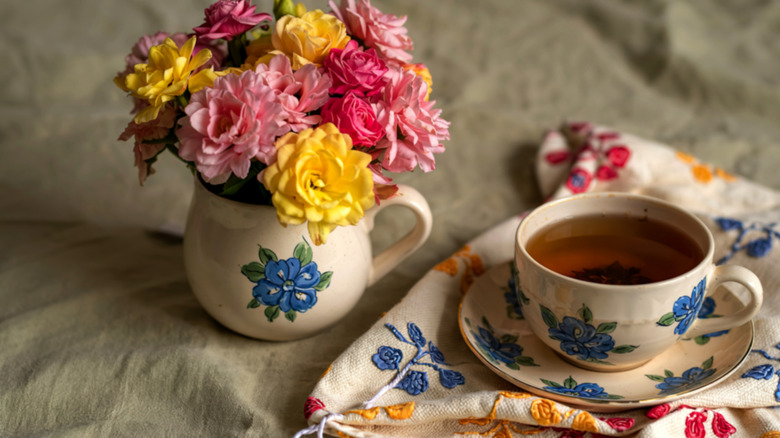
Lending a country-inspired feel to your kitchen is easier than you think — especially once you start noticing the visual impact that can be created by the smallest additions. Case in point: patterned tea towels. Chances are that you have a few mismatched pieces strewn around your kitchen already for drying fragile glassware or lifting heavy pots. But when curated with intentionality, the lively infusion of patterned tea towels can add texture and decorative appeal against the backdrop of muted countertops.
So, what's on Surjit Singh Namli's wishlist? "Checks, stripes, and small-scale florals in muted tones like sage green, dusty blue, and butter yellow are perfect for a country kitchen," he says. It helps to ensure that this humble staple doesn't look overly styled — he advises slinging yours over the oven handle as a laidback finishing touch. If you are hoping to truly add your own personal touch, you can even choose to frame a few vintage patterns to create whimsical artwork that is unlike any other kitchen on the block.
Vintage rolling pins
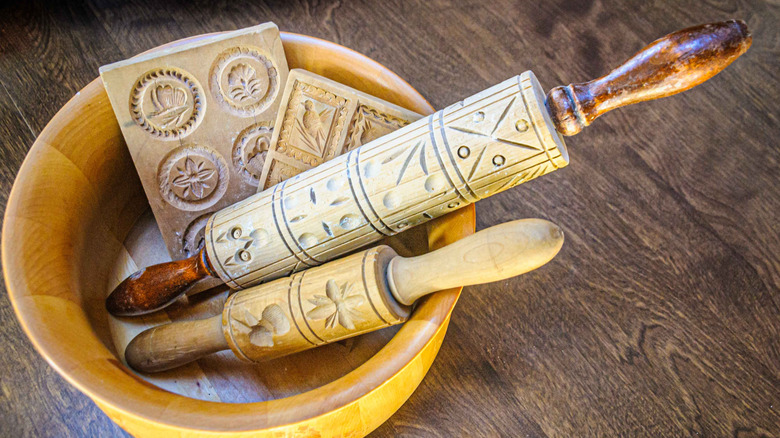
When designing the country kitchen of your dreams, you'll want to find every possible way to sneak in natural materials. If you have the time to spare for a remodel, you might find yourself drawn towards a butcher block countertop. But if you are looking for small yet impactful changes, you will want to consider including vintage rolling pins in your country kitchen decor.
Not quite sure how to tell if a rolling pin is vintage? For starters, there is the material; wood, glass, porcelain, and copper were popular in previous times. The patina that these materials have developed with the passage of time only adds to their charm.
Once you have scored the perfect set of vintage pins, it is time to consider creative display ideas. "Arrange rolling pins in a vertical wall rack or place them in a wide ceramic crock on the counter. If you have open shelving, lay them in a shallow wooden tray alongside a stack of cutting boards for a layered, collected look," Surjit Singh Namli says.
Gingham furnishings
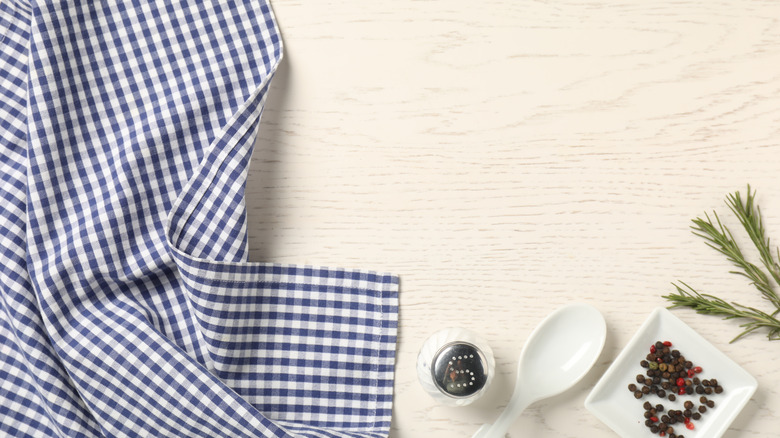
The importance of soft furnishings in a kitchen cannot be stressed enough. A dainty infusion of soft furnishings adds warmth to the space and contrasts with the rigidity of timber flooring and natural stone countertops, acting as a tactile element that you will want to reach out, touch, and lean against after putting together a hectic meal.
When considering soft furnishings for a country kitchen, gingham is a no-brainer. With a long, storied history that dates back to the 17th century, the rural charms of this checkered fabric invite you to forget your worries as you slice through a slab of aged Gouda at a lakeside picnic.
For adding country-style appeal to your kitchen, Surjit Singh Namli recommends adding a vibrant infusion of gingham to seat cushions, napkins, or café curtains over the sink. Those feeling particularly nostalgic will also want to invite gingham to their lampshades, basket liners, and pot holders. "Keep the [color] palette soft and faded rather than bold, so it blends into the space rather than dominating it," he says.
Wooden trays

"I have too many wooden trays" — said no one ever. Ornamental crystal trays might have their place in the sun, but country kitchen decor thrives on the texture and timeless appeal of natural materials. Wooden trays become your winning bingo card for hitting the intersection between form and function. Whether you use yours as a storage workhorse or as the base for seasonal countertop displays, you'll find that you never quite have as many wooden trays as you'd like.
Surjit Singh Namli has found wooden trays to be a versatile addition to a country kitchen. "A large, well-worn wooden tray can live on your countertop, holding oils, salt cellars, and a small potted herb for easy access. For entertaining, use it to serve bread and cheese — functionality and warmth in one," he says.
When shopping for wooden trays, it helps to consider your choice of wood: teak, walnut, and acacia are durable options that can stand up to the wear and tear faced by everyday items in the kitchen. An occasional hand of wood polish can further maximize the longevity of your new purchase.
Decorative ceramic bowls
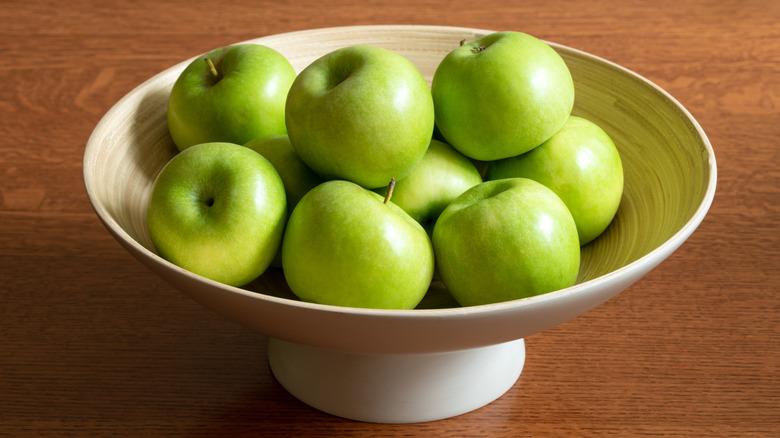
Decorative bowls that can double as functional assets? No country kitchen designer will ever say no to this winning proposition. When doused in country-approved patterns, such as micro florals, toile, and gingham, decorative ceramic bowls are a handy way to add flair to vacant countertops.
But as pretty as they may be to look at, large ceramic bowls can also be intimidating — what do you do with all that empty space? Surjit Singh Namli is glad you asked. "Fill a ceramic bowl with seasonal fruit, pinecones, or even a cluster of pillar candles. For a more styled centerpiece, layer in dried flowers or herbs, so it feels abundant yet natural," he says.
To create an eye-catching display, you'll want to style these fillers with care. Leaving any vacant areas within isn't ideal, but you also don't want to overcrowd the bowl to the point where it tumbles over at the lightest whisper. As a rule of thumb, it helps to work in decorative fillers of varying heights — you can even sneak in a tiny pedestal within the bowl to give smaller items the gift of height.
Vintage cookbooks
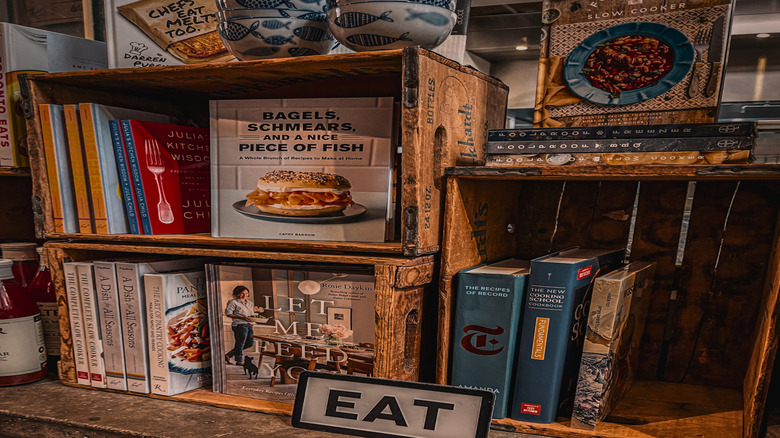
Weathered covers. Worn-out spines. Handwritten notes jotted in the margins. There is an inescapable sense of nostalgia around vintage cookbooks that modern, impassive cooking tutorials simply can't capture.
There are several ways to give your vintage cookbook collection the hall-of-fame treatment. "Display them spine-out on open shelving or stack them horizontally with a small plant or candle on top. If the covers are particularly beautiful, face them outward like art pieces," Surjit Singh Namli says.
If you have more cookbooks than you know what to do with, you can create your own miniature library by arranging them in a small cart at the edge of your kitchen island. You can also add gallery rails on shallow shelves or convert a plate rack into a showcase for your most prized editions. Any unused corners in your breakfast nook can play host to a stack of vintage cookbooks — perhaps topped with a rattan table lamp for maximum visual impact?
Glass cloche
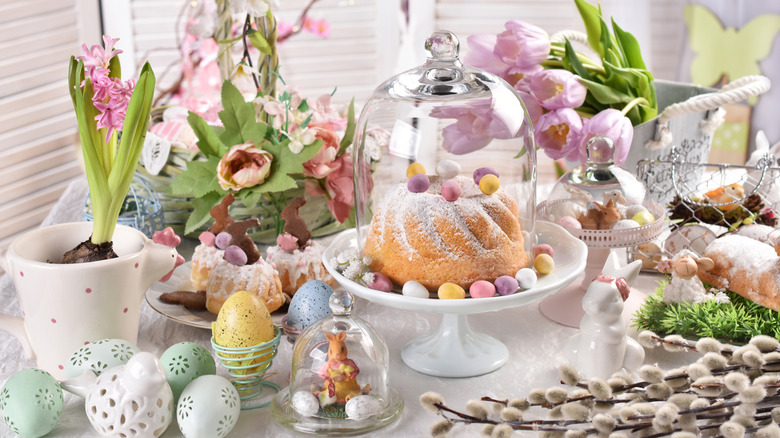
Originally invented for protecting small plants from frost in 1623, the glass cloche has since been favored in country kitchens for its old-world, farm-favorite feel. You may not be trying to protect some saplings from the vagaries of winter, but this bell-shaped cover makes for an easy focal point. When placed under this dome, everything from slabs of freshly baked bread to decorative tchotchkes becomes a curated conversation starter.
"A cloche is like a little stage for seasonal vignettes, spring flowers in a small vase, vintage kitchen tools, or even a stack of pretty teacups," Surjit Singh Namli muses. Candles, succulents, and artisanal cheese arrangements are worthy candidates as well — just remember to use items of varying heights to create dimension within the cloche. "Change it up every few weeks so it always feels fresh and personal," he says.