

Why Pasta In Italy Isn't The Same As The Stuff In Your Pantry
We may receive a commission on purchases made from links.
You can memorize all the types of pasta and when you should be using them, but it won't bring you any closer to solving this mystery: What makes Italian pasta different from the stuff in your pantry? The primary answer is actually written into Italian law. Interestingly, it's a legal requirement for dried Italian pasta to use semolina (also known as durum wheat), and not the standard flour used in American-made pastas. It's exactly this difference that gives pasta in Italy — be it linguine or spaghetti — its signature al-dente chew and the ability to hold its shape. That's not all, though.
When it comes to its cuisine, Italy upholds a colossal focus on quality, not quantity — and that's especially true with its pasta. Italian pasta makers use cold water, slow mixing, and a gradual drying process that takes as long as 50 hours, just to avoid any structural damage and over-stressing of the pasta dough. In contrast, same-sized factories elsewhere can create in three hours what a factory in Italy might produce in a year. With better structural integrity and legally upheld standards, all of these factors make Italian pasta a premium choice.
Shopping for Italian pasta and ingredients
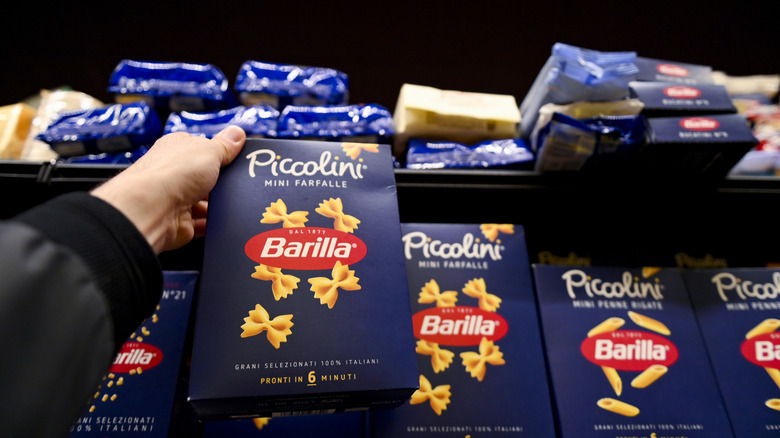
As you sift through the pasta brands with the highest quality ingredients, it's clear that the biggest hack to finding Italian pasta in the U.S. is to check the ingredient list for semolina (also known as durum wheat). Rummo Pasta, the boxed pasta Stanley Tucci loves, is made with 100% Italian durum wheat. Pastificio Di Martino is another authentic brand that's shipped from Italy, compared with other brands like Barilla, which is made in the U.S. by imitating Italian techniques and recipes. You can shop specialty Italian stores or order online for even more options; Di Martino ships durum wheat pasta directly to the U.S., and Morelli Bucatini Pasta Noodles or De Cecco Orecchiette are both available on Amazon.
In terms of identifying the quality of the Italian pasta itself, the signs are subtle. Pale yellow colors are a positive, suggesting that the pasta has been slow-dried. A rougher texture is another green flag, signifying that it has been traditionally bronze-cut. If you're preparing homemade pasta, on the other hand, the difficulty shifts toward sourcing authentic flour. Unfortunately, Italian-made flour is a little harder to find in the U.S. In this scenario, the better options are shopping at international stores with designated European sections, or settling for a U.S.-produced semolina flour, which can be bought at major retailers like Walmart and Target.