

This Cheap And Easy Cleaner Might Just Ruin Your Kitchen Faucet's Finish
We may receive a commission on purchases made from links.
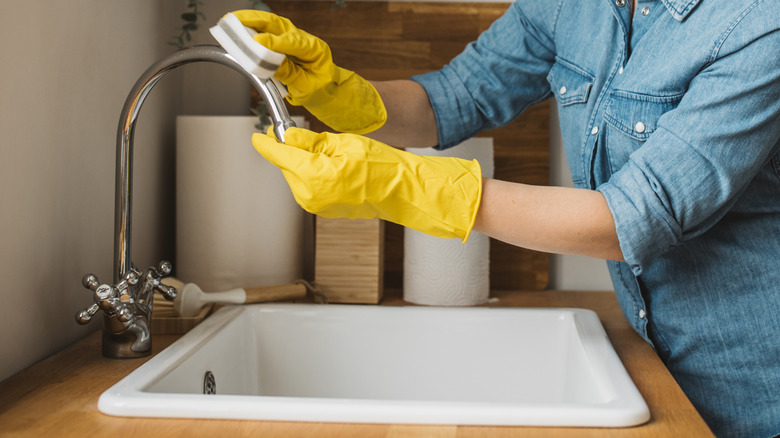
Over time, your kitchen faucet can develop a buildup of grime and calcium deposits. Eventually this can affect its lifespan and performance. Your faucet may not be something you think to clean in your kitchen, but you definitely should clean it regularly.
However, it's important to choose the right cleaner for your faucets based on their material. Although some store-bought kitchen cleaners might be designed for cleaning faucets, most all-purpose kitchen cleaners are too harsh or won't actually remove calcium deposits and stubborn buildup. Distilled white vinegar is a natural solution that works for many areas of your kitchen — and it works here too. You can use it to clean stainless steel faucet heads by filling a sandwich bag with a mixture of equal parts white vinegar and water. Then submerge the faucet head in the baggie and secure it with rubber bands. You can also make your own kitchen faucet cleaner by creating a paste using equal parts vinegar, water, and baking soda.
While vinegar is all-natural, but it still can damage certain materials. It is too acidic to be used on gold and bronze faucets as it can wear down the finish and cause them to become dull and discolored. To protect your bronze and gold faucets, you should use another natural cleaning solution or a specialty solution that is formulated for your specific material.
How to clean gold and bronze kitchen faucets properly
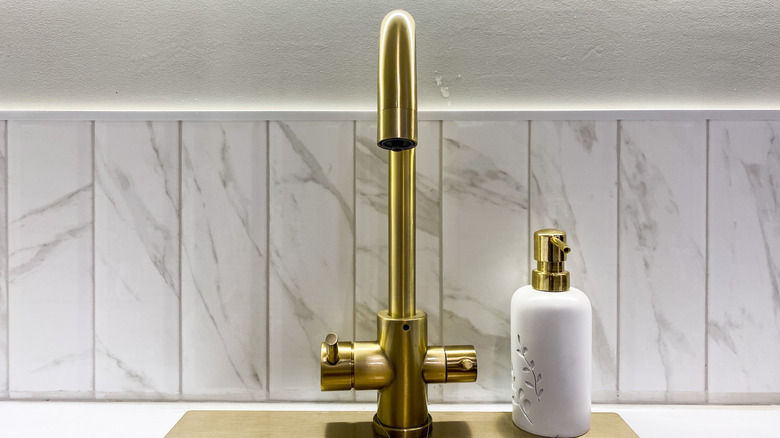
You should use a gentle, mild cleaning solution on gold and bronze kitchen faucets. Do not use bleach, ammonia, or acidic cleaners. If you don't want to buy a cleaner that is specially formulated for use on gold or bronze, you can make an all-purpose cleaner yourself using baking soda or salt and dish soap. Just combine a few drops of mild dish detergent with distilled water and a teaspoon of salt or baking soda.
To clean the faucet and fixtures, first spray them with distilled water and dry them with a microfiber cleaning cloth. This will remove the top layer of dust and grime. Then apply your homemade or store-bought cleaning solution to a damp, soft sponge or cloth. Gently wipe all parts of the faucet. For stubborn build up and grime, you can create a paste of baking soda and water and apply it with a soft-bristled kitchen brush or toothbrush.
Using metal cleaning tools, scouring pads, steel wool, or wire brushes to clean your faucet can remove the natural shine or destroy its protective finish. You also shouldn't ever submerge any part of the faucet in water or any other liquid.
When the faucet is clean, use a damp, clean cloth to remove all traces of the cleaner. Then spray the faucet again with distilled water and dry and buff it gently with a different soft cloth. This will remove streaks and restore the faucet's shine.