

Don't Overlook This 1990s Kitchen Trend That Puts You In Control Of Your Layout

We may receive a commission on purchases made from links.
Chances are, your kitchen is what's known as "fitted." All of your work and storage space — aka, counters and cabinets — are like extensions of your walls, built into and around the room. In the 1950s, fitted kitchens became the norm as designers developed what they felt was a more convenient layout for busy housewives. But different trends popped up over the years, and one from the 1990s may make the most sense today, when all different members of the household are interacting with the kitchen in all different ways. Freestanding kitchens, or "unfitted" kitchens, are so flexible and versatile, it feels downright revolutionary.
While certain appliances must be fixed to connect to power and water sources, the rest of a freestanding kitchen is not built in, but rather consists of furniture you can move. While this design approach came into fashion in the '90s, that's not when it originated; in fact, the '90s style of unfitted kitchens was cottage-inspired, nodding to the freestanding kitchens with only a fixed fire source that existed for centuries. Cabins, cottages, country estates — they all would have freestanding tables as workspaces and cabinets for storage until the arrival of sinks, then modern ovens, refrigerators, and so on.
Because of the ever-changing ways we use our kitchens, the more rigid fitted layout may be one kitchen trend on its way out in favor of more personality, style, and versatility. Freestanding kitchens are more eclectic and artful, and make updates and modifications easier.
The advantages of freestanding kitchens
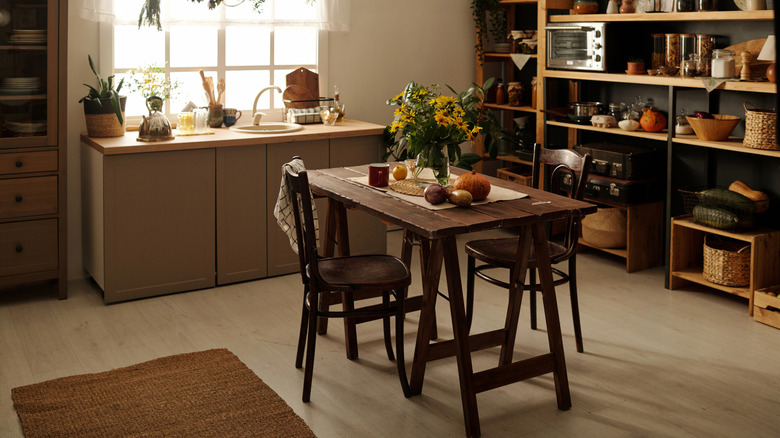
Freestanding kitchens lighten the pressure of commitment. Worried about making one of the most common kitchen design mistakes? It's so much easier to make a switch when you realize you prefer a different color, or that a material isn't holding up, or a cabinet is an inconvenient spot for your routine. Want to avoid designing a kitchen that just looks dated in a few years? With a freestanding kitchen, it's so easy to pop one piece out for an update, rather than having to invest in a pricey renovation.
The "kitchen triangle" concept was developed in the 1920s and became common in the 1940s. This ethos that the fridge, stove, and sink should be in a certain layout made fitted kitchens seem necessary. We know today, though, that the work triangle may not make sense for all kitchens. Consider how everyone in your home uses the kitchen to meal prep, cook, bake, clean, eat, work, and socialize. Different layouts work for different activities at different times; it's a lifesaver to be able to rearrange your kitchen according to your own needs. Mobile pieces like this OtterOasis rolling kitchen island or this ThreeHio rolling microwave cart with shelves further enhance a freestanding kitchen's flexibility.
With the rise of cottagecore, the countryside-chic aesthetic has revived freestanding layouts and also means your best bet style-wise is to hunt thrift shops and flea markets to fill your kitchen with unique vintage items from shelves to breakfronts to repurposed tables.