

Why You Should Always Thaw Frozen Lobster Tails Before Cooking
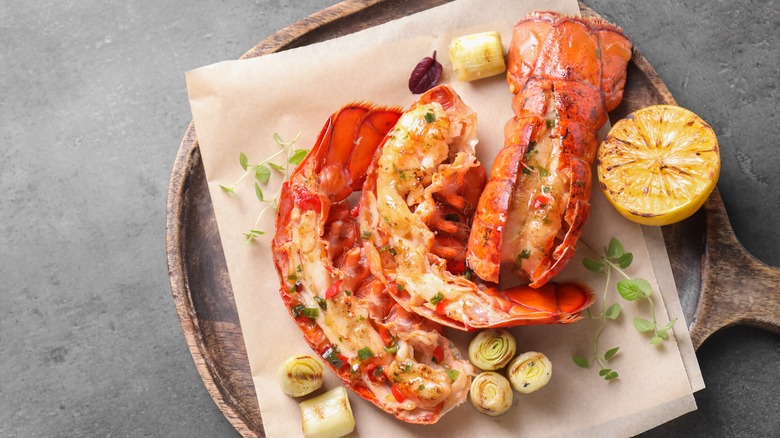
Frozen lobster tails can be serious stress-savers, since you don't have to worry about butchering the expensive shellfish or having them go bad in the fridge. The only inconvenience is the thawing process, but it absolutely cannot be skipped. Try to cook lobster tails from frozen, and you'll end up with a chewy disappointment.
Lobster meat is delicate, and proper thawing allows for gentle, consistent cooking. Put tails straight into a hot pan or oven, and the meat will cook unevenly, with many parts turning horribly tough. The same sad results can happen with improper defrosting, so precision is key. Most major mistakes to avoid when defrosting seafood apply to lobster tails, including submerging them in warm or hot water or using the microwave. Both methods toughen the flesh before you even start cooking. And if your tails are vacuum-sealed, avoid a dangerous seafood defrosting mistake by removing them from the plastic package.
The best way to defrost lobster tails is to place them on a dish and leave them in the refrigerator for 12 to 24 hours. The controlled environment of the fridge slowly brings the meat's temperature down while keeping it at top quality. If you forget to put the tails in the fridge a day ahead, you can leave them out at room temperature for a few hours, or use cold water to defrost them more quickly.
More tips for tender lobster meat
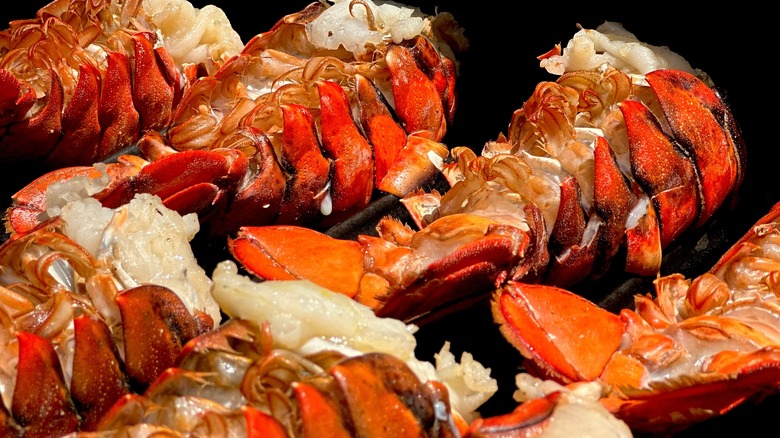
To defrost lobster tails in under two hours, seal them in an airtight zip-top bag and press out the air. Submerge the bag in a bowl of cold water and change the water every 15 minutes until the tails are thawed. This method isn't as gentle as the fridge, but it gets the job done without making the meat tough.
From the broiler to the air fryer, there are many ways to cook lobster tails to perfection, and most are finished in under 15 minutes. Methods like boiling, broiling, and steaming can take as little as four to six minutes. Remove lobster from the heat the moment the shell turns red and the flesh turns solid white. It also helps to butterfly lobster tails, or cut them in half and pull the meat through the shell, since they become easier to eat and gain more surface area for seasonings.
Want to fire up the barbecue for a smoky spread of tails? Keep in mind you should never grill lobster tails without the shell, as that outer layer insulates the delicate meat from the flames. Make sure to place the lobster on the grates shell side-down to take advantage of this. Defrosting the tails is even more important here, since proper thawing prevents the meat from sticking to the shell once it's time to eat.