

15 Tofu Dishes From Around Asia To Try Once
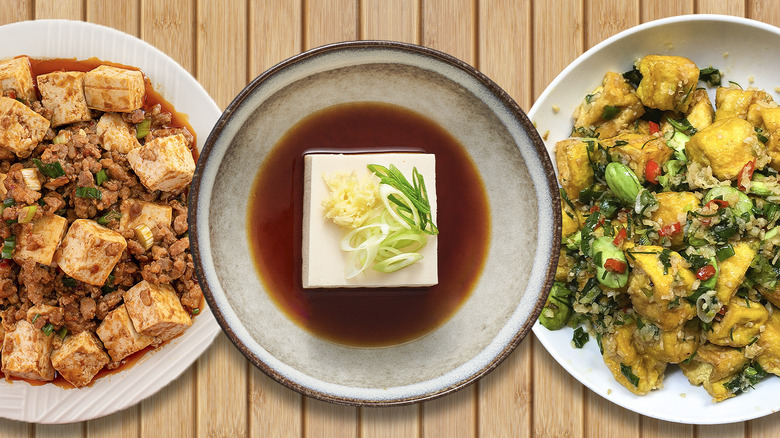
In the West, tofu is having a bit of a moment. Plant-based diets are rising in popularity, and people are more aware of the soy food's health benefits (it's a source of protein, beneficial isoflavones, and minerals, for example). It's also incredibly versatile, and can elevate everything from simple pasta dishes to salads and burgers. This is why, according to Grand View Research, the global tofu market exceeded $3.1 billion in 2024, and by 2030, it could hit $3.85 billion.
But tofu is far from new. The ingredient, which is made with condensed soy milk, originated in China more than 2,000 years ago. In the centuries that followed, it spread to many other Asian countries, including Japan, Korea, and Vietnam, becoming a popular staple and a star of many different dishes. From mapo tofu to stinky tofu to Inarizushi, below you'll find 15 examples of traditional Asian dishes with tofu that you have to try at least once in your life.
Mapo tofu - China
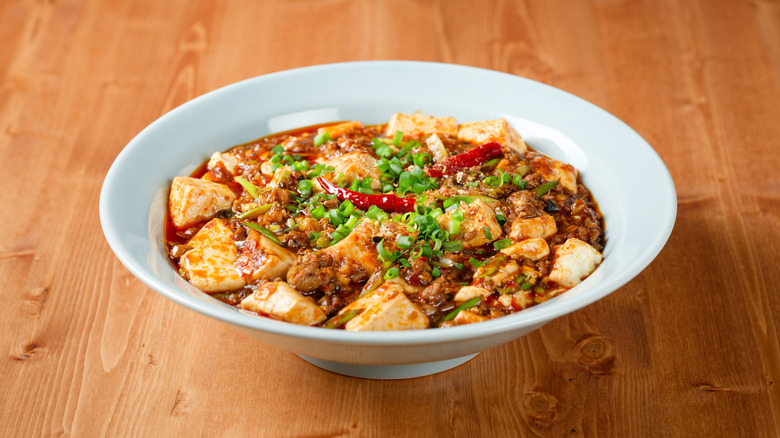
If you love to order Chinese food, you've probably come across mapo tofu at some point. The tongue-tingling dish is loaded with Sichuan peppercorns for an almost-numbing effect, while Doubanjiang (Sichuan chili bean paste) brings the spice. This, combined with aromatic ginger, garlic, umami-packed fermented black beans, meat, and, of course, tender tofu, makes the dish a firm favorite on takeout menus. But the very best place to try mapo tofu? That, of course, has to be where the dish was invented: Chengdu, Sichuan.
In Chinese, "mapo" doesn't always bring up images of a delicious tofu dish. It actually means "a lady with pockmarks on her face." And there's a very simple reason for that. Back in the 1860s, during the Qing Dynasty, a small restaurant in the town of Chengdu in Sichuan became renowned for its ultra-tasty tofu dish. It was the signature recipe of the owner's wife, who also happened to have pockmarks on her face. And that, the story goes, is how mapo tofu got its name.
That restaurant, now called Chen Mapo Tofu, is still open today. In fact, it's even recommended by the Michelin Guide.
Agedashi Tofu - Japan
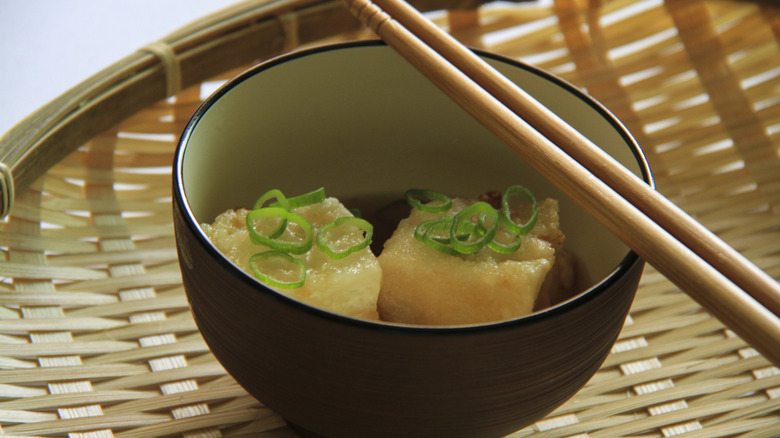
Agedashi tofu is an incredibly simple Japanese dish, but it's still full of flavor and delicious texture. Tofu is covered in batter and then deep-fried until it gets a crispy texture, and then served in an umami-rich soy sauce broth. If you've got a deep fat fryer on hand, it is possible to whip up agedashi tofu from scratch, but arguably, the best place to try it is in an izakaya. A traditional Japanese pub, an izakaya specializes in small, tapas-style dishes, and, alongside staples like edamame, tempura, and sashimi, you'll often find agedashi tofu on the menu.
Agedashi tofu has likely been a favorite in Japan since the Edo period, which spans from 1603 to 1867. One of the first written mentions of agedashi tofu was in 1782, when it appeared in the cookbook "Tofu Hyakuchin." The book, which contained around 100 tofu recipes, was a big hit in Japan at the time, and even spawned sequels.
Hiyayakko - Japan
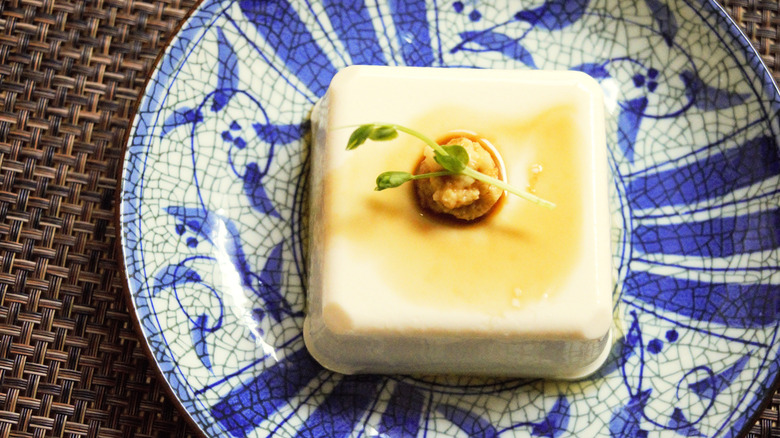
Another Japanese tofu favorite is hiyayakko, which is, essentially, a block of silken tofu served cold ("hiya" means chilled) with lots of different toppings, like green onions, bonito flakes, soy sauce, and grated ginger. Because it doesn't require anyone to turn on an oven, hiyayakko is particularly suited to Japan's very hot and humid summers.
Like agedashi, hiyayakko also appears in "Tofu Hyakuchin." But the recipe likely predates 1782, because the book highlights that it is already a pretty well-known dish. This is highly likely, given that tofu was introduced to Japan centuries earlier, during the Nara period in the 8th century. It was first eaten by monks, but by the 14th century, it was also enjoyed by members of the aristocracy and samurai warriors. By the Edo period, tofu had become a staple for all walks of society.
Maybe the samurai classes were particularly fond of hiyayakko, because "yakko" refers to the square crest worn on their jackets. Alternatively, it could just be referring to the shape of the tofu block.
Tofu scramble - Japan
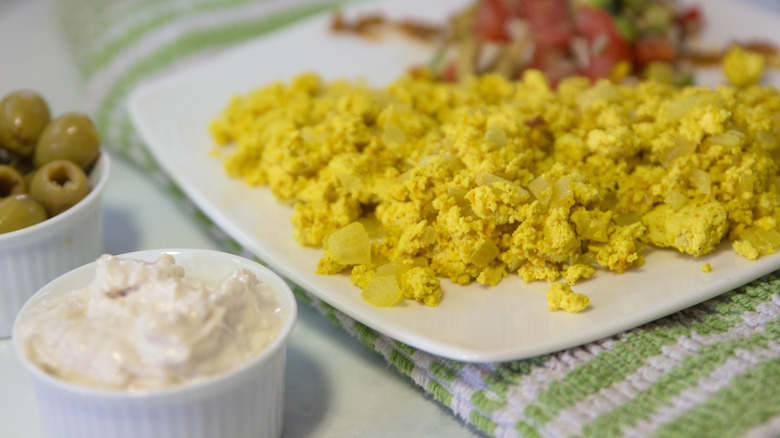
Scrambled tofu is a simple, plant-based way to get some more protein into your diet. It's exactly what it sounds like: Tofu that has been mashed with a fork or crumbled by hand and then fried in a pan, just like scrambled egg. To get that umami, eggy flavor and bright yellow color, most choose to add ingredients like nutritional yeast, kala namak (sulfurous Himalayan black salt), and turmeric to the mix.
You can also add tofu into your scrambled eggs if you want to increase the nutritional value of your breakfast or brunch. In fact, this might be how the dish originated. A recipe for tofu scramble appears in a 1914 Japanese cookbook, and in this dish, the tofu is combined with four eggs, onions, salt, and pepper, and then garnished with parsley or celery. Today, though, most people eat tofu scramble as an egg substitute. This likely started around the 1980s in the U.S., when tofu started to grow in popularity in the West.
Đậu sốt cà chua - Vietnam
As with many Southeast Asian countries, tofu features in quite a few traditional Vietnamese dishes (it's a common filling choice for one of the country's most famous dishes, the bánh mì sandwich, for example). In fact, the ingredient has likely been eaten in Vietnam since around the 10th century, which coincides with the spread of Buddhism.
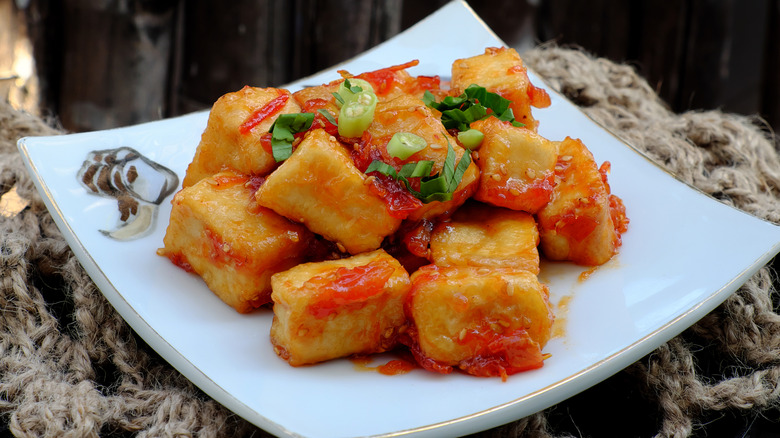
One particularly popular tofu dish in Vietnam is đậu sốt cà chua, which is basically fried tofu with tomato sauce. It sounds simple, but the flavors are rich and sweet, especially when fresh roma tomatoes are used to make the sauce. Like with Japanese agedashi tofu, the tofu in đậu sốt cà chua is usually deep-fried for that extra crispy texture. Ingredients like fish sauce, tamari, and oyster sauce bring extra layers of umami to the dish.
Usually, đậu sốt cà chua is served as a side dish with steamed rice. Often, pork is added to the mix, too, but it can also be served meat-free.
Stinky tofu - China/Taiwan
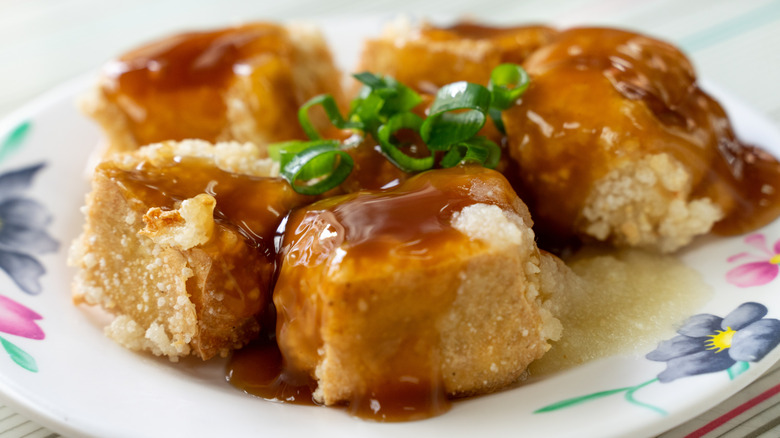
Wet socks, garbage, and rotten meat are just a few things that the smell of stinky tofu has been compared to, so the dish hardly sounds appetizing. But actually, once they've got past the stench, most people who try stinky tofu enjoy it. Luckily, it doesn't taste like it smells (or it probably wouldn't even be on this list). Usually served from street food vendors in China, Hong Kong, and Taiwan, it's salty and a little bitter, with a pleasant crispy texture. The smell comes from the brine, which is made with a mix of pungent ingredients, like fermented milk, dried shrimp, and meat.
Stinky tofu, which is known as cau dau fu in Cantonese and chou dou fu in Mandarin, was likely invented in China. But its creation is shrouded in mystery and legend. One origin story claims it was accidentally invented centuries ago by a Chinese tofu merchant when he left unsold goods to ferment. Another origin story claims it was actually created by a scholar during the Qing Dynasty, who started selling tofu to earn some extra money. He decided to pickle his leftover moldy stock, and months later, he discovered that it smelled disgusting but tasted delicious.
Over the years, word spread about stinky tofu, and it particularly took off in Taiwan. Today, in Taipei's district of Shenkeng, there is even a whole street dedicated to the delicacy.
San bei tofu - Taiwan
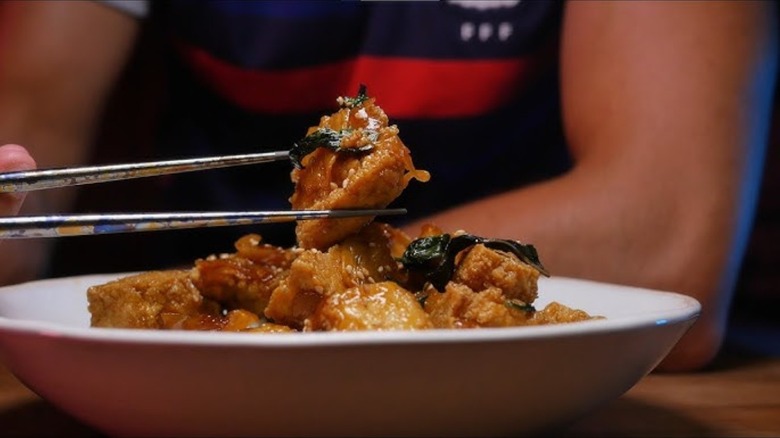
Not all tofu in Taiwan is served stinky. San bei tofu, or "three cup tofu," is a plant-based version of the popular Taiwanese dish San bei ji, which is usually served with chicken. But the flavor doesn't come from the meat, it comes from the sauce, which is why you'll sometimes find it served with different proteins, including tofu and seafood.
Again, san bei sauce is very simple, but that doesn't mean it skimps on flavor. It's called three cup sauce because it is made up of just three main ingredients: Soy sauce, toasted sesame oil, and cooking wine. Together, these three components help to create a sauce that has a sticky texture and a pleasant salty and sweet flavor. A little Thai basil is usually added for a peppery flavor, and some also choose to add extra ingredients like ginger and garlic to the mix, too.
Dubu jorim - Korea
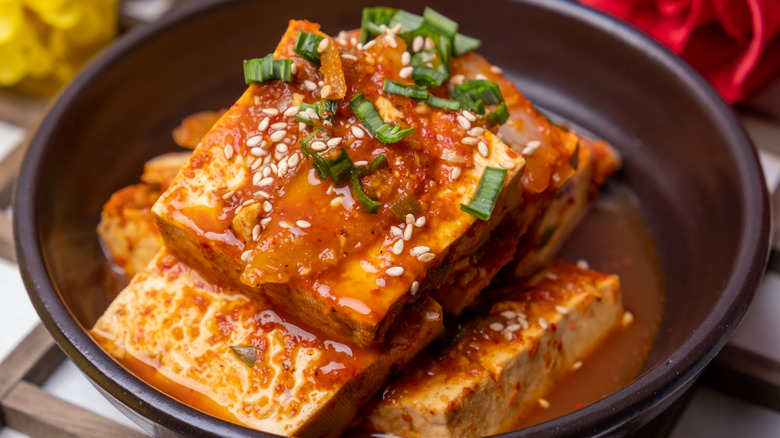
Tofu has probably been eaten in South Korea since around the 10th century, but production really started to take off during the Japanese occupation of the country in the first half of the 20th century. Japan's love for tofu inspired Korea to start producing its own versions of the soy-based ingredient. It was also during this time that Korean people started giving tofu to people recently released from prison. Not only is tofu white, which symbolizes a pure, crime-free future, but during the occupation, it also served a nutritional purpose, too. Prison occupation conditions were dire, and inmates were often malnourished.
Today, tofu features in many Korean dishes. One of the most popular is dubu jorim, which is a braised tofu dish. To make it, firm tofu slices are usually pan-fried until golden, and then braised in soy sauce. If you like an extra kick, spicy dubu jorim with gochugaru is also popular in South Korea. Often, dubu jorim is served as a side dish alongside other Korean staples like kimchi and rice.
Sundubu-jjigae - Korea
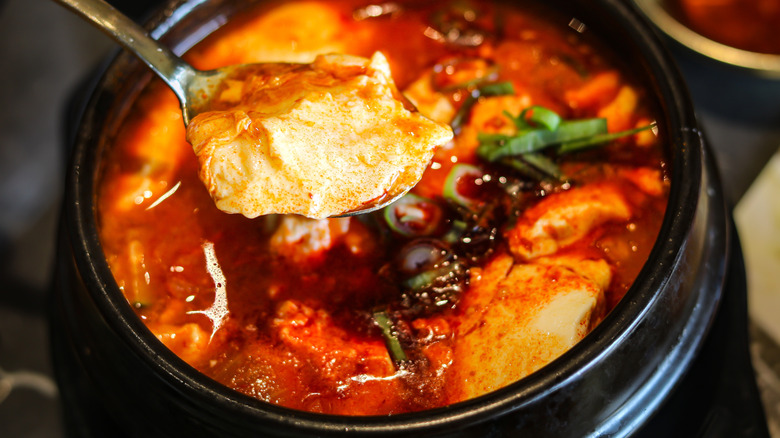
Another popular Korean dish with tofu is a spicy stew called sundubu-jjigae. Unlike dubu jorim, which is usually made with firm tofu, sundubu-jjigae is usually made with soft tofu. This is then cooked in a seafood broth, usually made with anchovies and kelp, and combined with more seafood and meats like pork or beef.
You'll find sundubu-jjigae served in restaurants across South Korea, but one of the best places to try the spicy dish is in Seoul. The capital is home to several tofu restaurants, which, you guessed it, specialize in tofu dishes like sundubu-jjigae and dubu jorim.
If you like milder flavors, you'll also find plainer soft stews, like deulkkae sundubu jjigae (which is made with perilla seeds), in some tofu restaurants. Other notable Korean tofu dishes that are worth sampling include dubu jeongol (tofu hot pot), dubu jeon (tofu pancakes), dubu-jangajji (tofu pickles), and dubu-gangjeong (sweet and crunchy tofu).
Ganmodoki - Japan
As we mentioned earlier, tofu has been eaten in Japan for a very, very long time. We're talking from more than 1,000 years ago — that kind of a long time. At first, it was eaten by Buddhist monks, and today, tofu is still a big part of Buddhist cuisine, which is known as Shojin Ryori and is mostly vegan and vegetarian.
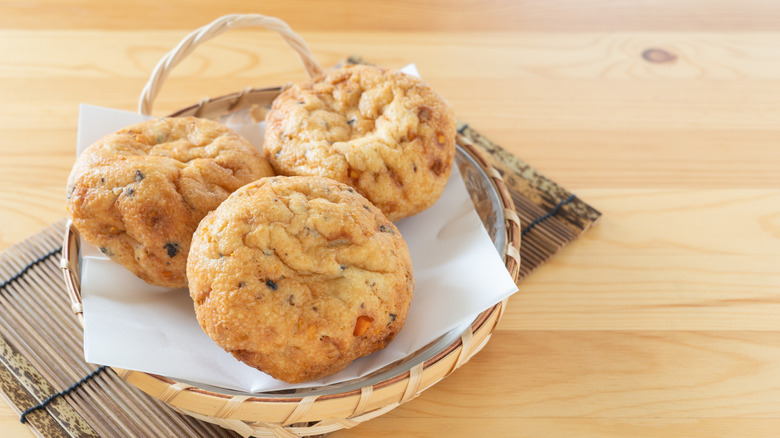
One particularly tasty tofu Shojin Ryori dish is ganmodoki, which is basically a fried patty made with tofu and other ingredients like seaweed, shiitake mushrooms, and edamame. The patties, which kind of look like veggie burgers, are deliciously golden and crisp on the outside, while the inside is fluffy and light.
The best place to try ganmodoki and any other dish from Buddhist cuisine, like vegetable tempura or shiraee (mashed tofu and vegetable salad), is at a Shojin Ryori restaurant in Kyoto or Tokyo. You can also visit temples or, to learn how to make it for yourself from scratch, attend a Shojin Ryori cooking class.
Inarizushi - Japan
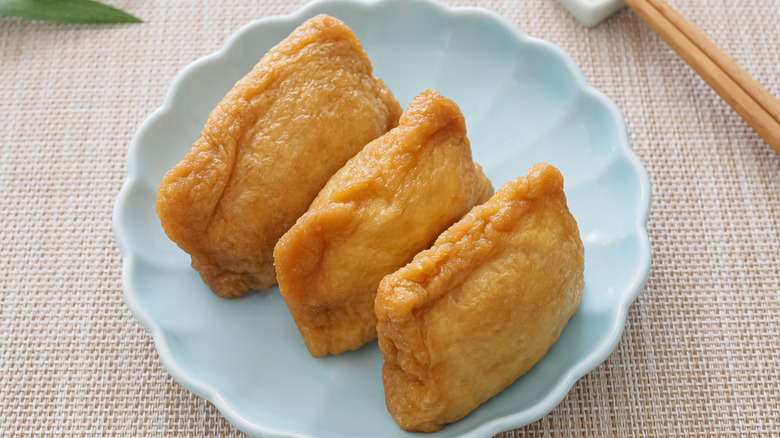
Of course, if you're indulging in Japanese cuisine, you're probably going to eat sushi at some point. If you're heading to a sushi restaurant, keep an eye out for inarizushi, which is deep-fried tofu skin seasoned with dashi broth and stuffed with vinegared rice. It's a delicate dish, boasting the perfect combination of sweet, salty, and umami flavors.
Inarizushi has an interesting history. The name comes from Inari, the Japanese god and protector of rice. There are many shrines to the deity across Japan, and for nearly two centuries, people have left offerings of deep-fried tofu skins, known as aburaage, at these shrines. Eventually, the aburaage was stuffed with rice, and inarizushi was born.
Depending on where you are in Japan, inarizushi has different shapes. In Kansai, for example, the sushi is shaped like a fox ear, because according to Japanese mythology, foxes are big fans of aburaage, and may even be direct messengers from Inari. In other regions, inarizushi has more of a rectangular shape.
Mun Tahu - Indonesia
Over the centuries, Indonesian cuisine has been influenced by many different cultures. Take rendang, for example. The curry dish is incredibly popular both in Indonesia and across Asia, and its creation was heavily inspired by Indian curries. There's also satay, which was influenced by Middle Eastern cooking techniques. China has also had a big impact on Indonesian cuisine, bringing staples like noodles and deep-fried wontons to the country.
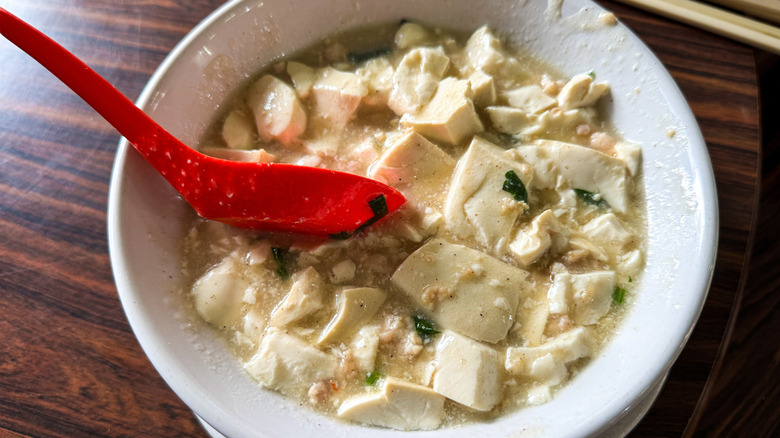
In fact, many delicious dishes in Indonesia are Chinese Indonesian, or Hakka, which refers to the Chinese diaspora. Mun tahu is one example. The dish is made with braised silken tofu, which is usually combined with ground meat or shrimp, and then covered in a thick, white, umami-rich sauce, which gets its flavor from ingredients like oyster sauce, soy sauce, cooking wine, sea salt, and sesame oil.
You can find mun tahu served in restaurants across Indonesia, but for the most authentic experience, consider heading to Chinatown in Jakarta. There you'll find many restaurants serving up traditional Hakka cuisine, including mun tahu.
Tahu Goreng Kecap - Indonesia
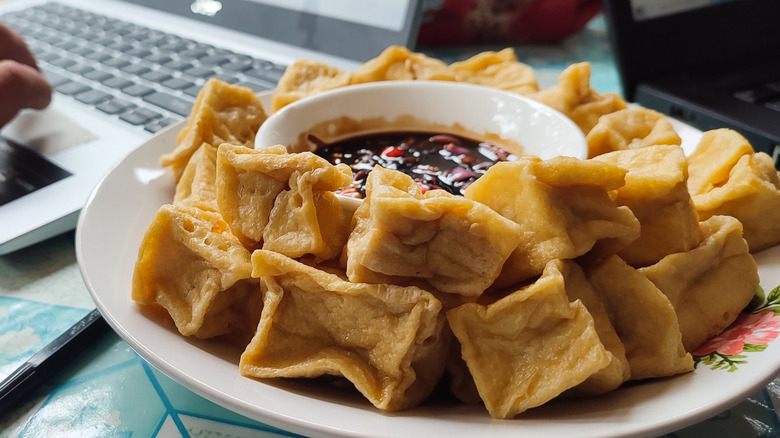
If you're craving fried tofu in Indonesia, tahu goreng kecap is what you need to look out for. The name translates, quite literally, to "fried tofu with soy sauce," so you can't really go wrong.
The dish is a simple, budget-friendly street food option, but don't be fooled into thinking that means it's boring. Tahu goreng kecap it's incredibly versatile, and can be enjoyed with a range of sides, from vegetables to fried rice to coconut rice. The dressing, which is made with peanuts, shrimp paste, shallots, and garlic, is also full of flavor.
You can also opt for dishes like tahu goreng bumbu kuning, which is similar to tahu goreng kecap, but instead of soy sauce the tofu is fried with herbs and spices like turmeric, galangal, lemongrass, and Indonesian bay leaves. Other Indonesian tofu dishes to look out for include tahu lada hitam, which is tofu in black pepper sauce, and martabak tahu, another popular street food consisting of pancake stuffed tofu.
Taho - The Philippines
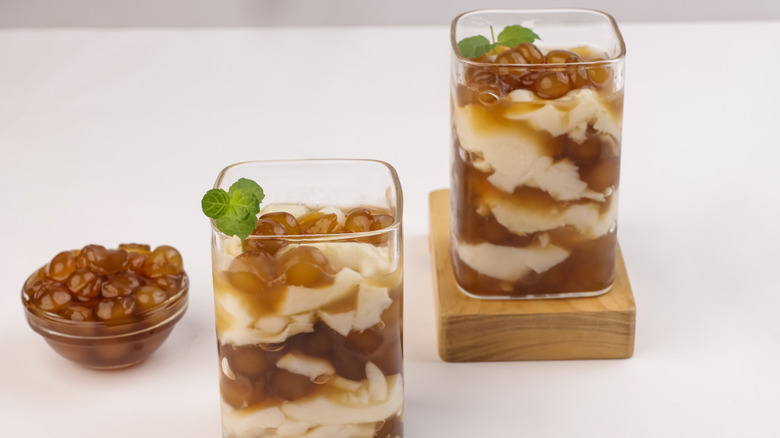
Unlike every other tofu dish we've covered so far, Filipino taho is actually more sweet than savory. Usually, it's made with soft, creamy silken tofu, which is combined with sago pearls (sometimes tapioca pearls) and brown sugar syrup. Served warm, the dish is sweet and comforting, and while it's indulgent enough for dessert, it's usually eaten for breakfast or an afternoon snack.
Similar to Indonesian mun tahu, taho was probably influenced by Chinese traders in Manila. That makes sense, because taho is very similar to a Chinese sweet tofu dish called douhua (which we'll come to shortly!). It's easy to make taho from home, but, arguably, one of the best places to try this traditional Filipino sweet treat is on the streets of a city in the Philippines. The street food is usually sold by dedicated taho sellers, who pound the pavements shouting "Taho!" until eager customers come running.
Douhua - China
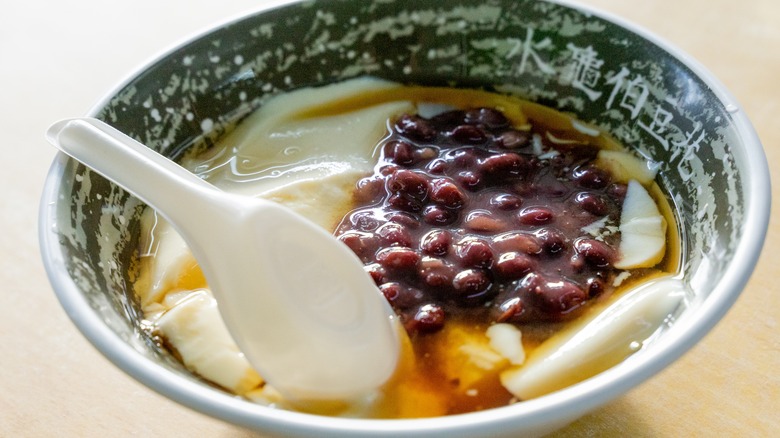
As promised, it's time to talk about douhua. This creamy dish is incredibly similar to taho, as it's also made with super soft tofu, but it's not always served sweet. In fact, while the soft consistency is always the same, the flavor changes depending on where you are.
If you're searching for douhua in Beijing in northern China, for example, you'll likely find it referred to as dou fu nao, and served with a savory gravy made with ingredients like mushrooms and pork. In Guangdong in southern China, it's served sweet, like taho, with sugar and syrups. And then there's the Sichuan version, which, as you might have guessed, is pretty spicy. This type of douhua is often served with ingredients like chili oil, Sichuan peppers, soy sauce, and fried soybeans.
In most regions, douhua is sold as a street food. It's also popular in Taiwan, where it's also usually eaten with sweet ingredients and served as dessert.