

10 Old-School Vending Machine Candies That'll Take You Back To Your Childhood
We may receive a commission on purchases made from links.
Begging your parents for quarters so that you can purchase candy from the vending machine is a quintessential childhood experience. Candy has been sold from vending machines for more than one hundred years, long before the red-colored twist variety existed. They offer a different type of candy consumption; the sweets are generally small, unpackaged, and meant to be eaten immediately. The cost is low, and a simple twist releases a handful into your palm. These treasure troves for gumballs, sour treats, gummy worms, candy-coated chocolates, and toys are strategically located outside and inside retail spaces, luring sweet-loving kids as they pass by.
Today, candy is easily accessible at stores, major retailers, and online, so the twist-style vending machines aren't the go-to they once were. However, they remain as reminders of a bygone era when candymakers were first introducing brands that would later become household names. From sweets created in the 1800s to the world's first bubblegum, here are 10 old-school vending machine candies that'll take you back to your childhood.
Dubble Bubble Gumballs
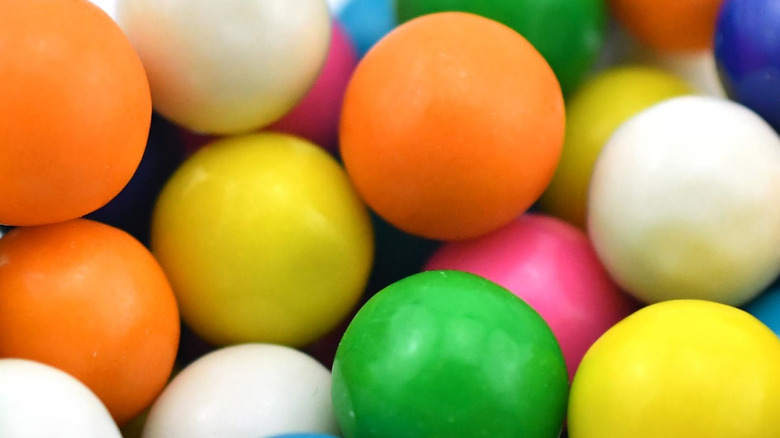
The invention of Dubble Bubble was a happy accident made by Walter Diemer in 1928. It was derived from the original 1906 recipe used by the Fleer Chewing Gum Company and is the world's first-ever commercially sold bubblegum. Diemer created the signature bubblegum flavor you know and love, but not the iconic pink color. That came from Fleer's recipe, chosen because it was the only food coloring available at the factory. For 97 years and running, Dubble Bubble has been the bubblegum standard, and though the recipe has changed, it's largely responsible for why brands use the color pink.
Jumbo-sized candy-coated gumballs were introduced after the company was purchased by Concord Industries in 1999. They were sold in vending machines in various fruit flavors, including blueberry, strawberry, and banana, with the original bubblegum flavor on the inside. The offerings later expanded with blueberry smoothie, watermelon, and others. For 60 years, Dubble Bubble has been one of the most popular brands associated with candy vending machines. Today, it sells miniature refillable vending machines for the home.
Hot Tamales
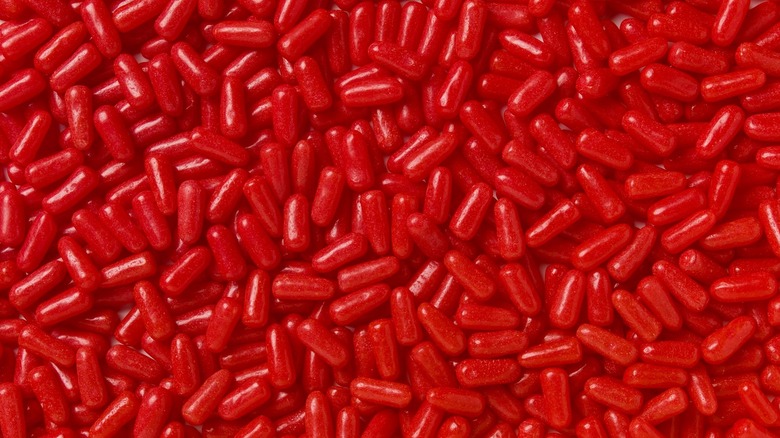
Few vending machine candies are as beloved as the fiery, cinnamon-flavored Hot Tamales. They were created in 1950 by Bob Born, the former president of Just Born Quality Confections, the 102-year-old candy manufacturer behind Mike and Ike. Bob Born was also known as the "Father of Peeps," as he created the famous marshmallow candy, as well. Hot Tamales arrived 10 years after Mike and Ike, and might've even been inspired by it, as both are chewy jelly bean types.
Besides being a must-have movie theater snack and a classic Halloween treat, Hot Tamales were once popular vending machine candies, particularly in their earlier days. You may find vending machines that carry Hot Tamales today, but they're not as widespread. Candy-related history blog Collecting Candy shared some of Just Born's vintage insert card artworks, which are the vending machine version of a product label. The insert card used for Hot Tamales during the '70s featured what appears to be a Mexican male wearing a sombrero, above the words "Zingy Hot Tamales." A version with the current red-colored branding didn't appear until the '80s.
Mike and Ike
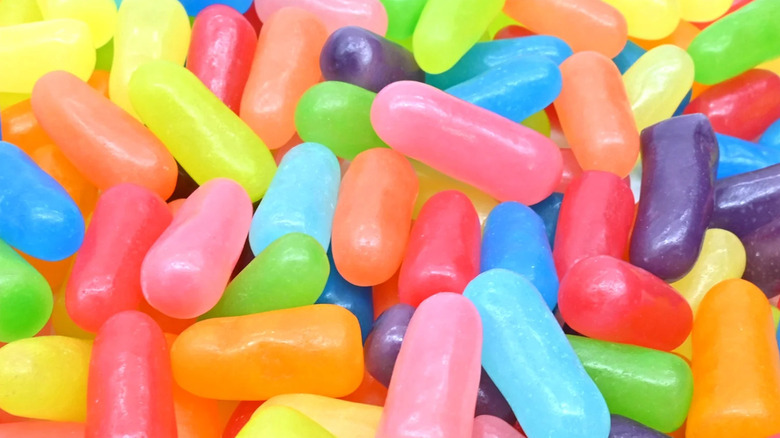
Mike and Ike is another invention of Just Born. Released in 1940, the original five flavors were cherry, lemon, strawberry, lime, and orange. These chewy, oblong sweets need no introduction; you've likely seen this classic candy at the movie theater while standing in the concession line. Mike and Ike's vending machine history mirrors that of Hot Tamales, in that the machines were more common in the earlier days. Typically, and probably still today, if you come across them, both brands are sold side by side.
The Mike and Ike name wasn't inspired by real-life people, even though they were advertised as humans during the 1970s, before being replaced with the anthropomorphic cherry and lemon in the '80s. Like Hot Tamales, Mike and Ike candies have a convenient grab-and-go size that's ideal for dispensing. You can now purchase Mike and Ike brand candy dispensers that resemble vending machines, which is a testament to the brand's vending legacy.
Runts
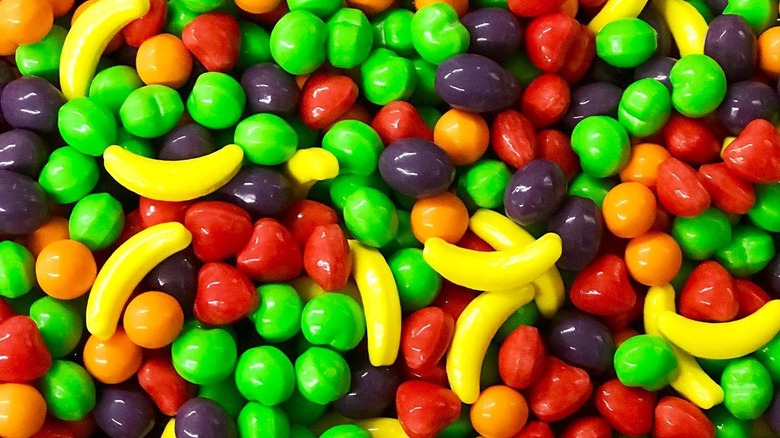
Another addition to the candy hall of fame, Runts are classic fruit-flavored sweets. Nestlé introduced them in 1982 with the flavors banana, green apple, cherry, orange, and strawberry. However, the assortment changed numerous times. Today the line-up is banana, orange, strawberry, green apple, and grape. Runts are shaped like and designed to mimic real fruits. Their small size made them a popular vending machine candy during the '90s, often found outside of retailers.
The brand released different varieties throughout the years — an offshoot named Rock'n Runts with pineapple, lemon, grape, and raspberry flavors during the 1990s, and a chewy type that was discontinued in 2014. There was also a limited-edition Easter candy called Runts Freckled Eggs. That said, the original Runts are the only ones still available. Today's version has a crunchier consistency with more tartness than the original and is most often sold in a box rather than in vending machines.
Good & Plenty
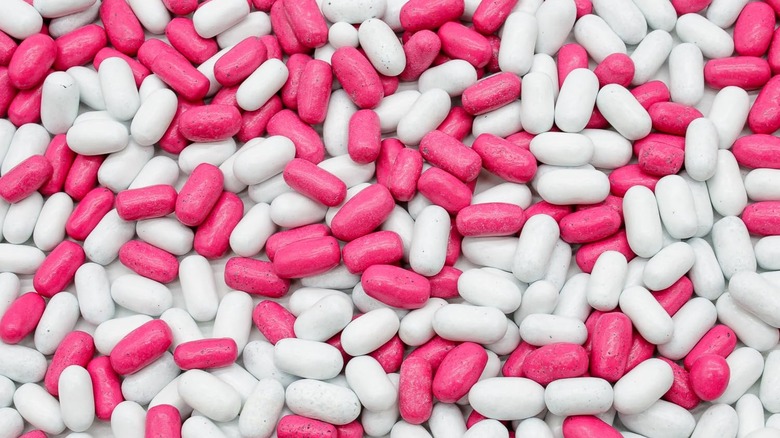
Created in 1893 by the Quaker City Chocolate and Confectionery Company, Good & Plenty is an old-world black licorice-flavored sweet with lasting appeal. Even if you've never tried it, odds are you've seen its iconic purple color box, patterned with white and violet candies. While the intense anise-like taste has always been divisive, black licorice somehow maintains a cult following, which may explain how Good & Plenty has survived for so long.
Like Mike and Ike and Hot Tamales, this jelly bean-style candy is perfectly suited for vending machines, and was sold from them even before the twist variety existed, when candy was dispensed by pulling at a knob. They remained staples through the evolution of vending technology. While Good & Plenty is mostly known for its box nowadays, it'll always be a vending machine candy that reminds you of childhood.
Cry Baby Gum
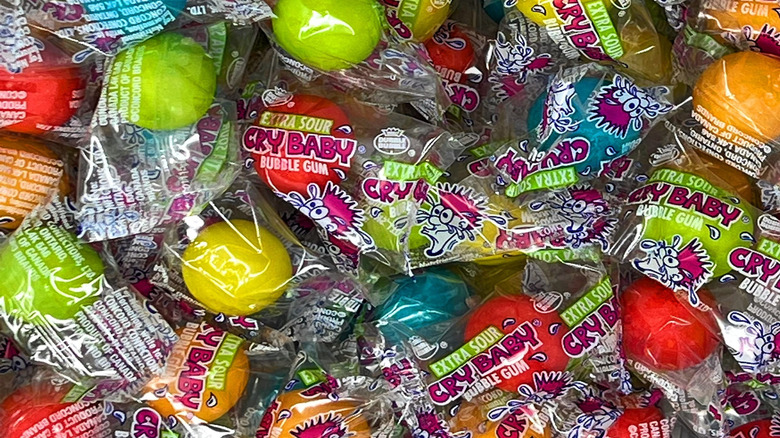
Sour candies were all the rage during the '90s, from WarHeads and Sour Patch Kids to Trolli. For one reason or another, kids treated conquering sourness like a rite of passage. Among them was Cry Baby Gum, an appropriate name if there ever was one, due to its penchant for causing literal tears. While not as pucker face-inducing as WarHeads, we still consider Cry Baby Gum one of the most sour candies in the world. It was purchased by Tootsie Roll Industries in 1991 and released under the Dubble Bubble brand, which Tootsie Roll acquired after buying Concord Confections sometime in the 2000s.
David Klein, the inventor of Jelly Belly jelly beans, came up with the name. Cry Baby Gum comes in five sour flavors: lemon, cherry, green apple, blue raspberry, orange, and watermelon. They are coated with sugar that provides a touch of sweetness before sourness takes over your taste buds. Like other Dubble Bubble products, Cry Baby Gum was a vending machine mainstay.
Hershey-ETS
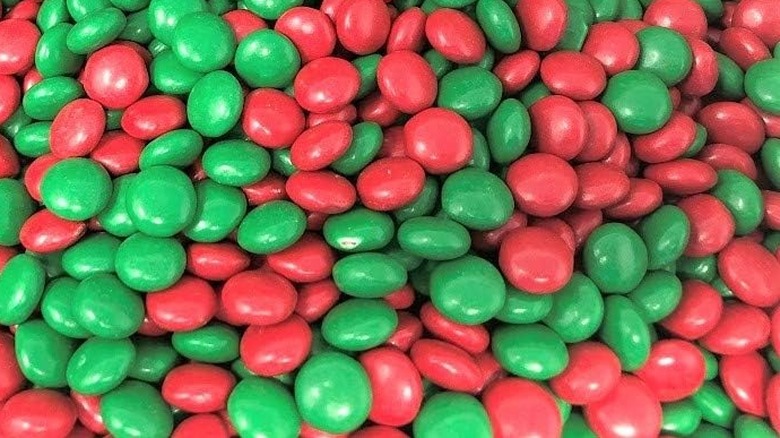
Hershey has released countless chocolate candies in its 131 years. Following World War II, the company began testing various panning techniques, which is a method of coating chocolate and other ingredients with a candy shell. Hershey wanted a candy shell-coated chocolate product that could compete with M&M's. In order to stand out, the confectioner attempted applying the coating to its signature chocolate kisses, which had the unintentional effect of binding the flat sides together, resulting in a shape closer to a football.
The football-shaped sweet was named Hershey-Ets, and it hit shelves in June of 1954. Unlike M&M's, the first iteration had a clear candy shell, before the colors blue, yellow, red, green, and orange were added. Hershey-Ets were being sold from vending machines by the '60s. Then in the mid-1970s, they were discontinued altogether. At some point, Hershey brought them back and now sells them online. Today's iteration is shaped more like a Mentos than a football. The company later released a candy-coated Hershey kiss product, called "Kissables," which was discontinued around 2009.
Jawbreakers
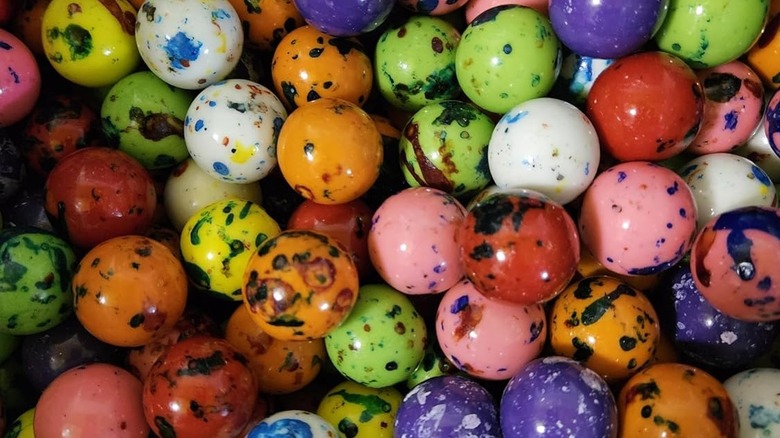
Jawbreakers are the candies that every timid kid feared and that every adventurous one desired. First released in 1919 by the Ferrara Candy Company under the name "Jaw Busters: the original jaw breakers," it's a candy that tells you exactly what it does, and that's break jaws. Maybe not literally, but there are enough urban tales about them going around to believe the hype. Although jawbreakers had been successful for decades, the release of the book "Charlie and the Chocolate Factory" in 1964, which introduced the fictional concept of the "Everlasting Gobstobber," took its popularity to new heights.
When Ferrara brought the fictional Everlasting Gobstobber to life, you could suck on one forever and it'd never shrink — at least that's how the company marketed them to kids. Jawbreakers have been sold in vending machines since the 1930s, long before the current twist-style machines were invented. This candy is quite the pop culture phenomenon as well, not only appearing in the 1971 "Willy Wonka" feature-length film but in the animated cartoon "Ed, Edd & Eddy," and it even has a movie named after it.
Starburst Jelly Beans
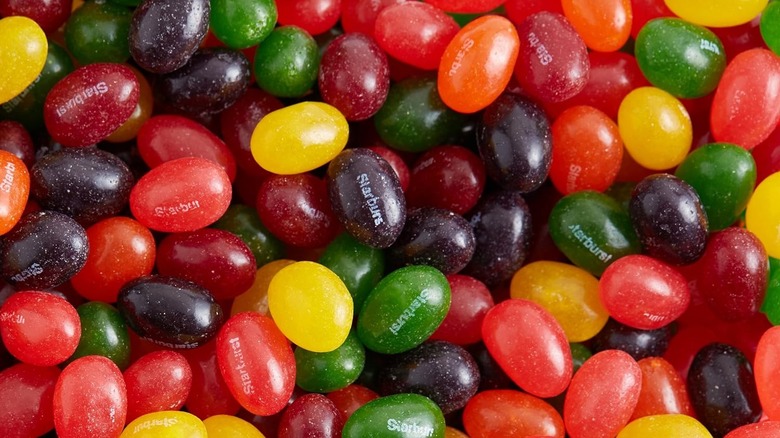
The debate over which Starburst flavor is the best can be contentious. Cherry and orange are always tossed around but diehards know that strawberry is the true star. Originally released in 1960 in the United Kingdom, Starburst was named "Opal Fruits" before being changed in 1967, following the candy's U.S. introduction. The taffy-style sweet has come in many fruit flavors over the years; the current lineup includes lemon, orange, cherry, and strawberry. In 1995, Starburst Jelly Beans joined the permanent product line, introducing chewy jelly bean versions of its signature fruit flavors, with the addition of green apple and grape.
They've remained available since their debut and, like similar jelly bean-style candies listed here, could be purchased from vending machines. A picture of one filled with Starburst Jelly Beans was shared on Facebook as recently as 2023, so it looks like they're still out there satisfying sweet tooths.
Nerds Gumballs
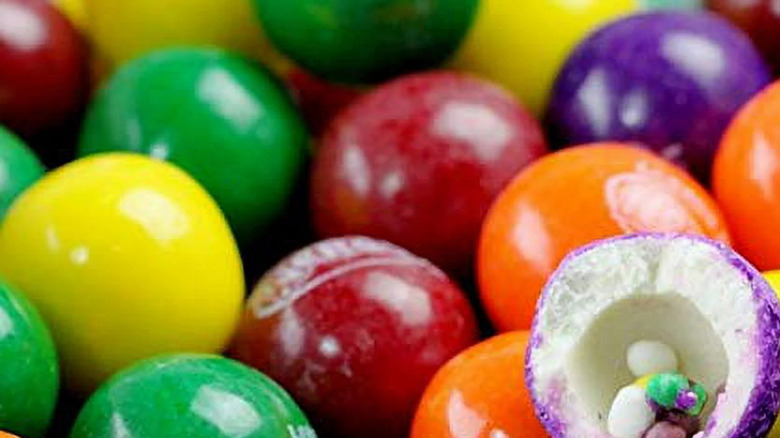
Nerds are fun to eat, particularly for their crunchy consistency, which releases sugary bursts of fruit flavor. They were launched in 1976 by David Klein, the man we mentioned earlier, who invented Jelly Belly jelly beans — but in this case, with help from his wife, Judy. Lots of flavors have been released over the years; some popular ones are strawberry, grape, wild cherry, and watermelon. The product line later expanded with Nerds Ropes and Nerds Gummy Clusters, which essentially saved the company during a dry spell, and Nerds Gumballs, to name a few.
Nerds Gumballs were the perfect size for vending machines, unlike regular Nerds, which were too tiny to be dispensed. The gumball was different than others because it contained Nerds candies, and the surrounding gum layer was coated in the brand's signature fruit flavors, delivering chewiness and a crunchy texture.