

How To Know When A Persimmon Is Ripe Enough To Eat
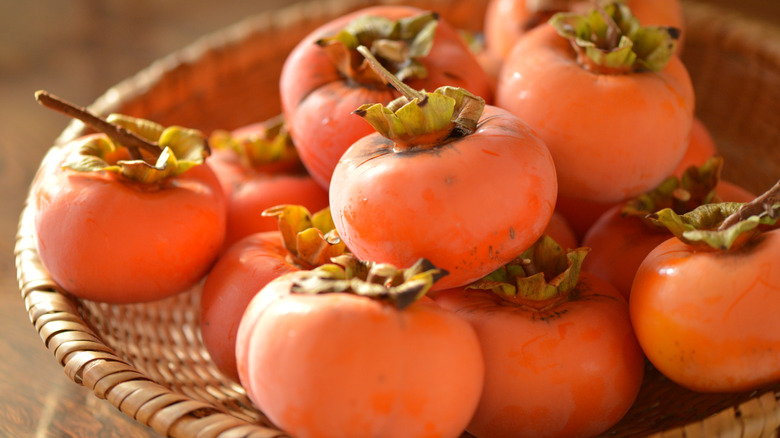
At market, you'll generally find two types of persimmon: the squat fuyu, which can be eaten crisp or soft, and elongated hachiya, which absolutely must turn to velvet softness before it's sweet enough to eat. Their ripeness signals couldn't be more different, and knowing which you're handling changes everything about how you wait for it, or don't.
In Japanese aesthetics, shibui describes a felt sense of something that is perfectly what it is: balanced, unembellished, elementally complex but complete without adornment. Shibui can describe many things: a baseball pitcher's clean throw, the grain of weathered wood, or the curve of a handmade bowl. But the concept grows from the original meaning of shibui – the tongue-twisting astringency of an unripe persimmon — a mouthfeel so viscerally unpleasant it became the negative space that defines perfection. The defining, tangible reference point of shibui is a persimmon, still on the tree, at the exact moment of peak ripeness, dusted with the frost of a winter morning.
Persimmons are among the few fruits whose finest moment comes after the air turns cold. In the company of other hard, autumnal harvests like quinces, apples, and pomegranates, they build their sweetness slowly, as daylight shortens, the cold altering puckering tannins that would otherwise seize your tongue. Unlike soft, delicate spring berries that fade in days, persimmons can hold their promise deep into winter, their thick skin a firm, glossy vault against spoilage. But their window of ripeness is narrow. Leave one too long and it will collapse in your palm, the true-orange flesh slipping into syrup like mercury you can't hold onto. The perfect stage comes when the fruit yields gently under your touch yet still holds its form, and that stage depends entirely on the variety.
The sweet spot of the fuyu
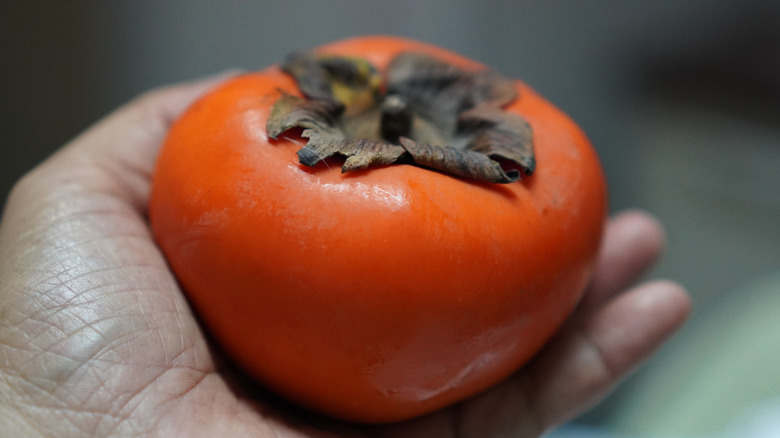
Fuyu persimmons are the easier of the two to judge. They are stout and tomato-like, with a flat bottom and a cheerful, lacquered orange skin, and are considered ripe the moment they turn fully colored and firm, no matter if the flesh still feels crisp. Unlike their hachiya cousins, fuyu can be eaten at almost any stage after coloring up, crunchy like an apple, or left on the counter to soften into a honeyed, melon-like texture. If the skin is bright and free of green patches, and the calyx (the little hat of leaves and stem) at the top looks dry and papery, it's ready. Leave them a little too long, and they develop the viscosity of room-temperature honey, and you'll need to eat them with a bowl and a spoon, or maybe even a straw.
Because they hold their shape so well, fuyu persimmons can last for weeks in the fridge. In Japan, amagaki ("sweet persimmons") are given as seasonal gifts, and their saturated orange hue often appears in still life paintings alongside chrysanthemums as an emblem of the season. In the kitchen, they can be sliced thin into winter salads with chicories, roasted nuts, and goat cheese, or layered over almond cream in a tart, or even roasted to concentrate their sugars. Korean cooks use similar varieties in sujeonggwa, a spiced cinnamon-ginger punch served chilled, where the fruit's natural sweetness balances the aromatics. If you do have some too-ripe fuyus on your hand, they can be de-seeded and blended, then folded into a panna cotta, which will be delicately colored and flavored, and is perfectly accompanied with a seasonally complementary quince syrup. The key with fuyu persimmons is remembering need no dramatic softening to be edible. Once they've blushed their full color, they're yours to enjoy.
Patience ripens into sweetness
Hachiya persimmons are less easygoing. They demand patience and a more hands-on approach. Tall and acorn-shaped, they're astringent and totally inedible until the flesh softens completely, almost jelly-like under the skin. Until that moment, even a hint of firmness means their high levels of still active, soluble tannins will seize your mouth in an astringent grip; only when those tannins convert to an insoluble form does the flavor open up. An edibly ripe hachiya is gushy, yielding completely under the lightest touch, the deep-orange flesh turning almost translucent, with a custardy, scoopable texture. At that point, the flavor is intensely sweet, carrying analogies to apricot and warm spice.
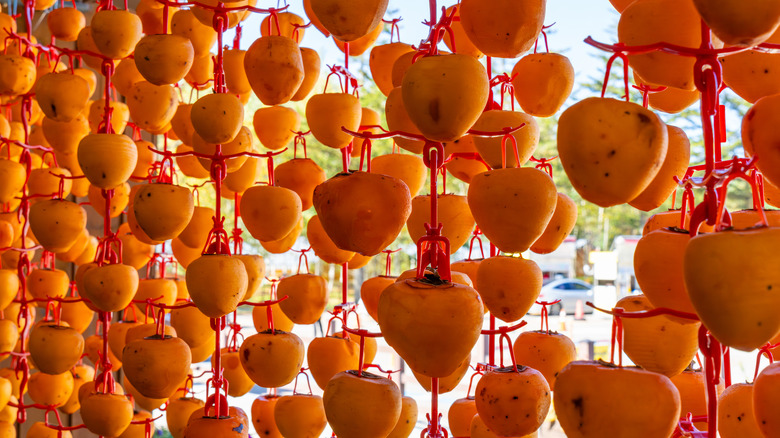
The hachiya's long wait is a metaphor for reward after restraint. In Japan, one of its most celebrated preparations is hoshigaki, whole fruits peeled and strung under eaves, massaged daily until their sugars migrate to the surface and bloom into a delicate frost. The process turns the fruit into a dense, candy-like delicacy prized for New Year's celebrations, emphasizing a fruit that has soaked up the long light of summer, ripening only at the tail end of autumn, and been kept to savor in the depths of winter as a welcome reminder of warmth.
Hachiya are known as baking persimmons, and their fully ripe sweetness pairs well with cream or chocolate and can be folded into steamed puddings, churned into ice cream, or baked with warm spices like cardamom and allspice. Or, that rather one-note sweetness can be contrasted against salty, savory elements like prosciutto or aged cheese. However you use it, the rule is absolute: If it isn't soft enough to feel like a water balloon about to burst, it isn't ready yet.