

Why Glass Countertops Aren't The Most Popular (Or Practical) Choice

When choosing the best kitchen countertop material for your home, you should consider your cooking habits, budget, and how much time you want to invest in countertop maintenance. Some countertop materials are relatively low-maintenance. Others are less durable and may require specialized care and cleaning, like glass.
Glass countertops are not the most popular (or practical) choice for kitchens. While glass might look modern, minimalist, and clean, it's actually a very high-maintenance choice. One of the biggest downsides to the material is its susceptibility to damage. While the glass used for countertops is very durable, it can develop microscopic imperfections over time due to wear and tear, poor installation, and lack of maintenance.
Though these imperfections aren't visible to the eye, they will weaken the structural integrity of the countertop. This means that even the slightest force, such as putting a pot down a little too hard, can cause the countertop to break. When a glass countertop is damaged, repairs can also be costly – you may even need to replace the entire countertop. Another disadvantage is that glass countertops also show smears and fingerprints, which means they need to be cleaned regularly. If you are looking for a low-maintenance countertop material, you should explore options other than glass.
Which countertop material should you choose?
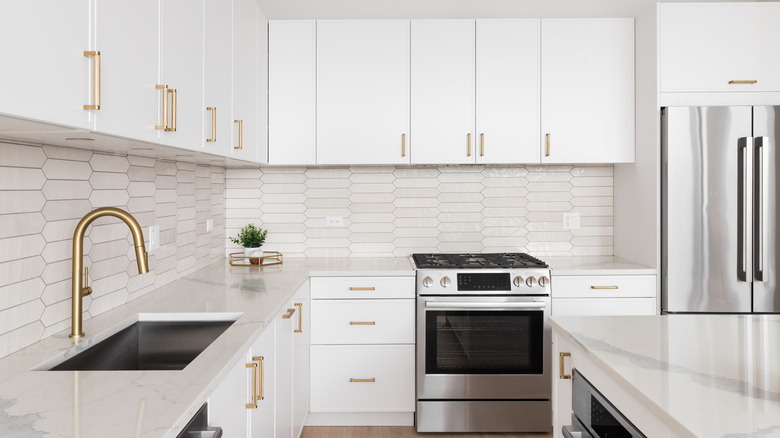
When selecting countertops, don't install anything before considering how much maintenance it will require. For example, ceramic-tiled countertops can cause nothing but headaches in the long run. They are difficult to clean as they have lots of nooks and crannies where dust and grease can settle, and require regular maintenance to protect against stains and deterioration. Opting for butcher-block countertops is another big mistake as natural wood also requires a lot of care. Although wood is attractive and durable, it can easily get scratched or nicked by sharp knives and kitchen appliances. It also needs to be regularly deep-cleaned, oiled, and sanded. You should also consider the upkeep before committing to natural stone countertops as they can be susceptible to stains, etching, and scratches.
One of the most low-maintenance kitchen countertop materials is laminate. Laminate, much like solid surface countertops, can withstand daily use and are resistant to stains. Laminate doesn't need to be treated, sealed, or oiled, and you don't need to use specialized cleaners, either. Just clean it with mild soap and water or all-purpose kitchen cleaners. It's also available in a range of colors and patterns. Another low-maintenance countertop option is quartz. The biggest difference between granite and quartz countertops is that the latter is an engineered, non-porous stone that's resistant to stains and scratches, and is easy to clean and care for. It's also modern, attractive, and available in a huge variety of colors, styles, and designs.