

How To Finally Banish Drain And Fruit Flies From Your Kitchen Sink

Cleaning the kitchen sink might not be on anyone's list of favorite after-dinner activities, but it's a necessary reality of life. Yet, nothing makes this task more unpleasant than discovering a few unwelcome tenants: drain or fruit flies squatting rent-free in your pipes. If you've been wondering how to give these pests an official eviction notice, we have you covered. With the right tricks, you can send both fruit and drain flies packing for good.
While fruit and drain flies are both tiny nuisances, they're actually different insects altogether, and sometimes that means eradicating them calls for different strategies. But if either is breeding or lingering in or around the sink, one quick, low-effort way to target them is to flush the drain with boiling water several times (so long as your pipes are metal) or sprinkle half a cup of baking soda, followed by half a cup of vinegar. If you go with the latter, let the fizzy mixture work its magic for about 15 to 20 minutes before rinsing. In most cases, this simple ritual can help you reclaim your sink space.
If this doesn't work, you may have better luck with a classic fruit fly trap. Fill a small jar with a quarter cup of apple cider vinegar and a couple of drops of dish soap. Cover the jar with plastic wrap, poke a few tiny holes, and set it on the counter. The vinegar's tangy aroma lures the flies in, while the soap breaks the surface tension, leading them to sink in. This is an efficient, hands-off solution while you go about your day.
Knowing the difference between fruit or drain flies is half the battle
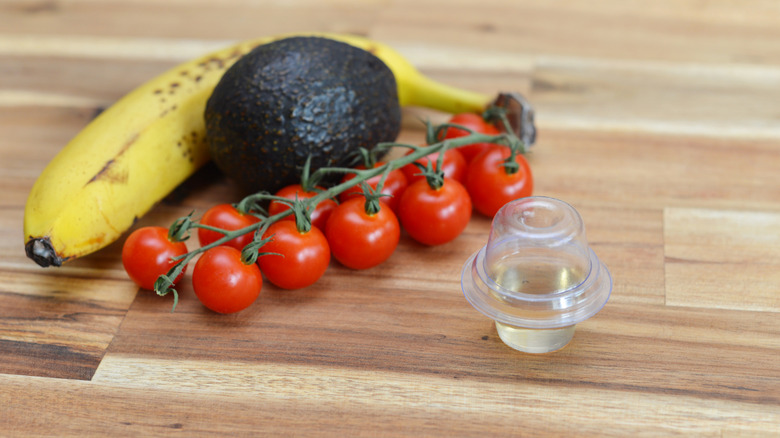
Struggling to get rid of drain or fruit flies in your kitchen sink? It may help to learn how to tell them apart. Fruit flies are tan at the front and black at the rear, have clear wings, and are attracted to organic matter like fermenting fruit, food scraps, and sticky spills. To banish them for good, you need more than traps; you need to have tight control of food and fermentables left around the sink, which includes emptying and cleaning the compost bin frequently. A single fruit fly can lay up to 500 eggs, so if you don't want your sink to turn into a fly hotel, it's essential to stay on top of your cleaning routine.
Meanwhile, drain flies, sometimes called "moth flies," are darker in color, have hairy wings, and prefer damp drains or gunk-filled spots. To truly farewell drain flies, you have to target their breeding site. If it's in the drain of the kitchen sink, it's not safe to use insecticides. Instead, clean your sink frequently, and, as noted before, pour boiling water down the drain several times a day for a week; this should do the trick. Once you've tackled the problem, keep the kitchen sink a permanent no-fly zone by cleaning as you go and storing food in the fridge. Stay consistent and you'll reclaim your kitchen in no time.