

What To Know Before Repairing Chipped And Cracked Countertops

We may receive a commission on purchases made from links.
Anyone who considers their kitchen a haven knows the way it looks, feels, and functions is important. When something is out of sync or not as it should be, home chefs can be thrown for a spin. Even a tiny chip in the kitchen countertop can feel like the culinary equivalent of stepping on a Lego while barefoot.
Chipped or cracked countertops are one of those kitchen headaches that feel bigger than they usually are — especially when you're staring at it mid-meal prep or preparing your morning caffeine fix. In fact, whether it's general wear and tear, heat damage, or a dropped saucepan that did the trick, damaged countertops can age your space fast. The good news is that you don't need to replace the entire countertop in most cases. If you have the right tools, a little patience, and a clear understanding of your surface material, a bit of DIY work may do just the trick.
To find out everything you need to know about repairing kitchen countertop chips, cracks, and more, we spoke to Rohan Jain, Director at RJ Projects. With Jain's expert advice, we can help guide you through most common DIY repair mistakes, learn what materials you need for different surfaces, and when your countertop need a more professional approach. Spoiler: Super glue might not be the miracle solution TikTok says it is.
The biggest mistake people make
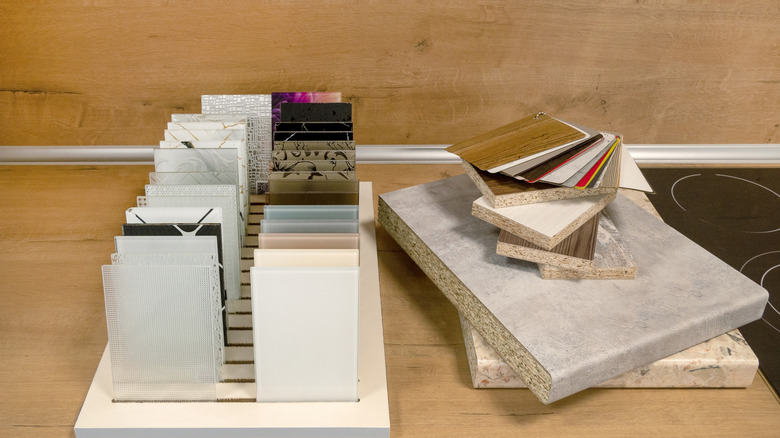
Before you head off to your local home improvement center, it's worth knowing what some of the biggest pitfalls are when it comes to DIY kitchen countertop repairs. After all, diving in without the right prep or products is a recipe for disaster.
"Using the incorrect materials or failing to adequately prep the surface before repair are two major mistakes," says Rohan Jain, who has extensive experience in the kitchen repair space. "People frequently use whatever glue or filler they happen to have lying around or speed up the job. This may worsen the issue or hasten the breakdown of the repair." In other words, if you don't know what you're dealing with, stop right there. While you may think it's the right product for the job, you may be better off calling in a professional.
Not all adhesives and fillers are created equal. You need to carefully consider the material of your kitchen countertop and understand what product is best suited. As Jain told us, "It's important to know what your countertop is made of — laminate, granite, wood, etc. — and use products meant for that surface." A little extra time spent prepping and selecting the right tools can make all the difference in getting a seamless, lasting fix.
Safety first
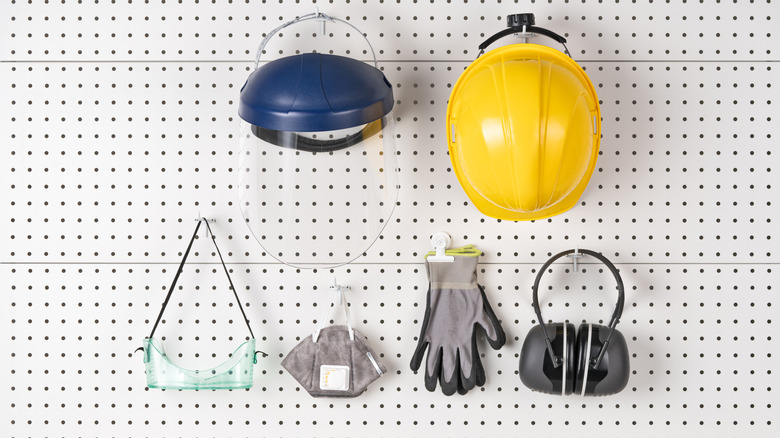
Before you get your gloves dirty, make sure you're not cutting corners on safety. While kitchen countertop repair may be a lower risk project, that doesn't mean it's without hazards. From sharp edges on broken stone to chemical-heavy adhesives, there are several precautions worth taking before you start patching anything up.
"Put on safety goggles and gloves first," Rohan Jain told Tasting Table, "especially if you're going to be using adhesives or sanding." Some materials release fumes that can be harmful when inhaled in an enclosed space like a kitchen; this is especially true if you're using epoxy or acetone-based products to smooth, fill, or clean surfaces. "Some repair products have significant odors," Jain noted as well. "Make sure the area is well-ventilated." Open your windows, switch on the extractor fan, and don't hover over the area while it cures.
The other thing to think about is the risk of breathing in dust when sawing or cutting is involved. Even if you close the door leading to the kitchen, there's a risk of the dust spreading through the rest of the home as you enter and exit. Jain says to "seal the area off since there could be considerable dust flying around the house." By taking a few extra minutes to gear up and prepare, you can save yourself from a nasty case of poisoning and a deep gash or two.
The equipment you'll need

Next, you'll want to ensure you have the right tools for the job. The specific items you'll need depend on the surface you're working with, but there are a few staples you'll want close at hand. After all, having the right materials and tools upfront is half the battle, according to Rohan Jain. "It depends on your countertop type," he said. "But generally, you'll need: Sandpaper or a sanding block, putty knife or scraper, cleaning cloths, mild cleaner or rubbing alcohol, repair paste or epoxy, touch-up paint (if needed), and gloves and safety goggles."
It's important to take the time you need to properly clean and prep the damaged area of your countertop before you start; otherwise, you may find that the adhesive won't stick or set properly. That's where the mild cleaner and rubbing alcohol come in. You can use either of these on laminate countertops, as well, so don't be worried about the rubbing alcohol doing any damage.
Once the area has been cleaned, make sure it is dried properly before moving on to the repair. Having the right tools and materials ready before you begin, as well as prepping the area, not only makes the repair process smoother but also increases the chances of a lasting fix.
How much is a DIY countertop kit?

If you're wondering whether fixing a chipped or cracked countertop will be costly, the good news is that many minor repairs won't break the bank — as long as you know what to look for. Many affordable do-it-yourself kitchen countertop repair kits can be found at your local home improvement center, and they're widely available online, as well. You'll find that they are usually tailored to specific countertop materials.
You can pretty much get all you need from Amazon. The retailer giant offers a variety of DIY kits for various countertop surfaces; for example, you can purchase a marble and granite repair kit for less than $20 as of August 2025 that's designed for chips, dents, cracks, and holes. Amazon offers a few brands to choose from, too, so there are plenty of other options. You can also head to your local Walmart, which has a variety of DIY brands.
You can color match with these kits, and they often come with mixers and scrapers, too. For wood and laminate, you can find a number of generic DIY kits at your local store for under $20, as well, though we'd recommend you look at customer reviews first before you buy any items.
How effective is laminate repair paste?
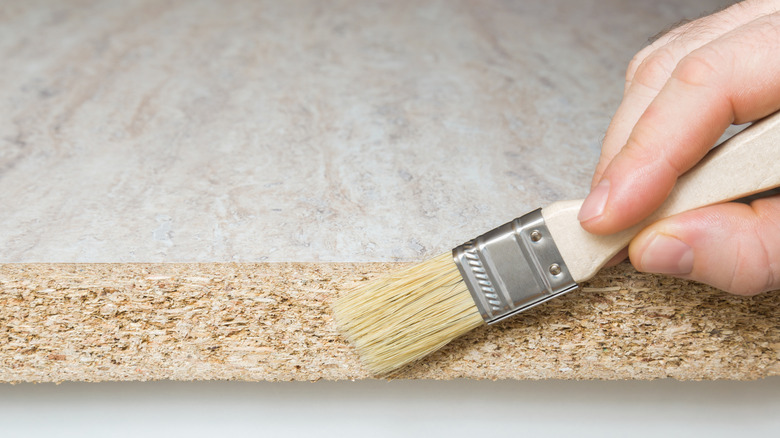
If you've got a chipped or scratched laminate countertop and are eyeing a small tube of repair paste with skepticism, you're not alone. Laminate repair kits that come with a paste often seem too good to be true. Yet when used correctly, they can actually deliver surprisingly decent results — something Rohan Jain agrees with.
"It's incredible how well laminate repair paste works for little chips, cracks, or scratches," he told Tasting Table. "It won't be perfect, but it blends in nicely and helps protect the surface from getting worse." That means for small cosmetic flaws, it's often the quickest, most cost-effective fix available — no special tools or professional help needed.
That said, it's not a miracle worker. If the laminate is peeling, water-damaged, or has large sections missing, a paste probably won't cut it. Jain explains, "For larger damage or if your counter is peeling, you might need a stronger solution." He also notes that color-matching is key. "If the paste doesn't match [your countertop], you might need a stronger solution. But for quick fixes, it's cost-effective and pretty durable for everyday use," he says. So, for light wear and tear, laminate repair paste is a sound and affordable way to give your laminate kitchen counter a second life.
Can you paint your laminate countertop?
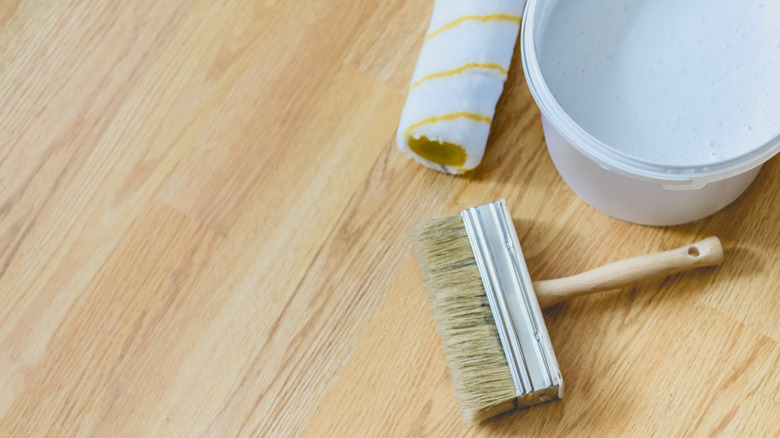
While it's a popular TikTok hack and go-to for budget kitchen makeovers, can you actually just paint over your kitchen laminate countertops when they're in need of repair? The short answer is yes ... but it depends on the type of damage you're dealing with. "Painting can work if your laminate is just scratched or faded," Rohan Jain told Tasting Table. But he added, "It's more of a cosmetic fix. If done right (with primer, paint, and sealant), it can refresh old countertops. But don't expect it to last forever."
Consequently, if it's a minor repair job, then by all means: Paint away. As for the type of paint, many experts recommend an acrylic primer, paint, and top coat that's water-based. The acrylic paint will give the counter the durability it needs, and with a water-based product, cleaning up will be relatively simple. Plus, these products are also generally low odor.
Furthermore, when it comes to cracked or torn laminate kitchen countertops, paint won't do the job. "If your laminate is actually torn or cracked," Jain states, "painting won't hide the damage or keep it from getting worse. It's best used as a short-term visual fix, not a long-term repair." In other words, paint can give your countertop a visual upgrade, but it won't add structural strength or longevity.
Tips for repairing solid countertops
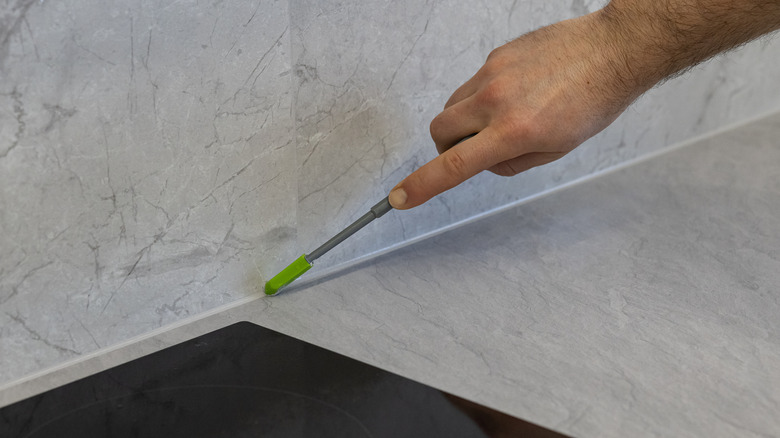
When it comes to repairing solid countertops, like wood or stone, prep is everything. To start, jumping straight to filler without proper cleaning can ruin the finish before you even get to the repair work. It's always best that you begin by giving the area a thorough cleaning to remove any oil, grime, or debris. To do this, you can use rubbing alcohol or a gentle cleanser. This ensures appropriate adhesion of the filler or adhesive. Once you're done cleaning, give the countertop enough time to air dry. Once the countertop is dry, you'll be able to have a closer look at the extent of the damage to figure out whether epoxy, filler, or a complete replacement portion is needed.
As for simple materials, Rohan Jain told us using wax for wooden countertop repair jobs can be a quick fix. "Wax (such as furniture or beeswax) can smooth over minor surface-level cracks and blemishes. It provides a clean finish and some water resistance, but it is not permanent." Additionally, wax won't work for deeper damage on wooden countertops.
You'll need to consider other materials in that case, but how do you know when to use which one? "For minor repairs, use wood filler," Jain states, and "epoxy putty for stronger, longer-lasting fixes. Once filled and sanded, seal the area with a food-safe oil or sealer like mineral oil or tung oil to protect it from water and stains." If you're looking for an affordable and stainable wood filler, Amazon is an good option.
Will super glue do the job?
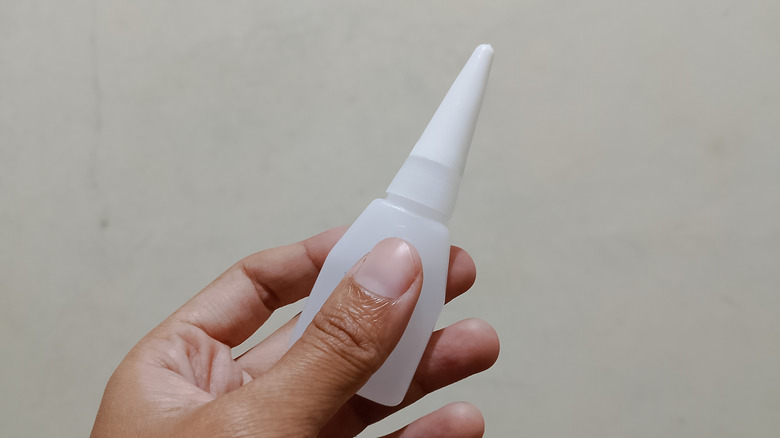
Super glue has been used across the U.S. since the 1950s to fix all sorts of items around the home, and it's a popular choice for countertop repairs, as well. Is it really up to scratch, though? In some cases, yes.
As Rohan Jain explained, "Clear superglue can be a fast, short-term solution for very tiny chips." But he added "it's not the best for anything other than small dings. It may not hold up over time or blend effectively. For best results, use epoxy made for stone which can be tinted to match the surface." While super glue might save the day when you're in a rush or prepping for guests, if you're aiming for a repair that lasts longer than your next grocery shop? It's worth investing in the proper materials.
Epoxy is more durable, bonds better to stone or composite surfaces, and — if tinted correctly — will blend in more seamlessly. Keep super glue as a backup for micro-fixes, but for anything more visible, you're better off going the extra mile with a repair kit designed for the job. Still, it's always handy to keep a tube of clear super glue in your kitchen drawer.
Tips to reduce future chipping and cracking

If you've gone through the trouble of previously fixing a chip or crack in your kitchen countertop themselves, you ideally don't want to have to repeat the process. Luckily, with a few mindful habits, you can reduce the risk of future damage and keep your kitchen counters looking great for years to come.
First and foremost, Rohan Jain suggests treating heavy pots and pans with care, noting you shouldn't "drop them or slam them down." The force can cause cracks, especially around edges or corners. Even tough materials like granite or quartz aren't immune to impact over time, so go easy on that counter. Plus, if you have a granite or marble kitchen countertop, you should use cutting boards whenever you're prepping food. Cutting directly on the surface might dull your knives, wear down protective finishes, and weaken softer countertop materials like laminate or wood.
One of the biggest impacts on the life of your countertop is heat. Jain says, "Sudden temperature changes can crack stone, so don't go from freezing cold to hot in one spot." As for wood and laminate, moisture is the biggest enemy as this causes water damage, staining, and swelling. "Wipe up spills quickly," he adds, "especially on wood or laminate."
Household products that you can use
For light scratches or dull areas on your kitchen counter, a few everyday items from around the house can surprisingly do the trick. In fact, as Rohan Jain told us, "For light scratches or minor wear, yes, beeswax or furniture polish can fill in and smooth over tiny flaws." You can even use beeswax on marble and granite tops as a non-oil-based dressing.
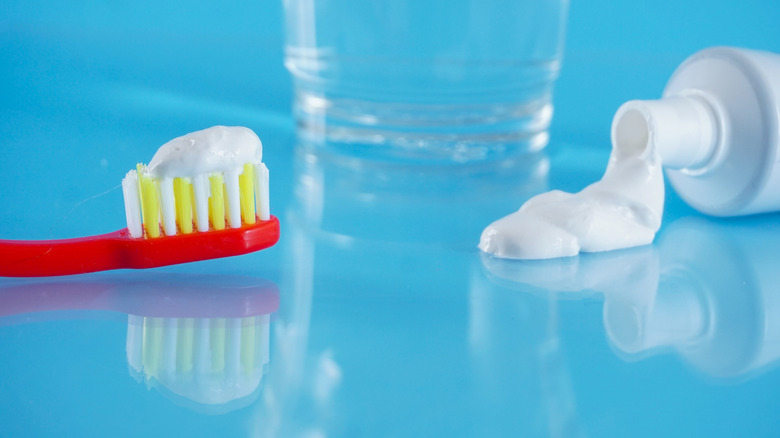
For laminate, Jain has a handy trick that'll do the job nicely — and you won't even need to leave your home. "Toothpaste or baking soda paste can polish dull spots on laminate," he explained. You can even use toothpaste to help remove light burn marks on your laminate countertop. Once you've applied it to the countertop, let it sit for 5 minutes. Give it a good scrub for a few minutes with a brush, making sure the toothpaste penetrates into the surface, then give it a good wipe with warm water and a rag.
Now, these DIY solutions can offer a quick and affordable cosmetic fix, but they're not intended for deep chips or structural issues. So while toothpaste and beeswax may work for smaller jobs, you're better off going with something specifically designed for more significant cracks or chips. "Store-bought kits are more reliable and long-lasting," Jain noted.
What not to ignore

For your kitchen countertops, the "out of sight, out of mind" approach can cost you. Minor chips or hairline cracks may seem harmless at first, especially if they're tucked away in a corner or barely visible under the toaster. Yet small damage can quickly turn into a much bigger issue if left unchecked. Moisture can seep in, heat can exacerbate the split, and before long, you're looking at a costly replacement instead of a quick DIY fix.
With that in mind, Rohan Jain believes homeowners shouldn't overlook even the tiniest flaws. "Don't ignore small damage," he says, as "tiny chips and cracks can grow over time." Understanding what type of product you need for your specific countertop is important as well. "Know your countertop material and don't assume one fix works for all," Jain added. "Always test products in a small hidden spot first.
Additionally, it's important to remember that countertops made of granite, quartz, and laminate each have unique properties. For example, thermal shock from hot pots placed directly on stone surfaces can lead to cracks. Meanwhile, water damage is a common enemy of laminate and wood, often creeping in unnoticed until swelling or peeling occurs. You shouldn't avoid small issues either, then, as they'll likely grow into bigger (and more expensive) problems over time.
Know when to call in the experts

DIY countertop repairs can be both satisfying and cost-effective, but they're not always the right call. If your damage is structural, spans a large area, or affects plumbing or cabinetry beneath, it's probably time to bring in a professional. Plus, with some materials (like granite or marble), you'll need specialized tools and skills; trying to fix these yourself could potentially worsen the damage, and lower your home's value.
Now, when choosing a professional to contact, not all contractors are created equal. "Look for licensed contractors or repair pros with experience in countertops," Rohan Jain explained, "ideally with photos of past work. Read reviews and check if they offer warranties." He adds it's also worth asking "if they've worked with your specific material." In other words, when searching for a pro, take a close look at who you're potentially hiring.
Generally speaking, reputable tradespeople should be licensed and insured in the U.S. – especially for work that involves structural surfaces. Many online platforms are helpful for finding verified professionals, offering detailed reviews and portfolios. The bottom line is that with expert knowledge, you'll get more significant repairs done correctly without the need to call another professional in.