

Pistachios Vs Almonds: Here Are The Different Benefits Of Eating Each

It's no secret that nuts are part of a healthy, well-balanced diet. Today, we're taking a closer look at two staples — almonds and pistachios — to examine what exactly makes these small-but-mighty nuts so impactful. Nuts are staples of the Mediterranean diet, which is associated with world-leading longevity and globally-lowest disease rates. Thanks to their low levels of unsaturated fats and high fiber, both pistachios and almonds make for a great snacking choice for people with a wide range of dietary needs. However, their nutritional powerhouses are far from identical. Just like there are differences in drinking pistachio milk versus almond milk, there are distinct health-conscious reasons for munching on each nut.
One of their key benefits is their levels of healthy fats: 579 calories per 100-gram serving of almonds, and 560 calories per 100 grams of pistachios. Both types of nuts also offer similar protein levels, which can be particularly beneficial for vegetarians and vegans. However, their unique benefits might be better-suited to fit different people's specific needs. Almonds are a rich source of calcium, magnesium, and vitamin E, which promote bone health, skin health, and weight management. On the other hand, pistachios feature more potassium, B vitamins, and copper, which are better for gut health and blood sugar regulation. According to the Cleveland Clinic, pistachios are connected to lower blood pressure more than any other type of nut.
Pistachios promote gut health and blood sugar regulation
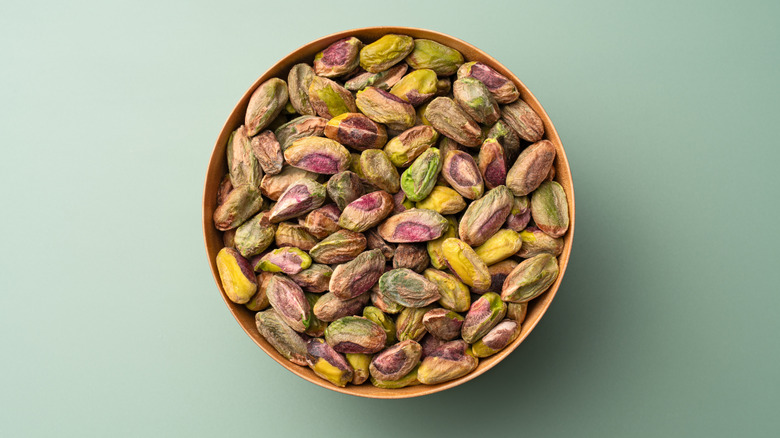
It's fun to crack open the shell and free those green-hued kernels. For trendy-minded eaters, pistachios are also the stars of viral Dubai chocolate bars. But nutritionally, where pistachios shine is in the realms of potassium and B vitamins. Just 2 ounces packs more potassium than a large banana, and a 100-gram serving is enough to meet the daily recommended potassium intake. Why does it matter? In the body, potassium is an essential mineral for maintaining fluid balance within the cells, which regulates everything from blood pressure to muscle contractions.
Compared to almonds, pistachios are also a significantly richer source of vitamins B6 and folate. Vitamin B6 promotes hemoglobin production and plays a central role in blood sugar regulation. Hemoglobin is the molecule that carries oxygen throughout the blood, and folate (also known as folic acid) is a building block of new cell formation. In other words, they affect every aspect of daily bodily functionality. A lot of power is packed into each tiny pistachio.
Nuts' high fiber content aids in digestion, but when it comes to pistachios specifically, those gut health benefits are manifold. Pistachios promote the bodily production of butyrate — the most beneficial short-chain amino acid in the gut biome. Butyrate is also the primary energy source for the colon, a distinct advantage over almonds for folks looking to regulate their gut health. Incorporate pistachios and a few of these 15 fermented foods from around the world into your regular diet for a gut-healthy overhaul.
Almonds help inflammation, skin health, and weight management
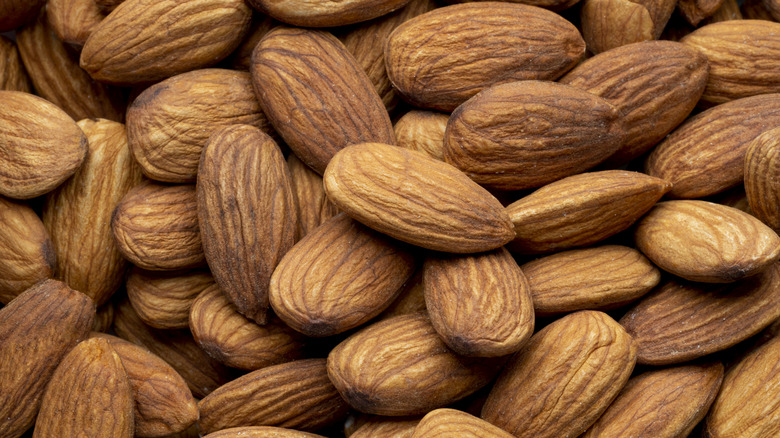
In the kitchen, subtly sweet, slightly bitter almonds can be used in everything from almond coffee cake to savory applications, like stir-fried chicken almond gai ding. In the body, this ultra-versatile nut also serves as a nutrient-dense superstar. Almonds are a rich source of the antioxidant vitamin E, packing 7.4 milligrams into a 1.5-ounce serving. This serving size represents over 50% of the daily recommended value for vitamin E intake. Vitamin E is an essential brain-healthy nutrient that helps maintain neurological health, as well as promotes clear, bright skin and may even prevent blood clots.
Another superstar quality of almonds is their ability to satiate hunger. According to research by the British Journal of Nutrition (as reported by the BBC), consuming a 55-gram serving of almonds daily is connected with weight loss and a reduced risk of heart disease. Almonds can also help reduce bad LDL cholesterol, promote blood sugar management, and are associated with lower inflammation in the body.
If you're looking to increase your calcium and magnesium intake, almonds are a solid source of both minerals. Almonds offer 80 milligrams of calcium versus 30 milligrams in pistachios (per 1.5-ounce serving). They also contain 75 milligrams of magnesium (30 milligrams for pistachios),which strengthens bones, nerves, and muscle function. Since magnesium deficiency is strongly correlated with high blood pressure, almonds' magnesium can help lower blood pressure levels and maintain stasis.