

The 16 Best (And Worst) Food Brand Mascots To Exist
We may receive a commission on purchases made from links.
When companies design the mascot that's going to be associated with the brand and products, it's safe to say that most are trying to create something iconic. Some companies hit it big and become so firmly associated with a character that the character itself seems to take on a life of its own. They're not just on packaging and in commercials; some of the most beloved food mascots have been given their own video games and a ton of merch.
Others are unforgettable in another way. We're talking about mascots that end up being nightmare fuel, haunting our dreams and making scores of people wonder what, exactly, marketing was thinking when they came up with this abomination.
So, let's take a walk through the weird, weird world that is inhabited by food brand mascots. While there's no way to talk about them all, we wanted to celebrate some of the most beloved, and also call out some of the characters that we only wish we could erase from our collective memories forever.
Best: M&M's Spokescandies
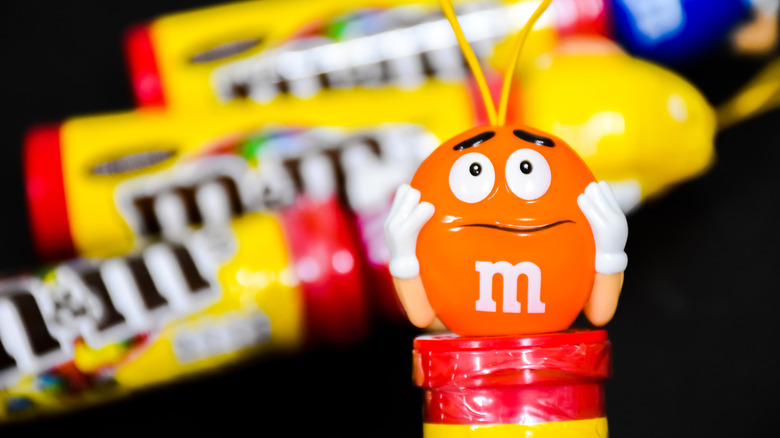
On the surface, the M&M's mascots should be weird: They are, after all, anthropomorphic candies, and they're precisely the same thing that you're eating. Commercials have leaned into that in an epic way, though, even having the characters discussing just how good M&M's are. Strange and cannibalistic? Absolutely, but this crew of candies is so bursting with personality that we'll forgive it.
The candy itself was famously popularized during World War II, and the first two mascots — Red and Yellow — made their debut way back in 1954. The lineup wasn't complete until Brown's appearance in 2012, and over the course of the decades, M&M's has overhauled and updated the appearance of the candies a few times. It's ensured they've stayed relevant, and one of the things we love about them is that they're fully developed characters. Did you know that Yellow secretly wants to be a ghostwriter because he loves ghost stories? That Green says her best quality is being an advocate for her friends, and for other women? That Blue doesn't sleepwalk, because he's not good at multitasking? Those are all fun tidbits that Mars has released about these longtime spokescandies, and they're honestly a masterclass on mascot development.
Worst: McDonald's Happy
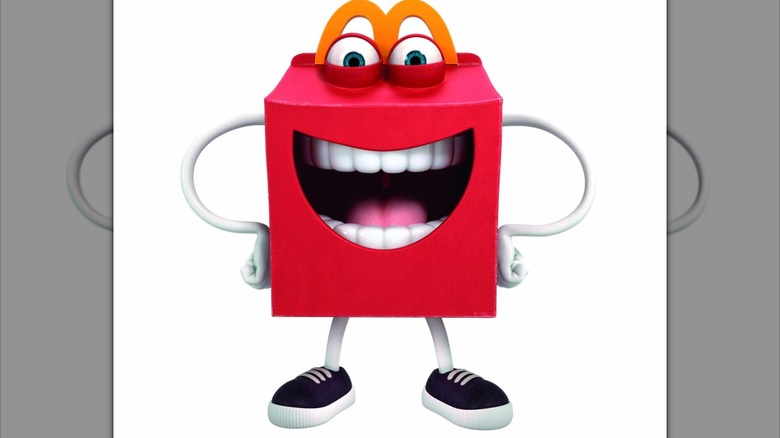
McDonald's has a ton of mascots, from Ronald McDonald to Grimace, the 1970s-era purple creature who made a big splash in the corporation's marketing in 2023. We want to talk about someone else, though, and that's Happy. Created in 2009, Happy was anything but. The walking, talking Happy Meal box made the jump from his native France to the United States in 2014, and social media immediately started calling him McScary. McDonald's issued a statement that they were standing by their new mascot.
However, we'd argue that sometimes, companies should listen to their customer base when they respond to an unveiling with expletive-filled comments and reminders that most of us have plenty of nightmare fuel already, thank you very much. The hate didn't stop, either, with Reddit users condemning this atrocity as a badly-designed project for a high school graphic design class, and as a surreal depiction of what happens when scientists start mucking around with the DNA of a Happy Meal. Others said that it was so terrifying that it made them want to un-eat every Happy Meal they'd ever had, and we get it. Is it the teeth? The eyeballs? It's all of the above.
Best: Coca Cola's Polar Bears
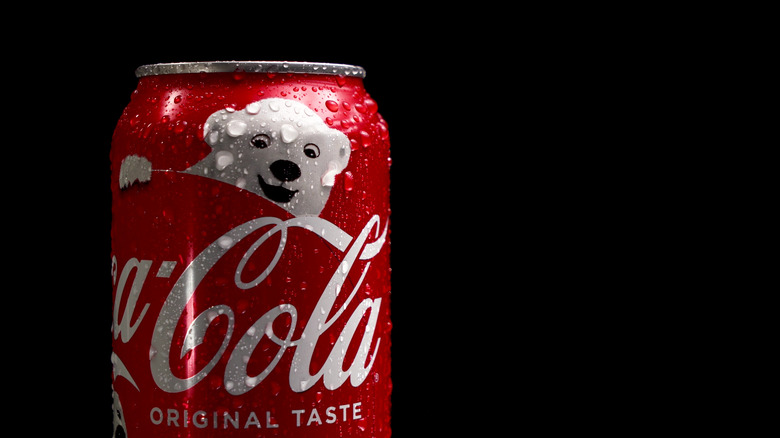
No one can deny these friend-shaped, cola-loving bears are a brilliant example of marketing done right. Although polar bears were featured in Coke ads as early as the 1920s, it wasn't until the 1990s that they appeared in a way that we're still familiar with today. Part of the reason for their enduring popularity might have something to do with the fact that they were created with cutting-edge technology and were truly a labor of love.
The first modern ad they appeared in was one where they sat beneath the Northern Lights, and that was back in ye olde days of 1993. The story of how they went from one artist's imagination to the TV screen involves an epic tale of creating 3D models, tricking very basic software into mimicking textures, spending hours backing up data on reel-to-reel tapes, and one keystroke that almost deleted the entire project. Fortunately, that mass deletion didn't happen, and the bears — inspired by artist Ken Stewart's very bear-like puppy — are now the heart and soul of his global brand.
Worst: Lemonhead's Lemonhead
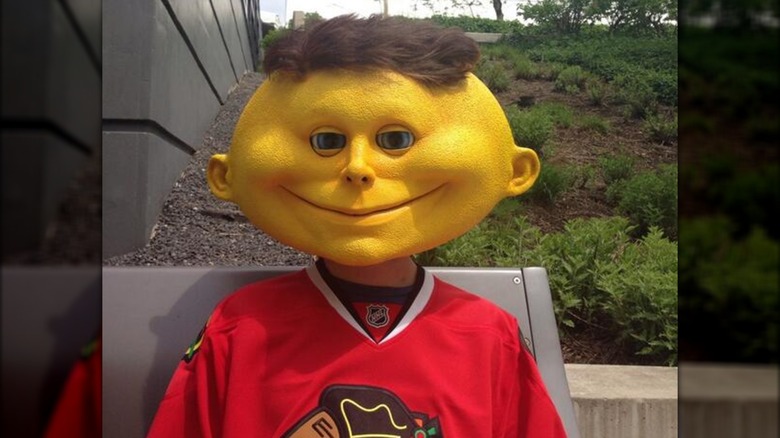
Browse the social media pages for Lemonhead candy today, and you'll see the adorable cartoon mascot that has been on the brand's packaging for a long time. That's probably for the best, because back in 2014, the company's attempts at giving their eternally youthful mascot a glow-up failed in a shocking way that many thought might have been predictable from the very first time someone pitched the idea in a marketing meeting.
Parent company Ferrara said at the time that they were attempting to make the mascot more relatable to an older target audience, but instead, it had customers comparing it to their own personal sleep paralysis demon, or something that haunts your deepest, darkest nightmares and only exists to consume souls. Others suggested it was reminiscent of a "Doctor Who" villain who made the leap to the real world, while we're pretty sure we saw Sam and Dean Winchester hunting this thing at one point. Honestly, one of the only decently nice comments we could find about him was the idea that it got the brand some attention. That is definitely true.
Best: The Keebler Elves
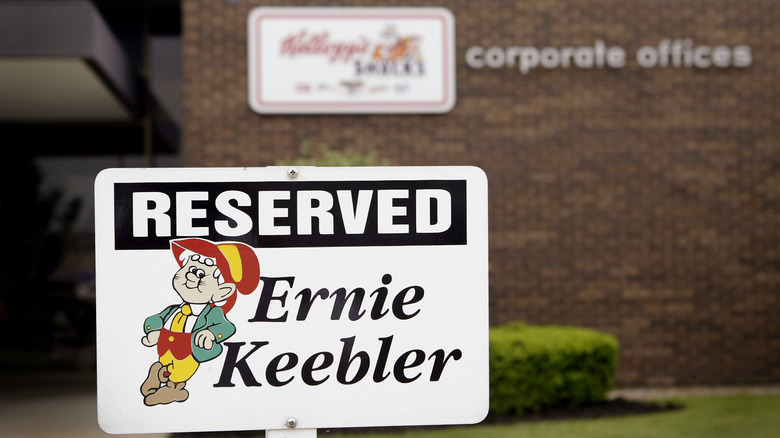
The Keebler Elves have evolved into one of the most delightfully whimsical of food mascots, and they're a pretty perfect example of getting mascots right. Not only are they the face of the brand, but they have a story that's woven into the creation of the cookies themselves: Led by Ernie, the Keebler Elves use their magic to create everyone's favorite treats.
The Elves have been working their magic for a long time, created in the late 1960s and fully capturing customers' hearts pretty quickly. Part of the reason for that isn't just that they were so intrinsically linked to the brand, but they aren't just one-dimensional mascots. Keebler — and parent companies Kellogg and later, Ferrero — built an entire world around the elves. We see them hard at work in the Hollow Tree; we see them making cookies and creating new ones, causing trouble and getting into adorable shenanigans. It turns out that when childhood imaginations are captured by a whimsical world like the Hollow Tree, adults will keep reaching for those same familiar characters when it comes time to choose some cookies to add to the cart.
Worst: Aunt Jemima and Uncle Ben
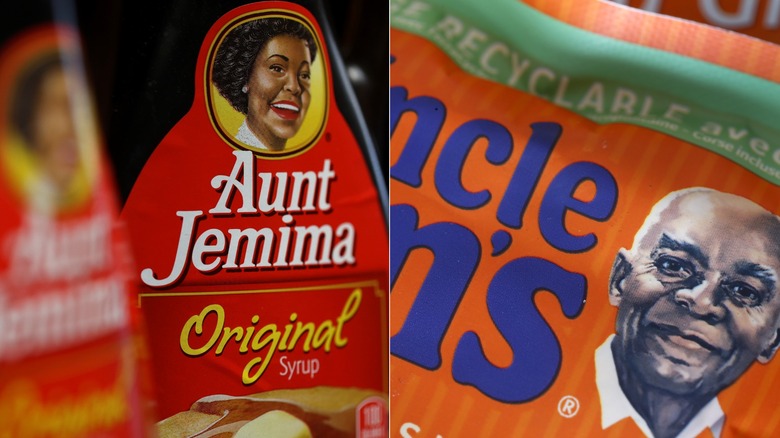
We're putting these two together for an obvious reason, and that's because they were both widely condemned as being based on racist stereotypes that hung around into the 21st century. When the Aunt Jemima character was retired in 2020, it had been the face of the brand for 130 years. And yes, it was based on a real person: Her name was Nancy Green, and she became the spokesperson for the brand in the 1890s. Unfortunately for Quaker Oats, the company was called out for imagery that perpetuated racist stereotypes, and for ignoring the fact that Green had been born into slavery.
It wasn't until 2021 that it was announced that the Aunt Jemima brand would become Pearl Milling Company, but the 2020 announcement proved to be the catalyst for other brands to take a look at just what harmful stereotypes were still being promoted. Uncle Ben's became Ben's Original — dropping the "Uncle" title that was often used to refer to Black men — and similarly, Mrs. Butterworth's and Cream of Wheat also announced there was going to be a re-examination of brand mascots.
Best: Little Caesars' Little Caesar
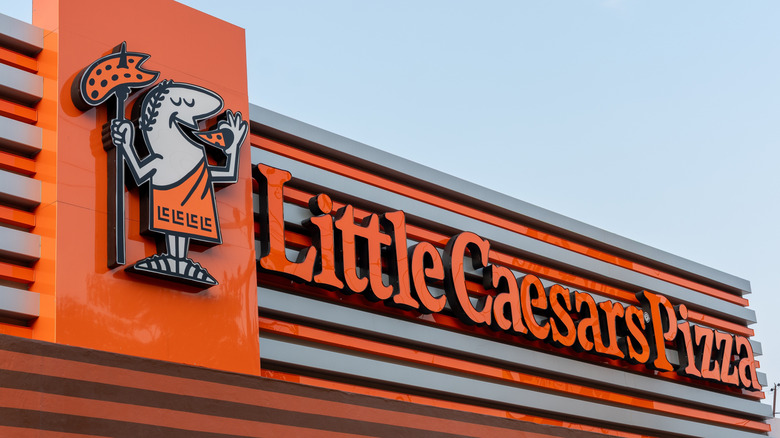
Some of our favorite mascots are the ones that have fully-developed personalities and, in some cases, entire backstories and homes. On the other end of the spectrum is the mascot for Little Caesars, who has no personality beyond his love for pizza. Why is he among the best, then?
For starters, he's brilliantly designed. He first came on the scene in 1971, and there are a few details you might not have noticed, starting with his toga. The decorative lines along the bottom are actually "LC" repeated four times, and that's a relatively recent addition that came with a 2017 logo update. He regularly says, "Pizza, pizza!" as a reference to the chain's affordability, and the fact that customers could get two pizzas for the same price point that other places were selling a single pie. Also? His mouth is perfectly shaped for that piece of pizza he's about to eat. He's fun, simple, and anyone who loves pizza can relate to his excitement: "Pizza, pizza!"
Worst: Domino's Noid
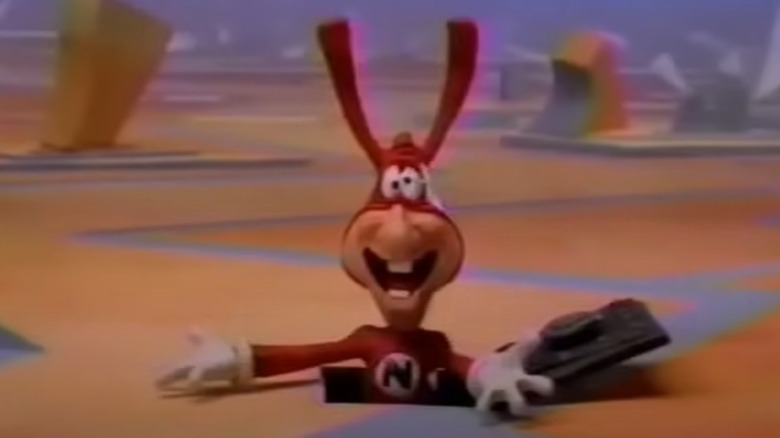
The Domino's Noid is incredibly weird. Those of a certain age will remember how this rabbit-eared, Claymation little gremlin-thing was everywhere, even getting his own video game at one point. He was created to give Domino's an advertising edge over Pizza Hut, and for a while, he did. The masses were obsessed with this pizza-stealing, pajama-wearing creature, and his name is a reference to a behind-the-scenes name for Domino's employees: Dominoids.
Unfortunately, the catchphrase that instructed customers to "Avoid the Noid" had real-life ramifications when a man named Kenneth Lamar Noid held two Domino's employees at gunpoint during a five-hour-long incident. Noid was transferred to a psychiatric facility, released, and died by suicide in 1995. The Noid mascot returned a few times, including in 2021, to promote Domino's delivery service technologies. Given the tragic backstory, the Noid is still weird, unsettling, and perhaps best suited to retirement.
Best: Cheetos' Chester Cheetah
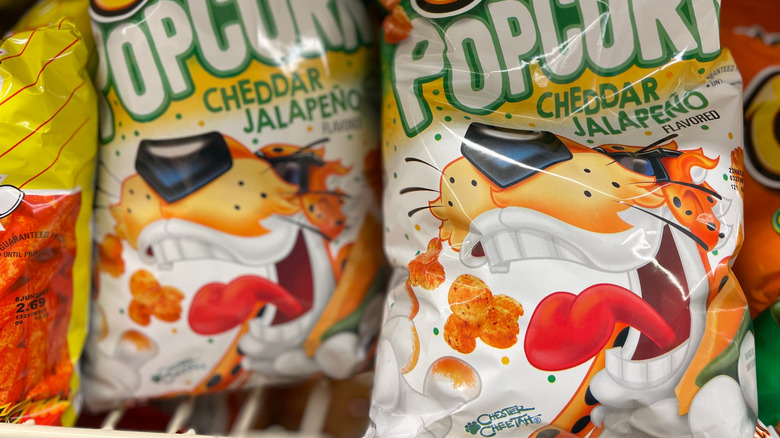
Fans of Cheetos know that they're so much more than just a delicious snack. Cheetos are the unsung hero of your next broccoli dish, and you can give your mozzarella sticks a seriously spicy twist with some Flamin' Hot Cheetos. These delightfully cheesy snacks have actually been around since 1948, but it wasn't until 1986 that Chester Cheetah first strolled onto the scene and showed everyone just how cool Cheetos were.
Chester Cheetah wasn't the first mascot for Cheetos, and he actually existed alongside a previous mascot called the Cheesy Rider. The cheetah proved much more popular than the mouse, though, and while the mouse was gradually used less and less, Chester went on to be added to the Advertising Week Walk of Fame in 2015. Chester's status as a beloved mascot is evident in just how much merch he's been featured on: In addition to hats and t-shirts, he was even given several of his own Funko Pop figures, including a glow-in-the-dark version.
Worst: Peperami's Animal
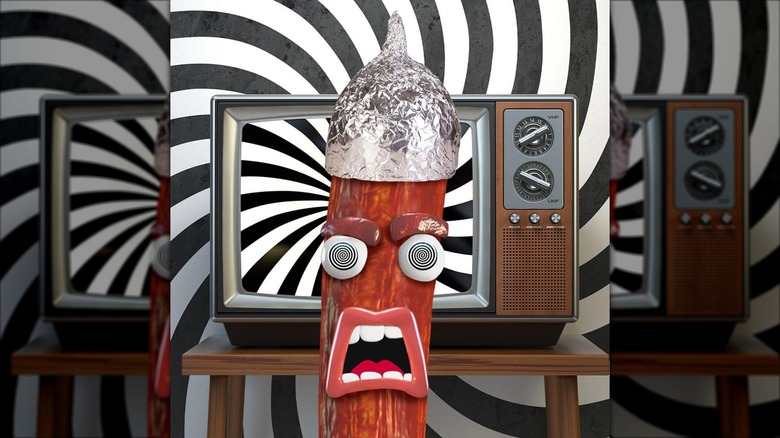
When United Kingdom snack giant Peperami reintroduced its infamous mascot in 2024, it's possible to argue that it's still pretty cringy. The walking, talking, often wildly inappropriate sausage's heyday was in the 1990s, and he ultimately disappeared in 2014 and fell off the advertising radar before his reboot.
For those unfamiliar with the mascot, just imagine a lot of angry shouting, and ... well, that pretty much sums things up. For a commercial advertising Peperami Minis, he screams as he runs himself across a cheese grater, and occasionally dives into garbage disposals, too. When the creative team at Fearless Union brought him back after his decade-long hiatus, the idea was to make him a little more mature without taking away what made him so memorable in the first place. Fans say he's edgy, but he also can't be talked about without throwing around ideas about toxic masculinity, anger issues, cannibalism, self-destruction, and honestly, there are much better ways to sell sticks of meat.
Best: Mr. Peanut
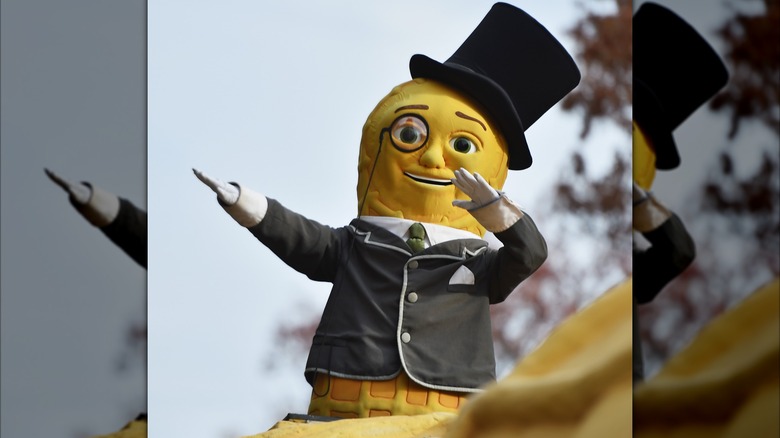
Truly outstanding food brand mascots stand the test of time, and persist to speak to very different generations. That's the case with Mr. Peanut, the Planters' mascot that was created by a Virginia teenager who entered a company-run contest way back in 1916. His original name was Mr. P. Nut Planter, and it won Antonio Gentile a $5 prize. (Gentile's family credited the company's support for his ability to go to medical school and become a surgeon. Sadly, he died suddenly in 1939.)
When Mr. Peanut was killed off in a 2020 Super Bowl ad, the commercial got around 1.5 million views the first day it was up on YouTube. According to Planters' marketing, the company was inspired by the way pop culture figures were mourned, and that gave them the idea of killing Mr. Peanut in a way that spoke to his century-old message of kindness and selflessness.
Worst: Honeycomb's The Craver
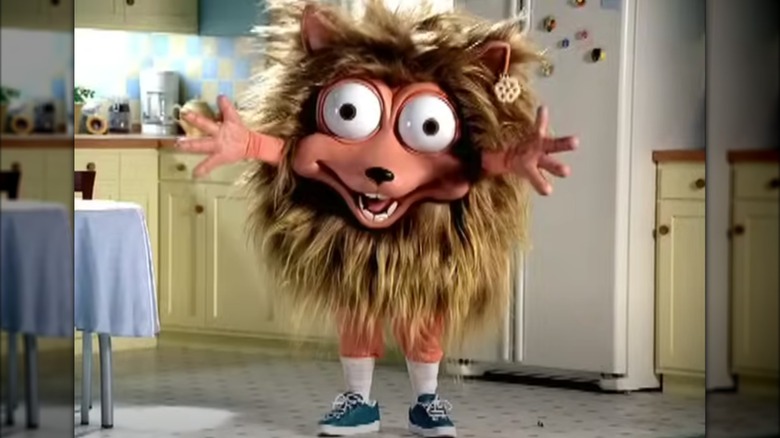
One of the kindest things that can be said about Honeycomb cereal's Craver mascot is that design choices were definitely made. If the Coca-Cola polar bears were inspired by an adorably fluffy puppy, we'd have to hazard a guess and say the Craver was perhaps inspired by that weird hairball drain clog that seems to show up out of nowhere, which then got arms, legs, and a catch phrase of "Me want Honeycomb!"
We're not alone in thinking this, and when we headed to Reddit, we found discussions of this particular 1990s and '00s mascot were met with confusion and a little bit of horror. Weirdly, we're not the only ones who have tried to forget this monstrosity, as much of his actual history has been largely forgotten. We do know that he was one of the many creations of Industrial Light & Magic. However, he disappeared sometime around 2005, and maybe that's for the best.
Best: Kool-Aid Man
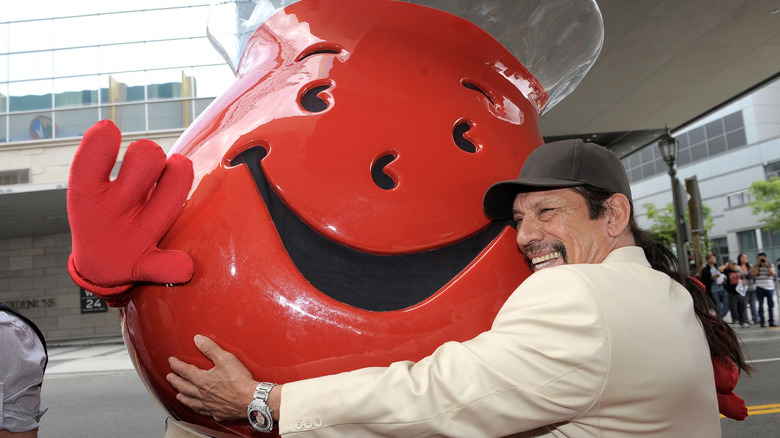
When we were at Tasting Table tried and ranked 18 different Kool-Aid drink mixes, it was a brilliantly nostalgic walk down memory lane. As delicious, refreshing, and easy-to-make as it is, we'd argue that it might not have had the enduring popularity it has if it weren't for the Kool-Aid Man. The drink mix itself goes back to the 1920s, and the Kool-Aid Man didn't come along until the mid-1950s. With his simple, straightforward catchphrase — "Oh, yeah!" — he was a massive hit. How do we know? You read that in his voice, didn't you?
The Kool-Aid Man we all know and love today truly came about after a 1970s-era redesign of the mascot previously called Pitcher Man, and sure, he was destructive. Sure, countless walls met their demise by this enthusiastic deliverer of deliciously flavored sugar water, but there's no denying that his heart was in the right place. He's only trying to help, after all, and he did: He helped define childhood for generations.
Worst: Quiznos' Spongmonkeys
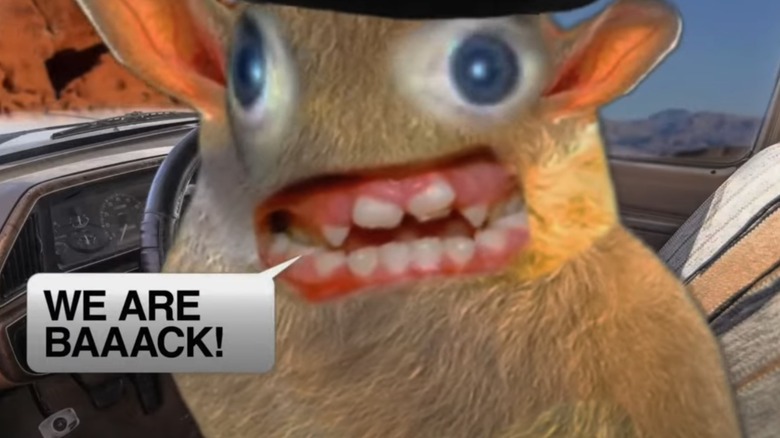
Among a lot of terrible food brand mascots, Quiznos' Spongmonkeys has got to be one of the most infamous. They first cursed our TV screens in 2004, and when they did, it had adults questioning reality and children breaking down in tears. It seems like the sort of idea that gets developed over a few too many drinks, and according to what creator Joel Veitch told Mel, that's exactly what happened: "I was in the pub with my brother, and we were talking about how great the moon was, while we got a bit tipsy."
Veitch made a video that went early-'00s viral, it got the attention of an ad agency working with Quiznos, and the rest is history. The agency wrote the lyrics, Veitch sang the new songs, and when the ads hit, the company got tens of thousands of complaints while franchisees tried to distance themselves from the ads. Quiznos dropped the ads until 2023, when Quiznos wanted to get everyone's attention again. Can they do that? Yes, but the real question is whether or not they should have.
Best: Pillsbury Doughboy
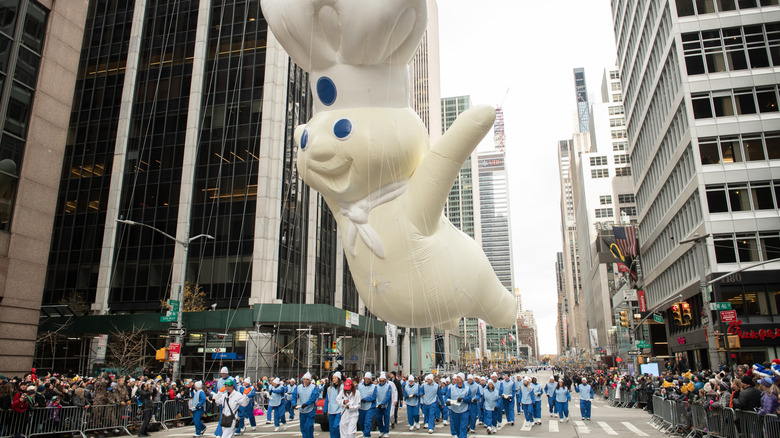
When it comes to the wonderfully wholesome, it doesn't get much more charming than the Pillsbury Doughboy. Pillsbury's happy little baker has become one of the most beloved food mascots in history, and yes, his name is actually Poppin' Fresh. The accepted story is that he was created by an ad agency in 1965, but interestingly, that history has been debated. In 2023, sketches of the Doughboy were found in an abandoned Pillsbury plant in Springfield, Illinois. The sketches were thought to date to the late 1950s, and according to former employees interviewed by historians, it was one of their own who had suggested the concept of the Doughboy, which was also a nickname for employees.
Wherever he came from, he's undeniably popular, has regularly received fan mail and autograph requests, and he's been in more than 600 different ads. Here's a fun fact: The original voice of the Doughboy was none other than "The Adventures of Rocky and Bullwinkle" actor Paul Frees. He's better known as Boris, and as for the Doughboy's early co-stars? That includes Marcia from "The Brady Bunch."
Worst: Burger King's King
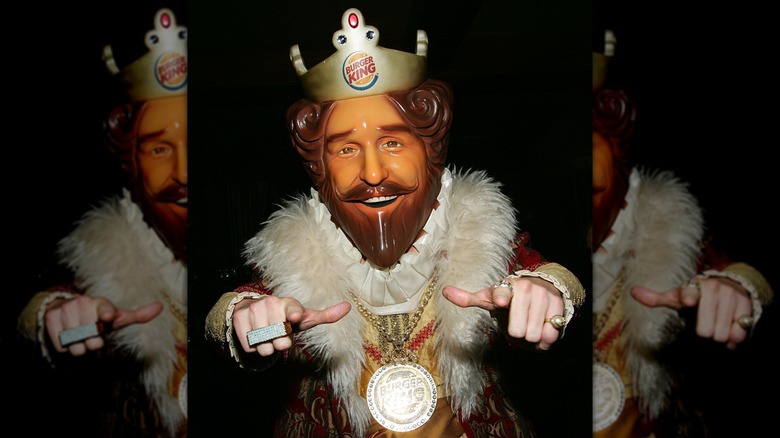
You'd think that a food brand would be the biggest cheerleader for its own mascot, but here we are. Burger King's King has long had customers creeped out, and if his vibe wasn't enough, we also have to mention that he, too, had his own video game. It was called "Sneak King." It was a release by BK and Xbox, and you sort of ... snuck up on people to feed them Whoppers? (As of 2021, one Reddit user had amassed 2,706 copies of the game. Why? Who knows.)
Burger King itself temporarily retired its mascot, starting in 2011. The company could have done something epic to bid him farewell, or it just could have let him go gently into the night. Instead, we have this quote from CFO Josh Kobza, who said (via Bloomberg) that Burger King was trying to recapture an entire section of its customer base, now that "we got rid of the creepy king character that tended to scare away women and children."