

10 Signs Your Silverware Is Valuable

For many homebodies, the kitchen is a sanctuary — a place where they escape the chaos, be creative, relax with family, and entertain friends. For some, it's also a treasure trove waiting to be discovered. No, we're not talking about digging up the floorboards to find a hidden bag of coins; we're referring to what may be lying right inside your kitchen drawers or on your shelves. Nestled among those familiar forks, spoons, plates, and cups may lie a small fortune.
Whether inherited from a grandparent, uncovered at a weekend market, or you've been gifted valuable vintage kitchen decor, the silverware lying around your kitchen may be worth a great deal more than you expect. But, before you rush off to your local auctioneer with a bag of silver cutlery, you need to know the difference between genuine treasure and pretenders.
Knowing how to differentiate sterling silver and silver-plated is the first step. Sterling silver, at 92.5% silver, is quite valuable, whereas items that are silver-plated won't fetch the high price you may think. If you know what to look for, however, you'll be able to get a good idea whether you're sitting on a hidden fortune or a fancy fake. From hallmarks and magnetism to simple home tests, here are a few ways that you can test whether or not your silverware is the real deal.
It has a stamp or hallmark
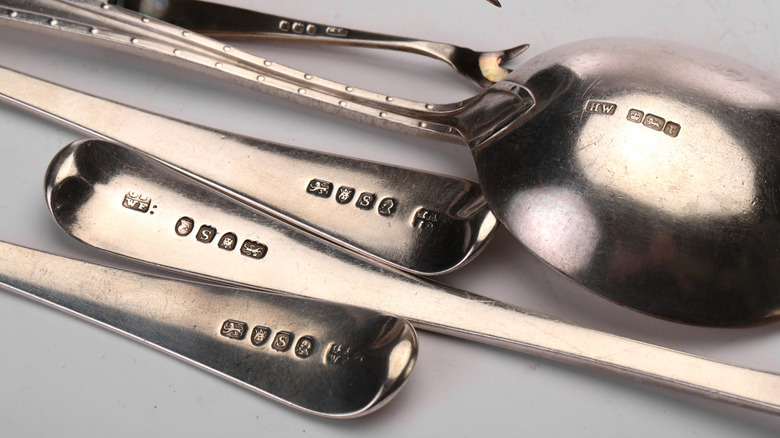
To avoid having to call in a valuation expert to size up your silverware, there is a simple sign that you can look for. You'll find big clues by taking a closer look at the item to see if there is a hallmark or a stamp. These markings are typically found on the underside of utensils or on the back of serving pieces. These hallmarks won't only tell you the purity of the silver, but they can also give key insight into where the item was produced and assayed (officially tested and certified for metal content).
If you're hoping for sterling silver, you'll want to look out for marks or stamps with "925" or ".925". This tells you the piece is made of 92.5% pure silver, which will carry quite a bit of value. Exactly how much depends on the specific item, its weight, and where you sell it, but don't be surprised to get between $40 and $100 for a single serving spoon. There are other signs and symbols to look out for, depending on the country of origin. For example, you may find a lion passant on British silver or Minerva heads on French items. In both instances, you'll be sitting with sterling silver.
It's also helpful to know that silver-plated items will often have different markings, such as "EPNS" (Electro Plated Nickel Silver), which look convincing but don't hold the same value as sterling silver.
It's not magnetic
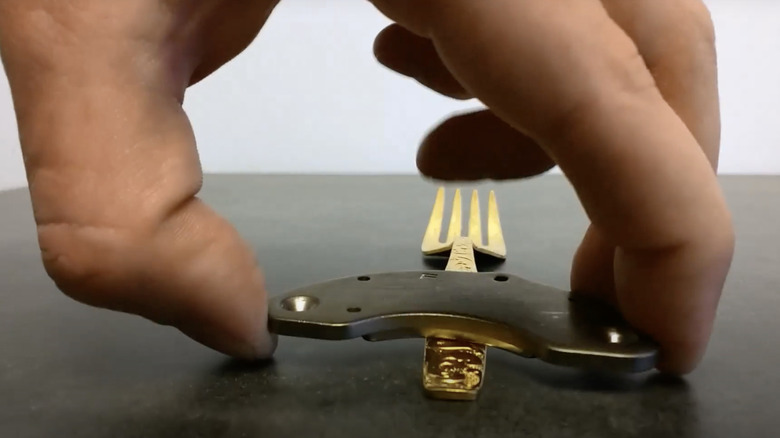
If your silverware doesn't have a stamp or if you're unsure if it's a fake, there is another quick way to help solve the mystery. Precious metals like platinum, copper, and gold do not have magnetic properties, in a pure form at least, and it's the same with silver. So, if your best cutlery or crockery is not attracted to a magnet, it may be made of sterling silver.
You simply need to find a magnet (one from your local hardware store will do) and place the silverware item that you want to test on a non-magnetic surface — a wooden board will do. Starting away from the silverware, take the magnet and slowly draw it closer to the item. If it's attracted to the magnet, it's most likely a fake. If the item is indifferent, there's a very good chance it's made of sterling silver. If sterling silver is 92.5% pure silver, though, what about the other 7.5%? Well, this is mostly made up of metals like copper and zinc, which are also not magnetic.
As for silver-plated cutlery and crockery, it's a different story. While the outer layer may look identical to sterling silver, the core material underneath is often made from nickel, brass, or stainless steel. As you guessed, all of these are magnetic and so will be attracted to the magnet when you do the same test. So, if you're in doubt as to the authenticity of your silverware, just grab a magnet.
It has no odor

This might seem like a bizarre way to check if your silverware is sterling or not, but by giving the item a good smell, you should be able to get a better idea of how authentic it is. An important fact about pure silver is that it is odorless, so you shouldn't really smell anything when giving a sterling item a sniff.
Before you smell the item to check, start by cleaning your hands thoroughly to make sure that no external scents interfere with your sense of smell. You might want to ease up on the perfume and cologne as well. Then, gently rub the silverware item with your fingers to create slight friction. Then, bring the item up to your nose and see if you detect any strong metallic or chemical-like smells. If you do, chances are the item is not sterling silver. While sterling silver is non-reactive and doesn't give off an odor, cheaper metals can oxidize and release a scent over time.
It's a great way to spot (or smell) silver-plated items, which often have a core of nickel, brass, or other metals prone to giving off a distinctive metallic smell when handled. So, while the outside may appear to be silver, the inside materials may tell a different story. The smell test won't give you a precise valuation, but it's a practical trick for narrowing down which items deserve a closer inspection. Who knows, your nose might just lead you to uncovering a hidden kitchen treasure.
It doesn't flake or peel
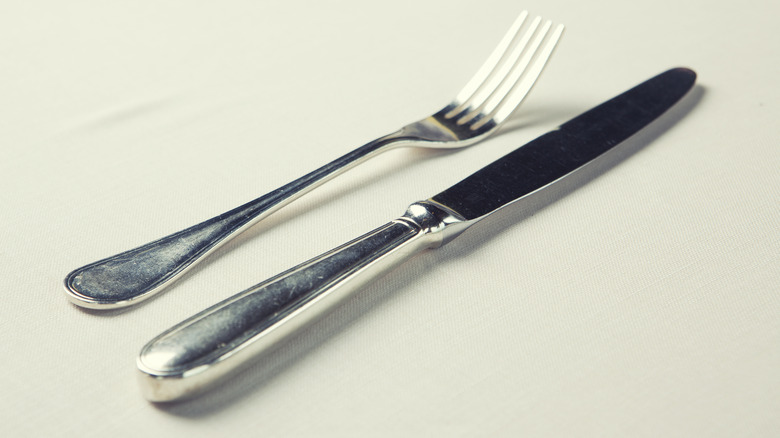
Another way to check if your silverware is the real McCoy is to check whether or not it flakes. You won't need any professional kitchen tools for this one, and you won't have to hack anything off your prized kitchenware. Silver-plated items, while visually similar at first glance, are coated with only a thin layer of silver over the base metal. Over time, with a bit of use and wear, this silver coating can start to flake, chip, or peel away, showing the real material lying underneath.
To see for yourself, you don't need to wait until you find flakes in your dishwasher or around your kitchen — all it takes is a closer look at your silverware. Take the piece in question and start by inspecting the edges and high-contact areas of the item. You'll want to focus on places like the tips of forks, the backs of spoons, or the handles of knives. These are the spots that are most likely to show signs of wear. Run your fingernail gently along these surfaces to feel for any inconsistencies. If you notice any small chips, flakes, or patches where a different metal is peeking through, it's probably a fake.
Another solid giveaway is a visible difference in colour between layers or parts of your silverware. Sterling silver will be uniform in colour, while silver-plated items may show brass or nickel tones underneath the worn areas or parts with a thinner silver coating.
It reacts to polish
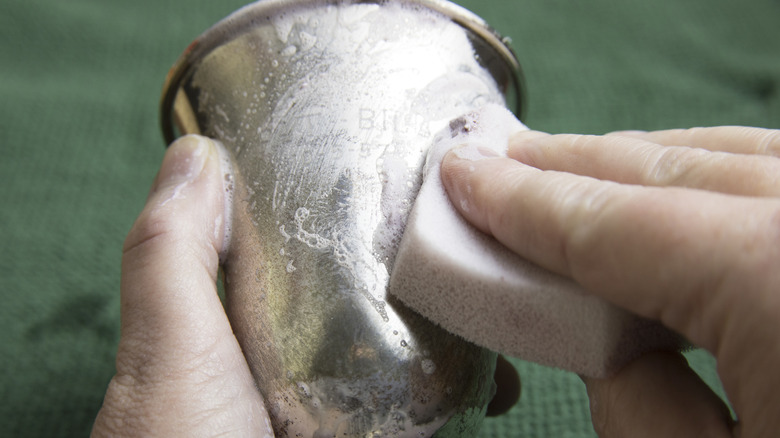
To check the purity of your silverware, simply grab a polishing cloth or a bottle of polish and a cloth. Another interesting fact about sterling silver is that it naturally develops a dark tarnish or patina over time because of a reaction with sulfur compounds in the air. You don't need to get all scientific to check this — your household polish will do.
When you rub a silver polishing cloth on a real sterling piece, it leaves behind a black residue on the cloth. This happens because the cloth removes oxidized silver, which is a good sign that you have genuine silver. In contrast, silver-plated items may not leave the same black marks, or you might reveal the base metal underneath if the silver layer is worn thin.
To do this at home, use a soft polishing cloth designed for silver or a gentle silver polish. Lightly rub the item in a small, inconspicuous area like the back of a spoon or the underside of a fork handle. Look for the dark residue on the cloth after you've given it a good polish. If the item is shiny but there's nothing material left behind on the cloth, it's probably a silver-plated item. This won't tell you the exact purity of the silver, but it will tell you whether or not there is pure silver in the silverware. It's another non-invasive and straightforward way to check your silver cutlery and crockery, without having to call in the experts.
It melts ice
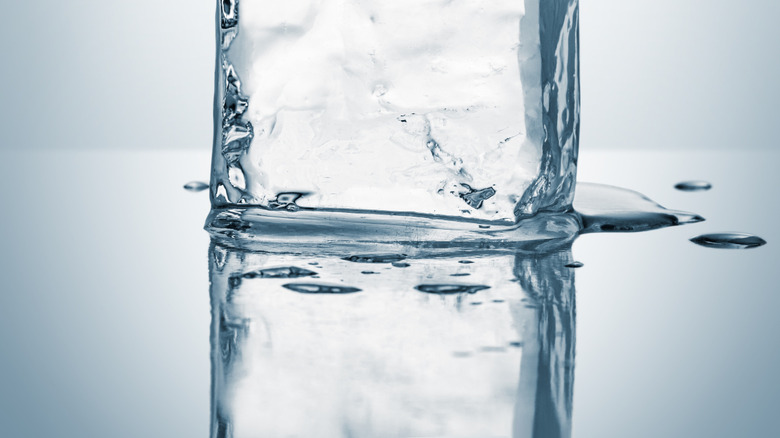
Pure silver has excellent thermal conductivity properties — one of the highest of all metals — meaning that it's a great heat conductor. While it doesn't actually produce heat, it will melt ice when it's placed against the metal because heat is transferred through the silver from its surroundings. Even in cooler conditions, the ice will melt more rapidly against the silver compared to parts of the ice that are not in contact.
Start by placing your silverware on a non-conductive surface like wood or plastic, and set a fresh ice cube on top of the piece you want to test. Make sure the silverware is at room temperature beforehand to get the most accurate result. If the ice starts to melt almost immediately and pools quickly, you likely have genuine silver. With silver-plated items, the core material of nickel or brass doesn't conduct heat as well as silver, so you'll see a far slower melting process.
If you argue that the ice is still melting, use a piece of silverware in your home that you are certain is sterling silver, do an A/B test by placing the items alongside each other and adding a piece of ice to each. If the piece in question melts the ice at the same pace as the sterling silver item, then you have a clear sign that it, too, may be the real deal. While this test isn't definitive on its own, it's a helpful indicator when combined with other methods like the magnet or polish tests.
It reacts well to a flame
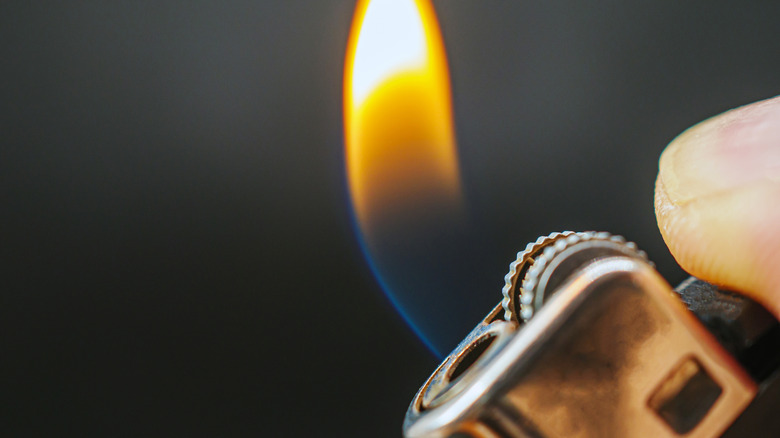
While the idea of placing a piece from one of your best flatware sets against a flame may not seem like a great idea, it's quite a good way of checking the authenticity of the piece. As sterling silver transfers heat well, it will heat up quickly and then cool down equally as fast. Make sure to read the below before proceeding, though
For this test, you can use a lighter or small flame and briefly apply it to a hidden or inconspicuous area of the silverware. If the piece is genuine sterling silver, it will show no visible changes like bubbling or peeling after exposure to the flame. It will instead turn a darker color and heat up quickly. If it's fake or silver plated, the item may react to the flame by bubbling or changing color, revealing the base metal underneath. You might also notice green or blue hues, signs of oxidation in non-silver metals.
Since the flame test carries some risk of damaging valuable or antique silverware, it should be done cautiously or avoided on high-value items. Rather, test this on less precious pieces or as a last resort when other tests are inconclusive. It's a great option to try on items that have already shown signs of being sterling silver. Once you've tested it with the flame, you can simply polish the dark mark off. Take the necessary safety precautions if you are trying this test.
It's listed as a rare item
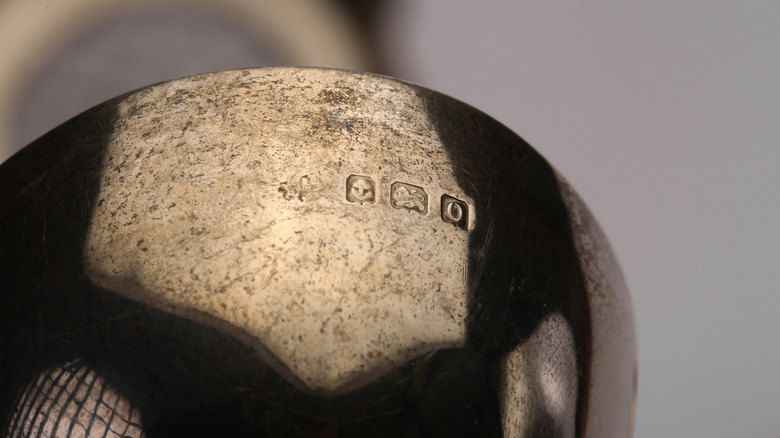
Before you grab the polish, ice, or lighter, there is another way to check if your silverware is valuable or not. Some patterns, makers, and eras are highly sought after and can significantly increase the value of your pieces if you know where to look. If you've found unique hallmarks or stamps on the piece that differ from those we mentioned earlier ("925" or ".925), cross-reference them with reputable databases and encyclopaedias dedicated to silver marks. You don't need to make the trip to your local library — just open up your browser.
Websites like 925-1000.com have extensive databases of silver hallmarks from around the world. With these databases, you can identify key information about your pieces, like the origin, purity, and the maker. With 925-1000.com, which claims to be the "most extensive internet resource for Silver Marks, Hallmarks, Trademarks & Maker's Marks," you'll be able to search by country and by specific marks.
If you find a hallmark and match it on this database, it will help you find out if your item is a limited edition or belongs to a notable manufacturer. Antique and collectible silverware that's rare or discontinued typically commands higher prices. You can also do an online search to see how much these specific items have sold for or to find out more about their listing prices. From there, you'll be armed with enough information to go and sell your item, confident that you're getting the right value.
It's in excellent condition
Once you're sure that your silverware is sterling silver, you'll need to take a closer look at the condition. As with any valuable item, this will ultimately play a key role in the final price you'll get for it. Even if a piece of sterling silver is rare, damage like dents, deep scratches, heavy tarnishing, or discoloration can dramatically reduce its worth.
Look closely at high-contact areas like fork prongs, spoon bowls, and knife handles. Minor surface wear is common and often expected, but chips, cracks, or corrosion could mean a significant drop in its value. Discoloration that cannot be removed with polishing may indicate that the item is not as pure as you think it is, while uniform color and smooth texture typically suggest a well-preserved item.
So, if you have genuine silverware, it's important that you take care of it. Give your items a regular and gentle cleaning, and make sure that they are stored correctly. This will maintain the condition and help to hold the value. For the polish, look for one that is non-abrasive. A good option is Wright's Silver Cream, which you can get from Amazon for around $12. For storage, it's best to wrap the silverware in unbleached cotton muslin or tarnish-resistant flannel and place it in a chest or drawer. A handy and unconventional way to prevent silverware from tarnishing is to add in a piece of regular white school chalk, which will absorb some of the excess moisture, slowing down the tarnishing process.
It sells at high prices on auction
If you're interested in selling some of your genuine silverware but have no idea what it is worth, a good place to start is by heading to the auctions. Both online platforms and traditional auction houses publish sales results, which can give you a realistic idea of current market prices for sterling silver and collectible pieces.
These auction companies will often list detailed information about sold lots, including maker, age, pattern, and condition. Tracking this data helps you see which items are in demand and what buyers are willing to pay. You'll also be able to see the items that don't often sell. If you follow the sales, you might discover trends that affect value, for example, renewed interest in vintage patterns or silverware from specific regions.
These companies have also made it quite easy. Many come with search filters that allow you to sort by item type, production date, or manufacturer, making it easier to compare your silverware with similar items that have already sold. This not only gives you a pricing benchmark but also helps you set realistic expectations if you plan to list your items for sale. Pay attention to the condition of the pieces sold; mint-condition silverware often fetches premium prices compared to worn or damaged items. When looking into these auction prices, make sure you do so with reputable auctioneers who specialize in this type of product.
If in doubt, have the experts test it
If you are skeptical that you won't get definitive results by trying to check your silverware's authenticity at home, or if you're concerned that you'll damage the item, you can get a professional opinion. The most reliable way to confirm its value is to have it tested by an expert, who may use precious metal analyzers to measure the exact silver content of the piece. There are other methods, including X-ray fluorescence (XRF) analysis, that can determine the silver purity without damaging the item.
In some cases, experts may perform an acid test, where a small scratch is made in a discreet area and exposed to nitric acid to observe its reaction. While effective, this should only be done by professionals to avoid unnecessary damage. Electronic silver testers are also used, which can non-invasively assess the purity by measuring electrical conductivity.
Having your silverware professionally tested is not only a good idea to verify the authenticity, but also to help guide you on its market value. Even if you don't intend to sell the item, you may want to know the true value for insurance purposes. Certified appraisers can give you the relevant documentation required by auction houses, collectors, and insurance companies. Make sure you choose a reputable and certified appraiser who is affiliated with recognised organisations in silverware appraisal. A good starting point is the International Society of Appraisers (ISA). By bringing in the professionals, you'll take the guesswork out of your silverware authenticity.