

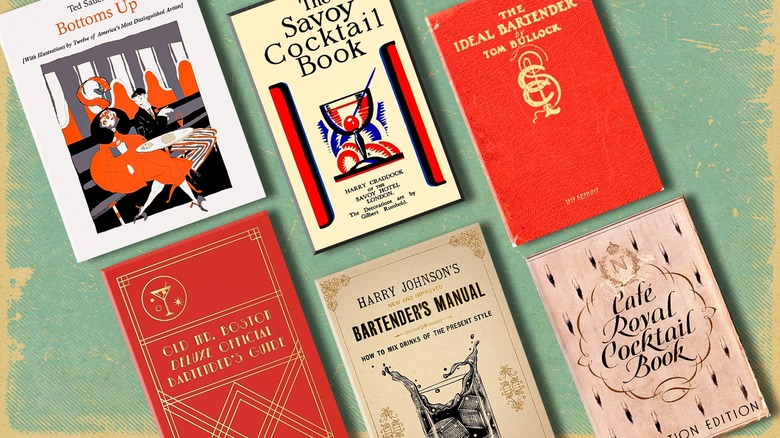
9 Of The Best Vintage Mixology And Cocktail Books
We may receive a commission on purchases made from links.
Mixing up cocktails that are as beautiful as they are delicious is nothing short of an art form — just ask anyone who's taken the time to turn some of those leftover citrus peels into fancy cocktail garnishes that make even old favorites feel fancy. Once you start experimenting with all kinds of different cocktails, you might never look back at a plain Jack and Coke again. Did you know that steak can be an excellent cocktail garnish? It can!
However, there's an old proverb that you need to learn how to walk before you learn how to run, and that's the case with mixology and cocktails, too. There are a ton of great cocktail books out there for all different kinds of applications and tastes, but a great place to start is with some outstanding vintage books from some of the great pioneers who laid the groundwork for today's industry. These books aren't just outstanding and practical teaching tools; they're an invaluable look back at the history of mixology.
In order to give you a list of recommended vintage cocktail books, we did a few things — starting with the bartenders, mixologists, and authors themselves. We chose books that were written by pioneers in their fields, and from there, we were looking for several other things. They had to be highly reviewed and rated by those who had purchased them, and they had to be available in widely available reprint versions. Who knows, you might just find yourself looking for the first editions.
The Savoy Cocktail Book (1930)
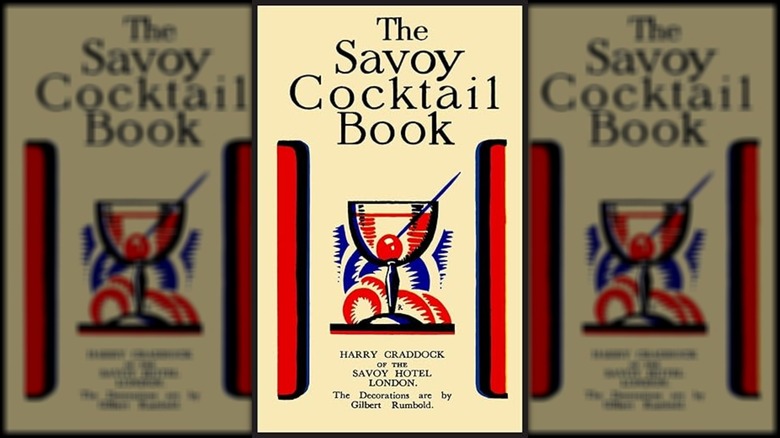
There's a lot to love about "The Savoy Cocktail Book," and it's one of the staples of the industry's history for a very good reason. It was written by Harry Craddock, a British-born bartender and mixologist who is still known as one of the most important figures in the history of bartending. After spending some time in the U.S., he left at the start of Prohibition. He started working at the Savoy in London, and when he wrote his famous cocktail book, he did more than just write a simple book: He's credited with being one of the only people to record precise recipes for a number of 1920s and '30s-era cocktails.
His cocktail book truly does cover it all. In addition to details on different cocktails, recommendations on when to serve them, and some wonderfully insightful footnotes on some, Craddock also introduces different types of wines, and has a section on non-alcoholic cocktails as well. There's nearly 800 recipes, and while not all might be suited to a modern palate, it's an undeniably fascinating look into the history of cocktail creation.
The bottom line is that this book is an absolute treasure. It's still lauded for pairing outstanding recipes with occasionally bizarre-sounding ones, wrapping it all together with some snarky, humorous notes that stand the test of time, and it's served up with some beautiful illustrations.
Purchase "The Savoy Cocktail Book" at Amazon for $53.50 (hardcover).
The Bartender's Guide: How to Mix Drinks: A Bon Vivant's Companion (1862)
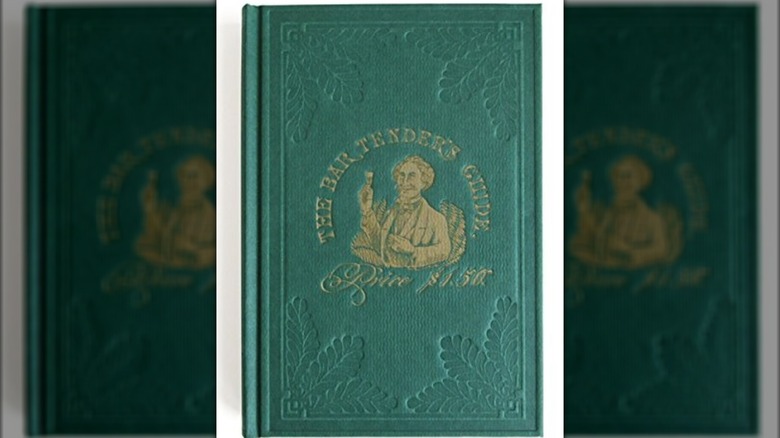
This book may have been written in 1862, but many of the tips outlined in the very first pages will sound incredibly familiar as part of common practices in mixology today. However, author Jerry Thomas was a little bit of a rebel. Much like magicians famously don't reveal their tricks, bartenders considered cocktail recipes a trade secret. Thomas, however, wrote them down, and in doing so, this California Gold Rush-era bartender became the father of mixology.
Fun fact: There are only nine first edition copies of his book still in existence. Fortunately, there are some outstanding reprints, and this is a must-have for any home bar. It includes recipes for drinks from whiskey cocktails to juleps and Champagne cocktails, egg nogs, and lots of punch.
Those punches are one of the things that this book gets some high praise for, because if you're looking to mix up a batch of fun cocktails for a party, this has delicious ideas that still hold up today. While that's not the case for all the cocktails, those looking to experiment with their own cocktails will find that this is a perfect template for tried-and-true recipes that lend themselves to being updated with a modern twist, and it's perfect for anyone interested in some of the earliest history of America's cocktail culture.
Purchase "The Bartender's Guide: How to Mix Drinks: A Bon Vivant's Companion" at Amazon for $39.95 (hardcover) or $5.95 (paperback).
Old Mr. Boston Deluxe Official Bartender's Guide (1935)
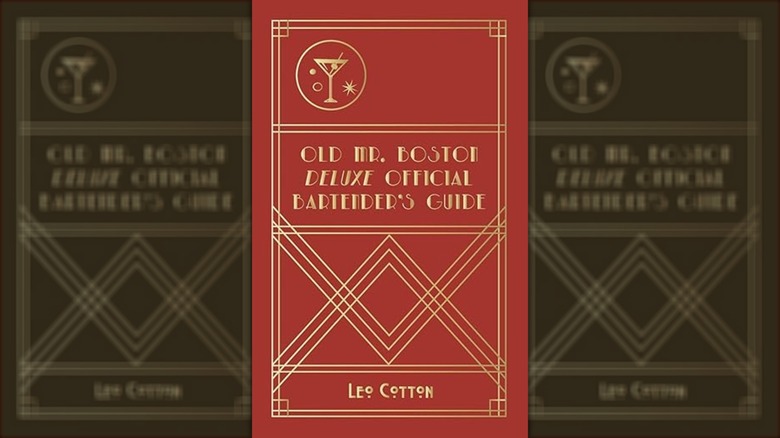
Anyone who's done any research on the strange time that was America's Prohibition era has probably come across references to bathtub gin. That's essentially the practice of making liquor at home, and needless to say, it wasn't great. Since Prohibition lasted from 1920 to 1933, there were a lot of people who just didn't have experience with high-quality liquor, and that's where Mr. Boston came in. Irwin Benjamin and H.C. Berkowitz made cordials during Prohibition, and when Prohibition was repealed, they transitioned to distilling. Along with that came the Old Mr. Boston brand, and the book we're talking about here was written to help restart the industry and train a new generation of bartenders.
It sold millions of copies and was a huge hit. Largely compiled (and often updated) by a group of pre-Prohibition bartenders, there are scores of cocktails here that are all organized not only alphabetically, but by the base alcohol.
As you might expect with some of these older books, some of the ingredients might be difficult or impossible to source. That, however, makes it a great starting point to make something that you can put your own spin on, and if you're looking for a classic reference book, this is perfect. That said, that's also something to keep in mind: You won't find historical anecdotes here, but it still deserves a place on the shelf.
Purchase the "Old Mr. Boston Deluxe Official Bartender's Guide" at Amazon for $14.49 (hardcover) or $8.92 (paperback).
Harry Johnson's New and Improved Bartender's Manual; or, How to Mix Drinks of the Present Style (1882)
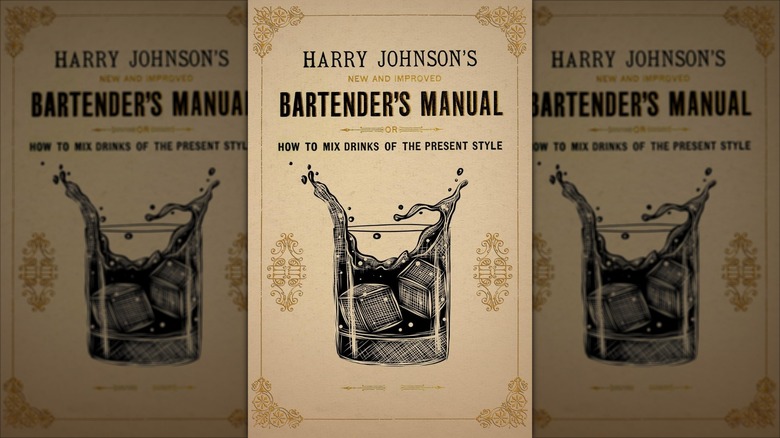
Harry Johnson is a pretty fascinating figure in the history of bartending and mixology, and he's credited with writing one of the first books that not only gives tips on how to make outstanding cocktails, but how to run a bar. The Prussian-born Johnson had a ton of experience in American establishments, and was equal parts bartender and businessman. His "Bartender's Manual" contains a wealth of historical information, from how to clean silverware to the right way to pull pints, with attention given to different types and styles of beer.
And yes, there are cocktail recipes here, too, along with tips on how to match customers with the right drink, how to open a champagne bottle, and how to cool large-batch drinks in punch bowls. That's a ton of information packed into this little book, and even in the era, it was much-needed and much-appreciated: He turned consulting into his full-time job.
While Johnson's 19th-century promise to teach readers bartending in the so-called "modern style" might seem like it would be outdated, it's not — and reviews from those who have purchased this book say that it's still a relevant, go-to text that holds up today, especially if you're looking for basics on things like essential glassware, tools, and practices.
Purchase the "Harry Johnson's New and Improved Bartender's Manual; or, How to Mix Drinks of the Present Style" at Amazon for $33.56 (hardcover) or $20.99 (paperback).
Cafe Royal Cocktail Book (1937)
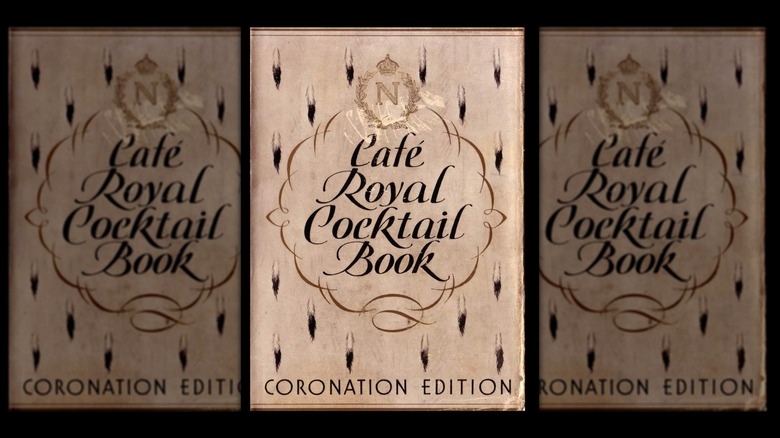
The "Cafe Royal Cocktail Book" is a little unique, in that it was compiled by Cafe Royal head bartender William J Tarling as a fundraiser to benefit the United Kingdom Bartenders' Guild Sickness Benefit Fund and The Cafe Royal Sports Club Fund. That's not entirely arbitrary. Tarling — along with another bartender on our list, the Savoy's Harry Craddock — was the founder of the U.K. Bartenders' Guild.
It's also unique in that while it was much-lauded and much-celebrated when it was released in 1937, there were only ever about a thousand copies. Then, it pretty much disappeared until it was finally printed again in 2008, when it was once again celebrated as an outstanding representation of the era's cocktail scene.
Anyone looking for a book with a ton of classic cocktail recipes will find this invaluable. Along with recipes, there are footnotes on the proper procedures for making the drinks, and some notes on who originally created the cocktail. In the introduction, Tarling wrote that he selected cocktails from a pool of around 4,000 recipes, and according to customers who have tried some of the cocktails, they're still outstanding today. Some have even bought several copies, in preparation for wearing out the first.
Purchase the "Cafe Royal Cocktail Book" at Amazon for $32.95 (hardcover) or $10.99 (paperback).
The Fine Art of Mixing Drinks (1948)
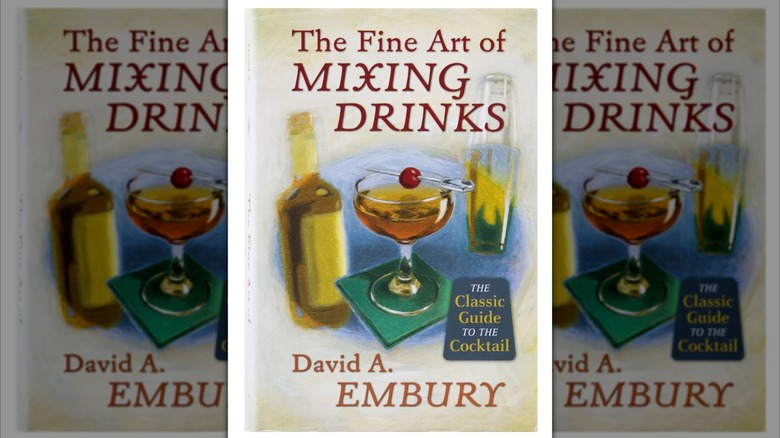
We've all gotten those cookbooks or cocktail books that are so complicated they're discouraging, and David Embury's "The Fine Art of Mixing Drinks" is not one of those books — likely because Embury wasn't a bartender, he was an attorney who wrote that most of his experience with cocktails was in drinking them. Still, his book became one of the biggest and most important cocktail books of the mid-20th century.
Where this book shines is taking a look at the basics, including in-depth looks at some of the most famous classic drinks, including what makes a perfect martini to what characteristics define an old-fashioned. For anyone who's interested in things like the impact of ice and water on drinks, how variations on classics drinks are developed, and the core principles of mixology, this is a must-read.
One of the things that customers seem to really like this book for is the insight into cocktail creation. Let's say you're interested in experimenting with any of a number of variations on the classic martini. This book will give you some guidelines on what makes a drink work, and you might think of it as a sort of crash course in mixology. He also talks about what doesn't work, and customers appreciate the bad recipes (along with explanations) that are all presented with a dash of humor and encouragement to find your own inner mixologist.
Purchase "The Fine Art of Mixing Drinks" at Amazon for $39.95 (hardcover).
The Ideal Bartender (1917)
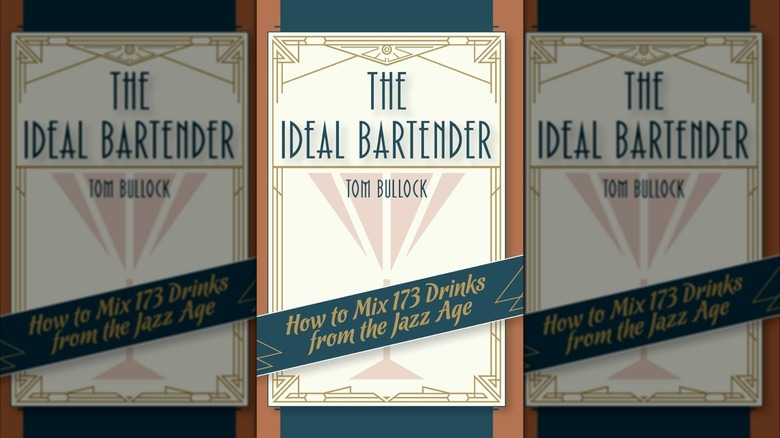
"The Ideal Bartender" is interesting for a number of reasons, starting with the fact that it was published pre-Prohibition, and presents a neat look into the history of cocktails before it was forever changed by America's ill-fated Temperance Movement. Additionally, many other cocktail books are often a collection of well-established recipes, but Tom Bullock's book includes many of the bartender's own original drinks. Those were developed over a lifetime behind the bar, including at the Pendennis Club and the St. Louis Country Club, which was attended by a who's-who list of the era's elite.
Along with being widely celebrated as an outstanding bartender — particularly well-known for his mint juleps — Bullock was also the first Black author of a cocktail book. And it's not just any cocktail book, it's one of the last to be published before Prohibition. Customers who have purchased and reviewed his book say that it's an incredible look into the drinking culture that was interrupted by this chapter of U.S. history.
Others love the fact that it gives a glimpse into the ways that the cocktail world has evolved, and it's important to note that this isn't just about cocktail history, it's also about Black history. Sadly, little is known about Bullock's personal life, but his legacy in preserving this slice of history is unparalleled.
Purchase "The Ideal Bartender" at Amazon for $19.95 (hardcover) or paperback ($9.99).
Bottoms Up (1951)
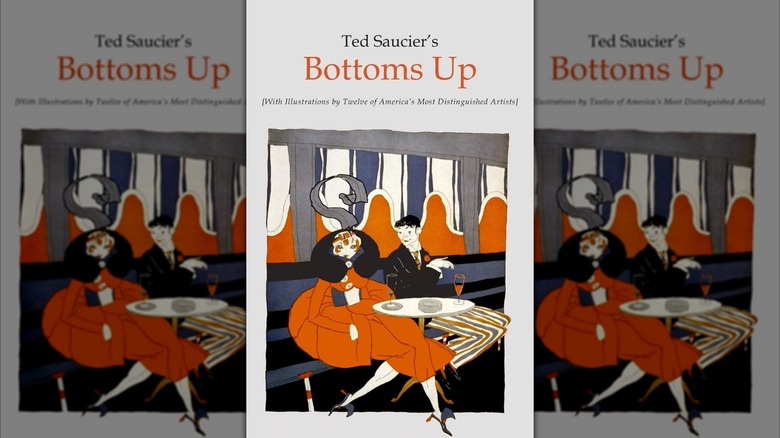
"Bottoms Up" is another classic cocktail book that wasn't written by a bartender at all. Ted Saucier was in charge of publicity for New York's Waldorf-Astoria, but at the same time, he was lauded as the sort of person who was not only up-to-date on all the biggest culinary trends, but ahead of things, too. When he died in 1970, "Bottoms Up" was mentioned in his obituary as one of the most important cocktail books of the era, and it includes guidelines on how to read recipes instructions and measurements, how to toast in different languages, and of course, there's some illustrations that are 1950s-era risque.
Interestingly, this volume also addresses the mysterious origins of The Last Word cocktail, and thanks to Saucier's work, that particular drink was established as a pre-Prohibition creation. That's just one of around 200 cocktails featured, and given that this was written and published as a part of a marketing campaign with the hotel, you know the drinks are classics.
Customers agree: Since we can't go back in time, stroll into the '50s-era Waldorf-Astoria, and order a cocktail from the barkeep, some say that this is the next best thing. It's the kind of book that customers say they hold onto for years, and then, they purchase another copy for family members hoping for a taste of legit, authentic, 1950s New York.
Purchase "Bottoms Up" at Amazon for $25 (hardcover) or $13.95 (paperback).
The Stork Club Bar Book (1946)
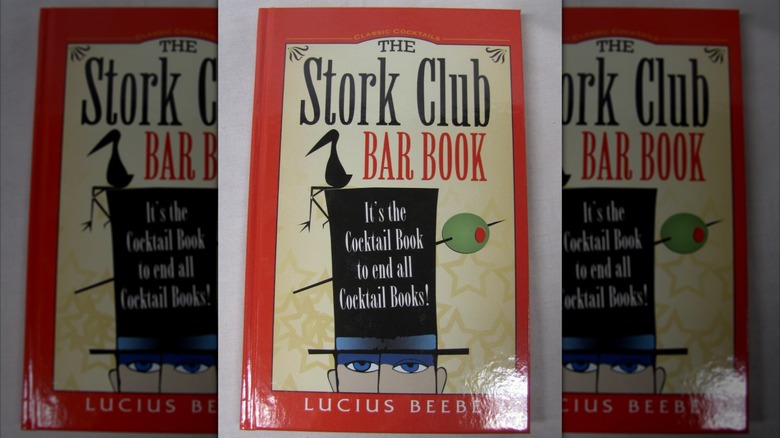
If you were in Manhattan between 1929 and 1965, you wanted to go to The Stork Club. It was the kind of place where the staff communicated via a series of secret gestures, and management handed out tens of thousands of dollars in gifts every year. It was all documented by the almost surreal Lucius Beebe, a reporter and columnist who drank in speakeasies, carried a gold-tipped cane, and once organized the toilet-papering of JP Morgan's yacht.
Understanding a little bit about Beebe is important, because it's his observations, style, and prose that make this a stellar read and a great cocktail book that still stands up — somewhat — to the modern palate. Imagine stepping back in time with a guide who owned two bespoke train cars (with plenty of room for his Saint Bernard, and each with their own wine cellar), and was friends with everyone from Frank Sinatra to Cecil B. DeMille.
Not only are the drinks fun to experiment with, but it gets high points for capturing old New York. Divided into sections based around morning, noon, and night, cocktail recipes are scattered throughout. (What's included in the morning drinks? A Manhattan cocktail, for starters, along with a dry martini.) Beebe gives credit where credit is due, but also notes that some of the recipes he's recorded are specific to customers' tastes, and isn't that what a truly stellar cocktail should be?
Purchase "The Stork Club Bar Book" at Amazon for $14.98 (hardcover) or $20.11 (paperback).
Methodology
In order to come up with a list of some of the best vintage cocktail books that deserve a place in your library, we started by looking at some of the biggest and most important names in the history of mixology. The books written by some of the most influential figures credited with establishing the principles of cocktail creation — as well as the foundations of bartending — made it onto our list, and these are generally the books that get mentioned by historians, industry experts, and amateurs alike.
Many of those amateur opinions came from Reddit: We browsed countless subreddits to see what got regular and enthusiastic recommendations. Finally, we also wanted to make sure that we were recommending books that you can actually get, so we looked for widely available reprints in a number of formats, including hardcover and paperback. Many of these picks are also available as e-books.