

The Top 10 Cheese-Consuming Countries (And Their Favorite Varieties)
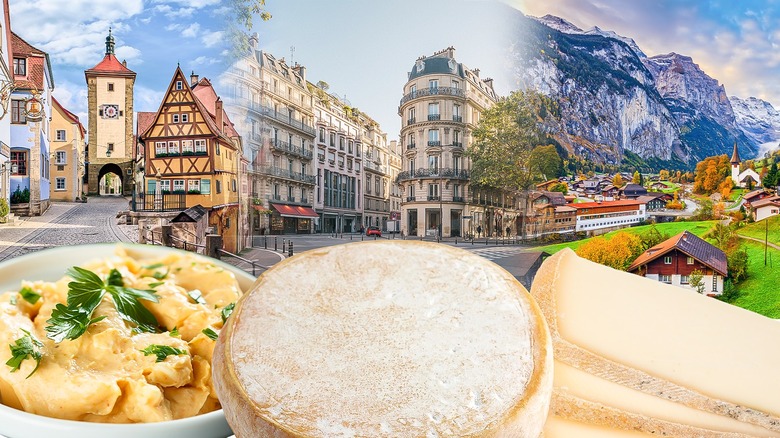
Whether soft or hard, mild or strong, young or aged, plain or flavored, cheese is central to many gastronomies and cultures around the world. In fact, global production is still on the rise to meet the growing consumer demand.
One would think that a country as large and diverse as the United States, known for its particular fondness for mozzarella, cheddar, Parmesan, and Monterey Jack, would rank highly among cheese-consuming nations. Surprisingly, that couldn't be further from the truth, as it turns out that the countries that consume the biggest amount of cheese are all located in Europe, according to World Population Review.
This appreciation of cheese and other dairy products isn't exactly recent. In fact, cattle, sheep, and goat farming started some 10,000 years ago, and cheesemaking was first referenced in Ancient Greece and Ancient Egypt. Fun fact: Nobody knows for certain when and how the very first cheese was prepared. The process may have been discovered by accident, either through storing milk in containers fashioned from the stomachs of animals or by salting curdled milk in an effort to preserve it. The theories abound, but one thing is sure: Cheese is beloved worldwide.
So, here is an overview of the 10 countries that consume cheese the most, starting with Switzerland, which sits at the top of the list with a whopping 51.80 pounds per capita.
Switzerland

Switzerland isn't only praised for its exceptional tap water, postcard-perfect landscapes, and fairytale-like Alpine villages. It also boasts a long history of cattle farming, which has roots in the Neolithic period. As for the earliest written reference to cheesemaking, it dates back to the first century A.D., when the Roman historian Pliny the Elder mentioned Caseus Helveticus, the cheese of the Helvetii, a major Celtic tribe that was living in the area. Swiss farmers later started exporting their cheeses by mule to Marseilles, an important French seaport, and, from there, these precious products made their way to Africa and Asia. By the 15th century, Gruyères (the world-famous cheese it originates from is written without the "s") and Emmental were the biggest cheese-producing regions, and the areas of Fribourg, Bernese Oberland, Appenzell, Schwyz, and Unterwalden soon followed suit.
Today, you can find more than 700 varieties of cheese across Switzerland, according to the federal authorities. The most consumed are Gruyère (which can be used to make the creamiest quiche), Tête de Moine, Sbrinz, Appenzeller, and raclette. It's also important to note that any Swiss-made cheese is supposed to be free from artificial additives and genetic modifications, and that the most traditional varieties are still prepared in village dairies, rather than large factories.
So, if you should ever find yourself in the medieval town of Gruyères, make sure you treat yourself to a fondue, a dish that combines melted cheese, wine, and cherry brandy, in which you can dip pieces of bread or baby potatoes. You could also visit the canton of Valais to sample an authentic raclette, where the titular cheese is melted on a special pan and eaten with bread, potatoes, gherkins, and pickled onions.
Germany

Germany is yet another country boasting a rich dairy-making heritage. In fact, evidence of curdled sheep's milk was found in the Neolithic site of Karsdorf, located in the state of Saxony-Anhalt. Today, though, it's the Allgäu region, in the state of Bavaria, that holds the title of the nation's biggest cheesemaking hub. The industry blossomed there in the early 19th century as an effort to reduce the astronomical cost of cheese importation from Belgium, Switzerland, and the Netherlands.
Overall, Germany produces hundreds of imitation and original cheeses, including the beloved Bruder Basil, a semi-soft and smoky product that was first prepared from semi-skimmed cow's milk by the Trappist monks of Rotthalmunster Abbey. It's typically consumed in sandwiches, gratins, and raclettes, or simply snacked on with dark German beer or dry white wine. The pungent and intensely flavored Limburger is another popular cheese, and you'll usually find it on charcuterie boards and in salads, burgers, sandwiches, and quiches. As for butterkäse (literally "butter cheese," though it doesn't contain any butter), its creamy texture renders it conveniently spreadable, while the soft-ripened Cambozola is a coveted addition to cheeseboards.
Germany offers many cheese-centric snacks and dishes, from käsespätzle (cheese spaetzle), the local version of Mac and Cheese, to obatzda, a spread that is best consumed with pretzels and beer and is widely popular at Oktoberfest in Munich.
France
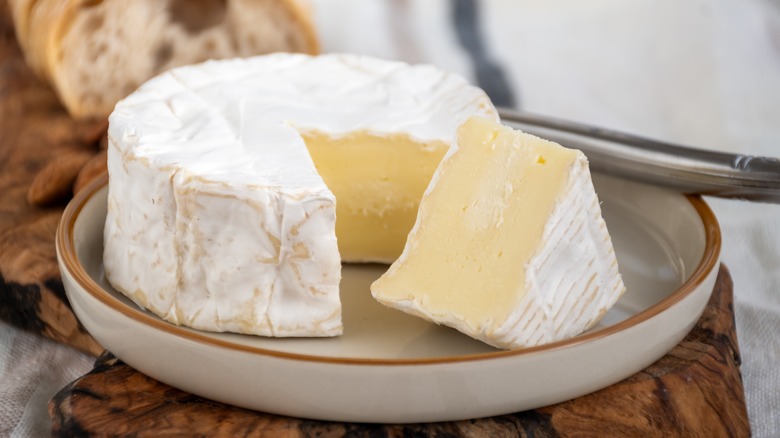
Once largely operated by women, the cheese industry started developing in French farms in the 13th century to serve regional markets. In this day and age, three specific types of cheese immediately spring to mind when one thinks of France: brie, camembert, and Roquefort, as they are not only locally beloved but also widely exported. And, in case you still confuse the first two, which look somewhat alike, here's a quick recap: Brie is softer, milder, and creamier, and it originates from the Île-de-France region, while Camembert is smaller, earthy-flavored, and more aromatic, and it hails from Normandy. As for Roquefort, one of the world's most pungent cheeses, it's made from sheep's milk and aged in the limestone caves of Roquefort-sur-Soulzon, in southern France.
Those are not the only products of note, though. According to My French House, France produces more than 1,200 cheese varieties. Locals are very big on reblochon (which can be melted with boiled potatoes to make a tartiflette), emmental (frequently used in salads, sandwiches, and pasta), and comté (an elegant cheeseboard staple). In fact, if you're ever invited to a traditional meal, you'll likely be served a platter of assorted cheeses between the main course and dessert.
Italy
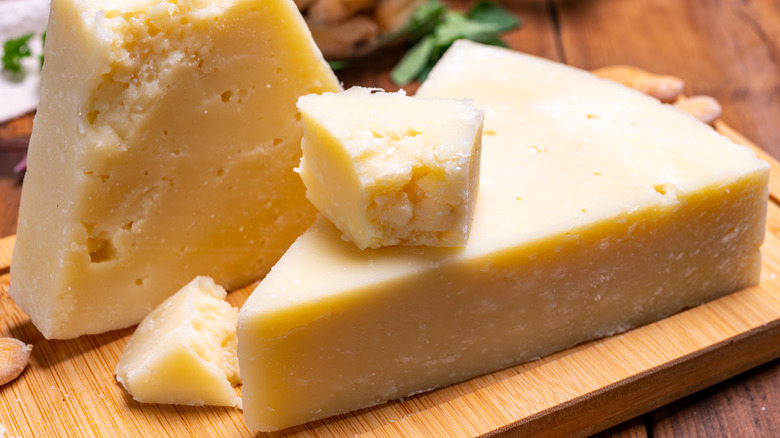
Italy conjures up images of decadent pasta and pizza dishes with copious amounts of melted or grated cheese; so, it's no wonder it stands among the top cheese-consuming nations. Today, the country produces 2,500 traditional types of cheese, many of which are snacked on or used in dishes, sauces, salads, and pastries.
The love of cheese is ingrained in Italian culture, as the ancient Romans were largely responsible for popularizing its consumption across Europe and the Middle East. Not to mention that most homes were equipped with an area for making, aging, and storing cheese, called a 'caseale.'
So, what are some of the most beloved Italian cheeses? First, there's the salty, hard, and crumbly pecorino romano, which is produced from the titular Sardinian breed of sheep and eagerly grated over cherished dishes like cacio e pepe and spaghetti carbonara. Equally popular are the soft and mild buffalo mozzarella, which is supposed to be made from the milk of water buffalo, and not from cow's milk; the cave-aged taleggio, which goes well with polenta and risotto; and the blue-green-veined gorgonzola, which may very well date back to the ninth century.
The Netherlands
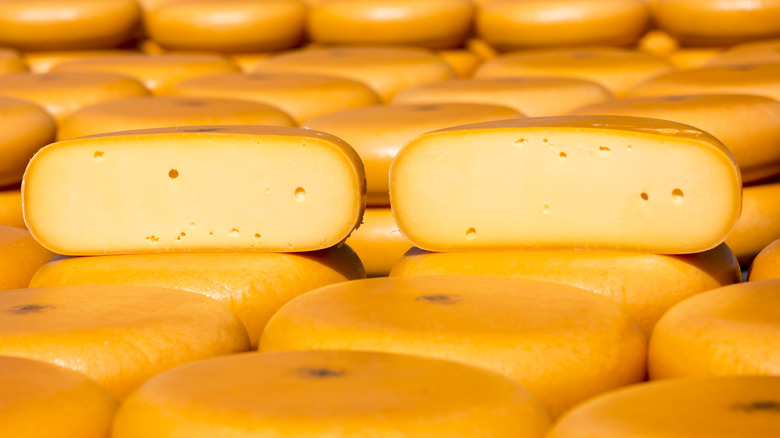
The earliest mention of cheese production in the Netherlands dates back to 80 B.C., in Julius Caesar's "Bellum Gallicum", or the "Gallic Wars" account. And, until the 19th century, most Dutch cheeses were still produced on traditional dairy farms. You can learn all about the history and techniques of local cheesemaking by visiting the Dutch Cheese Museum in Alkmaar and the Amsterdam Cheese Museum.
Meanwhile, let's explore some commonly produced Dutch cheeses. Typically made from pasteurized cow's milk (though there are other gourmet varieties), gouda, for one, is a semi-soft cheese that can be aged from two months to five years and more. It pairs well with fresh fruits, nuts, beer, or sparkling cider. As for edam, it's a mild, semi-hard, and nutty cow's milk cheese that is typically enclosed in red or yellow wax and meant to elevate pizzas, salads, and baked pasta dishes.
For its part, the dry and firm leyden contains cumin seeds, cloves, and/or caraway, and it's typically consumed warm on bread, preferably with a cold brew. Finally, maasdam, the Dutch answer to emmental, is slightly nutty and sweet and would therefore make a delicious addition to a ham sandwich, a baked pasta dish, a green salad with nuts and fruits, or as a gooey pizza topping.
Czech Republic
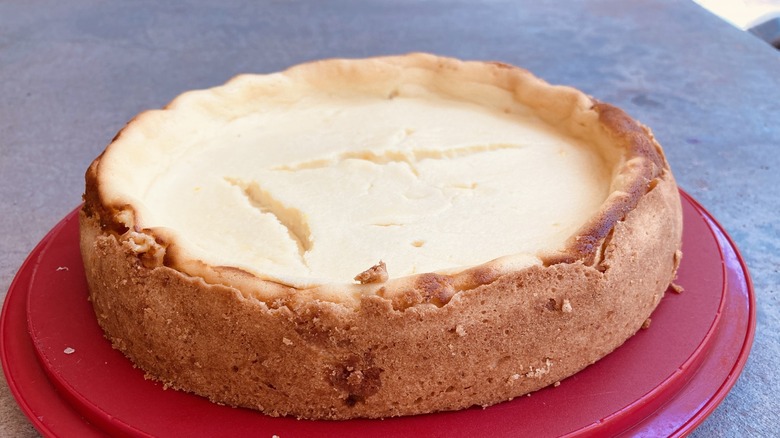
Cheese was first incorporated into Czech gastronomy in medieval homes and monasteries as a way of preserving milk, and it didn't experience a commercial boom until the Renaissance period. In today's Czech Republic, though, this food is a vital ingredient in many simple and complex dishes and desserts, such as kulajda, a creamy mushroom soup; bramboracka, a potato soup; gulas, a hearty beef stew; tvarohove knedliky dumplings, served with cabbage stew or a pork roast; and the somewhat tangy tvarohovy kolac cheesecake.
This country has produced several distinctive cheese varieties. Olomoucke syrecky, for instance, is a pungent, creamy product prepared from ripened skim milk and typically spread on bread or paired with a local wine. As for the camembert-style hermelín, it's delectably smooth, velvety, and mildly tangy, and you can order its marinated version at most pubs and restaurants, alongside a light Czech beer.
Greece
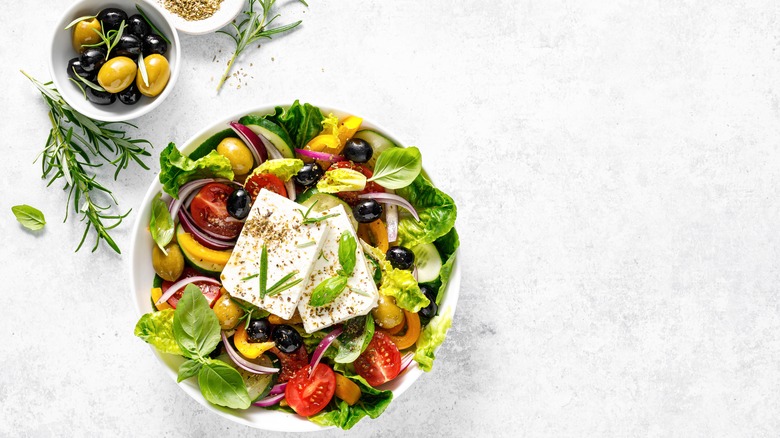
Greece produces more than 60 types of cheese, the most famous and oldest of which is feta. Deep-rooted in local mythology and history, this crumbly, salty, and tangy national treasure was first mentioned in Homer's "Odyssey," which was written in the 8th century B.C. Previously called "prosphatos" (meaning "fresh"), feta was popularized in 15th-century Crete, as recorded by the traveler Pietro Casola.
Genuine, locally produced feta is still traditionally made from sheep's milk or a combination of sheep and goat's milk, then it's aged in brine for that distinctively sharp flavor. There are many different ways to enjoy this beloved cheese: grilled or fried until golden; in a horiatiki or Greek salad, which consists of tomatoes, olives, cucumbers, and onions; in a spanakopita, a spinach phyllo pie; stuffed with vegetables and herbs in bell peppers and tomatoes; or drizzled with honey and sprinkled with sesame seeds.
Feta isn't Greece's only cheese contribution to the world, though. There's also graviera, a hard, deep-yellow variety with various flavors, from nutty to slightly sweet and spicy. As for the salty and hard kefalotyri, it's produced from unpasteurized goat's or sheep's milk (or a combination of both), and commonly added to cheeseboards alongside fruits, to be consumed with red wine; grated on pasta; or incorporated into stews. Finally, let's not forget about the semi-soft manouri, which is creamier, sweeter, and lighter than feta: It pairs well with honey or marmalade and can also be incorporated into salads and pastries.
Finland
The earliest mention of homemade cheese produced from cow's milk in what is now Finland dates back to 1555, but cheese wasn't actually commercialized there until 1856, under the initiative of Rudolf Klostner, a renowned Swiss cheesemaker.
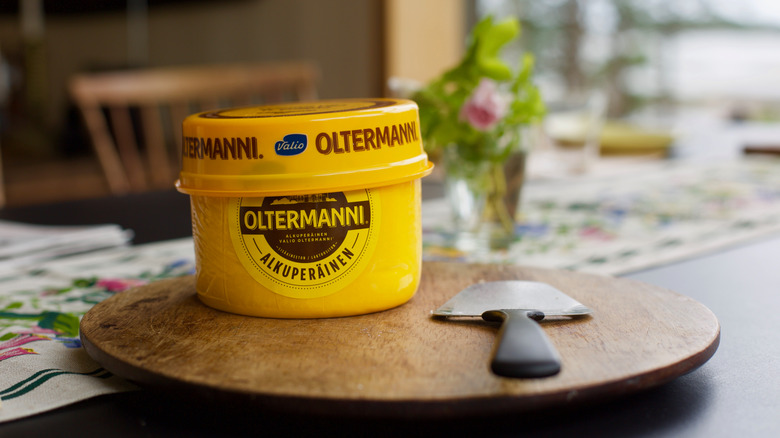
Today, the mildly flavored and somewhat sour Valio Oltermanni, totally free from additives and rich in calcium, is the most popular cream cheese in Finnish homes. It's widely used in sandwiches, salads, frostings, and sauces, and it makes a light and pleasant addition to cheese boards.
As for Aura, a semi-soft, strong, and tangy blue cheese produced from pasteurized cow's milk, it's usually matured for either six or 12 weeks and is known across North America as Midnight Blue.
Finally, juustoleipä, also called leipäjuusto and juusto, is probably the most fun of the lot. Known for its squeaky sound, this semi-hard, brown-crusted artisan "cheese bread" was popularized two centuries ago. It's made from pasteurized reindeer's, cow's, or goat's milk and is best consumed with honey or lingonberry jam or simply dipped in coffee.
Estonia
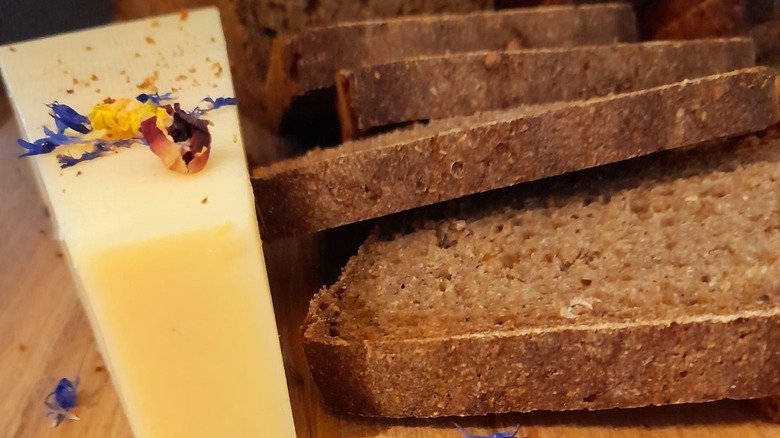
Despite being the smallest of the three Baltic states, Estonia has one of the highest cheese consumption rates in the world, and the Estonians are particularly fond of cheese on rye bread and deep-fried cheese balls.
The earliest mention of cheesemaking actually dates back to 1569, in the Maasi castle region, and then, between 1870 and 1910, as many as 50 manor dairies were established on the island of Saaremaa alone. Nowadays, this industry is still experiencing steady growth, and the main export markets are Finland, Latvia, Sweden, and Germany.
The two commonly consumed types of cheese in Estonia are Dutch-inspired (such as Eesti Juust) and Tilsit or Tilsiter (like Atleet, Saare Leet, and Estman). As for the most beloved cheese-centric snack, it's none other than kohuke, a delicious bar made from pressed curd and chocolate that comes in many flavors, such as lemon, coconut, strawberry, or caramel.
Luxembourg
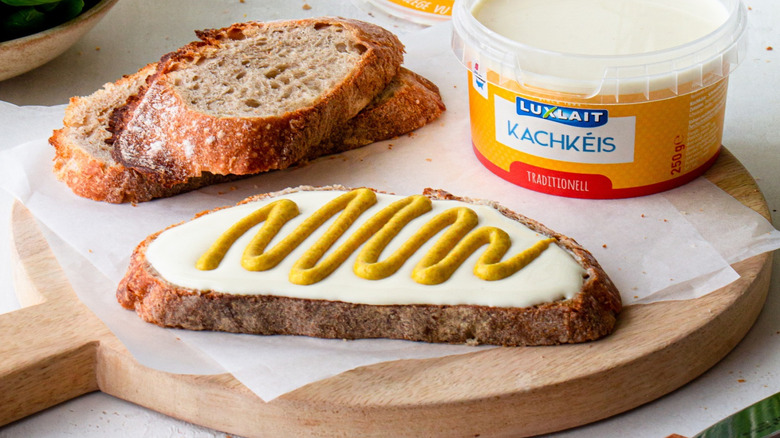
We conclude this culturally diverse list of top 10 cheese-consuming nations with the Grand Duchy of Luxembourg, a tiny and rich landlocked country bordered by France, Germany, and Belgium. It offers several specialty cheeses, such as Kachkéis, a popular spreadable cheese that can be compared to cooked French camembert. Free from preservatives and colorings and made from 100 percent Luxembourg milk, kachkéis is typically consumed as a snack with bread and a little bit of mustard. As for the beloved Stoffi, it's an organic, fresh curd cheese that is best enjoyed with bread, fresh fruits, or jam.
Another widely consumed product is the award-winning, preservative-free cottage cheese from Luxlait, which is consumed alone on bread, sprinkled with herbs and pepper, or incorporated into both savory and sweet dishes. The brand has actually been a major player in the industry since 1894, especially after merging with two other large agricultural associations in 1978.
Luxlait also produces Crème de Chapelin, a smooth gourmet cheese spread whose flavors include black truffle, sweet pepper, pimento, and Italian seasoning; an organic soft brie destined for cheese platters and sandwiches; and fruity, caramelized, beer-infused Gouda cubes to elevate salads and appetizers.