

10 Best Places To Get Baking Supplies On A Budget

While cooking at home is often touted as one of the best ways to save money, it's easier said than done. As someone with almost two decades of experience in the hospitality industry, I've witnessed the soaring costs of eating out firsthand. However, in recent years, a combination of factors has continued to push grocery prices higher and higher, too. Even the most basic baking ingredients, like eggs and flour, aren't safe from the likes of inflation or supply issues.
If you're someone who's just getting into home baking, there's also the added cost of kitting out your kitchen with the right tools and equipment. As a keen baker who frequently relocates around the world, I've often found myself having to reinvest in new supplies. I've found this endeavor can start getting pretty pricey without a few tips and tricks to keep costs down. Fortunately, it's still possible to source baking provisions on a budget if you know where to look. You can save money by purchasing your ingredients directly from a supplier or buying in bulk, and there are plenty of baking tools that you can grab second-hand. Today, I'm going to share with you the best places I've discovered for picking up baking supplies for less without having to sacrifice the quality of your tasty creations.
Big-box warehouse club retail stores
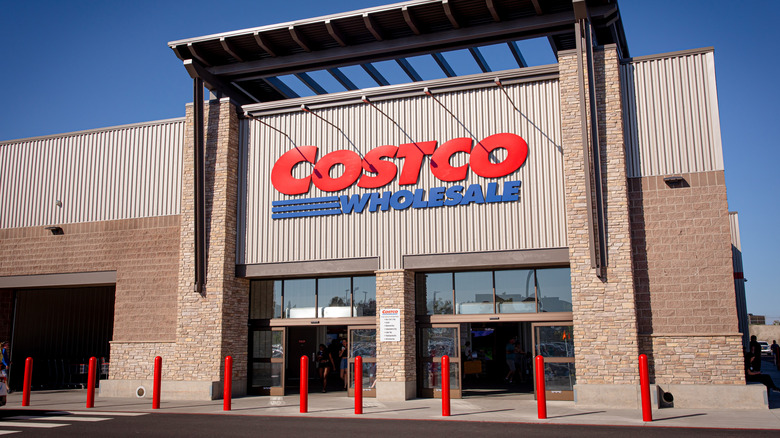
Those who are already familiar with the perks of warehouse club stores will already be well aware of the savings to be had under the right circumstances. Costco is the largest of these chains by a wide margin, but you've also got the likes of Sam's Club and BJ's Wholesale Club offering big discounts to their members.
The premise of warehouse club stores is simple – an annual membership fee gives you access to a vast range of name-brand goods that are often cheaper than you'd find at a regular supermarket. You'll also find a wide selection of private-brand products, like Costco's Kirkland Signature range, that have a great reputation for quality and are exceedingly good value for money. Plus, these stores tend to have a high turnover rate, meaning food ingredients may be fresher than at other types of retailers. There are even bigger savings to be had if you're willing to buy baking ingredients in bulk; however, this means a warehouse club membership might not be a cost-effective solution for infrequent bakers. Warehouse club stores also sell baking equipment, and if you're willing to wait, you'll often find impressive discounts on name-brand appliances, such as stand mixers and food processors. If what you're looking for isn't currently on sale, I suggest setting up e-mail alerts, as you'll be notified as soon as certain items drop in price.
Flour mills

Flour is by far one of the most essential baking ingredients because it's what gives baked goods their structure. Of course, there are flour-free recipes, but they typically require additional ingredients to rise and maintain their shape. There are many types of flour that affect cakes and breads in different ways, but the most common varieties are made from wheat. Grain-based flours require milling, a process that involves cleaning and separating out the different parts of the grain before grinding them into a powder.
As I mentioned earlier, one way to save money on baking ingredients is to go straight to the source; many flour mills offer direct purchasing options. By cutting out the middleman — in this case, the grocery store — you can typically find flour at a lower price. If you've got a local mill nearby, it's worth contacting them to see if they offer direct sales. You might even be able to save on delivery costs if you collect your order in person. If you don't have a mill nearby, you're not entirely out of luck, as there are mills that sell their products online. Some mills might have minimum purchase orders, but you can net significant savings if buying in bulk. You'll also find mills that offer alternative grain flours alongside regular wheat flour. These products can get pretty expensive if you're buying them from specialty retailers or health food stores, so it's always worth looking for an alternative source.
Farmers' markets
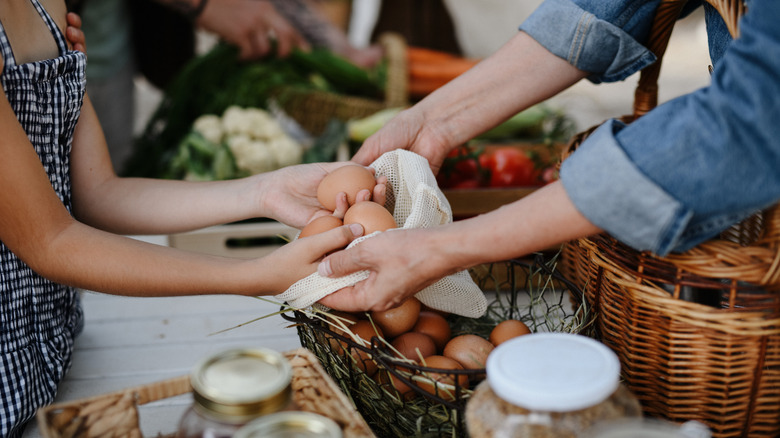
One of the best places to find fresh baking ingredients is your local farmers' market. Unfortunately, in recent years, the reputation of the farmers' market has suffered a bit. Part of this is down to markets that have co-opted the concept to flog expensive artisanal products. Even genuine farmers' markets have been hit by rising prices, but that doesn't mean they're not worth checking out, as they can still offer cheaper, higher-quality goods compared to supermarkets.
Besides being a great place to pick up fresh baking staples like eggs and milk, you'll often find great deals on seasonal produce at farmers' markets. If you do have a local mill, there's a good chance you can find their flour for sale there as well. Farmers' markets are also excellent for picking up items that don't meet the aesthetic standards of grocery stores. A bruised, misshapen apple that's not visually appealing enough for a supermarket to sell will still taste just as delicious once it's been baked into a pie. To keep your trip to the market affordable, research the place beforehand and arrive with a set budget in mind. By arriving later in the day, you can usually get bigger discounts from sellers looking to offload unsold stock before they go home. Asking questions will also give you a better idea of how the products are produced and when they're cheapest to buy, and building relationships is a surefire way to get solid leads on the best deals.
International food stores
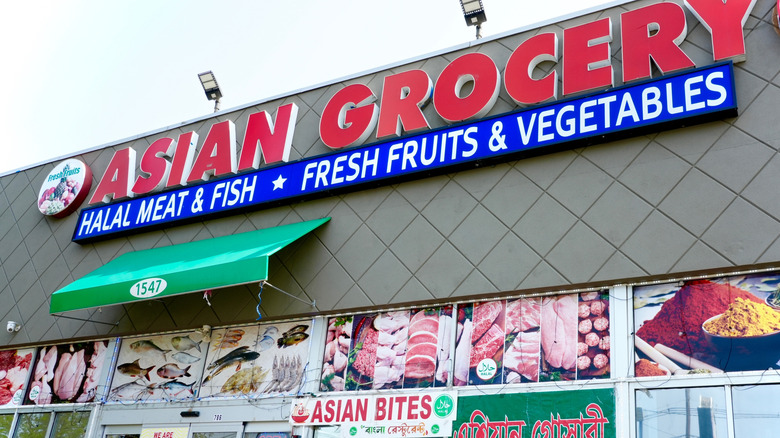
Some of the most overlooked sources for low-cost baking ingredients are international grocery stores. Many of these stores can offer cheaper items because they lack the overhead of larger retail chains and have a more focused product offering. While it's possible to find staple baking ingredients at lower prices, the real savings lie with the specialist ingredients.
I've found that international food stores are usually the best places to pick up alternative flours at a much lower price than you'd find at a specialist baking outlet. For example, rice flour, coconut flour, and tapioca starch are commonly used in Asian cuisines, so an Asian food store is almost certain to stock them. If you're experimenting with sorghum flour, look for a store that specializes in African ingredients. Places that cater to Middle Eastern cuisines are great for picking up semolina, barley, and chickpea flour. Many of these are excellent gluten-free flour substitutes, so you'll end up saving a ton if you're planning to bake for those with specific dietary requirements. International food stores also offer superb prices for spices and seasonings, including familiar ingredients, like cinnamon. I also find that these stores offer plenty of inspiration for unfamiliar baking recipes, so they're amazing places to visit if you're looking to try something new. It can be a little daunting trying to pick through unfamiliar brands and ingredients, so don't be afraid to ask the store's proprietor for help, as they'll almost certainly be thrilled to assist you.
Amazon
As much as I recommend trying to shop locally, it's not always feasible when you're on a tight budget. In terms of price and convenience, it's still hard to beat Amazon. The online retailer has an enormous, ever-growing range of baking ingredients and kitchen supplies with tons of low-cost options. Plus, if you're in a real pinch, Amazon Prime offers next-day –- and occasionally same-day –- delivery on the vast majority of products.
With its purchase of Whole Foods and the launch of Amazon Fresh, the company has made huge strides in the grocery sector. You can find staple goods as well as harder-to-find international ingredients at highly competitive prices, with the option to buy in bulk for further savings. If you're struggling to find the baking supplies needed to meet special dietary requirements, Amazon is almost certain to have something suitable in stock. Then, of course, there's the massive range of baking tools to choose from. These can range from super cheap bits, like measuring cups and cookie cutters, to high-end kitchen appliances. Plus, if you're not in a massive rush, you can wait until Prime Day for even bigger discounts on select equipment. One of the most helpful things about shopping on Amazon is that you don't have to take a gamble on your purchases, either. The review system means it's incredibly easy to filter out the low-quality items, and you can make informed purchasing decisions based on the detailed feedback of previous customers.
Facebook Marketplace

As I mentioned earlier, there's some baking equipment that you may as well buy second-hand. Items like sheet tins, cake tins, and mixing bowls are pretty sturdy and tend to last a long time. As long as they're clean and rust-free, there's no reason you can't save money by picking up some pre-owned gear. You can also find appliances like stand mixers or electric whisks, and if the price is low enough, it can be worth foregoing the warranty that comes with new products. While your luck with it may be location-dependent, it's always worth having a browse of Facebook Marketplace before deciding to buy something brand new.
Not only can you find second-hand baking supplies on Facebook Marketplace, but you'll sometimes find unused items as well that people are looking to offload. The search filter is extremely easy to use, allowing you to look for specific items and set price and location parameters. If you can't find what you're looking for, you can even create your own posts to let people know what items you're after. If you can arrange to pick up items locally, you'll be able to save on delivery fees, and occasionally you'll find people offering items for free if you're willing to collect them. However, it's important to keep some safety tips in mind if you're conducting in-person transactions with a stranger. I suggest arranging to meet in a public place if possible, and perhaps taking a friend or family member along, too.
Dollar stores
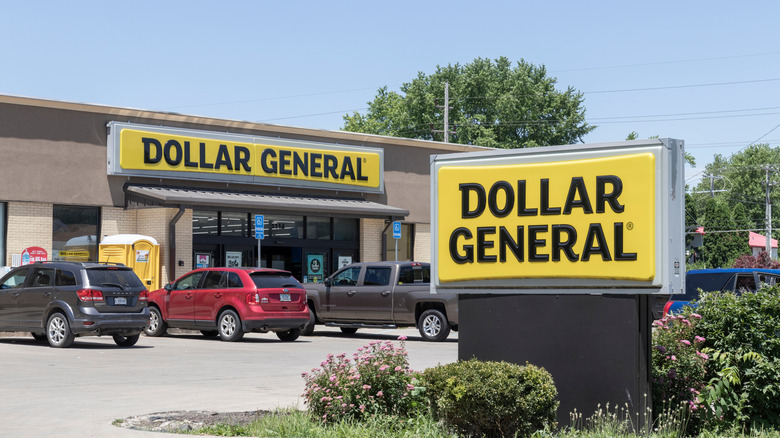
Variety stores are retail outlets that sell a wide range of merchandise at extremely low cost, relying on sales volume to turn a profit. Back in the day, there were "five and dime" stores that sold items for five and ten cents, respectively. Thanks to inflation, five and dimes eventually became dollar stores, and now we have the likes of Dollar General and Dollar Tree up and down the United States. While these stores do sell items that cost more than a dollar, the names are yet to be updated.
Even though dollar stores sell some items at a higher price than their name suggests, they're still extremely cheap. You shouldn't expect to find excellent deals on good-quality higher ticket items, like electrical appliances, but they're superb for the basics. If you need baking essentials like rolling pins, cookie cutters, or hand whisks, and you're on a tight budget, a dollar store should have you covered. I wouldn't expect your purchases to last forever, but they'll do the trick in an emergency or if you bake infrequently. They're also excellent for disposable baking supplies, such as paper muffin casings or rolls of baking parchment. Dollar stores are also great for when you need baking supplies with a seasonal twist. If you're after Halloween-themed candies to adorn some spooky cookies or Christmassy candy canes to stick in a cake, your local dollar store will almost certainly have you covered.
Restaurant supply stores
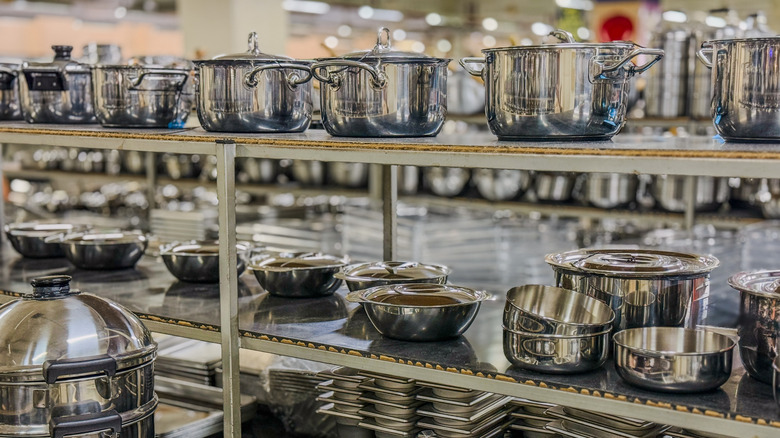
As an ex-restaurant manager, I've spent more than my fair share of time running around commercial restaurant supply stores. One of the things that always surprises me is that the vast majority of these stores — whether they're brick-and-mortar or online retailers — is that there's often no requirement to be a hospitality business owner. While many of them offer membership programs that offer savings to bulk-buying customers, the general public can still take advantage of their extensive inventories.
Commercial baking supplies are often lacking in visual aesthetic, as most of them won't be seen outside of a professional kitchen. However, they more than make up for it in functionality. This equipment is built to be used again and again, so it's typically heavy-duty and extremely long-lasting. Restaurant supply stores also tend to carry far more specialized products compared to supermarkets or retail homeware stores, making them super convenient when you want a one-stop shop for your baking needs. These places frequently stock baking ingredients as well, and often in quantities that you won't find in a regular store. For example, if for some reason you need a 10-pound bag of chocolate chips for a large-scale bake, these places will have you covered. These volumes may sound excessive, but it can be worth seeing if any of your baker friends want to pitch in together to save money on bulk purchases.
Yard sales and estate sales
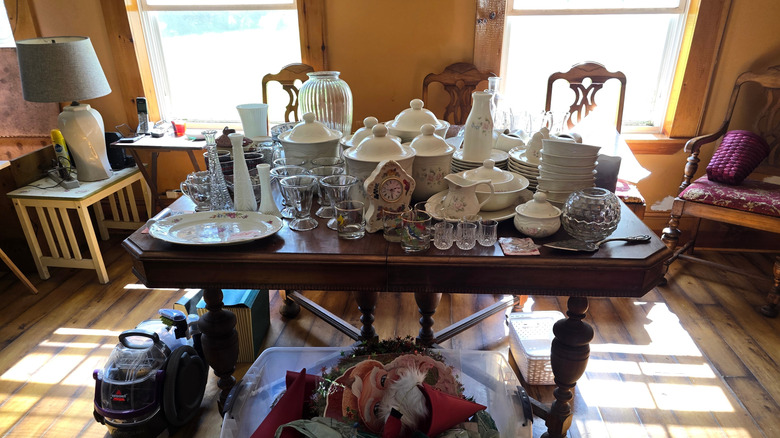
If you're looking to pick up high-quality baking equipment on the cheap, there are few better places than yard sales or estate sales. Often, you'll find name-brand products for a fraction of their original cost, and you may find entire sets of baking equipment up for grabs if you're lucky. The same can usually be said for flea markets and thrift stores; however, you may want to do a little research in advance. These days, you'll often find thrift stores that have branded themselves as vintage stores and actually charge a premium for secondhand items.
Another great thing about these sales is that you may be able to get your hands on baking supplies from highly acclaimed vintage kitchen brands if you know what to look for. Finding these treasures can take some time and perseverance, but it's well worth the extra work when your efforts pay off. You may even find expensive electrical appliances being sold for next to nothing. Honestly, I've found many of these items to be higher quality than modern equivalents — there's some truth behind the idea that "they don't build things like they used to." Even the electrical stuff is often simple enough for you to get repaired for a relatively low fee. However, be aware that there are some kitchen items you'll want to avoid thrifting. For example, I'd pass on cutting boards from a food safety perspective, and non-stick, copper, or aluminum pans are better to buy new.
Your local library

If you're unsure whether to commit to purchasing a brand new baking appliance — maybe you want to try before you buy, or it's something you don't think you'll use often enough — it could be worth seeing if you can rent one from your local library. Yes, that library. Of course, there are many libraries that still only specialize in books, but you might be surprised how many have diversified their offerings.
At some libraries, it's entirely possible to rent out appliances in the same way you'd check out a book. You've also got tool libraries, which specialize entirely in renting out equipment. Some of these might be limited to construction-related items, but many offer other household goodies, such as sewing machines and stand mixers. If you only need to use the equipment for a special occasion, being able to rent it for a few days is a far better option than splurging on something expensive that's only going to gather dust in the back of your kitchen cupboard. Plus, while you're there, you can check out some new cookbooks for inspiration for your next bake. Many of these libraries are non-profit organizations whose aim is to build a sense of community, so they're always worth giving your support to. If you take advantage of their services, I highly recommend paying it forward when you can. While most will accept financial donations, many will also accept second-hand tools for their inventories when you're done with them.