

Carla Hall's Presentation Tip For A More Pleasing Platter Of Shrimp

Is any occasion really complete without a glimmering platter of shrimp? It's one of the easiest dishes to put together, and it's always a solid option for those times you forget about appetizer duty. But you never want something to look boring, and Carla Hall has the perfect little trick for improving the presentation of any shrimp platter: Don't remove the tails.
The tails-on versus tails-off debate has been raging in kitchens for years, but Hall seems to have a preference – at least for certain dishes. The cookbook author and television star told Food & Wine that she likes to keep the tails on for a barbecue shrimp recipe to make them look more appealing and easier to eat.
When the tails are on, people can grab the shrimp easily with their hands and dip them into any accompanying sauces. The shell layer can also act as a shield, preventing the tender flesh at the bottom of the shrimp from overcooking and reducing any risk of damage during serving.
Leave the tails when sharing shrimp
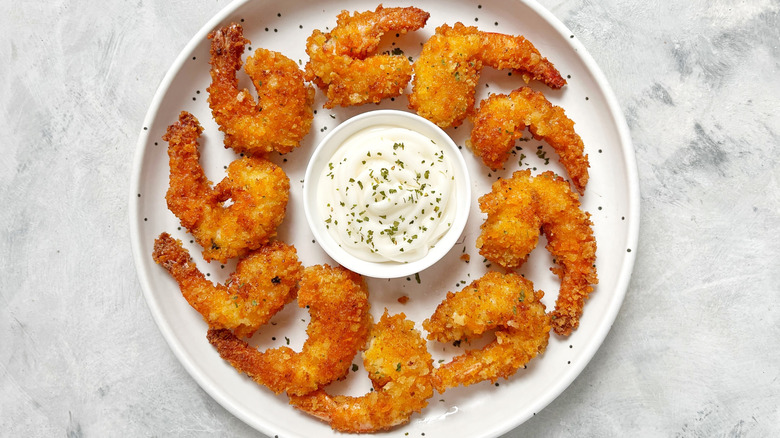
Hall also leaves the tails on when she makes shrimp and grits, baked shrimp, and crispy fried shrimp. Some chefs argue that you should never remove shrimp tails before cooking them, mainly because the shells are thought to have a lot of flavor. Shrimp shells can also create a flavorful stock, and in some cultures, shrimp are eaten shell and all.
However, the more common reason shrimp are served with the tails on is for the visual effect. A lot of cooks don't believe the meager tails add much flavor — just an unnecessary obstacle to eating. Hall does remove the tails for one of her recipes, a piri pirir shrimp, which might be because it's a meal better eaten with a fork.
No matter which side people lean toward, most tend to agree that tail-on is better for shared platters and finger food, while tail-off makes life easier when you're having a delicious shrimp pasta or aromatic shrimp curry.