

Why Rice Became The Go-To Sendoff For Newlyweds

We may receive a commission on purchases made from links.
From the bouquet toss, to the removal of the garter, to unique TikTok wedding cakes, weddings are filled with rituals (some easier to explain than others). On the food-related side of wedding-planning, brides and grooms might be thinking about how much food they need for their menu, the best (and worst) frosting choices for their wedding cake, or how to build a wedding charcuterie board. Today, we're exploring another centuries-old, food-centric matrimonial tradition: the rice throw. Rice is even a wedding prop for live performances of the cult classic "Rocky Horror Picture Show;" fans throw rice over their shoulders (not at the theatre screen!) as Ralph and Betty leave the church in the film's opening scene.
Throwing rice at weddings is a ritual that traces back to the ancient Celts over 2,000 years ago. The Celts were an agriculture-centric civilization that placed high symbolic importance on grains and rice, and tossed the natural elements as an appeal to the gods to bestow blessings of abundance onto the new couple. Per the Celtic religion, the throwing of rice also warded off evil spirits that might be looking to cause mischief for the new couple on their special day. Tossing natural confetti isn't just a Celtic tradition, either. There are records of the ancient Romans throwing wheat at weddings, and Eastern Indian wedding-goers throwing flower petals. Either way, this ancient nuptial tradition pre-dates the Christian religion by several centuries.
Wedding guests have been throwing rice as a symbol of prosperity for centuries
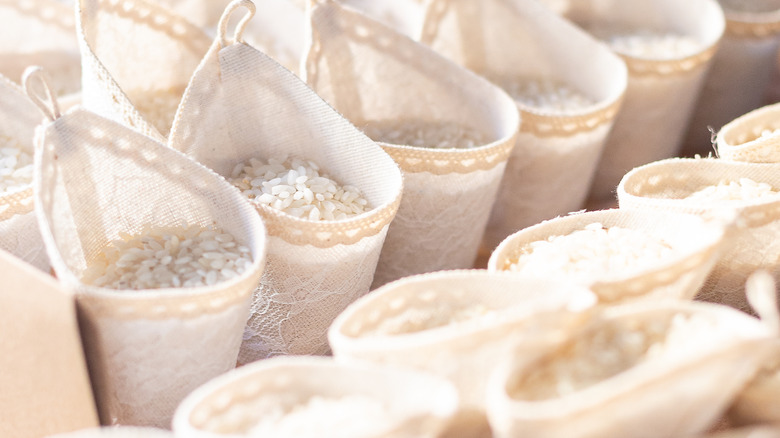
The tradition goes that friends and family toss grains of rice at a newly-wedded couple as they exit the ceremony together. The rice throw typically takes place as the couple walks back down the aisle post-vows, or as they leave the church or venue together before the reception. Small paper cones of rice might be passed out to each guest, or a larger bowl filled with rice might be offered for everyone to grab a handful.
So, why rice? For one thing, it's cheap and widely available. Rice is thought to have usurped cereal grains for the ritual sometime during the Middle Ages. On the metaphysical front, rice symbolizes fertility and prosperity, making it a natural fit for tiding well-wishes for the newly wedded couple, including good fortune and kiddos, if they want kids. Still, all that rice makes a mess.
Many modern ceremonies pay a vendor to handle clean-up. But the loose rice poses a slipping and falling hazard, is tedious and annoying for the venue, and some think it's potentially harmful for the digestive systems of nearby animals. Depending on where the ceremony is held, some churches and venues don't allow a toss of any kind (rice, flower petals, forget about it). For these reasons, the rice throw tradition isn't as popular in the modern era as the staple once was in weddings of the past.
Does the rice throw hurt birds?
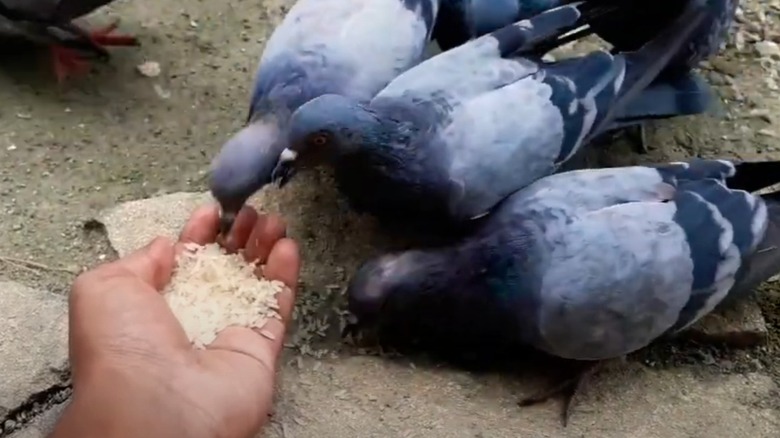
We would be remiss not to address the widespread misconception that has become linked with the wedding rice throw over the years: Uncooked rice hurts birds. So, does it? In a word, "no." The rumor traces back to 1985, when a Connecticut state legislator passed a bill that effectively outlawed the ritual, on the alleged grounds that uncooked rice kills birds. Even though the bill was not supported by Audubon bird experts, and doesn't carry any factual merit (ornithological studies have shown that uncooked rice doesn't hurt birds), the unflattering connotation has stuck.
On the contrary, migrating birds such as ducks and geese are known to eat uncooked rice to fuel up before their travels. If anything, the rice throw has a greater potential to attract birds – which can also throw a wrench into a smooth wedding day. In fact, in 2007, rice tosses were banned in Venice, Italy, for this very reason. At Venice's popular wedding destination St. Mark's Square, flocks of an estimated 40,000 pigeons, drawn by the rice, were regularly attending (and disrupting) ceremonies, perched and waiting for the anticipated rice throw.
Pro tip: For folks who admire the rice toss tradition but are hosting an outdoor wedding, seeds, herbs, and dried flowers make a more environmentally-friendly confetti. Guests could also wave ribbon wands, sparklers, ring bells, or blow bubbles as the new couple exits the ceremony, preserving the well-wishes sendoff. Or, why not just throw birdseed? If you're curious, here are a few other wedding food traditions from around the world.