

Why Is Canadian Whisky So Cheap?

Talk with whiskey enthusiasts for a recommendation, and they'll rattle off names for Tennessee whiskies, Irish blends, Scotch, and — for the especially savvy — even Japanese whiskies. Curiously, few, if any, will ever suggest a Canadian whiskey. Despite having centuries of experience and a decent track record when it comes to award-winning bottlings, Canadian whiskies still somehow fly under the radar. Now, if you're adventurous enough to go and search for a bottle at your local store, it might surprise you a little when you look at the price tags. Compared to a whisky of similar quality made elsewhere, Canadian stuff is often a fraction of the price!
There are reasons for this, and before you ask — no, it's not because Canadian distillers are cutting corners. Or, rather, that's not the main reason. The truth of the matter has to do with regulation: Canadian distillers work under much more lax regulations compared to their overseas competitors. In Canada, liquor only has to meet three criteria for it to be called a "Canadian whisky": It must be distilled from mashed cereal grain, aged in wooden casks for at least three years in Canada, and bottled at a minimum of 40% alcohol by volume. That's it. The savings that Canadian distillers get from not having to do extra tests and certifications get passed straight to the consumer.
Canadian whiskies are just less regulated overall
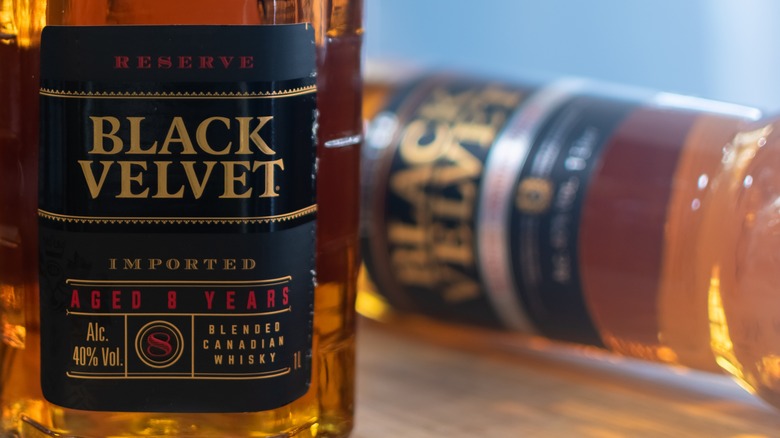
Another reason for the cheap price tag of Canadian whiskey is the infamous "9.09% Rule." The Canadian government allows distillers to add up to 9.09% of additives to the final liquor. Additives can be flavorings to fine-tune the taste; other types of spirits, like fortified wine or bourbon; or colorings like E150a (spirit caramel), used to give the whisky a richer, darker look. It's because of this rule that purists often group Canadian whiskies into the "bottom-shelf drinks" category, since, sure enough, many unscrupulous distillers take advantage of these rules to cut corners. But honestly, if you buy from trusted Canadian whisky brands, you'd still find them to be pretty darn tasty (plus, the price is unbeatable).
One final important legal distinction in Canada is that there aren't any rules that specify the sort of oak cask in which Canadian whiskies must be aged, unlike American bourbon, which must be aged in brand-new, charred American oak barrels. So distillers are free to use cheap ex-bourbon casks — or even rum, port wine, or sherry casks — to infuse extra flavor notes into the base liquor. Seriously, try a rum-casked Pike Creek 10 Year Old as your intro to Canadian whiskies. We promise that despite the price, it absolutely won't taste "cheap."
The results speak for themselves. To give you an example, take a look at the Canadian Club 100% Rye. You can have a bottle for around $23. Meanwhile, a budget American Wild Turkey 101 Straight Rye can set you back around $27. The CC 100% Rye is cheaper but no less flavorful. In fact, it won the 2024 World Whiskies Awards in the Canadian rye category. You'll find the same phenomenon across the entire range of Canadian whiskies. From blended Pendleton whisky to single-malts like Two Brewers Yukon, Canadian whiskey is usually cheaper by a couple of bucks compared to the same drinks distilled elsewhere.