

Why Your Dishwasher Is Making Your Dishes Smell Weird (And What To Do About It)
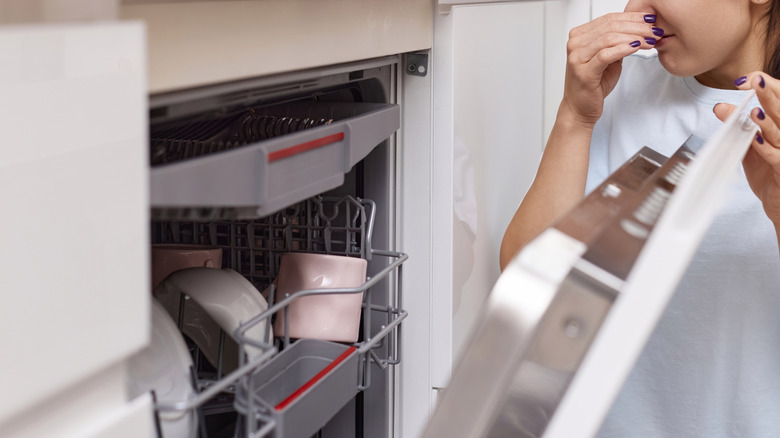
Which is more inconvenient: Hand-washing a ton of dishes, or running them through the dishwasher only for them to emerge smelling funky? You don't have to settle for either of these pesky situations — strange dishwasher odors can be remedied with some routine maintenance.
A common source of smells is the filter, which is meant to catch leftover bits of food and prevent drainage clogs. Neglecting to clean out these bits is one of the biggest mistakes you're making with your dishwasher, as they'll eventually make your dishes smell gross. To clean your filter, locate it on the bottom floor of the appliance and remove it according to your dishwasher's manual. Using a soft sponge or brush and dish soap, scrub away food residue and detergent scum under hot running water. Put the filter back, making sure it's locked in properly, and run a cycle to see if the smell remains. Continue to clean your filter at least once a month to keep odors at bay.
If the weird smell persists, there might be greasy residue on the dishwasher's walls, racks, spray arm, or utensil holder. Use a store-bought dishwasher cleaner to take care of this, or scrub these parts with a soapy cloth or sponge. For a serious smell-buster, scrub the inside of your dishwasher with a paste of baking soda, dish soap, and water, then sprinkle more baking soda on the bottom floor and run a hot water cycle. The soda's deodorizing effects will hopefully make your dishes smell clean again.
Other causes and solutions for a bad-smelling dishwasher
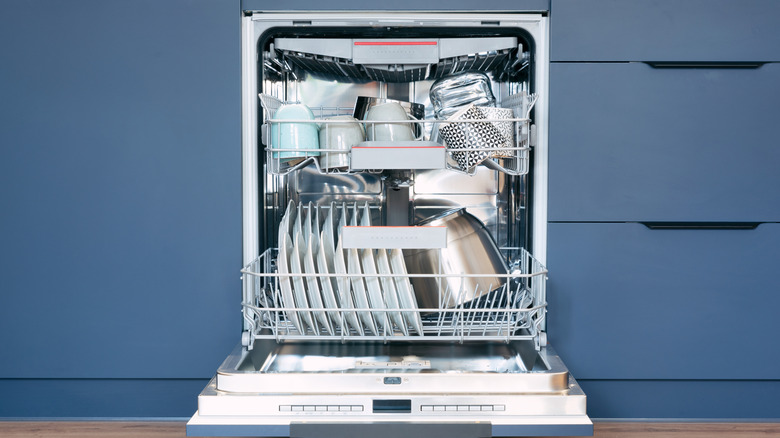
One more culprit of a musty dishwasher is mold or mildew, which grows easily in the steamy environment of the appliance. It's especially common on the gasket (aka the rubber seal on the inside of the door). Get rid of unwanted guests by cleaning your dishwasher using the same methods as for grease buildup, taking care to wipe the gasket thoroughly. Prevent further mold growth by keeping the door cracked open after every cycle, which allows steam to escape – a must-do before leaving clean dishes in the dishwasher overnight.
Hard water can also seriously mess with your dishes. Mineral deposits on the dishwasher's parts not only smell strange on their own, but can cause food particles to stick around and might even obstruct drainage. If softening your water isn't an option, buy a dishwasher cleaner meant to target hard water deposits, and manually clean the appliance often.
If you notice standing water or slow drainage in your dishwasher, that will also contribute to unpleasant odors. Make sure the drainage hose isn't clogged or broken, and call a professional if you suspect that it needs repairs. How long your dishwasher lasts before replacing the whole machine varies from model to model, but consistent drainage issues in an older washer might mean it's time to pony up for a new one. If you do need a new one, check out our article on the best dishwashers according to reviews. To prevent future clogs and messes of every kind, try hacks that will make dishwashing a breeze, such as removing large pieces of food or strong-smelling residue like eggs from dishes before loading.