

9 Old-School TV Dinners We Grew Up With And Still Miss Today
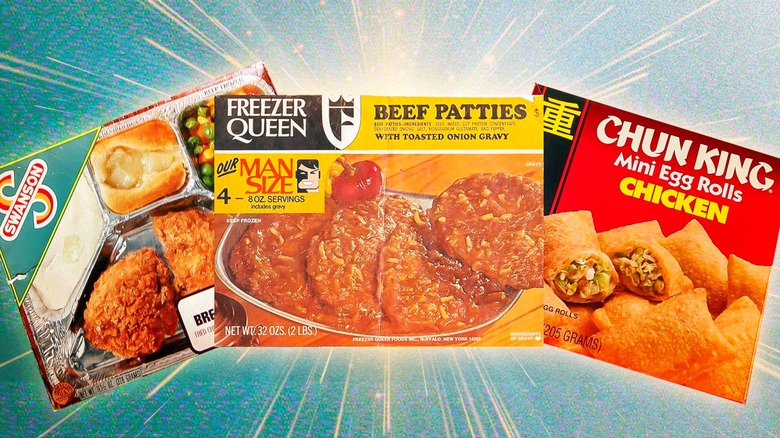
Meal prepping has all but taken over in the world of convenient dinner options, but there was a time in America's history when the humble TV dinner reigned supreme. Although the groundbreaking rise of TV dinners is often associated with the 1950s, when frozen meals became accessible to the public, it actually started way back in 1925. An entrepreneur invented a machine to freeze fish, which was later used to conveniently pack airplane meals, thus saving hours of labor and cutting costs. By the 1950s, the Swanson company got ahold of this technology, bringing complete frozen meals from the airplane to the grocery store — and the rest, as they say, is history.
In this list, we'll warp back in time to the decades when frozen dinners were the preferred choice for picky kids, busy parents, or those who weren't well-versed in the kitchen. These vintage frozen foods are gone but certainly not forgotten — their names alone wash over us in a wave of nostalgia, conjuring memories of watching prime time television with the whole family, everyone curled up with their TV dinner of choice.
So, let's ready the oven, grab our trusty spork — and please, wait for it to cool first. Let's explore these long-gone dinners of yesteryear that once filled our freezers (and our hearts) to the brim.
Swanson's fried chicken dinner
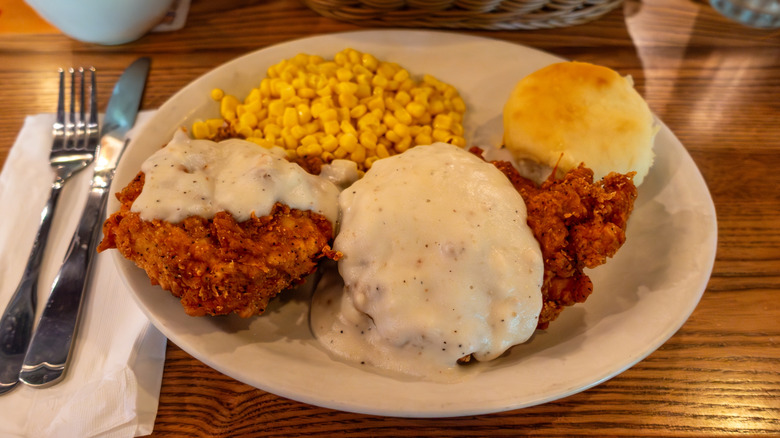
Although the fried chicken dinner from Swanson's Foods wasn't the original frozen meal created by the pioneering company (that would be a turkey dinner with sides like potatoes and peas), it was the fan favorite. Unlike the frozen, microwavable meals that we sometimes dig into today — although they don't hold a candle to our bento boxes full of homemade food that we meal prepped for the week — these Swanson dinners were meant for the oven. They came in a now-iconic aluminum tray stuffed into a freezer-friendly box. All you had to do was unwrap the meal and stick it in the oven for about 25 minutes to be graced with a classic meat-and-three dinner that was all-Americana and, admittedly, all-mediocre tasting — but the convenience made it delicious.
The Swanson fried chicken dinner came with two tender, crunchy pieces of chicken that tasted fresh from the fryer and somehow retained plenty of juiciness. Different versions came with different sides, like the 1985 version, which was paired with whipped potatoes, corn, and a chocolate brownie with nuts.
Another take on the iconic American dinner from Swanson came with the same whipped potatoes, a mix of peas, carrots, and corn, and a tiny apple cobbler for dessert. And yes, the apple compote inside was roughly the temperature of volcanic lava, but we ate it first anyway.
Freezer Queen's frozen dinners
The Freezer Queen brand of frozen foods — based in Buffalo, New York — was one of the biggest players in the world of TV dinners back when the concept first took off with the public. In the 1950s, brands like Freezer Queen came on the scene to compete with Swanson, offering quick meals that gave Americans more time to enjoy their favorite TV shows with their family. Of all the common foods from the '50s, TV dinners are among the few that stuck around, and we can thank brands like Freezer Queen for making them delicious enough to cement themselves a permanent spot in American food lore. Although it had its heyday in the '80s, the company existed up until 2004, when it was discontinued for a disturbing reason.
Freezer Queen offered most of the classic dinner options that were popular in the mid-to-late 20th century, like sliced turkey, Salisbury steak, and meatloaf — all famously loaded up with tons of gravy. Unlike other brands that sold strictly oven or microwave meals, Freezer Queen offered some boil-in-bag dinners that proved extra quick and convenient.
But it all came to a halt when Buffalo's health department forced Freezer Queen to close its doors for good. It turns out that roaches in the gravy vat — among other unsanitary food safety violations — aren't very healthy or appetizing. But we'll still hold on to the fond dinnertime memories we made thanks to Freezer Queen ... and do our best to forget the less savory parts.
Morton's Twinkie Suppers
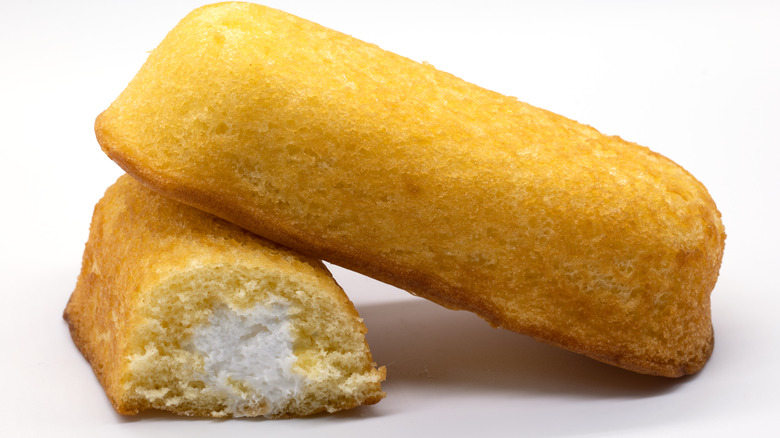
Don't you immediately think of Twinkies when the topic of what's for dinner comes up? No? Well, back in the 1960s, Morton's Twinkie Suppers were often on the menu, making the humble Twinkie part of the American dinnertime ritual. Morton Frozen Foods was an icon in the middle of the 20th century thanks to its classic pot pies, desserts like apple pie and honey buns, and three-course dinners — all freezer-friendly. Morton was eventually sold to multiple corporate entities, including Del Monte and later Conagra, until it faded from grocery stores for good around the year 2000.
The bizarre (but undeniably appealing) Morton Twinkie Suppers came in a few distinct varieties, like a spaghetti and meatballs dinner with a Twinkie on the side (talk about carb loading) and a confusing burger-like dinner. Instead of being labeled "burger dinner" or something to that effect, Morton referred to this meal as containing a "beef pattie." It came with corn and french fries on the side — and, of course, a Twinkie to act as the star of this frozen concoction. The mascot Twinkie the Kid appeared on every box to advertise the dinner's most appealing aspect, undoubtedly to attract the attention of children shopping with their parents.
Libbyland's Adventure Dinners
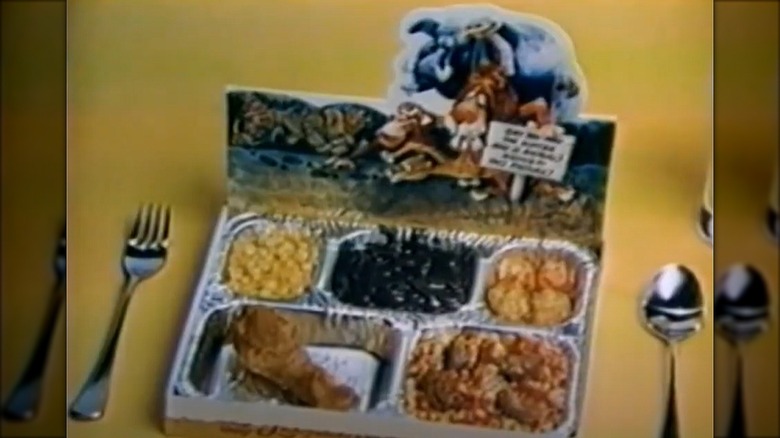
'90s and 2000s kids cherish Kid Cuisine, but before these penguin-themed dinners took over the kid-friendly frozen food scene, Libby's was there to pave the way. Libbyland Adventure Dinners were designed specifically for children, with fun themes like Pirate Picnic, Seadiver's Dinner, and Safari Supper. To be honest, they put the frozen kids' meals of today to shame.
Some of the Libbyland meals stayed on theme: The cowboy-themed Sundown Supper contained franks and beans and a burger, while the Seadiver's Dinner featured fish sticks, and so on. The Safari Supper was a fan favorite, featuring fried chicken plus alphabet spaghetti with tiny meatballs and a side of tater tots. Of course, every meal came with a dessert, but it was limited to just chocolate pudding.
The aluminum foil trays were designed to sit in the box, which could be propped up to display artwork and puzzle games for kids to solve while going to town on a four-course meal. One of the most unique features of Libbyland's Adventure Dinners was the addition of "Milk Magic" — a crystalline substance that, when added to regular milk, created an explosion of chocolatey flavor. But Libbyland's reign of fun only lasted from about 1971 to 1976, before the kid-tastic dinners eventually faded into obscurity.
Chun King's frozen dinners
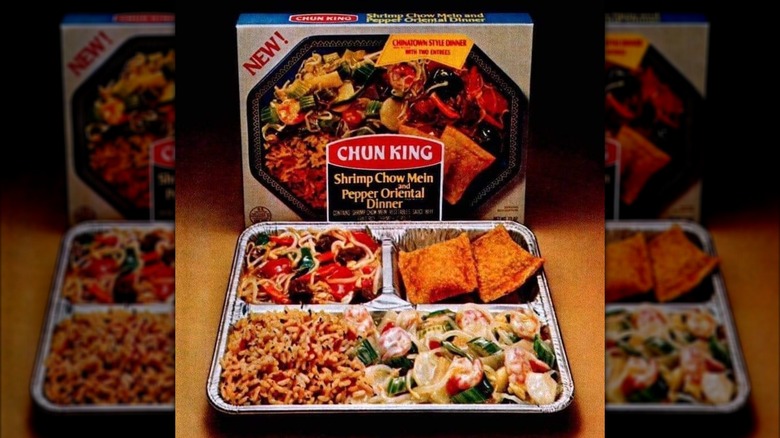
The story of Chun King is a quintessential story of America's amalgamated food cultures. The company started all the way back in the 1940s, when Jeno Paulucci — a man of Italian descent, ironically — came up with the concept of canning Chinese American favorites for convenience.
Paulucci rented an old cannery in Grand Rapids, Minnesota to make his new canned meals, beginning with the chow mein — and so, this iconic dish became the meal that would mark the start of Chun King's frozen aisle dominance. This venture's success — it's said that he was soon selling more than 300 cases daily — sparked the addition of frozen meals to complement Chun King's canned options and keep up with demand surrounding the TV dinner trend in America at the time. Chun King sold frozen meal versions of dishes that are still staples in Chinese American cuisine today. You could find sweet and sour pork, shrimp chow mein, chicken chow mein, and beef and peppers, all with sides of fried rice and egg rolls.
The company saw sales in the area of $30 million in the 1960s — a staggering figure for the time — and was eventually sold off to the tune of $63 million in 1966. The frozen food line's ownership would change multiple times over the next few decades, but by the mid-'90s, when it was in the hands of Conagra, the brand was discontinued for good.
Swanson's Salisbury steak dinner
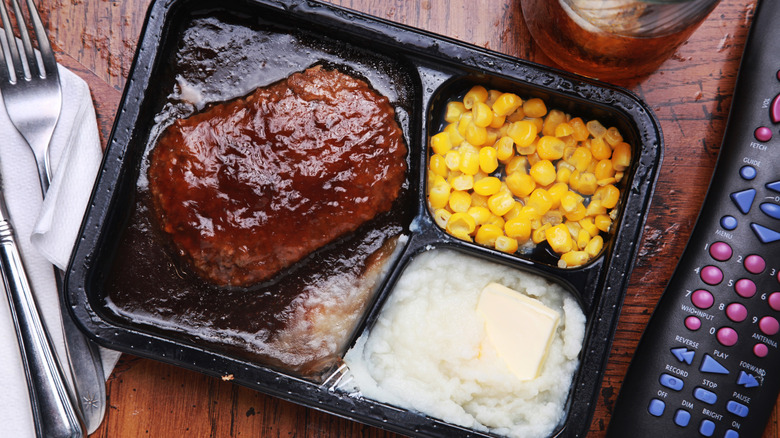
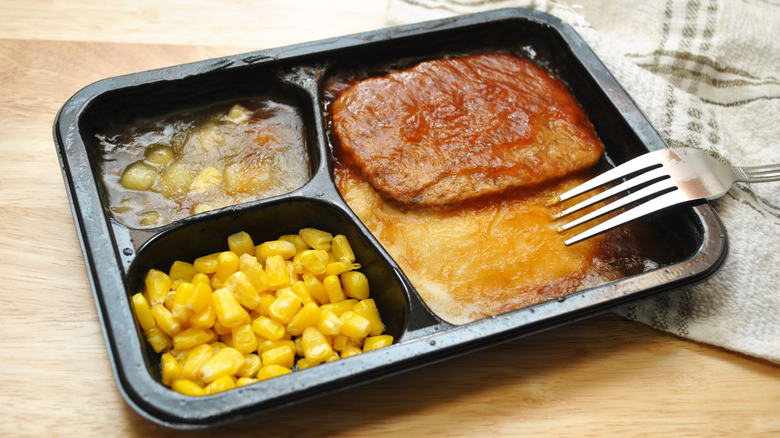
It should come as no surprise that the undisputed champion of mid-century era TV dinners is making another appearance on this list, this time with a vintage steak dish that left the American culinary lexicon far too soon, if you ask us. A typical Salisbury steak recipe consists of ground beef patties flattened into the shape of traditional steak cuts, then smothered — and we mean smothered — in a rich, oniony, mushroomy gravy. The result is moist, tender beef patties loaded up with savory flavor — which just so happen to freeze extremely well, and frozen food companies took notice.
Swanson's TV dinner version of this favorite, time-tested recipe came with one beef patty swimming in dark brown gravy, plus a side of corn, mashed potatoes, and a tiny brownie, the center of which was basically hotter than the surface of the sun. Swanson's Salisbury steak was such a hit that folks all but gave up on trying to recreate the iconic dish from scratch. Nowadays, Salisbury steak is heavily associated with frozen TV dinners. Since TV dinners aren't nearly as popular as they were in the mid and late 20th century, Salisbury steak has all but disappeared from the American dinner table.
Rosarita's Mexican-style dinners
The story of Rosarita began with Pedro and Rosaura Guerrero, a Mesa, Arizona couple, who were married for an astounding 76 years. They founded the company together, which still exists and thrives to this day. Legend has it that Rosaura was a horrible cook at first, but she ultimately mastered the skill in order to help her husband achieve his dream of pioneering a Mexican food brand that specialized in convenience. Her labor of love turned a massive profit, making Rosarita (which is derived from her name) a household name in Mexican American fare.
Although the Rosarita brand was more well-known for its salsa, tamales, and canned beans, in the middle of the 20th century, the brand jumped on the TV dinner bandwagon. Its collection of frozen dinners came during a time when Americans were infatuated with convenience, television, and ethnic cuisine, so the Rosarita brand created a perfect storm of success.
Rosarita offered a beef enchilada dinner, which came with miniature beef tacos and a side of refried beans, as well as a Mexican-style combination plate; cheese enchiladas; and tamales. The combination plate was a major crowd pleaser, with beef tacos, cheese enchiladas, and a side of cheesy refried beans — and it only cost 53 cents to boot.
Morton's ham dinner with raisin sauce
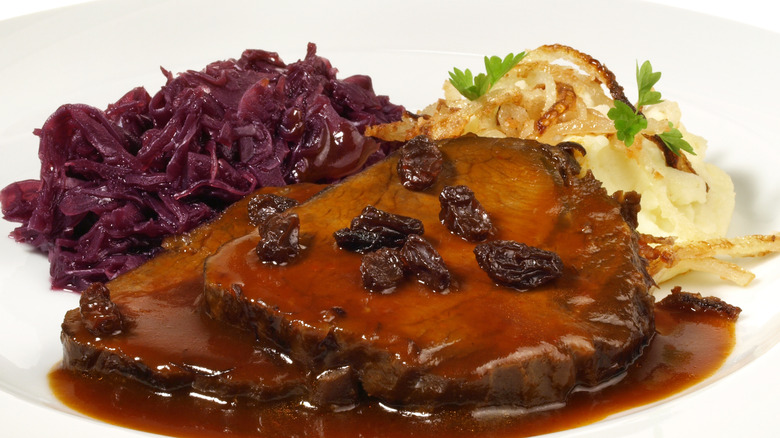
If you had to do a double take when you read the name of this Morton dinner, we don't blame you — but what do you expect from the company that once showcased Twinkies in its frozen dinners? Raisin sauce with meat is the epitome of vintage American tastes, although it's actually a little less outdated than you might think. Nowadays, raisins are a secret ingredient you can use to elevate steak sauce rather than the feature of a dish. But back in the early 1960s, Morton's ham dinner with raisin sauce was all the rage — some groovy grub, if you will.
This very-'60s meal came with thick slices of juicy ham doused in a sauce that was probably made with raisins, sugar, vinegar, and mustard for a tasty sweet-and-tangy accompaniment for naturally sweet ham. On the side were seasoned peas, sweet potatoes, and apple slices arranged in separate compartments on an aluminum tray. This meal was around before microwaving frozen dinners really took off, so it was designed for conventional oven cooking. Folks who have been around long enough to remember both oven and microwave frozen meals tend to recall that the old-school oven method resulted in a better product.
Swanson's International Dinners
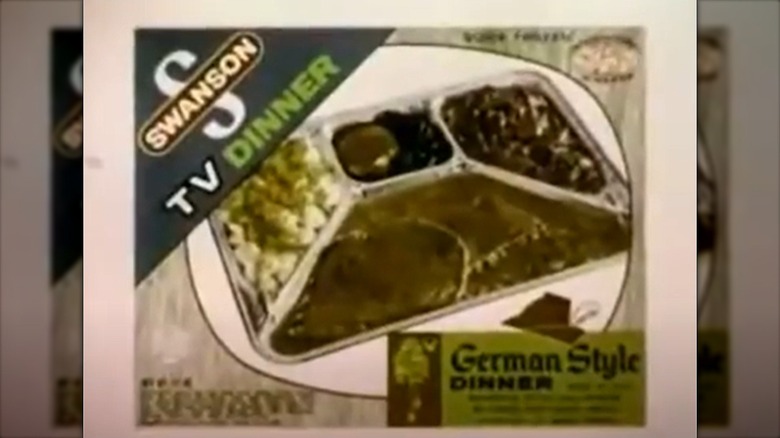
By the late '60s, Swanson's popularity was already in full swing, but the release of its International Dinners stepped up the frozen food game. Americans were likely getting tired of fried chicken, turkey, and Salisbury steak by then, so they embraced these new dinners, which helped folks get "a world away from the everyday," as the company's ads put it. As previously mentioned, international cuisine started to pick up steam at the time, so everyone was ready to explore the world's food cultures toward the end of the decade. Frozen dinners let them get a small taste of global cuisine without having to learn new recipes and cooking techniques or tracking down any obscure ingredients.
Swanson's line of international meals included a Mexican-style, German-style, Italian-style, and Chinese-style dinner. The Chinese meal consisted of chicken chow mein and fluffy fried rice with egg, while the German-style dish came with sauerbraten (otherwise known as a German pot roast) over spätzle (European egg noodles). The German meal also came with Bavarian red cabbage, plus a side of prune and apricot compote to accentuate the savory flavors in the beef. The Mexican dinner included beef tamales and enchiladas with fluffy rice and soupy beans, while the Italian meal had lasagna, Italian-style spinach, Tortoni pudding (an old-fashioned almond-flavored dessert), and sliced fruit.