

Luckin Coffee: We Tried Starbucks' Biggest Rival As First US Location Opens In NYC
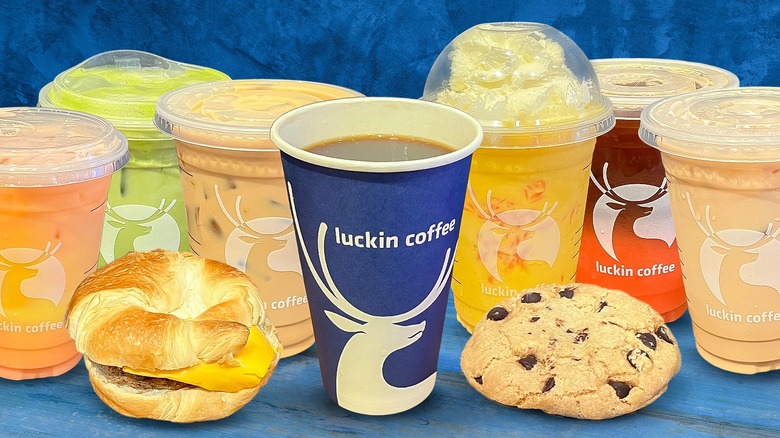
How is New York the city that never sleeps? Well, it may have something to do with coffee. There are thousands of coffee shops in this gleaming, hyper-competitive metropolis, and as of June 30, 2025, there is one more.
Luckin Coffee, China's largest coffee chain, just opened its very first U.S. locations in Manhattan. For those unfamiliar, Luckin burst onto the scene in China in 2017 with a tech-forward business model based on app-based ordering, low prices, and a focus on convenience. It grew fast (some might say suspiciously fast), and after a 2020 scandal involving inflated sales, many assumed it was down for the count. But Luckin regrouped, restructured, and has since quietly reclaimed its spot as China's top coffee chain, even outpacing Starbucks in domestic sales.
It's not the first international brand to take on a giant like Starbucks, and it won't be the last. But the real question is: Can Luckin win over New Yorkers? The best coffee shops in NYC also happen to be some of the best coffee shops in the country, so Luckin has some stiff competition. I stopped by its sleek new storefront to find out whether it's worth the social media hype.
Vibe
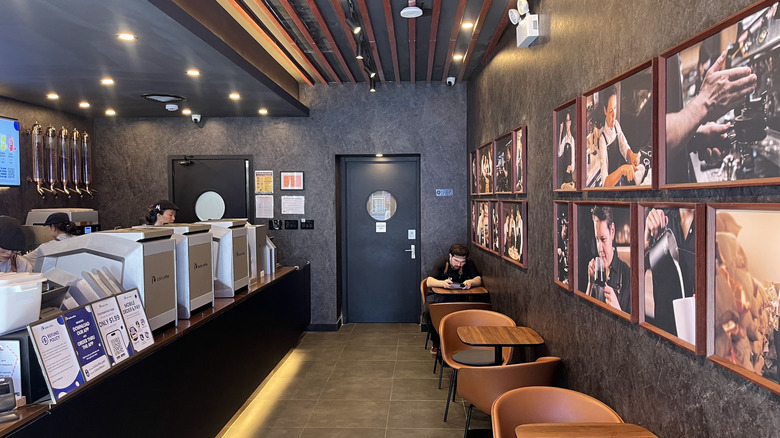
When I visited the Luckin Coffee location on Broadway in Lower Manhattan, it was immediately clear that this wasn't the kind of café where you were meant to hang around. The space was buzzing with students and young professionals who hovered near the pickup counter, only lifted their eyes from their smartphones long enough to see if their order had been called A team of harried baristas moved with the urgency of an airport ground crew, churning out drink after drink in what felt like a never-ending relay race.
The décor leaned toward minimalism, dominated by Luckin's signature blue and white branding, with cool-toned lighting and smooth surfaces that gave the whole place a slightly futuristic, almost clinical feel. Seating was limited to a few functional stools along the wall and a few tiny tables, which were all occupied. This isn't the kind of coffee shop where you curl up with a book or linger over a laptop; it's optimized for speed, convenience, and volume. Most customers came in with purpose, tapped a few buttons on the app, and waited at attention near the counter until their drinks were ready, at which point they bolted out the door with Instagram-worthy lattes in hand.
The shop itself was spotless (though, to be fair, it had only been open a week), and everything ran with clockwork precision. Still, the overall atmosphere felt more like a caffeine distribution center than a community gathering space.
Ordering
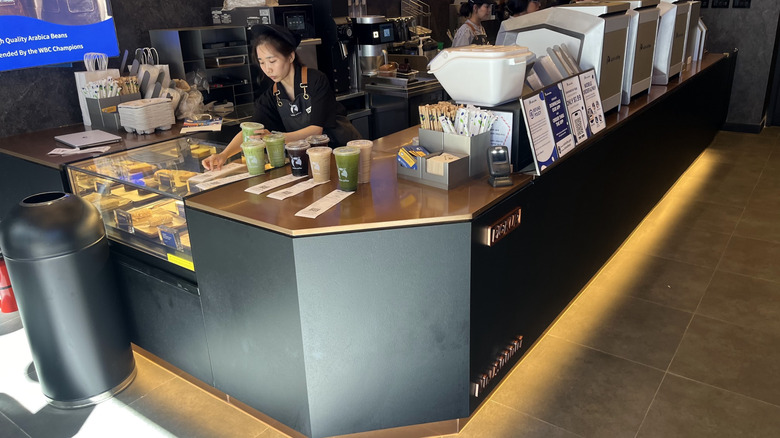
The entire ordering process at Luckin happens through the app. There's no option to speak to a barista or place an order at the counter. As I sat inside sipping my coffee, I watched a handful of people walk in, scan the space in confusion, and promptly walk back out once they realized they couldn't just order a latte the way they're used to. For a city used to fast service but still fond of human interaction, that barrier was clearly a dealbreaker for some.
That said, if you're willing to download the app, the process is seamless. It's fast, intuitive, and packed with customization options. You can do it all with a few taps and no fear of seeming like a diva with your laundry list of preferences. In that way, it's kind of liberating.
But still, something about the lack of face-to-face interaction feels a little sterile. As someone who relishes casual banter with a barista about beans or the weather, the transaction felt oddly cold. There's no moment of connection, no friendly smile, no chance to ask for a recommendation. Just a screen, a number, and eventually, a drink. It's efficient, but in a way that feels more like a vending machine than a coffee experience. It's a trade-off that might be worth it for some busy New Yorkers.
Signature lattes
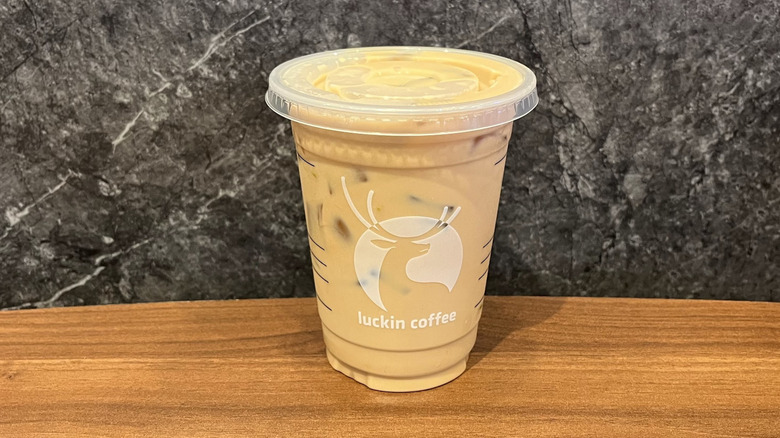
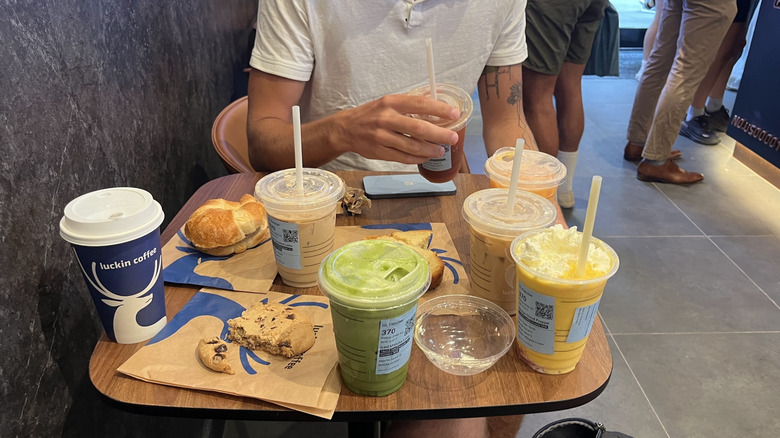
Luckin Coffee's signature lattes are where the brand seems most interested in making its mark. And if it's trying to stand out from traditional Italian lattes offered at many American coffee shops, it's doing a decent job. I tried two of its highlight drinks: The coconut latte and the velvet latte, both of which offer a very different experience from your standard caramel swirl or vanilla cold foam.
According to one barista I spoke with, the coconut latte is "by far the most popular drink. It's the biggest drink in China and they're still figuring out the U.S. market." But I wouldn't be surprised if this latte became a top seller stateside as well. The coconut doesn't overwhelm the drink, but it makes the beverage creamy and comforting, with a mild sweetness that doesn't get sickly sweet. You don't get a ton of coffee flavor here, but I can see it becoming a gateway latte for people who aren't hardcore coffee fans.
The velvet latte, another popular drink, is thick, almost like a melted milkshake. The barista told me the base is made with a combination of sweetened, condensed milk, heavy cream, whole milk, and ice cream milk mix. Drinking it felt like slipping on a very plush robe. If I were 16 and Instagramming my way through Lower Manhattan, this would be my emotional support beverage.
Coffee
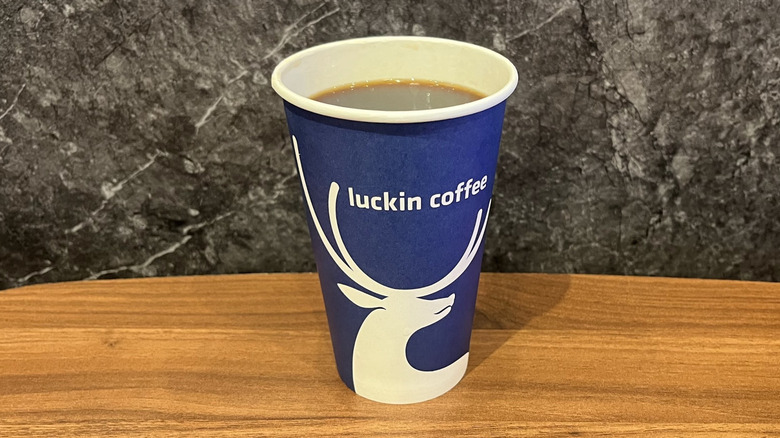
When it comes to actual coffee, Luckin holds its own better than I expected from a chain that leans heavily on app-based convenience and novelty lattes. I tried both the blood orange cold brew, one of many fruit-flavored cold brews on offer, and a classic Americano.
Cold brew and citrus aren't exactly natural companions, but this drink pulled it off. The blood orange flavor is bright and juicy and adds a tart, fruity layer that enhances the cold brew's natural acidity. It's a little sweet, but not horribly so, and you can also get it without added sugar if you prefer a sharper profile. It's the kind of coffee drink you could imagine sipping on a hot day when you want something caffeinated and refreshing. This drink changed the meaning of fruit-forward cold brew for me.
The Americano is less flashy, of course, but it's a good litmus test. I was pleased that it wasn't overly bitter, a departure from the scorched taste that sometimes haunts chain coffee. It was pleasantly drinkable, neither too hot nor too weak, and the lid design (a small but crucial detail) made it easy to drink on-the-go without sloshing or burning your tongue. It's not going to dethrone your favorite local roaster, but for a chain known more for gimmicky drinks, it's a surprisingly well-executed classic.
Non-coffee drinks
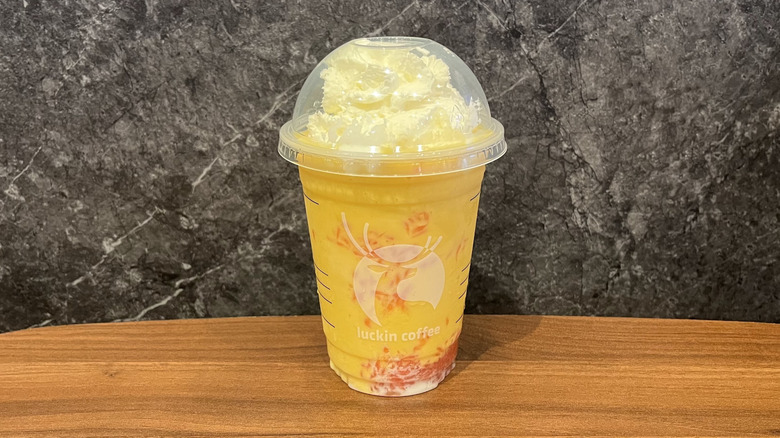
Luckin Coffee may lead with signature lattes, but on my trip to Luckin, I saw many customers walking out with eye-catching non-coffee drinks that I had to taste. The matcha latte was the most straightforward of the bunch. This latte packed a surprisingly bold, grassy flavor (something many cafés totally miss). That said, the default version was quite sweet. I'd order it again, but next time I'd skip the sugar for a cleaner cup.
The Pink Sunrise, on the other hand, leans fully into its over-the-top aesthetic. A layered mango-strawberry drink with a soft, milky tang, it looks like a Lisa Frank sticker but still manages to taste pretty good. I usually avoid overly sweet, non-coffee drinks at coffee shops, but this one had the right balance of fruity, creamy, and refreshing.
Finally, the Mango Cloud frappe is a tropical dessert in a cup. With its thick and satisfying texture, it makes the difference between a milkshake and a frappe seem negligible. I'm not sold on the grapefruit-mango combo, but I respect the creativity, and I give the beverage bonus points for the excellent whipped cream.
Food
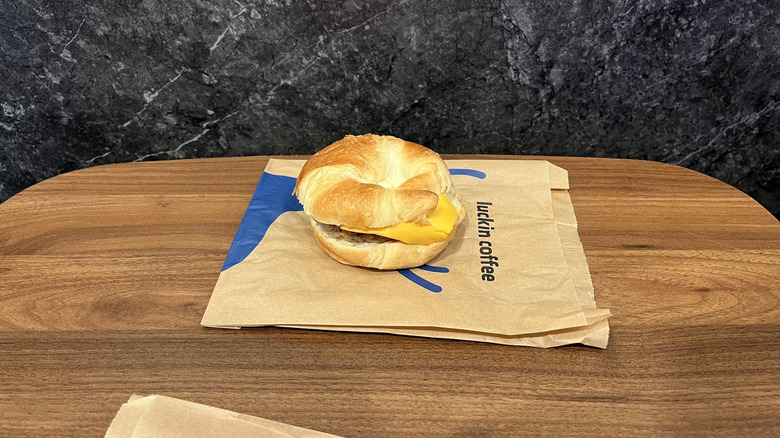
If Luckin Coffee wants to compete in New York's crowded café scene, it's going to have to seriously step up its food game. I wouldn't eat at Luckin again if it were the last coffee shop in New York.
I tried three items during my visit, and not one of them left me wanting more. The chocolate chip cookie was aggressively sweet, with a processed flavor that conjured images of an industrial food factory — not your grandma's sweet little oven.
The sausage, egg, and cheese sandwich was even worse. What was billed as a croissant tasted more like a spongy, flavorless roll. The egg was rubbery, the cheese barely registered as food, and the sausage patty was greasy and left a slickness on my tongue. For a New Yorker, a sausage, egg, and cheese like this one borders on blasphemy. The banana yogurt loaf was the only item I tried that wasn't outright offensive. It was moist and tender, with a pleasant texture, though the banana flavor tasted notably artificial. If any decision-maker at Luckin is reading this, I implore you: Invest more in your food or take it off the menu.
Value
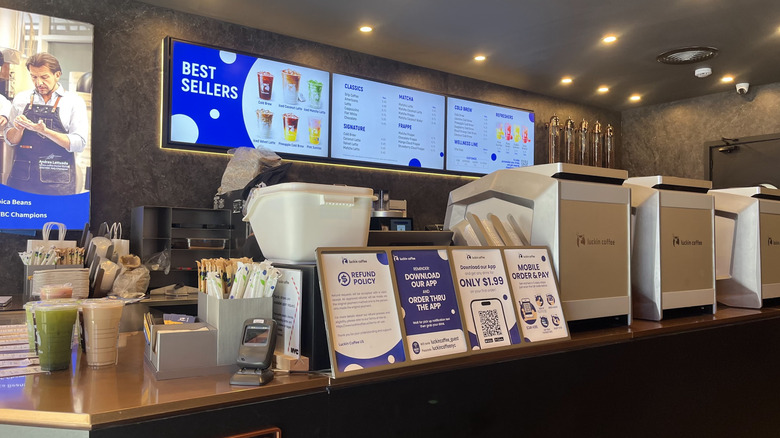
One of the most surprising parts of my visit to Luckin Coffee was the price, specifically the opaque discount formula that ended up saving me a significant amount of money. After adding several drinks and food items to my cart in the app, I went to check out and found the total amount I owed dropped by nearly half without any coupon or promo code. It was like some chaotic, benevolent force decided to slash my bill. I have no idea what was discounted by how much, or why. And neither did the barista, who gave me a shrug when I asked if this was a temporary promotion or just how Luckin operates.
If I'd paid full price, it would have been about what you'd expect for a coffee shop in New York, roughly $5 to $7 per drink. But with the discount, everything felt like an incredible value, especially considering how elaborate some of the drinks are. That said, I have no idea how long this generous pricing model will last. It could be an opening-week promo, a data-collection strategy, or just Luckin trying to buy goodwill in a brutally competitive coffee market. But for now, if you're curious to try the place, the risk-to-reward ratio is solidly in your favor.
Luckin vs. Starbucks
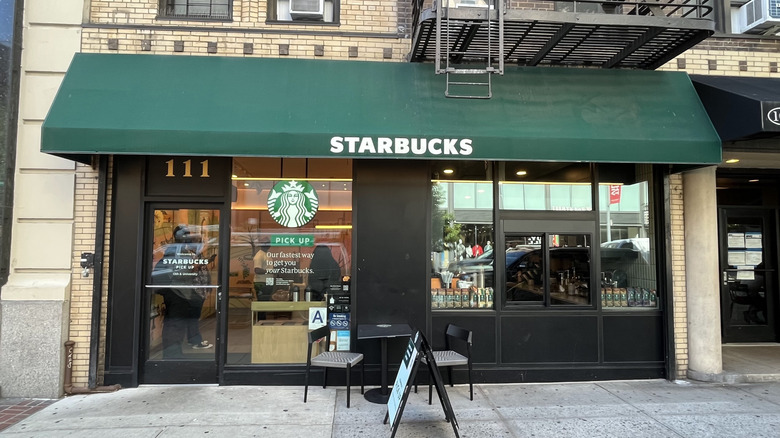
Although people often compare Luckin Coffee to Starbucks, the two offer fundamentally different experiences. Starbucks cosplays as a cozy, corporate riff on the neighborhood café, with its warm lighting and comfy chairs. Luckin, on the other hand, doesn't bother pretending it's anything other than a sleek, hyper-efficient caffeine factory that runs on app orders and pumps out colorful, camera-ready lattes with the efficiency of a Swiss watch.
While Starbucks drinks tend to skew syrupy unless you customize them, Luckin's default drinks are notably less sweet. And while the app-only ordering model may annoy some, it's impressively streamlined, with tons of customization options that are easy to use.
Luckin also seems more adventurous with its menu, with drinks like blood orange cold brew or velvet latte that make innovations like Starbucks' cold foam flavors look pretty predictable. Luckin's drinks are also visually striking, made for social media in a way most Starbucks offerings aren't. That said, when it comes to food, Starbucks wins by a landslide; the food I tried from Luckin ranged from bland to genuinely unpleasant, and I wouldn't bother ordering it again. And most glaringly, Luckin isn't built for lingering. There's barely any seating and a generally hostile vibe toward anything resembling relaxation.
Final thoughts
I wasn't expecting to like Luckin Coffee as much as I did. After seeing the neon lattes on social media, I assumed it would be a gimmicky attempt to cash in on coffee culture without really understanding what makes a good drink. But to my surprise, the drinks were genuinely solid and in some cases, better than what you'd find at more established chains.
The mobile-only ordering system will definitely turn some people off, especially those chatty Cathies like myself who prefer a human touch. But for a growing number of customers (especially in a fast-paced city like New York) the appeal of a fully app-based experience makes sense. In a way, it's the perfect business for late-stage capitalism.
New York City is a fitting place for Luckin's first U.S. outpost. It's a refueling station, a means to an end; it's not a destination. But while I am reasonably confident that Luckin can thrive in Manhattan, I'm not sure it would have quite the same appeal in other American cities with slower paces and a stronger emphasis on human connection.