

10 Surf And Turf Combos That Make The Ultimate Dinner Duo

There isn't a really good origin story for the pairing of beef and seafood to make the surf and turf meal. Or, perhaps more accurately, there are too many stories about where surf and turf originated, meaning it's hard to know which (if any) is accurate. The concept as we know it today seems to date to the post-war years of the mid-20th century, roughly paralleling what we think of now as the "Mad Men" era.
Of course, the concept of serving meat and fish at the same meal is likely an echo of the feasts from bygone centuries, where lavish meals with multiple kinds of meat, poultry, and fish demonstrated the host's wealth and generosity. The modern surf and turf carries the same message (in its smaller way), as it's a happy splurge and symbol of abundance.
However it arose or what it means, combining beef and seafood just plain tastes good. As a trained chef myself who grew up on the seafood-centric East Coast and started my culinary career in Alberta — AKA Canada's beef capitol — I know a thing or two about both beef and fish. More than that, I've seen them combined in some fairly interesting ways. With that in mind, here are 10 surf and turf pairings to try, ranging from old school traditional to the distinctly uncommon.
Beef tenderloin and lobster tail
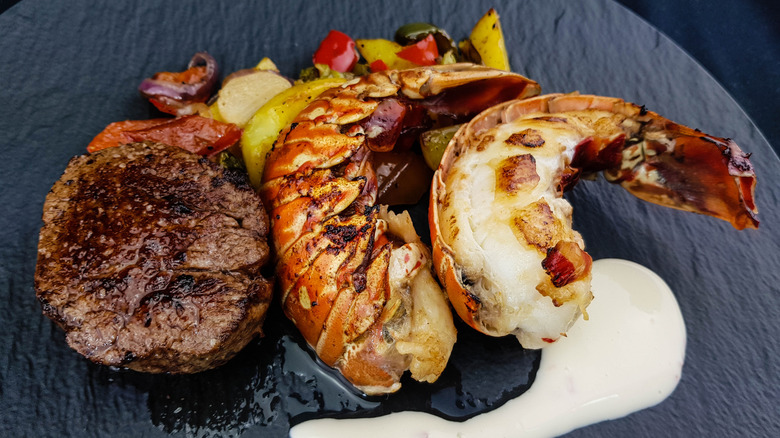
Let's start with the classic version of surf and turf — the one you'd expect to see at a good restaurant. Of course, you really can't go wrong by putting a lobster tail together with a nice piece of beef tenderloin. This is a quintessential special occasion meal, whether you prepare it at home, or go out to celebrate at a nice restaurant. Although it's an expected combination, there are still any number of ways you can spin it.
Most of these options revolve around how the lobster tail is prepared; you can butterfly it and grill it, for example, or use a pair of shears to cut away a section of the shell, then broil the exposed lobster. You might even par-cook the tail in a steamer, extract and butter-poach the delicate flesh, then put it back into the shell for a prettier presentation. Like I said, there are lots of options available.
Regardless, this combination works on a number of levels. Culinarily, the pleasantly chewy texture and sweet flavor of the lobster makes it a good foil for the butter-soft, savory beef. Also, tenderloin medallions tend not to be especially large, so you can eat both main proteins without feeling bloated. Additionally, both are unquestionably premium ingredients, which doubles down on it being a special occasion dish. In short, this duo just works.
Crab cakes and strip steak
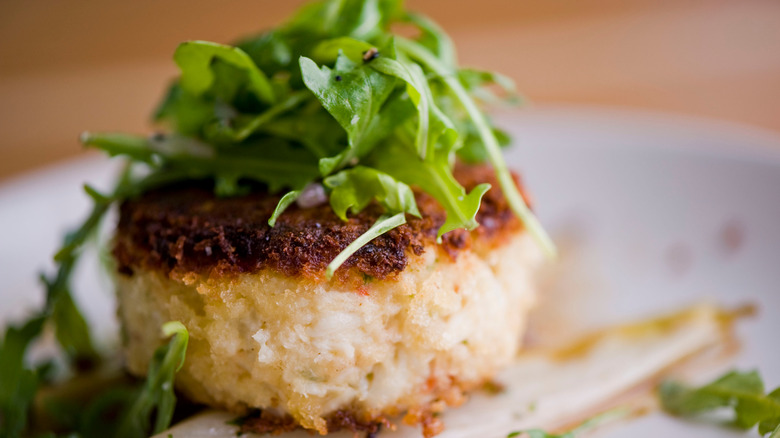
While crab cakes are appreciated everywhere, they're essentially a religion in Maryland. We don't all have access to that state's treasured blue crabs, but the West Coast's Dungeness crabs and the East Coast's snow crabs make a pretty good crab cake, as well. Either way, the combination of flavor and texture makes crab cakes an excellent accompaniment for a good grilling steak, like a strip steak, for a less traditional take on surf and turf.
Here, the beef will be chewier than the tenderloin filet in the classic version, while the softer crab meat (and the crisp crust) provide an appealing textural contrast. Crab is, if anything, even sweeter and more flavorful than lobster, and lump crab meat is more tender than a lobster tail. Combining the crab meat with just enough breadcrumbs to help it hold together in the skillet creates a pleasing crust on the finished crab cake.
What really makes this combination hang together is the dipping sauce that's served with the crab cakes (usually a remoulade). The sharp tang of the dipping sauce cuts through the richness of the crab and the well-marbled beef, which might otherwise feel like just a little too much of a good thing.
Steak Oscar
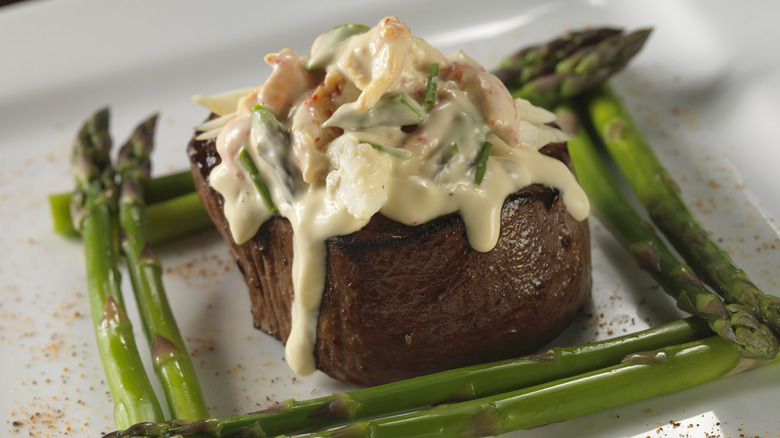
This one-time restaurant favorite has faded somewhat with contemporary diners, who often favor bright, fresh flavors and lighter dishes. After all, steak Oscar is the exact opposite: A resolutely old school dish that feels like an ode to excess. Of course, that's probably because steak Oscar was created for royalty, specifically Sweden's King Oscar II. The original version of this surf and turf dish used veal, crayfish, and asparagus, all topped with rich Bearnaise sauce (like Hollandaise, but infused with tarragon).
Like many things from the 19th century, steak Oscar was Americanized and updated after it arrived on this side of the Atlantic. Consequently, modern steak Oscar uses filet mignon in place of veal, and crab in place of crayfish. If you live in crayfish or crawfish country, of course, you can definitely switch back if you prefer.
This decadent dish holds up surprisingly well in the modern day. A key reason is that beef tenderloin, while unusually tender, is actually quite lean. That makes it an outlier among premium steak cuts, which tend to be rich and well-marbled. In fact, the buttery sauce would be overwhelming if added to a ribeye, but with a medallion of tenderloin, it works beautifully.
Carpaccio with ceviche
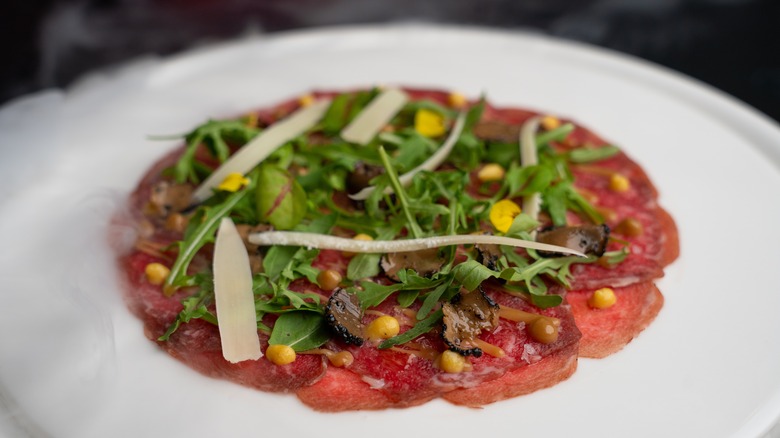
This unconventional option is perfect for hot days when you don't want anything rich or heavy. The only potential downside to this surf and turf combo is that the main ingredients are uncooked. Now, sushi's been popular for long enough that people are used to eating raw fish, but raw meat is still mostly a niche thing for enthusiasts. Still, it's a very natural pairing that makes for the ultimate dinner duo.
Carpaccio — said to owe its origin to a visiting countess in Venice — is made of raw or lightly seared beef. This is sliced paper-thin, then served with acidic ingredients, like capers and lemon juice, and garnished with shavings of Parmesan cheese. The classic ceviche recipe combines similar ingredients in a different way, immersing bite-sized pieces of lean, white fish in an acidic marinade. The marinade makes the fish opaque and its texture firm, just as cooking would.
I once tried this combination on a whim at an industry function, where each was available from a different food vendor, and it worked surprisingly well. The acidity of the fish's marinade made it a perfect foil for the beef, and the differing textures of the beef and fish complemented each other nicely. The cilantro-and-chilies flavorings in the ceviche are at odds with the carpaccio's Italian roots, but as long as you keep the marinade's citrus base, you can experiment with your own flavoring options.
Grilled ribeye and grilled shrimp
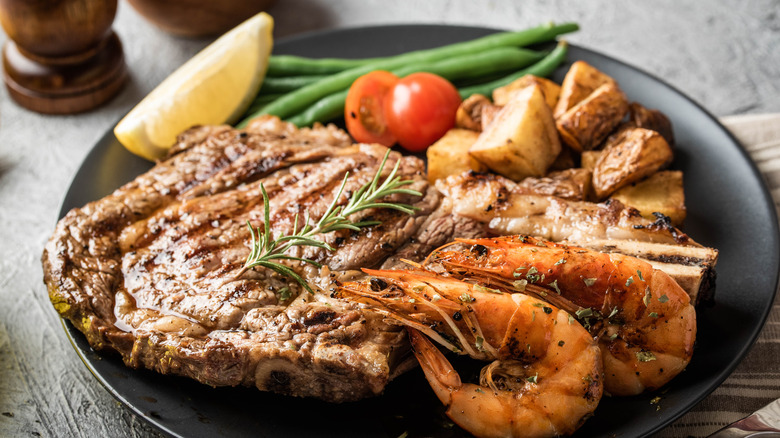
Here's a variation on surf and turf that works equally well as a traditional sit-down dinner or at a summertime backyard party. Either way, making both grilled ribeye and grilled shrimp gives you an excuse to fire up the grill (and avoid heating up your kitchen on hotter days).
The ribeye is an especially rich cut of beef because it's the most heavily-marbled of the common grilling steaks. It takes a certain degree of skill to grill them well, because the fat is prone to flaring up and dripping. Still, they're flavorful enough to be well worth the effort. Shrimp also lend itself beautifully to grilling. Depending on your budget, you can buy shrimp large enough to pop straight onto the grill, but usually it's better to skewer them (like in this copycat Texas Roadhouse grilled shrimp recipe).
Ribeye and shrimp make a natural pairing in a couple of additional ways. The ribeye is super rich while the shrimp are not, which helps keep the dish from being too over-the-top. Also, while ribeye commands a premium price, you'll usually be able to find good deals on shrimp. Using the shrimp to offset the cost of the beef helps keep your budget healthier, while still letting you enjoy a lavish dish.
Philly-style fish cake dog

I don't often recommend combinations I haven't tried myself. But every once in a while, I come across an obscure regional specialty that's just too good to ignore. That's the case with this oddball surf and turf pairing, which I hadn't been aware of before I began writing for this site. While this Philadelphia fish cake dog is an old school favorite that's slowly disappearing, and yup: It's exactly what it sounds like.
First, you take a hot dog on a traditional soft bun, and break up a fried fish cake over top of it. For the next (and less obvious) part, you top it with its unique traditional condiment of "pepper hash," a vinegary slaw with bell peppers in it. Now, I grew up eating fish cakes on the East Coast, and I can taste this in my head (chefs do that). Consequently, it works for me, and I'm absolutely going to make this to eat with the grandkids before the summer is out. If the classic surf and turf is a slam dunk for celebratory meals, this oddball variation on the theme is much better suited to a summer afternoon filled with kids, sprinklers, and excited pets.
Skirt steak with monkfish
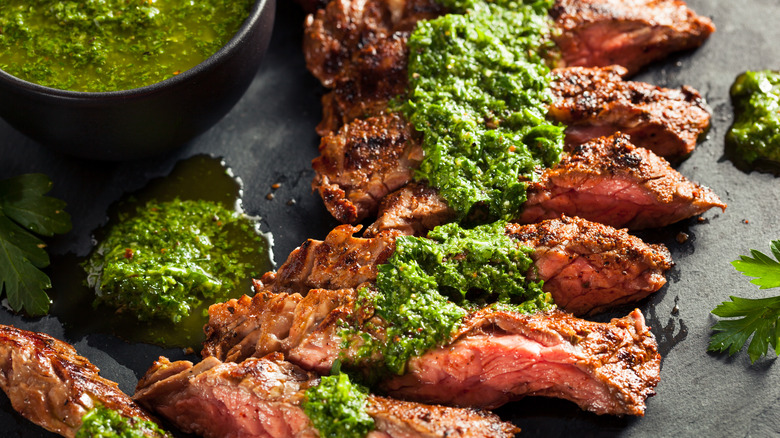
The beef industry has done a really good job of popularizing once-obscure cuts over the years. Several of these fall into a specific category sometimes described as bistro steaks for their popularity in classic bistro dishes like steak frites. These cuts (such as skirt steak) have long, chewy muscle fibers. While they're dense and somewhat tough, they have an outstandingly beefy flavor, and cooks and chefs have always been motivated to find ways to use them. On that note, consider pairing a grilled skirt steak with medallions of monkfish for an interesting spin on more-common versions of surf and turf.
Now, the ideal technique for skirt steak is to grill the beef whole, then slice it thinly across the grain to shorten the muscle fibers. When done properly, the sliced steak is deeply flavorful with a pleasant texture. Meanwhile, monkfish is sometimes called "poor man's lobster," because its thick fillets resemble a lobster tail, and it has something akin to a lobster's sweetness. It's an appealing complement to the savory beef, especially if you serve a bold and tangy chimichurri sauce with the skirt steak.
Gravlax with steak tartare
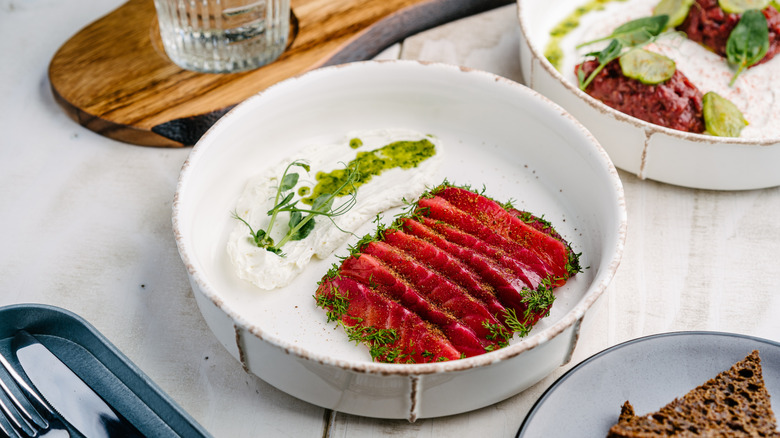
Here's another take on surf and turf that might stretch your sensibilities a little, but makes perfect sense from the culinary perspective. Like ceviche with carpaccio, this combo pairs uncooked fish with uncooked beef in an unconventional but logical way.
You may have seen or eaten steak tartare at a restaurant, which is where it's usually served. Now, homemade steak tartare is absolutely a thing if you're adventurous, but many of us would just as soon leave that to the pros. It's made of fresh-minced beef with herbs, mustard, and an egg yolk, and is usually served with pickles or capers to counter its richness. As for the surf component, gravlax is silky-soft cured salmon made with salt, sugar, herbs, and strong spirits (traditionally aquavit or vodka). Sliced thinly, its texture is similar to lox and other kinds of cold-smoked salmon, but minus the smoke.
Serve both the tartare and sliced gravlax on a platter with capers and other garnishes, plus a selection of crusty bread, crispbreads, or crackers as accompaniments. You could also prepare individual plates of tartare, then provide the gravlax and breads alongside. You and your guests can alternate mouthfuls of one with the other, or even wrap a forkful of tartare and a couple of capers in a slice of gravlax. The herbal tang of the cured fish makes it a fine complement to the beef's richness.
Braised squid in Bolognese
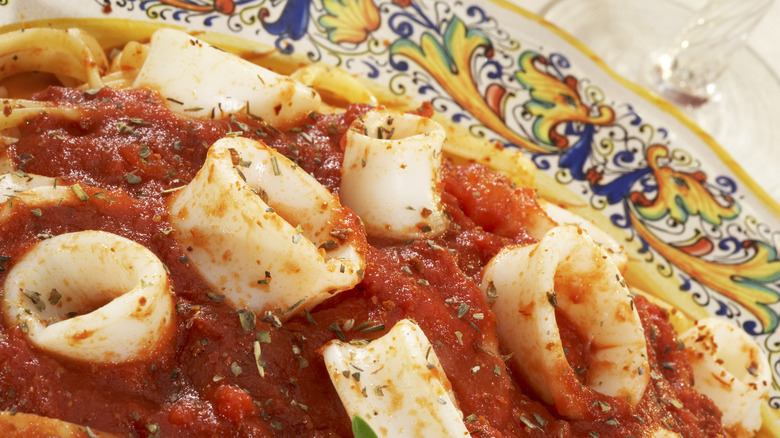
There's a saying that squid needs to be cooked for a minute or an hour, and that's mostly accurate. If not cooked properly, it can feel like you're chewing rubber bands — and we've all had bad calamari that fell into that trap. Either way, this offbeat take on surf and turf (featuring squid in Bolognese) is very much a comfort food kind of dish.
I generally use whole squid tubes because I like the option of stuffing them, but you can use strips, rings, or anything else you find at the store. If you aren't familiar with cleaning squid, I'd suggest picking up a pack of tubes or rings from the frozen section; it's easy and they're inexpensive. As for the cooking method, it couldn't be simpler. Make your favorite Bolognese recipe, or crack open a jar of your favorite commercial brand, then add the squid. Slow-simmer the mixture in your slow cooker, on the stovetop, or in the oven, until the squid are very tender (it'll take a couple of hours).
While marinara is the traditional choice for this type of dish, Bolognese is an interesting alternative, and makes for a heartier meal. If you have lots of sauce and a small quantity of squid, serve it over pasta as you normally would. If you have lots of squid in a modest quantity of sauce, serve it with crusty bread, shaved Parmesan, and a nice side salad.
Halibut with bresaola
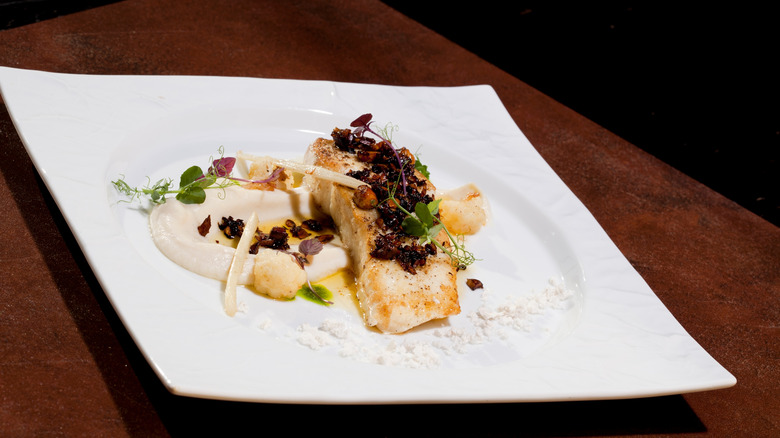
Most surf and turf recipes treat the beef as the main element, with the seafood acting as a (sometimes deluxe) garnish. But this pairing turns that on its head. Here, halibut is the star of the show, while beef — bresaola, to be precise — is relegated to a glorified garnish.
Halibut is one of my personal favorites. It's a large, bottom-dwelling flatfish with firm white flesh, and a mild but pleasant flavor. There are still sustainable halibut fisheries on the East Coast, though Pacific halibut is both common and equally tasty. You may see it in the form of fillets (from larger fish) or steaks (from smaller fish, or the tail sections of larger fish). Both are good, though you'll have bones to contend with if you opt for a steak. Regardless, it's a versatile fish that's equally good whether baked, broiled, grilled, steamed, or pan-fried.
The difference maker here is a dense and richly-flavored form of dry-cured beef from northern Italy called bresaola. Think of it as something like prosciutto from cows, though that doesn't really do it justice. It's normally thin-sliced and eaten uncooked, though we're going to crisp it in a pan or a toaster oven in this case. Cook the halibut however you choose, then break the bresaola into shards over the portions as a flavorful addition (similar to how you'd use bacon in other dishes). The beef adds a bold, savory note that elevates the halibut and forms a delicious duo.