

The Best Affordable Store-Bought Cheeses To Add To Your Charcuterie Board
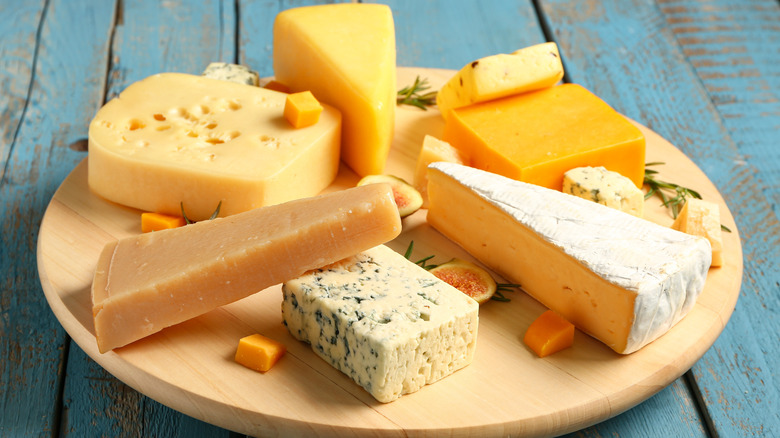
Nothing says party like a carefully curated selection of cheeses, but creating a spectacular cheeseboard doesn't need to break the bank; it's just a case of picking the right types of cheese. To help us create the perfect, affordable cheeseboard, we consulted Caroline Elston, co-founder of Platterful, who began by walking us through the reasons for price differentials in cheese. Elston explained that while ingredients play a part — "Gouda will always be cheaper than a truffle-infused one" — a lot of it is down to aging, as "a 1-year aged cheddar is likely going to be less expensive than a 10-year aged cheddar."
Elston advises sticking to the basics, keeping budget in mind, and trying to determine where you can save and where you can splurge. Try saving with basic cheeses, like orange or yellow cheddar, and splurging on a single, unique flavor profile showstopper — essentially making one cheese the star of the show.
We asked Elston which cheeses she would choose for a good-quality yet budget-friendly cheese board. She tells us, "The most popular (and easy crowd-pleaser options for a charcuterie board are going to be an aged cheddar, a smoked gouda, and a herbed goat cheese – you can likely find a variation of all of these for under $10 at your local market." Here's the ultimate guide to what cheeses you can find at the store for a good price to craft an amazing charcuterie board.
Cheddar
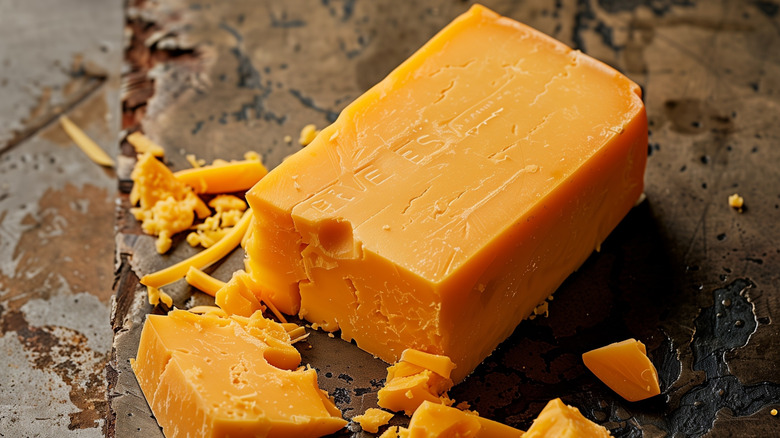
No cheese board would be complete without cheddar cheese. Universally loved, cheddar can be sharp and tangy, mild and creamy, and it appeals to all tastes. Despite its British origin (cheddar was originally made in the Cheddar area of England in the 12th century), cheddar is often regarded as a quintessential American-style cheese –– after all it is the second most popular cheese in the United States (after mozzarella). Americans eat cheddar sliced onto burgers, melted into grilled cheeses, and grated on top of potatoes, but to appreciate its versatility and affordability, cheddar should be allowed to shine as part of a cheese board.
Cheddar may be one of the most popular cheeses in the world, with hundreds of different brands. We reviewed 10 store-bought cheddars in the United States and narrowed down our affordable favorites: Cabot Creamery Extra Sharp Cheddar has a bite and bitterness that marries well with creaminess. We also looked at Cathedral City English White Cheddar Extra Mature. After all, where better to source cheddar from than directly from the country where it was created? The Cathedral City is a tad more expensive, but it's still pretty easy on the pocket and delivers a crumbly sharpness that makes it seem more expensive than it is. Both cheeses will stand out on a cheeseboard –– pair them with sweet options, such as honey or apples, to balance out the taste profile.
Brie
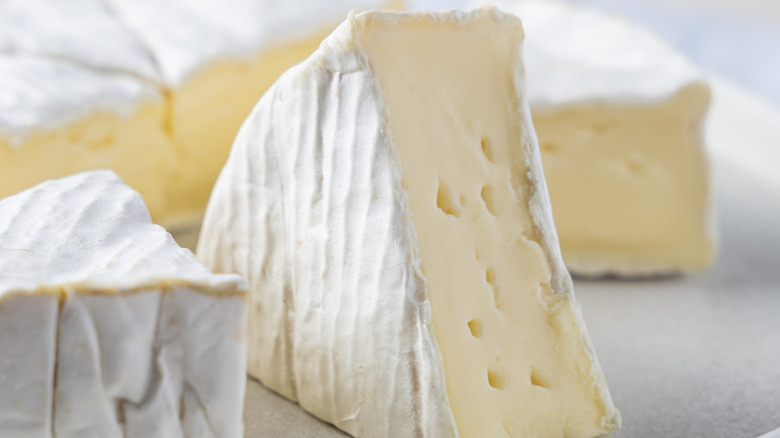
Brie, known as the Queen of Cheeses, is a delicacy that once graced the tables of kings and queens in medieval Europe. Brie is made by adding rennet to warm cow's milk, which causes the milk to form curds. These curds are then cut, drained, molded, and aged with white mold to develop their soft, creamy texture and bloomy rind. However, did you know that Brie in America differs from the European versions? Outside of the U.S., Brie is made with raw milk, whereas in the U.S., legislation requires cheese (including brie) to be made with pasteurized milk.
Regardless of provenance, Brie is an absolute essential for any cheese board. You may not be able to stretch your wallet for an imported French cheese, but rest assured that many American-made, store-bought cheeses are both affordable and cheesily good. To help you pick a Brie, we looked at nine store-bought Brie cheeses and were pleasantly surprised at the sophistication and taste profile of these more affordable options. No. 1 on our list was Fromager d'Affinois, noted as having "fresh milk dairy notes" and a "mushroomy quality to the rind." We also loved the ever-popular Président Brie, which ranked highly for creaminess and you are sure to find in most grocery stores. We recommend serving Brie at room temperature, but there are myriad ways of using Brie, from adding honey to baking a whole round and making it the center of your cheeseboard.
Mexican cheese
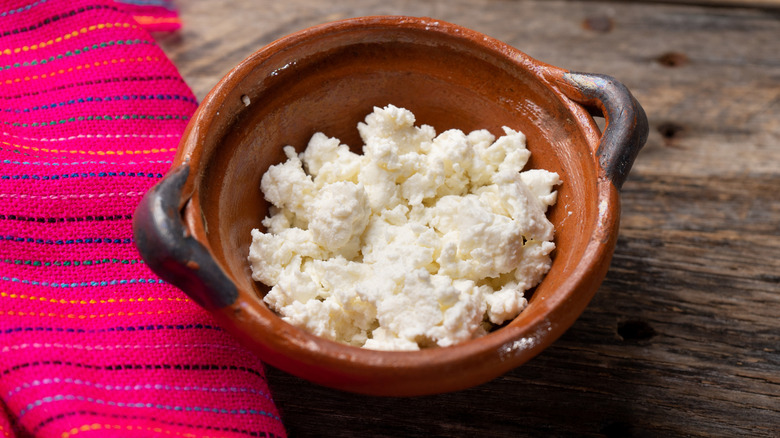
Mexican cheese is a generic term, as Mexico produces many different varieties of cheese, but what they have in common is a characteristic Mexican style and method of preparation. Cheese is a relatively new arrival in Mexico, only arriving with the introduction of milk-producing animals by Spanish colonists. Mexican cheese is primarily made from raw milk rather than pasteurized, is typically consumed un-aged, and is often flavored with ingredients specific to the region, including chili pepper, annatto, cumin, oregano, and garlic.
While you can find Mexican cheese in many forms today, traditional examples include Oaxaca, Cotija, Chihuahua, and queso fresco. To create an affordable cheese board, go for milder, fresh Mexican cheeses and avoid pricier options like Cotija. In store, look for El Mexicano or Cacique Ranchero, which offer a range of Mexican cheeses that taste great and won't break the bank.
Consider creating interest on your board by selecting cheeses with diverse textures and styles. Look out for the unique flavor of queso fresco, which translates to "fresh cheese." Queso fresco can be made from goats' or cows' milk and has a light, fresh, milky salinity that pairs well with tropical fruits. Panela is great as a fried or baked addition to your cheese board, and Oaxaca is similar to a stringy, slightly rubbery mozzarella. When we asked Caroline Elston what Mexican cheese she would go for, she opted for a Mexican Manchego.
Cheddar and Parmesan hybrid
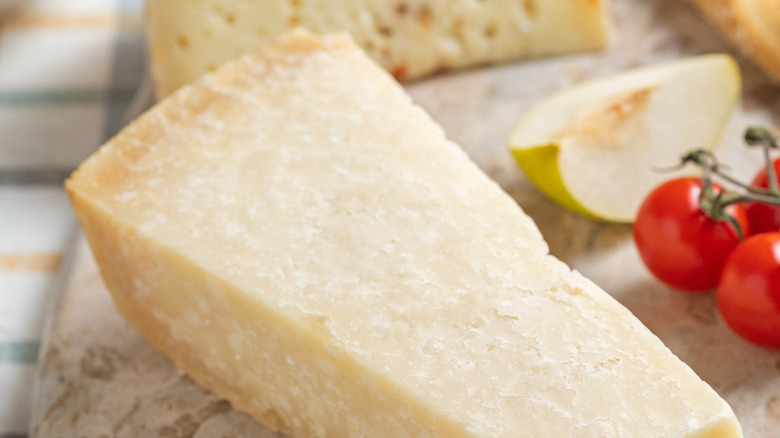
Hybrid cheeses aim to take the best parts of different cheeses and combine them into one "super" cheese. There are several different hybrid cheese combinations available, and cheddar and Parmesan is just one. Interestingly, the hybrid cheese market is booming in the vegetarian sector, where companies are exploring hybrid varieties that mimic the taste and texture of real cheese while offering an ethical alternative and a more appealing option than traditional plant-based cheeses.
Our top pick for a cheddar and Parmesan hybrid that should take a starring role on every cheeseboard is the Trader Joe's Unexpected Cheddar. It's created by American cheesemakers from Wisconsin, who pay homage to their Italian roots. Tasting Table reviewed the Unexpected Cheddar cheese and described it as having "a clear tangy punch of sharp cheddar, mixed with a buttery richness." It's like a slightly harder, more crumbly cheddar with a nutty, umami taste. And what's more, this winning cheese is light on your pocket. Pair it with light Italian wines and serve it at room temperature with Italian grazing items, such as olives and salami.
Irish cheese
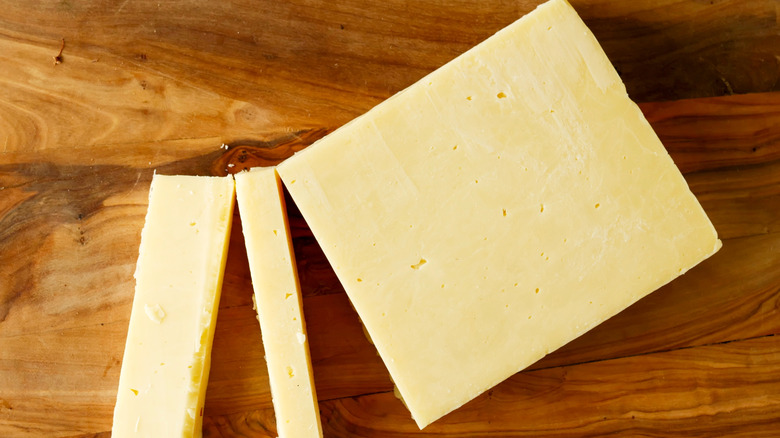
Ireland has a rich history of unique cheesemaking dating back over 1,000 years. It's a country with plentiful rainfall and an abundance of cows, so it's no surprise that some of the world's finest cheeses come from the island. Much like Mexican cheese, Irish cheese is a generic term for the many different types of cheese from the cows, goats, and sheep native to the country, ranging from Brie to blue. Caroline Elston explains that the difference between Irish cheeses and American cheeses is not only down to the milk source, but they also have different production methods. The lush, fertile environment means Irish cows are grass-fed rather than grain-fed and produce cheese that has a higher than usual level of beta-carotene. It's this beta-carotene that gives Irish cheese its distinct yellow color.
Irish cheddars have intense, rich flavors. Some of the most well-known Irish brands are Kerrygold, Tipperary, and Wexford, but of these, only Kerrygold is readily available in your average grocery stores in the U.S. Kerrygold Reserve Cheddar is aged for two years and is a sharp, intense cheese that works well on a charcuterie board. Kerrygold Dubliner is another widely available and very affordable Kerrygold cheese that has the texture of cheddar with the sharpness and bite of Parmesan. Including Irish cheese on your cheeseboard helps to add a touch of class, making an affordable cheeseboard appear more expensive than it is. Pair your Irish cheese with wheaten or soda bread for a true Irish touch.
Fresh mozzarella
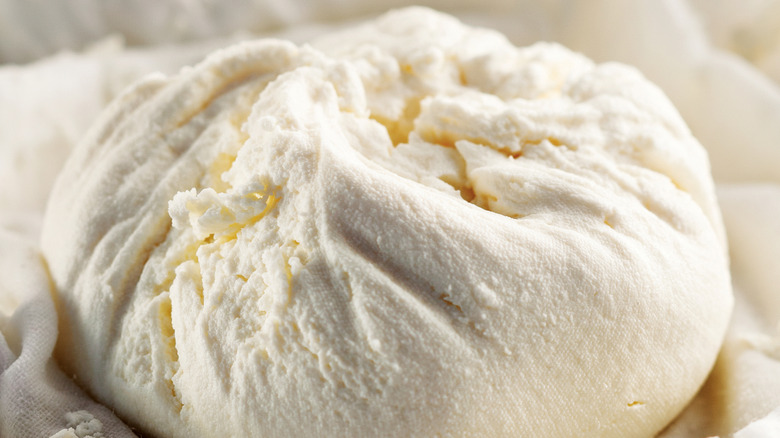
Mozzarella is one of the most popular cheeses in the world, and fresh mozzarella tastes nothing like those hard balls of plastic cheese that you grate across your pizza. In fact, there is nothing quite so decadent as a ball of fresh mozzarella. Mozzarella can be made from any type of milk, so when choosing a mozzarella, be aware that goat's milk mozzarella is drier than sheep's milk, which is creamier.
Make fresh mozzarella the star of your charcuterie board; it's a standout cheese that pairs well with a wide variety of flavors due to its mild taste. Italians eat mozzarella with nothing at all, savoring the simplicity of the cheese, but it goes well with tomatoes, herbs, cured meats, figs, and fruits, all of which make perfect accompaniments for a charcuterie board. These affordable balls of gloriousness have a creamy freshness which stands apart on a cheeseboard. Some excellent and affordable store-bought mozzarella cheeses are BelGioioso and Galbani fresh mozzarellas, both of which are made in the USA using Italian methods.
Goat cheese
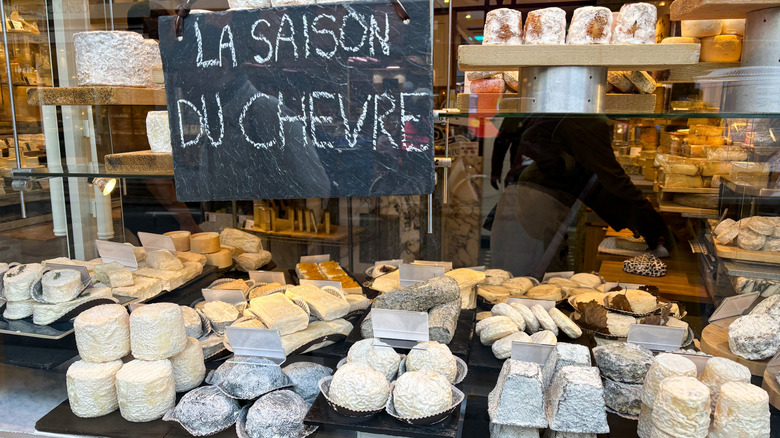
When you say goat cheese, most people instantly think of a log or wheel-like soft cheese made from goat's milk, but almost any cheese can be made out of goat's milk. The traditional version of goat cheese that most people know is called chèvre, the log or wheel-shaped cheese. Caroline Elston tells us the reason classic chèvre goat's cheese is presented in its log or wheel shape is to "allow for ingredients to be distributed evenly during the ripening process and makes it easy for slicing and serving."
Including a chèvre goat's cheese on your board, or indeed any form of goat's cheese, adds a distinct flavor dimension to your cheese board. Chèvre tends to have a tart, earthy flavor that's more rustic than cow's cheese. In the U.S., you will find a range of intensities, from soft, mild, fresh goat cheese to the more complex and mature aged goat cheeses. Look out for La Bonne Vie, Montchevre, and Trader Joe's goat cheese logs. Some brands, like Montchevre, which is made from goats raised in Wisconsin, produce chèvre in various styles and flavors, including garlic and herb, fig and olive, lemon, and cranberry cinnamon. These affordable cheeses add a touch of class to your cheeseboard; pair them with figs, honey, or almonds.
Manchego
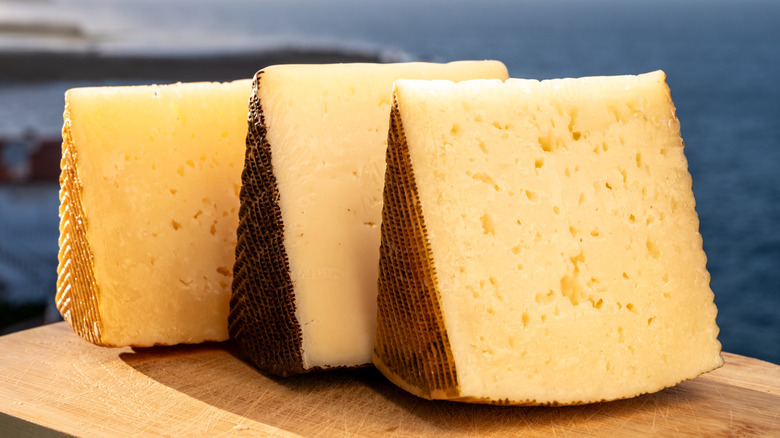
Did you know there's both a Spanish and a Mexican version of Manchego? The better-known Spanish version is produced in the La Mancha region of Spain, and its popularity is so profound that it's protected by the European Union's Protected Designations of Origin certification, which means that, like champagne in France and Parmigiano Reggiano in Italy, real Manchego can only be produced in the La Mancha region. Manchego — which has both sweet and savory uses — is made from raw or pasteurized sheep's milk, whereas the Mexican version is made with cow's milk and is often aged for a longer period.
Manchego comes in four varieties, which are based on the length of aging. Fresco is aged for less than two weeks to a month and is hard to find in America due to its short shelf life. Aged slightly longer but less than six months, semi-curado, or semi-cured, has a creamy, light texture, but you may find it difficult to find store-bought semi-curado. In the U.S., for affordable Manchego cheese, look for curado, which is Manchego aged from six months to one year, and viejo, aged for at least one year. Curado Manchego cheese is mild, sweet, and nutty, while the matured viejo is strong in taste and hard like Parmesan.
We recommend using a harder, more aged Manchego, such as a curado or viejo, for your cheeseboard. These harder varieties are perfect for slicing or cubing alongside a variety of Spanish delicacies, including chorizo, nuts, olives, and fresh figs. Stores where you can buy affordable Manchego cheeses include Trader Joe's, Costco, and Aldi.
Blue cheese
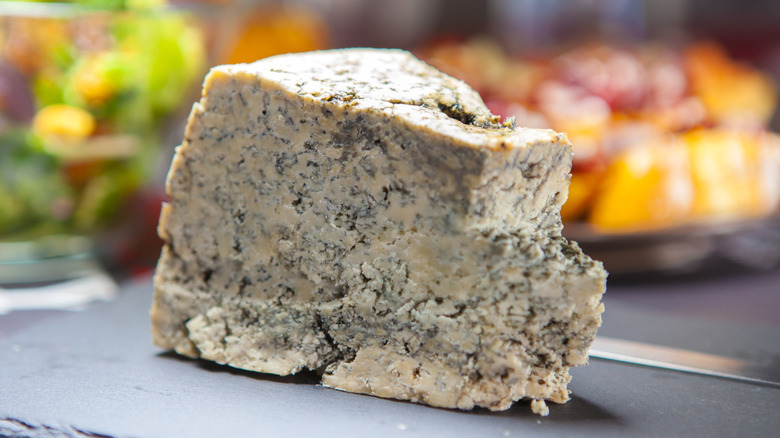
Creamy, crumbly, bold, tangy, rich, and endlessly polarizing. Despite the love-it-or-hate-it nature of blue cheeses, no cheese board is complete without one. Blue cheese comes in a wide range of varieties, from gentle Danish blue to the punch-you-in-the-face, Penicillium-laden English Stilton.
Blue cheese can be made from any kind of milk, cow, sheep, or goat –– the defining factor is that all blue cheeses have been injected with Penicillium mold. The variations occur depending on moisture, the type of Penicillium mold, age, and other changeable factors. The result is a distinctive cheese with a marbled blue vein running throughout. The most well-known blue cheeses are Gorgonzola, Roquefort, Stilton, Danish blue, and Spanish Cabrales.
When selecting a blue cheese for your cheeseboard, Caroline Elston says that the best way to gauge the strength of a blue cheese is to "look for a blue cheese that has less blue/green veining in it." She says that the veining "indicates the intensity of the flavor profile of a blue cheese." The more blue you see running throughout the cheese, the stronger it is, so if you prefer mild and sweet varieties with creamy textures and less veining, opt for a Danish blue like the one from the brand Castello. For stronger, saltier, and peppery flavors, choose an aged cheese, one that is harder and has numerous visible blue veins, such as a Roquefort Société.
Edam and Gouda
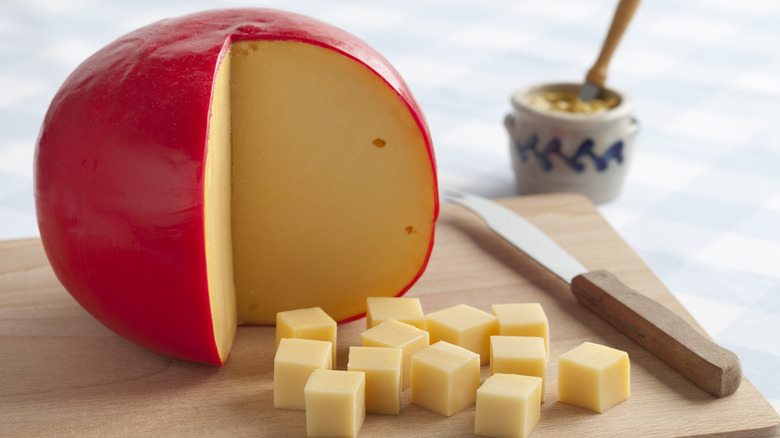
Both Edam and Gouda are Dutch yellow cheeses produced using traditional methods, resulting in semi-hard, mild, and sweet cheese. Edam, instantly recognizable for its distinctive wax shell (which has been mimicked in miniature by the brand Babybel), is sweet, slightly salty, and very milky, while Gouda has a nuttier taste.
The Dutch would likely blanch in horror at the suggestion that Edam and Gouda are interchangeable, and while we wholeheartedly agree (we wrote an entire article celebrating the differences between Gouda and Edam), we question whether they are too similar to be served on a cheeseboard together. We turned to Caroline Elston for her opinion on both cheeses sharing a board, and she says, "While Edam and Gouda can be similar, I would still include both on a board to allow the different undertones to come out with the various other pairing options — different charcuterie or jam pairings will highlight different flavors in the cheeses."
One factor that may influence your decision is the trend of adding different flavors to Gouda. In the U.S., you can purchase Gouda in various flavors, including garlic, pepper, rosemary, fennel, and the ever-popular smoked Gouda, which is widely available in most stores. Both Edam and Gouda are reasonably priced. Look out for Castello and Boar's Head brands for Edam cheese, and Trader Joe's, Dutchmark, Red Apple, and Castello for Gouda.