

16 Old-School Food Brands That Are Way Older Than You Think
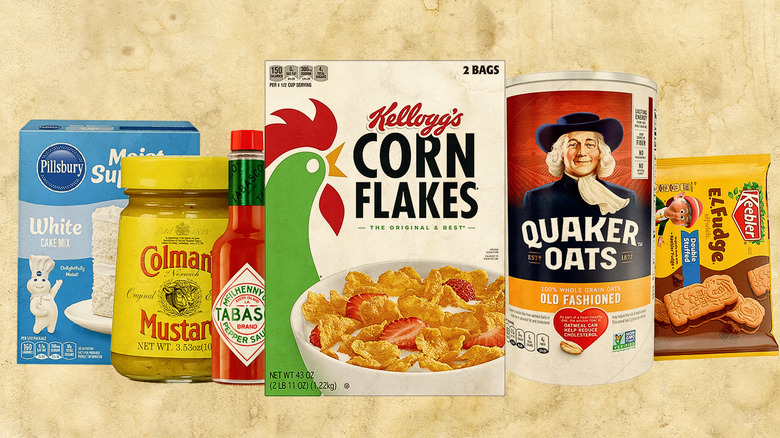
The food landscape is constantly changing. Thanks to emerging dietary trends, new technology and innovation, and changing attitudes, there will always be room for young startups offering something new. But that said, the global food industry is still dominated by some major old-school players. We're not just talking about decades-old brands, but, in some cases, centuries-old brands.
Below, we've listed some of the oldest food brands in the game. From Heinz to Cadbury to Campbell's, these companies have roots that stretch far deeper than you may think. In fact, for the most part, they had their start not in the 20th century but in the 19th. For context, that's the same century as the Battle of Trafalgar, the abolition of slavery, Queen Victoria's coronation, and the invention of the lightbulb. Some of these food brands are older than our great-great-grandparents, and yet, many of them are just as popular today as they ever were, if not more so.
Heinz
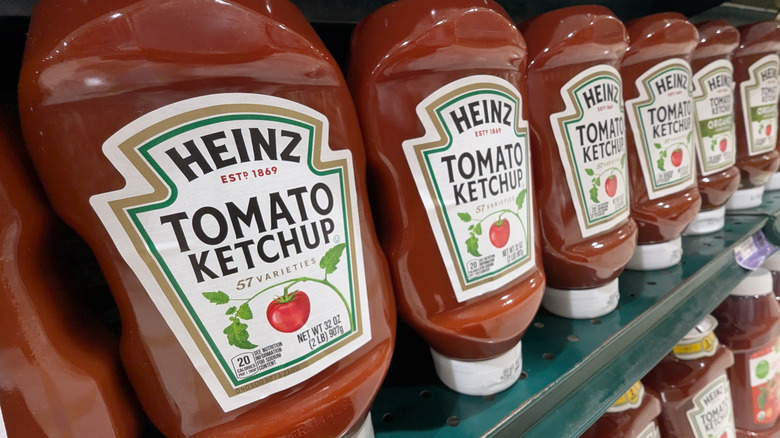
When you think of Heinz, you probably think of Heinz Ketchup. The brand's tomato sauce is, without a doubt, one of the food giant's most popular products in the U.S. Per Statista, in 2020, nearly 200 million Americans enjoyed the condiment in some capacity, whether it was slathered over French fries or smothered on a burger. Heinz Ketchup might be a modern favorite, but it's far from new. In fact, Heinz first brought its signature sauce (called Catsup, at the time) to market in 1876.
But believe it or not, ketchup wasn't the food that started it all. That honor actually goes to horseradish. Back in 1869, Henry John Heinz, a Philadelphian entrepreneur, started selling horseradish alongside other products like sauerkraut, vinegar, and pickles. That business ultimately failed in 1873, but it paved the way for the Heinz corporation to start growing. By 2015, Heinz had merged with Kraft to become one of the biggest food corporations in the world: Kraft Heinz Company.
Cadbury
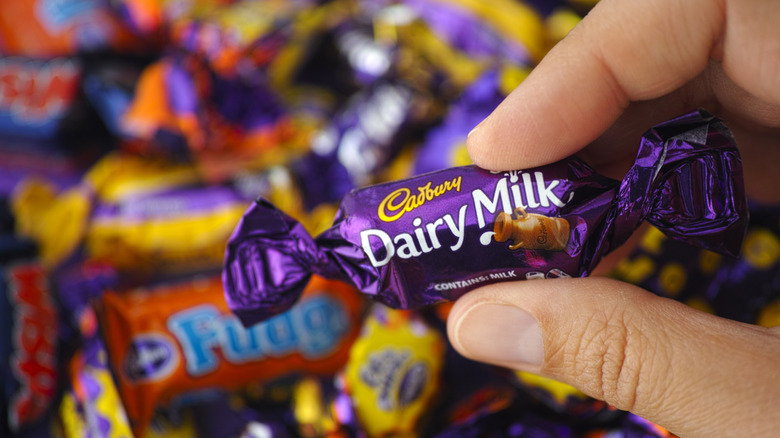
Cadbury isn't a new company in the U.S., but it's not old, either. The British brand's chocolate first hit American shelves in the late 1980s. But at home in the U.K., Cadbury's products are much, much older. In fact, Cadbury's founder, John Cadbury, first opened a store in Birmingham selling drinking chocolate and cocoa in 1824, more than 160 years before Cadbury's U.S. debut.
In 1931, Cadbury, together with his sons, opened a warehouse for the first time – in Bourneville – to manufacture the brand's chocolate products. Today, the brand is owned and operated by Mondelēz International and sells its chocolate in more than 50 countries around the world. In the U.K., some of its most popular products include Giant Buttons, Wispa bars, and Twirl.
Oscar Mayer
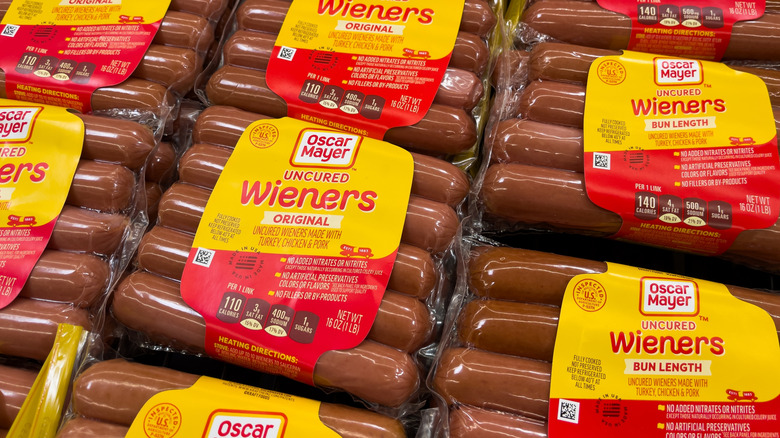
Oscar Mayer is now a major multi-billion-dollar meat brand, but once, it was just a small shop in Chicago. More than 140 years ago, in 1883, 24-year-old German butcher Oscar F. Mayer decided to branch out on his own after spending 10 years as an apprentice in Detroit and Chicago. The shop was a success. On his very first day of trading, Mayer made the equivalent of $1,800 in today's money. So, it's safe to say the brand was a hit from the start.
Over the course of the 1900s, Oscar Mayer grew into one of the U.S.'s most recognizable meat companies, best known for its hot dogs (packed with that signature yellow stripe across the center) and its iconic traveling brandmobiles, known as Wienermobiles. The company, now owned by Kraft Heinz, has stayed relevant by continuously catering to changing demands. In 2024, it even launched its first plant-based hot dogs.
Dr. Oetker
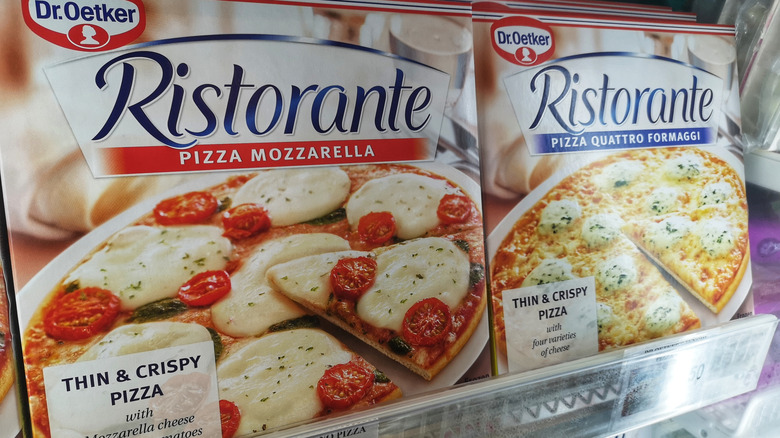
If there's one product that is synonymous with Dr. Oetker, it's Pizza Ristorante. The thin and crispy pizza, which comes with a variety of toppings, is sold in more than 50 countries around the world. The brand also sells a variety of baking products, like baking powder and chocolate chips. While pizza might be its modern-day bestseller, it was actually the baking products that started it all for Dr. Oetker more than 130 years ago.
All the way back in 1891, Dr. August Oetker bought a pharmacy in Bielefeld, Germany. But, as the son of a baker, he knew he also wanted to use his new space to develop baking products. He created his own baking powder, selling it out of the pharmacy and sowing the seeds for what would become the major food corporation we know today.
In 1900, Oetker moved from the pharmacy to a factory to produce even more baking products. Seven decades later in 1970, Dr. Oetker finally branched out into pizza, becoming the very first company to start selling frozen pizzas in Germany.
Campbell's
Head to any grocery store, and you'll find shelves lined with dozens of cans of soup in different flavors. It's one of those normal, everyday facets of life we all take for granted. But without The Campbell's Company, more widely known as just Campbell's, this might not be a reality.
Campbell's was first founded by fruit and vegetable seller Joseph Campbell and commercial canner and packer Abraham Anderson in 1869, but it wasn't until the mid-1890s that it first started selling one of its most iconic products: Tomato soup. Even then, it was sold in jars. In 1897, everything changed. Dr. John T. Dorrance, the nephew of Campbell's president Arthur Dorrance, invented condensed soup, which allowed it to be packaged in cans for the very first time.
Dorrance would eventually go on to take over from his uncle as president of Campbell's, and in the years that followed, the company turned into a pioneer of the soup market, even introducing and popularizing chicken noodle soup in 1934. In 1922, it changed its name to The Campbell Soup Company. Before that, it had been named Anderson & Campbell, after its founders. It wasn't until 2024 that it turned into The Campbell's Company.
Hershey's
Hershey is currently one of the biggest confectionary companies in the world. Every year, it produces roughly 373 million chocolate bars. But it hasn't always been a food giant.
In the late 1800s, its founder, confectionery Milton Hershey, was struggling to get any company off the ground at all. After trying and failing to set up candy shops in Philadelphia and New York, Hershey eventually decided to go back to Lancaster, Pennsylvania, where he had initially trained as a confectioner. It was there that he experienced success with the Lancaster Caramel Company, which specialized in caramels made with fresh milk.
In 1900, Hershey started working on a formula for chocolate bars, and the rest, as they say, is history. Those chocolate bars, also made with fresh milk, were the beginning of the Hershey's candy empire. But Hershey's didn't stop with its own candy. It also started acquiring multiple competing companies, buying up brands like the H.B. Reese Candy Company and Twizzlers throughout the 1900s. Today, Hershey owns more than 90 brands.
Barilla
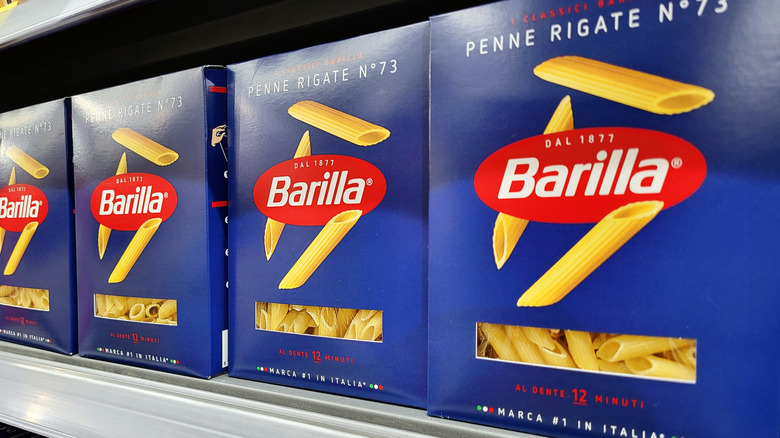
Barilla's pasta is a common sight on grocery store shelves all over the world. The Italian food company sells its products (which also include tomato sauces and pesto) in more than 100 countries. But the brand has deep roots, stemming all the way back to 19th century Italy.
In 1877, Pietro Barilla opened a bread and pasta shop in the north of Italy, in a city called Parma. The shop was not an overnight success, and in a challenging economic climate, Barilla struggled to make enough money to support his family. But he didn't give up. He attempted to expand, went bankrupt, and then attempted to expand again. This time, with the help of new equipment, things finally started to look up.
Over the generations, the Barilla family continued to nurture the family business as it hit milestone after milestone. In 1969, for example, it opened Pedrignano, the largest pasta factory in the world. In 2017, annual pasta production at the factory reached 330,000 metric tons.
Quaker Oats
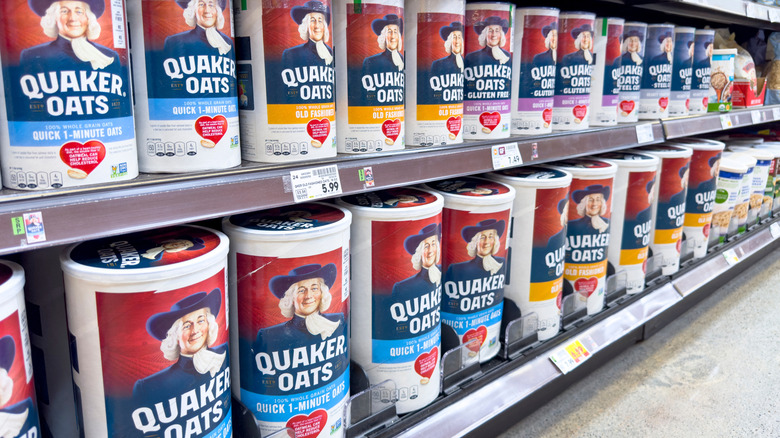
If you're in the grocery store for oatmeal, there's a good chance you'll be adding a canister of Quaker Oats to your cart. After all, it is one of the biggest and most recognizable oatmeal brands in the U.S. But, of course, you don't become a household name overnight. Quaker Oats has a long history. Its journey can be traced all the way back to the mid to late 1800s.
Quaker Oats began, perhaps unsurprisingly, with an oat mill. The mill, located in Ohio, was owned by Henry Parsons Crowell, who, in 1891, joined forces with two other millers, named Robert Stuart and Ferdinand Schumacher, to start the American Cereal Company. But that company wasn't meant to last. After a conflict between the trio, Crowell and Stuart ended up taking control of the American Cereal Company and turning it into the Quaker Oats Company at the beginning of the 1900s, and that company, it turns out, did have staying power.
Quaker Oats transformed into a breakfast juggernaut. In 1911, it bought the rival brand Mother's Oats, which allowed Quaker Oats to control half of the mills east of the Rocky Mountains. In 1966, it launched the first instant oatmeal to the market. Today, it dominates grocery store shelves with oatmeal, of course, as well as a range of breakfast cereals, rice snacks, snack bars, grits, and more.
Carnation
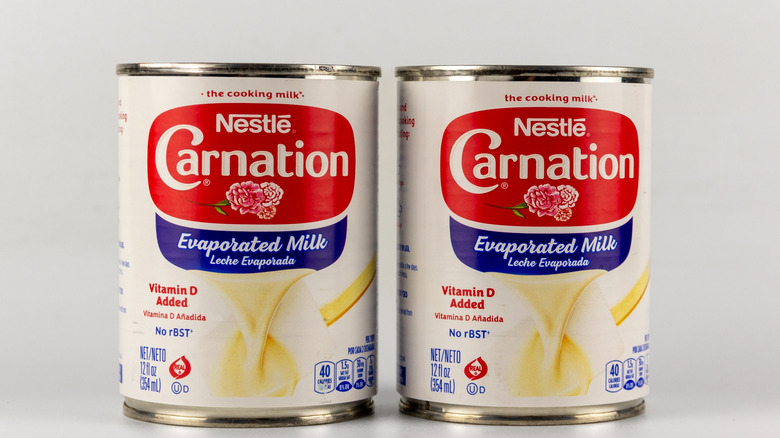
A can of evaporated milk is an incredibly useful pantry staple. It can be added to eggs to make them extra silky, for example, or sauces or soups for a nice, velvety texture. Evaporated milk has been helping out home cooks for more than 100 years, and it's all thanks to a man called Johann Baptist Meyenberg. Without him, we wouldn't have Carnation, one of the biggest and most recognizable evaporated milk brands in the world.
Meyenberg was working for the Anglo-Swiss Condensed Milk Company in the late 1800s when he came up with the idea for evaporated milk. The product, which has 60% less water than fresh milk, is similar to condensed milk but lasts much longer and has no added sugar. In the U.S., in 1899, he founded the Pacific Coast Condensed Milk Company with grocer Elbridge A. Stuart and food retailer Tom Yerxa, and in 1900, the company launched the Carnation brand for the very first time.
Today, Carnation, now owned by Nestlé, sells a variety of milk products. Alongside the classic evaporated milk tins, it also specializes in condensed milk, fat-free condensed milk, and dessert sauces.
Tabasco
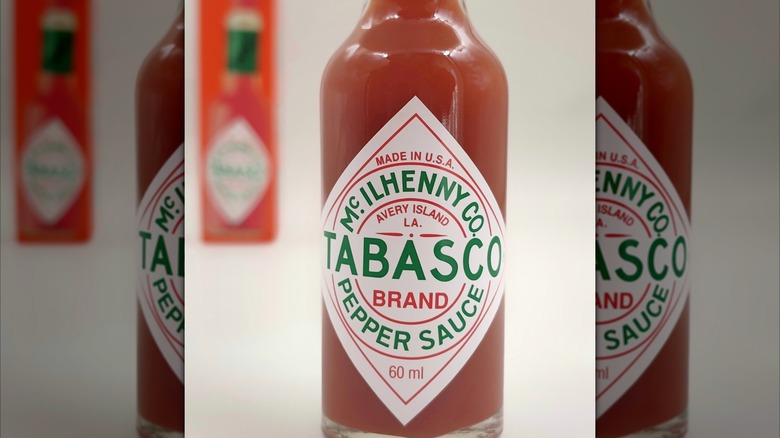
If you love hot sauce, it's almost guaranteed that you have enjoyed a bottle of Tabasco at some point in your life. After all, the brand's producer, the McIlhenny Company, is one of the biggest players in the hot sauce market, alongside names like Huy Fong Foods, Kraft Heinz, and McCormick.
Tabasco's journey started in Avery Island, Louisiana, in the 1860s when Edmund McIlhenny decided he wanted more flavor in his food. He started growing his own peppers and making his own hot sauce, which he called Tabasco (likely after the variety of pepper he was using, which originated from Tabasco in Mexico). Long story short, McIlhenny was pretty good at making that hot sauce, and people couldn't get enough of his signature recipe. Tabasco, as we know it today, was born.
Tabasco is still run by the McIlhenny family, and it still offers that same original sauce with its pungent, spicy flavor. In fact, it's now sold in more than 195 countries around the world. The brand has also branched out and offered hot sauces in a variety of other flavors, including Salsa Picante, Green Jalapeño, Buffalo Style, and plenty more.
Keebler
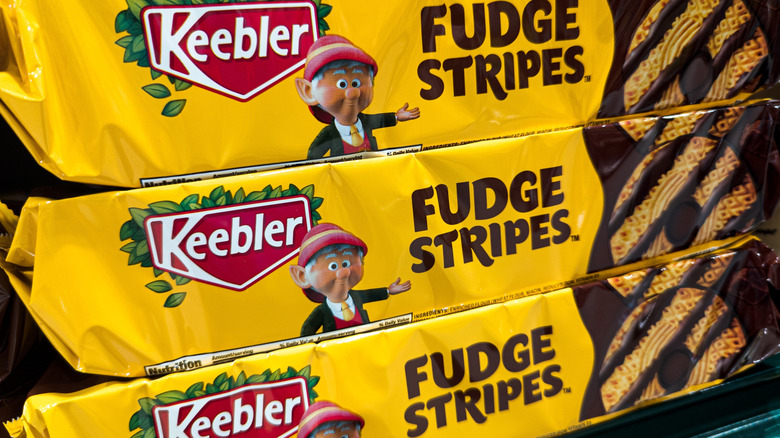
For many Americans, Keebler evokes nostalgia. That's largely thanks to its iconic elves, which have been a key part of the branding of its beloved cookie products since 1968. But the history of this brand goes back even further than the 1960s. In fact, Keebler actually started out its life as a small bakery in Philadelphia in the mid-1800s.
The bakery was run by German immigrant Godfrey Keebler, who later became part of The United Biscuit Company, together with other bakeries in the region. In the end, the company decided to go with more unified branding, deciding to simply call the entire operation Keebler. And that was the beginning of the cookie juggernaut we know today.
In the years since, Keebler has had many ups and downs. In 2000, it ended up being acquired by Kellogg's, and then in 2019, it was sold again to Ferrero, where it remains today.
Del Monte
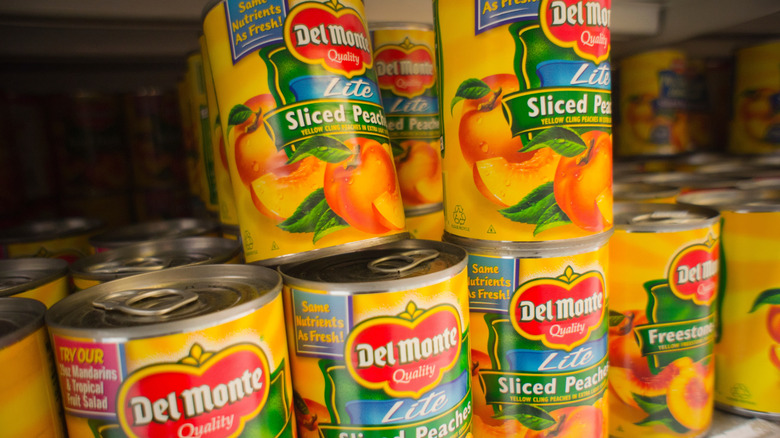
Del Monte, known for canned fruits and vegetables, has a long history. It has been around since the late 1800s when it was run by 11 canners in California and known as the California Fruit Canners Association. The branding was changed to Del Monte in 1916, and under this name, during the 20th century, it grew considerably, becoming a household go-to for products like tinned tomatoes, corn, green beans, peaches, and pineapple.
It's important to note that Del Monte and Del Monte Foods are distinct from the brand Fresh Del Monte. While they started off united, Fresh Del Monte (which, as you may have guessed, sells fresh produce) spun off as its own entity in the late 1980s.
As of July 2025, Del Monte is in the headlines for what many would deem the wrong reasons. Its parent company, Del Monte Foods, has filed for bankruptcy and is currently looking for a new buyer. In terms of what happens next for the company, which also owns brands like Contadina and Kitchen Basics, CEO Greg Longstreet is staying positive. He said in a statement that there is still hope for a turnaround and a strong future.
Kellogg's
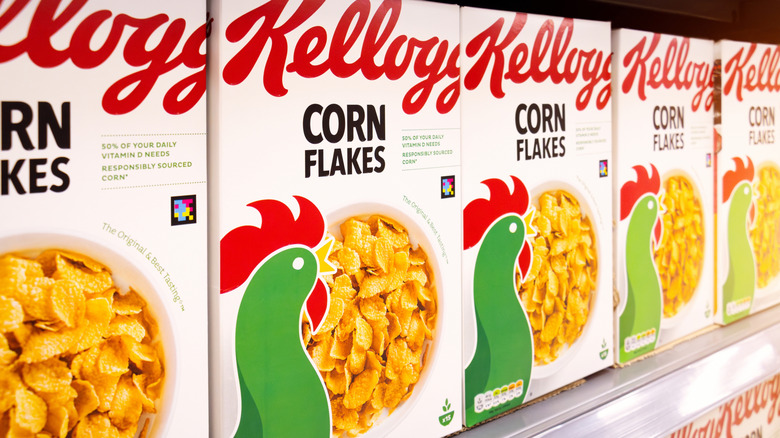
Whether it's breakfast or a late-night snack, most Americans eat cereal at some point throughout the week. And for millions, the go-to when they open the cereal cupboard is Kellogg's Corn Flakes.
This classic household staple has a long history. In fact, W.K. Kellogg and Dr. John Harvey Kellogg first invented Corn Flakes (by accident) way back in 1898. They had been trying to make a new kind of wheat meal, but instead, they created thin wheat flakes. Realizing it actually tasted pretty good, they had a go with corn, and they struck gold. Eight years later, W.K. Kellogg founded the Battle Creek Toasted Corn Flake Company in his hometown of Battle Creek, Michigan, and started selling Corn Flakes for the very first time.
Over the 20th century, the company, which was renamed Kellogg's in the 1920s, went from strength to strength. It created new products like Bran Flakes, Special K, Frosties, and Crunchy Nut Corn Flakes. It also expanded overseas, becoming quickly successful in the U.K. market. Today, Kellogg's is, quite frankly, huge. As well as Corn Flakes, it also owns many other well-known cereal brands, like Krave, Froot Loops, and Rice Krispies.
Lindt
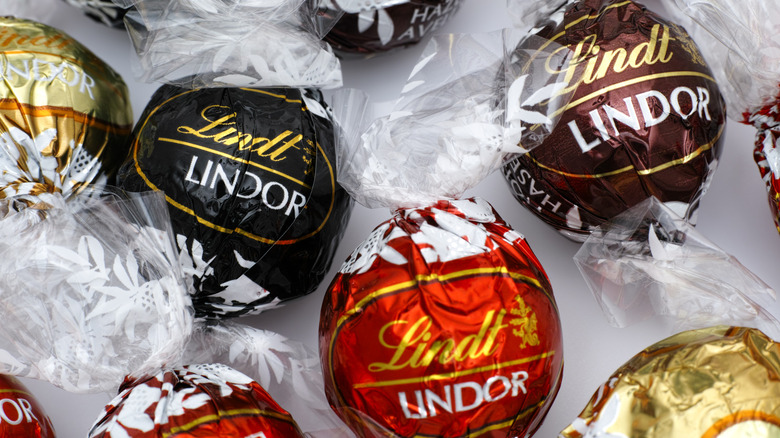
Today, Lindt & Sprüngli is one of the biggest names in the global chocolate industry. The Swiss chocolatier is instantly recognizable, as its chocolates are sold in more than 120 countries. However, the journey for this popular chocolate brand started back in the 1840s.
In 1845, in their candy shop in Zurich, David Sprüngli and his son Rudolf Sprüngli-Ammann developed the first solid chocolate bar in German-speaking Switzerland, and people were thrilled about it. And so, the father-and-son duo decided to keep making chocolate that people loved. In the years that followed, they bought a factory in nearby Horgen, opened a new confectionery, and kept expanding.
Eventually, the business was handed down to Sprüngli-Ammann's sons, Johann Rudolf Sprüngli-Schifferli and David Robert Sprüngli-Baud. It was Sprüngli-Schifferli who joined the business with Rodolphe Lindt, a pioneer of smooth, melted chocolate, which he created by churning chocolate for long periods with a conching machine. Together, the two chocolate connoisseurs created Lindt & Sprüngli, a chocolate giant that doesn't just produce the famous Lindt chocolates, but today also owns brands like Ghirardelli, Russell Stover, Caffarel, and Hofbauer.
Colman's Mustard
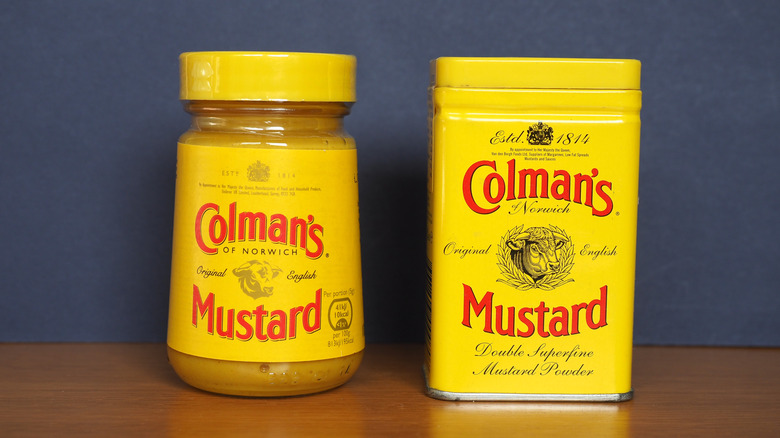
Global consumer goods giant Unilever owns a number of well-known British brands, including Hellmann's, Magnum, Marmite, and Bovril, but one of the oldest in its portfolio is, without a doubt, Colman's. In fact, the popular English mustard brand can trace its history all the way back to 1814, making it more than 200 years old.
Colman's was first founded by Jeremiah Colman, who lived in Norwich. After he died in 1851, his nephew, James Colman, took over, and after that, his grand-nephew, Jeremiah James Colman, took the reins. All of the generations of the Colman family made sure to take care of all the workers who helped them produce their mustard, ensuring their children were educated and giving them sick pay and pensions.
Acquired by Unilever in 1995, the brand has remained strong over the years. Today, it also has a presence across the Atlantic in the U.S., where it sells its classic English mustard in dry and prepared form.
Pillsbury
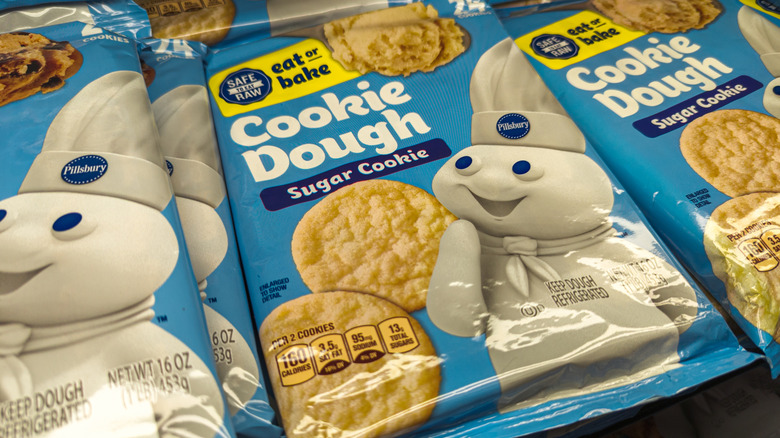
Pillsbury is a household name now, but its journey began a long time ago, in 1869. Back then, a miller named Charles A. Pillsbury bought a stake in a small flour mill in Minneapolis. He overhauled the mill with new steam rollers and purifiers, turning it into a profitable success. Pillsbury then used the momentum to form a new company called C.A. Pillsbury and Company, which bought up even more mills, becoming the largest grain miller in the world at one point.
Back then, Pillsbury was laying the groundwork for what would become a major food empire. Throughout the 1900s, his company sold everything from cake mixes to refrigerated dough, but also expanded into restaurants and frozen treats, once owning Burger King and Häagen-Dazs. In 2001, General Mills bought Pillsbury and most of its assets.
Today, Pillsbury is arguably best-known for the Pillsbury Doughboy, its lovable mascot, who was first introduced to sell its baking products in the 1960s. The brand is also known for its long-running, iconic Bake-Off cooking contest, the first of which took place in 1949.