

Freezing Fish For Sushi Can Kill Parasites, But Only If You Do It Correctly

Making sushi at home can be just as delicious and certainly more affordable than what you'd enjoy at a sushi restaurant. An essential component of all the ingredients you need to make sushi is naturally the fish. One of the unsettling truths about some raw fish that you purchase is that it can be host to parasitic worms. Several types of worms and their larvae are abundant in almost all species of fish — although salmon and cod are especially susceptible — and if untreated raw fish is consumed, it can cause severe intestinal disorder.
There are two surefire ways, however, of killing all fish parasites: cooking the fish to an internal temperature of 140 degrees Fahrenheit (60 degrees Celsius) and freezing it. We consulted with Nana Darkwah, executive chef of Ocean Hai at Wyndham Grand Clearwater Beach, about the proper procedure for freezing fish at home for sushi. "Home freezers often don't reach the required temperatures, so freezing fish at home is not always effective," Darkwah told us. "Only freeze fish yourself for sushi if you have a deep freezer that reaches -4 degrees Fahrenheit or colder."
To ensure that fish parasites are thoroughly killed, the U.S. Food and Drug Administration (FDA) recommends keeping the freezer at Darkwah's suggested temperature for seven days, which, for a regular home refrigerator freezer, can damage other frozen foods and drive up electricity bills. It's best, then, to keep your freezer at the recommended 0 degrees Fahrenheit (-18 degrees Celsius) and purchase sushi-grade fish at a reputable fish monger. Here are a few tips from a sushi chef that can help you pick the best place to buy sushi-grade fish.
Follow these safety tips for DIY sushi
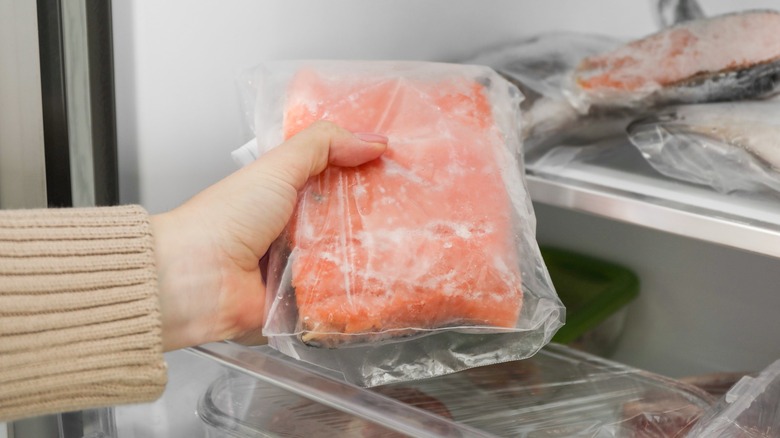
The U.S. Department of Agriculture (USDA) does not regulate or grade fish, so fish that's sold as sushi- or sashimi-grade is dependent upon the purveyor taking the necessary precaution of freezing it. Almost all wild-caught fish for sushi (with the exception of tuna, which is relatively safe to eat raw) is flash-frozen to kill parasites. As Darkwah recommends, always buy sushi-grade fish, since it will be safe to eat. There are also a number of important safety tips that he said must be followed when you're preparing sushi at home.
"Keep everything cold. Fish should stay below 40 degrees Fahrenheit until just before use." Bacteria that can cause foodborne illness begins to grow above 40 degrees Fahrenheit, so always keep your fish properly chilled in your refrigerator. If you're going to use fish that you've previously wrapped and frozen, Darkwah advises thawing it out in the refrigerator and never on the counter. When you're preparing the sushi, wash your hands and sanitize surfaces and cutting boards constantly, as both practices will help prevent cross-contamination. "Use clean, sharp knives — especially when switching between proteins," Darkwah says.
In accordance with the FDA guidelines for serving raw fish, he also told us that sushi should not be kept unrefrigerated for more than two hours and only for one hour if the temperature where you're serving it is 90 degrees Fahrenheit or above. You may have some leftover fish when making these best sushi recipes, and according to Darkwah, they should either be stored properly or discarded, again, as a preventative measure for safe sushi eating.