

Don't Skip This Seasoning Step Before Throwing Food Into Your Air Fryer
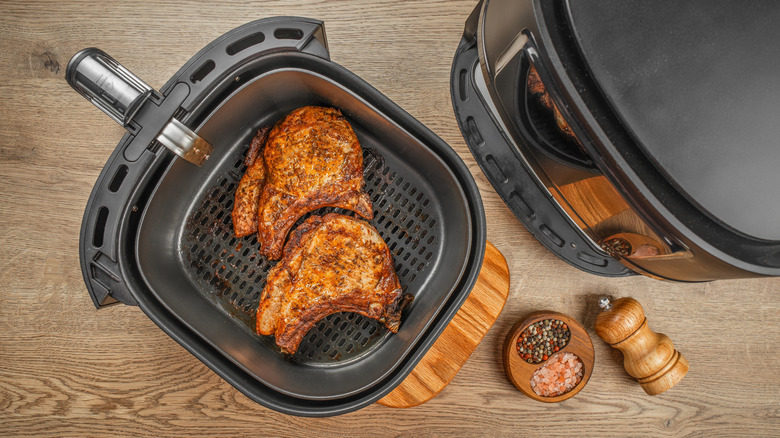
About two years ago, I gifted my Mum with an air fryer. She thanked me, but left it in the box for about six months, clearly distrustful of this "new fandangled" gadget. After eventually cajoling her to let me set it up, and showing her the basics, she says that it's the best thing since sliced bread, and has completely changed her cooking life. Now she experiments with cooking meat, veggies (including delicious butter roast potatoes), and all manner of things. But one trick we've both found to be one of the golden nuggets of air-fryer knowledge is mixing our seasonings with a bit of oil before adding them to any foods. This ensures that the seasoning is evenly spread and brings delicious flavor to every bite.
You see, if you sprinkle dry seasonings directly onto your food, the hot circulating air for which the air fryer is known, can blow the seasonings off your food, or even burn them. But when mixed with oil, they stick better, creating a more consistent and delicious result. Oil also helps in heat distribution. When food is lightly coated in oil that you've infused with spices or herbs, the surface crisps up more evenly, reducing the chance of burning some parts while leaving others undercooked.
Additionally, oil can partially absorb fat-soluble flavor compounds. Many spices, like paprika or chili powder, for example, release deeper flavor profiles when mixed with fat. Without that fat, you're not getting the full taste potential from your seasonings.
Better coating, less waste, and more flavor control
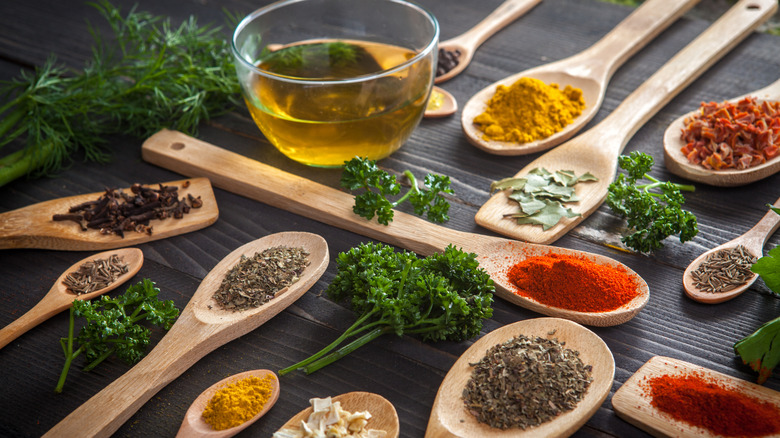
In addition to improving taste and texture, mixing seasonings with oil also cuts down on waste. When spices are added as-is, much of it ends up in the bottom of the air fryer basket or stuck to the liner, rather than on the food itself. That not only wastes your ingredients but also makes cleanup harder. A simple oil mixture clings to the food, delivering your seasoning investment exactly where it belongs — on your air-fried chicken or chocolate churros — and not stuck to your appliance.
Using oil also gives you better control over how much seasoning you apply. It's easier to eyeball or measure a tablespoon of seasoned oil than to sprinkle spices directly onto your food, where you might overdo it in some areas and miss others entirely. When spices are blended into oil first, every bit of food gets the same TLC. This matters when air frying smaller items like chickpeas or tofu, where even seasoning is key for every crunchy bite to taste as good as the previous one.
And last but not least, incorporating oil lets you experiment with infused flavors. Olive oil mixed with garlic, rosemary, and lemon zest can give vegetables a Mediterranean flair. A neutral oil blended with cumin, smoked paprika, and cayenne can transform air-fried potatoes into a smoky, spicy treat. It's a simple method that opens up big flavor possibilities. Rather than just seasoning the surface, you're using oil as a carrier to deliver both taste and texture enhancements that make your air-fried meals far more satisfying.