

The Snake Infused Whiskey That's Not For The Faint Of Heart

For some bar goers, putting back shots takes courage. For other drinkers, however, staring at a snake sitting in a bottle of alcohol is an enticing, compelling feature. Such is the case with snake whiskey, an alcohol found and sold in some parts of Asia.
Snake whiskey has become a tradition in Thailand. An entire snake is placed into a bottle of alcohol to add health benefits and flavor to the booze. A live snake is shoved into whiskey (or sometimes sake, a Japanese drink) and left to soak, resulting in an infused alcohol that is believed to pack an even greater punch than a shot served straight. As the cobra drowns and is left to ferment, the drink takes on an even stronger flavor.
Some brewers add unique touches to the brew, like herbs, spices, and other ingredients thought to carry medicinal or mystical powers that can reduce pain and serve as an aphrodisiac. But for those who are new to the concept, you might be wondering: Is snake whiskey safe?
A shot with a side of cautious skepticism
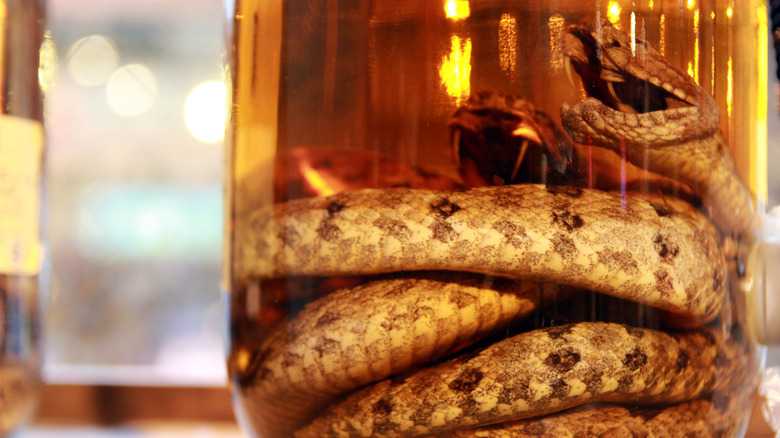
Snake whiskey is described as having fishy, smoky-tasting notes that deliver a spicier finish. (Try using Tasting Table's expert-approved method for tasting whiskey to experience its maximum flavor.) The slithery-enhanced booze isn't a recent invention, either. Snake wine can be traced back to 770 B.C., when it was seen as a remedy for exhaustion and hair loss. In more recent times, namely 2013, one Chinese woman attempted to make her own arthritis cure using a live viper and wine, but the snake survived three months living in the bottled liquid and bit the woman's hand once the cap was taken off.
In addition to this kind of danger, selling snake whiskey isn't regulated due to possible toxins and pathogens present in the beverage, and some bottles are infused with additional snake venom — a practice that has been made illegal in some countries. For understandable reasons, this spirit can prevent a lot of drinkers from trying a sip, but for more adventurous travelers visiting the area and willing to pay, pricey bottles can be purchased for consumption or as novelty souvenirs.
Is snake whiskey ethical?
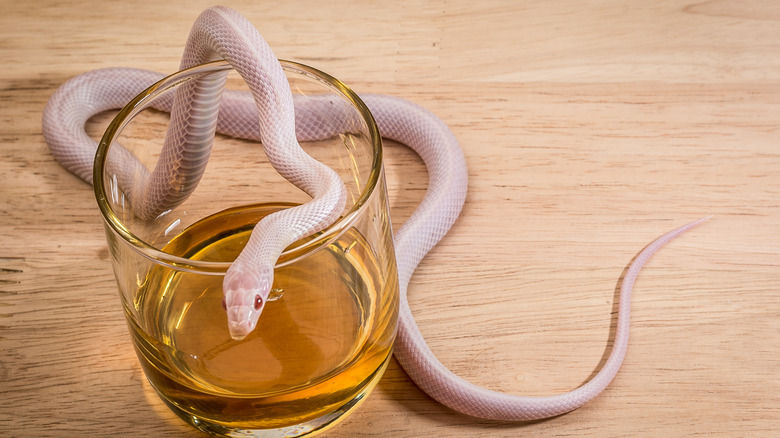
While snake whiskey has a long-standing history dating back to the ancient Greeks, it holds a mythical place in some cultures. Apart from its production and use in parts of Asia, snake whiskey has also been found around the world in places like Brazil, where it is used for impotence and insect bites. Similarly, habushu is a Japanese snake wine that's popular for increasing strength and helping soothe arthritis. But despite its prolific history, there are ethical concerns to consider.
Snake whiskey is not considered ethical by many, including animal welfare activists, because it is made with live snakes. Therefore, the production is considered inhumane. To top it off, many bottles use vipers or cobras. Unfortunately, several species of cobras are considered vulnerable to extinction or near threatened. While some producers claim to use farm-raised cobras, many snakes are illegally trafficked for several uses, including "medicinal uses" such as this. Perhaps it's best to stick with one of Costco's best Kirkland whiskeys.