

9 Mashed Potato Upgrades We Learned From Chain Restaurant Steakhouses
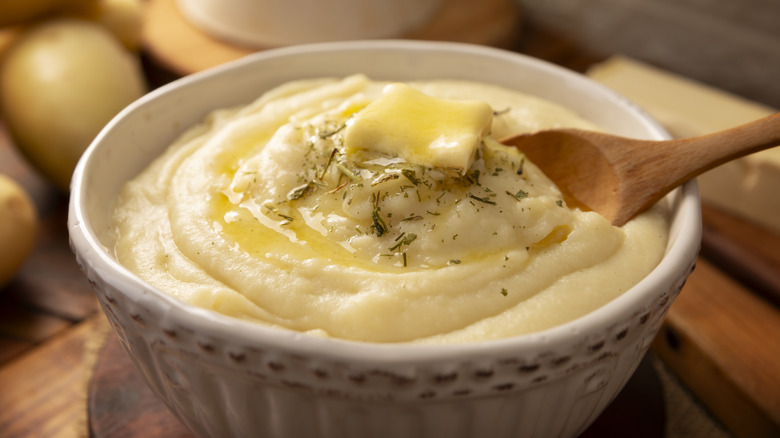
In a world filled with varying degrees of quality when it comes to mashed potatoes, many of us would agree that steakhouses do the dish best. Although a steakhouse is mainly known for sumptuous and tender sirloins and filets, its potato game is often consistently strong. Whether roasted, fried, or mashed, these side dishes can do just as much work as the steak itself. Now, mashed potatoes tend to fall on a spectrum (from buttery and whipped to lumpy and loaded), so folks often have strong opinions on which chain steakhouses does them best.
With that in mind, we went to the professionals to get their top secret ingredients, methods, and hot takes on how to create the world's best mashed potato. To gather insights into the world of chain steakhouse restaurant mashed potatoes, we talked to chef Efrem at Outback Steakhouse, the Texas Roadhouse Food Team, and chef Dan Drucker at Morton's The Steakhouse.
Boy: Did they deliver. From creamy mix-ins to preferred potato varieties, we were able to synthesize a list of nine mashed potato upgrades from chain restaurant steakhouses. Grab your pot, a notepad, and some potatoes. You'll soon be making top-tier mashed spuds, laced with secret methods and ingredients that will be sure to stay in your family for generations.
Add some sour cream
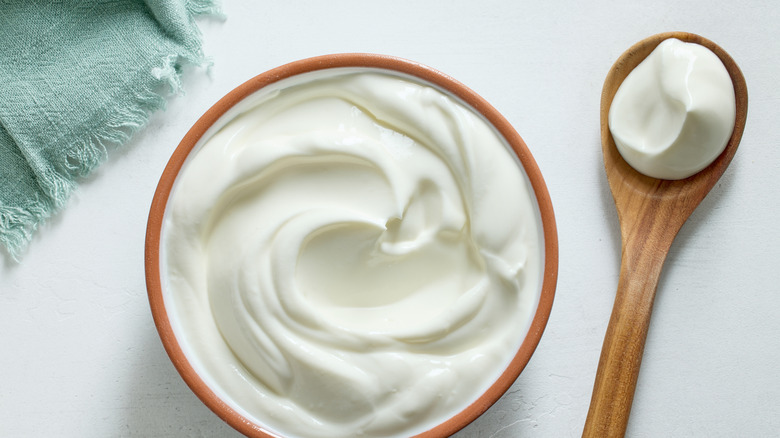
Morton's sour cream mashed potatoes have a so-called secret ingredient that might not be so hard to guess. Of course, while many folk enjoy a baked potato topped with a dollop of fresh, tangy sour cream, Morton's mixes it right into the mashed version. This helps to give the potatoes a creamy, moist texture, along with a flavor enhancement — and they don't just use a small dollop.
In fact, chef Dan Drucker notes that the ingredient that sets Morton's mashed potatoes apart from other steakhouse chains is "a little (see: a lot of) sour cream." This is an easy ingredient to add to homemade mashed potatoes, of course, and it's also rather forgiving. Find inspiration from Morton's and whip the sour cream right into the potatoes to make them light and fluffy, yet dense and delicious.
Add a little to start and taste test your way to perfection. The overall tangy note of the sour cream helps to intensify the flavor of the potatoes, while also making the side dish stand out as unique. While the Morton's chefs hold onto the secret recipe that makes their tater so outstanding, they were generous enough to share with us a few of their key ingredients so you can enhance your own whip at home.
Give it a kick with white pepper
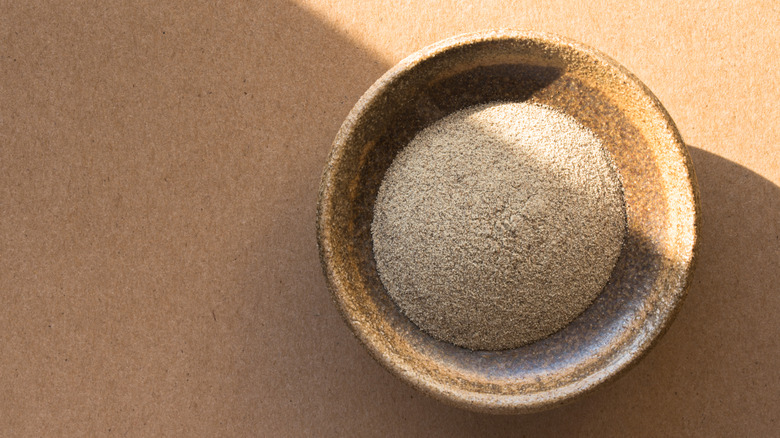
Alongside sour cream, another unexpected ingredient is used to enhance Morton's mashed potatoes: white pepper. Chef Dan Drucker calls it "a chef's secret weapon that gives the potatoes just a little kick." Folks often wonder what the difference is between white and black pepper; white pepper stands out from black pepper with its stronger spice profile, along with the musty or fermented flavor it offers. It's often used in combination with cream sauces, which is why its appearance alongside mashed potatoes is no shock.
Potatoes are naturally mellow, sweet, and subtle, so it's important not to overwhelm them with intense flavors if you want the vegetable itself to sing. White pepper is a beautiful enhancement that can create layers of flavor without stealing the show. Especially in combination with dairy ingredients like sour cream, white pepper can help mimic the sharpness while also creating a rounded flavor that stimulates the taste buds. If you wish your mash were more like Morton's, don't forgo the heavenly sour cream and white pepper combination.
Mix in some compound butter
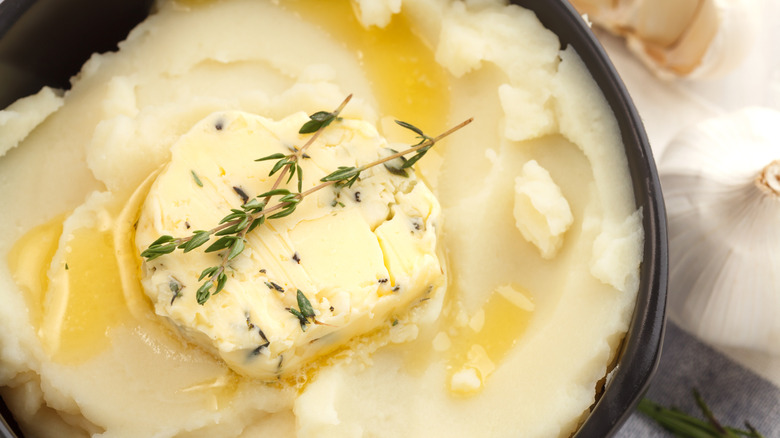
Although Morton's makes its mashed potatoes full to the brim with flavor, chef Dan Drucker suggested an addition to take your spuds to the next level: Compound butter. It's likely you've added butter to your mash already, and that's great. But if you want to create an even richer mouthfeel with additional layers of flavor, consider serving your pile of mashed potatoes topped with a slice of actively melting compound butter.
Compound butter uses a method not dissimilar from mashing potatoes themselves. Simply use softened butter mixed or mashed in a bowl with an enhancing ingredient. Shape the butter using saran wrap, and place it in your refrigerator to harden. Slice, and enjoy your mashed potatoes. Use garlic, herbs, spices, or even sweet ingredients in your compound butter, if appropriate with the overall flavor scheme.
But this tip isn't just for home cooking. According to Drucker, when dining at Morton's, you can also "ask your server to incorporate one of our delicious compound butters (blue cheese, black truffle, or garlic herb) into your mashed potato side dish."
Choose your potatoes wisely
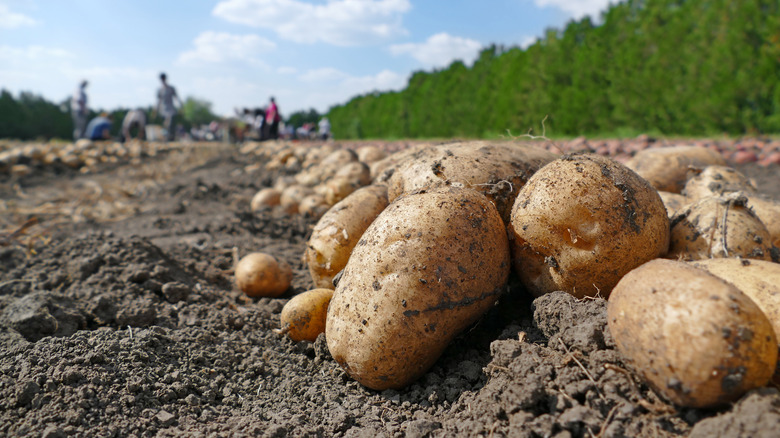
The chefs and teams from Texas Roadhouse and Outback had a lot to say when it comes to sourcing spuds for mashed potatoes. As it turns out, not just any old grocery store spud will do. In fact, both teams agree that starting with a quality potato makes all the difference.
The Texas Roadhouse Food Team states that "it starts with quality Idaho potatoes," which ensures potatoes remain the centerpiece. We asked why Idaho, and the Team's answer was straightforward: "Idaho has almost perfect potato-growing conditions." There are several important conditions that create the perfect storm. "The potatoes grow large and uniform," the Texas Roadhouse team explained, "the mountain water provides irrigation, and the warm days and cool nights help develop a high-starch, high-solids potato." This is why Idaho Russet potatoes are so fluffy, which is ideal for soaking up butter and cream and preventing a watery effect.
Meanwhile, Chef Efrem of Outback Steakhouse told us the restaurant uses "Burbank and Russet Norkotah potatoes, which are rich, moist, and not grainy." There's a second step to enjoying this variety, according to Efrem. "We also leave the skins in our Homestyle Mashed Potatoes, which enhances the mouthfeel, texture, and hearty flavor. This also increases the nutritional content, including minerals, antioxidants, and fiber." Who knew a simple spud swap could make such a difference in the flavor department?
Leave in some skins and lumps for texture
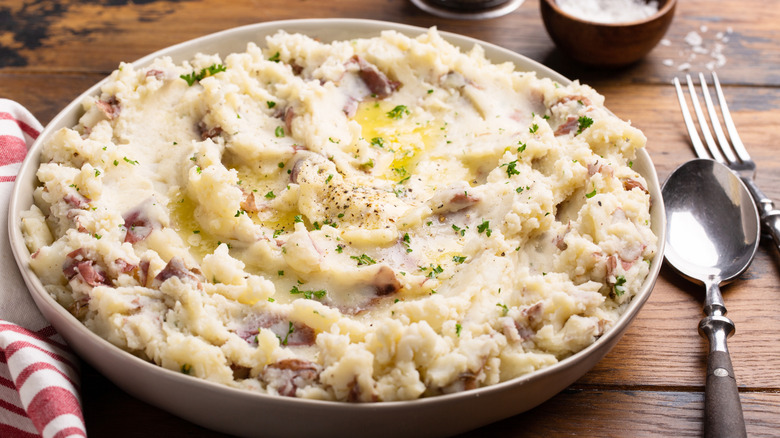
This is where things might get heated: the age-old whipped vs. lumps debate. Before you blurt out your personal favorite, let's see what the experts have to say.
The Texas Roadhouse Team states "our mashed potatoes are rich, savory, and satisfyingly homestyle, with a light, fluffy texture and just enough texture from the potato skins to remind you they're the real deal. They're intentionally slightly lumpy rather than perfectly smooth, giving every bite that hearty, made-from-scratch character guests expect from Texas Roadhouse." The team stresses that this detail makes all the difference. Each potato is scrubbed and carefully prepared with about 50% of the skin remaining, which gives the mash that "homestyle character." Okay, that's one for lumps.
Outback's Chef Efrem confirms the belief that lumps are what's up, "Our Homestyle Mashed Potatoes are pillowy, rich, creamy, and smooth, with a touch of texture from the skins that we leave in the mashed potatoes." However, if you've ever been to Morton's The Steakhouse, then you know we have at least one vote for team whipped. At the end of the day, choose what fits your personal preference while keeping your mind open to trying something new. Just because you're team whipped potatoes doesn't mean you have to make them that way every time.
Use a chicken base
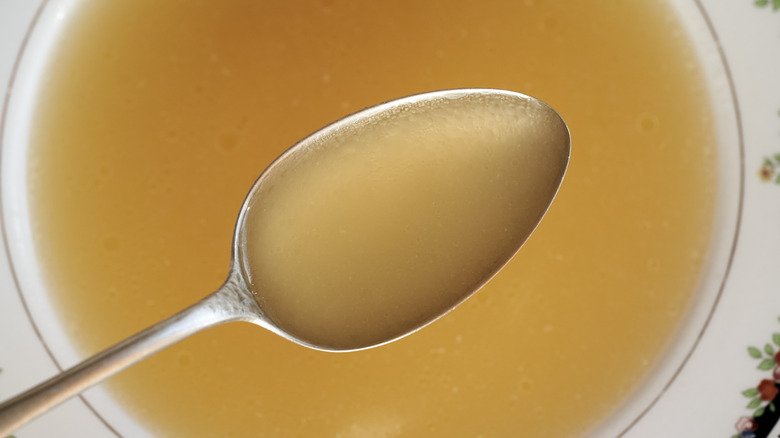
There are endless mix-ins to enhance mashed potatoes, but before we turn to AI or Google for answers, let's ask the experts at the steakhouse chains who do it best. The Texas Roadhouse Team starts with that quality Idaho potato base, then adds classic dairy ingredients along with "seasoning and chicken base," adding an element of savory flavor and depth to the side dish.
Often, home cooks will create balance using sweet, savory, salty, and fatty ingredients, but will forget about umami: the savory component. Ingredients like chicken broth, miso, and even a splash of tamari can go a long way. Some chefs like to cook their potatoes in chicken broth, while others use it to moisten their potatoes during the mashing process.
However, it's important to note that mashed potatoes are often thought of as a vegetarian side dish, so if you're following the lead of the Texas Roadhouse Team and using chicken broth in your mash, be sure to let your guests in on your secret ingredient. If you do have some vegetarians or vegans on your guest list, opt for miso mashed potatoes instead.
Cut them evenly for boiling
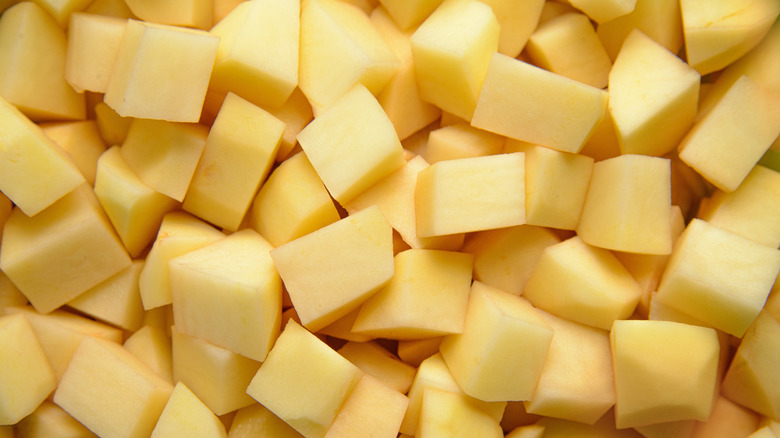
While many of these mashed potato upgrades we learned from chain restaurant steakhouses involve flavor-enhancing ingredients, it's important to note that technique plays an important role as well. Have you ever had grainy mashed potatoes? What about lumpy (and not in the tender, intentional way)? What about that sticky, gluey texture? As it turns out, a lot can go wrong when making this seemingly simple side, so it's important to look to the professionals for guidance.
After selecting your potato variety, scrubbing, and boiling, you'll need to cut those spuds up. While haphazard and catawampus cutting can be more fun, it's actually quite important that you cut your potatoes evenly. The Texas Roadhouse Team mentions that in their kitchens, the spuds "are cut into consistent pieces for even cooking, cooked until fork-tender and then mashed to achieve the light, fluffy texture." This is a great way to prevent lumpy mashed potatoes (again, not the intentionally lumpy, melt-in-your-mouth kind) and inconsistent textures. There's nothing worse than biting into an undercooked, chewy piece of potato in your mash, so take caution and take your time.
Load them up
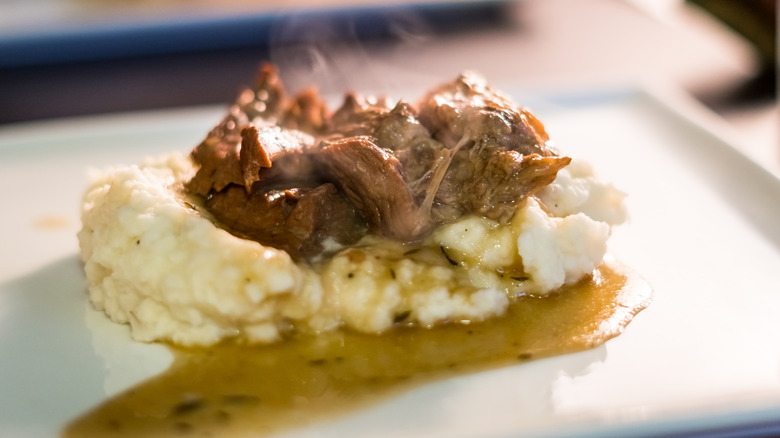
Even if you plan to load up your potatoes, it's essential that you have a strong base. However, selecting the best mashed potato toppings can be one of the most creative and fun elements to enjoying the side, so we asked the steakhouse chefs about toppings and pairings.
The Texas Roadhouse Team mentions that its mashed tots are served best alongside a Hand-Cut Steak. Additionally, they told us, "Guests can enjoy their potatoes on their own or take them up a notch with brown or cream gravy. They can also be ordered loaded with butter, sour cream, cheddar cheese, and bacon." At Outback Steakhouse, chef Efrem said the chain's mashed potatoes can complement any steak, and the topping options are endless. "You can order our Loaded Mashed Potatoes," Efrem noted, "which start with our rich, creamy Homestyle Mashed Potatoes topped with mixed cheese, sour cream, butter, crispy bacon, and green onions."
But why stop there? You can also top your taters with "fresh Chimichurri Sauce, our Roasted Garlic topping, and sautéed mushrooms and grilled onions." Consider topping your next homemade mash with some of these classics, or out-of-the-box options. Chef Efrem added "a chef's secret: Ask for a side of our Creamy Mushroom Sauce that we offer with our 10 oz. Chopped Steak." There's nothing like gravy over mashed potatoes to bring comfort to your plate, after all.
Make 'em fresh
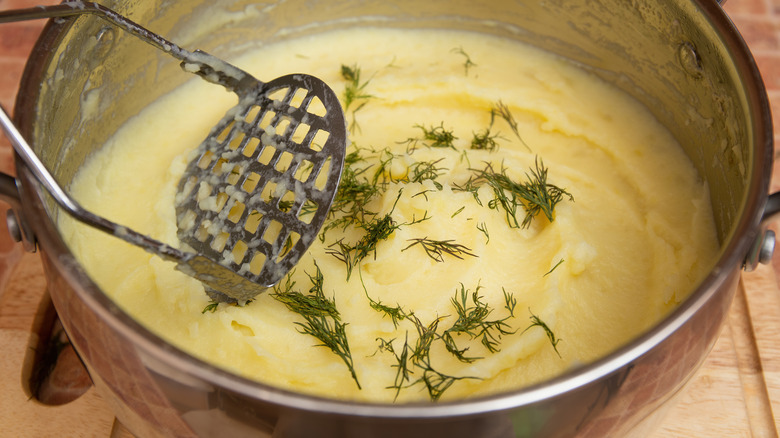
Like many dishes, mashed potatoes are best when eaten fresh. While they reheat well, they also tend to change in texture and sometimes become too soft or melty. That's why chef Efrem suggests making mashed potatoes fresh, from scratch, daily.
As Efrem told Tasting Table, "We boil our potatoes and prepare the mash fresh at the start of every shift, continuing this process throughout service to ensure our Homestyle Mashed Potatoes are piping hot, fresh, and perfect to pair with every meal, especially our Best Steaks Ever at Outback Steakhouse." If you have the time and energy, consider making your mashed potatoes day-of. Of course, on busy cooking days like Thanksgiving, do what you have to do (and note that some dishes like cranberry sauce actually taste better after sitting for a day).
Still, if you can, be sure to take any opportunity to serve piping hot, freshly mashed spuds. You'll notice an improvement in texture, as freshly mashed potatoes hold onto those fluffy air pockets that are perfect for storing butter. Listen to the steakhouse experts, as they cook for hundreds of customers each day and prioritize making their mashed potatoes fresh daily.