

6 Tips For The Absolute Best Smoked Turkey, According To An Award-Winning Pitmaster
We may receive a commission on purchases made from links.
Happy turkey season! For those of us who are culinarily inclined, the be-all, end-all of foodie holidays is right around the corner — and, if you're anything like us, you already have detailed spreadsheets telling you when to put each dish in the oven on the big day. Are you planning on smoking your turkey this year? If you have a smoker, you should! The process can lend unparalleled flavor to the bird, and it's really not as hard to execute as it sounds.
Still, if you're new to smoking meat (or just want a refresher from a seasoned pro), you could probably use a few handy tips to make sure this Thanksgiving goes off without a hitch. We connected with Grant Pinkerton, owner and multi-award-winning pitmaster at Pinkerton's BBQ, to give us the inside scoop on some of his best practices for turkey smoking. If you want to avoid the last-minute panic that tends to ensue when you're embarking on a big cooking project for the first time, don't fret — you're in the right place.
1. Give your bird an overnight brine
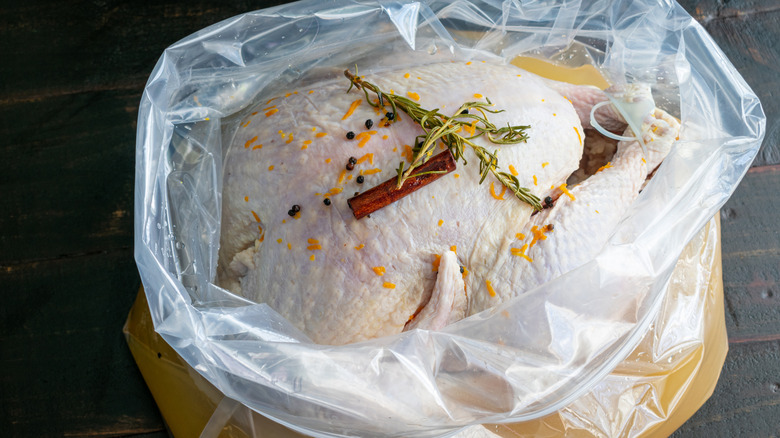
One of pitmaster Grant Pinkerton's first tips is a surefire way to make your bird as flavorful as possible. He recommends brining it overnight for maximum effect — in fact, he says the brine should be your main vehicle for seasoning the bird (but more on seasoning later). Want to go the extra mile? Pinkerton says it's not a bad practice to inject the brine into your bird.
That's all well and good, but unless you have a good brine, it won't really make a difference. Pinkerton recommends using "about 1 cup of kosher salt per gallon of water." You can stop there, or, if you want to add more flavor to the mix, include some sugar and aromatics like rosemary, orange zest, or lemon. As far as the "overnight" part of the brine, Pinkerton emphasizes that this length of time is crucial to letting the brine season the entire bird. He also says this brine time "helps it hold onto moisture, so the breast stays juicy even on the smoker."
2. Be careful not to overcook your turkey
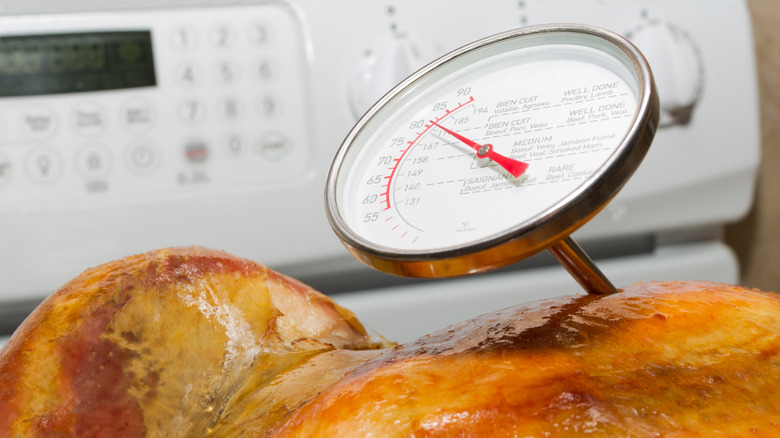
This may seem like a bit of an obvious tip, but it's especially crucial to keep in mind whenever you're trying new methods of cooking meat. If you've ever roasted some chicken thighs only to find that the usually juicy meat is bone-dry when it emerges from the oven, you know what we're talking about. Fortunately, Grant Pinkerton gave us some tips to take the guesswork out of turkey temping.
His first tip? Get yourself a good, reliable thermometer. "I think one of the most important things to have on hand is a Thermoworks Thermapen. Making sure [your] bird doesn't get overcooked is the key to everything," he says. To that end, he mentioned one of the most common mistakes home cooks make when smoking turkeys: They pull the turkey from the heat source once the thermometer reads 165 degrees Fahrenheit. Pinkerton says that's too late, and that you should pull your bird once it reads between 152 and 155 degrees Fahrenheit in the breast. "[A] turkey is actually pasteurized as long as it reaches 152 degrees for 3 [minutes]," he says.
3. Make a test turkey the weekend before
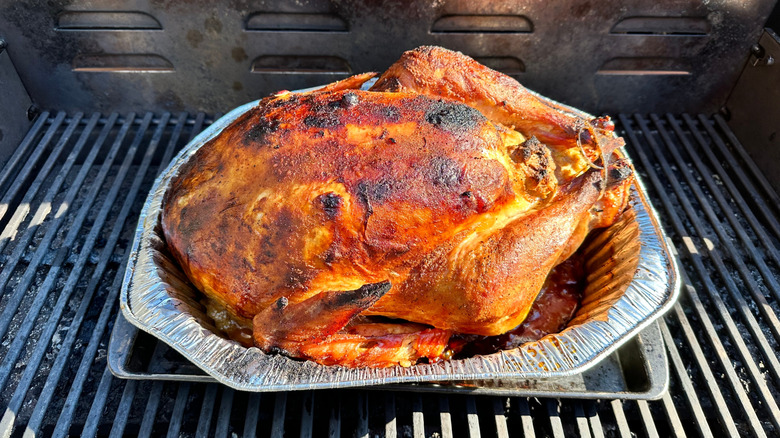
Even with the best pro advice at your disposal, embarking on something new — especially during the holidays, and especially when you're responsible for feeding a gaggle of guests — is bound to be daunting. One way to assuage the ever-present Thanksgiving Day anxiety? Cook a practice turkey. As they say, practice makes perfect, and even just one trial turkey can help you iron out any kinks so the big day goes as smooth as possible.
This is one of Grant Pinkerton's biggest turkey tips, especially when it comes to smoking the bird; he told us, "Cook a test and practice bird the weekend before so you can knock it out of the park when the pressure is on!" Not only will this help your actual cooking process go more smoothly, but it'll also allow you to test your brine and seasonings. Perhaps your trial turkey comes out too bland, and you decide you want a hit of rosemary for some herbaceousness or orange for brightness. Plus, there's nothing wrong with having plenty of turkey at your disposal. After all, nobody said you couldn't indulge in a scrumptious turkey sandwich or two before the big day ... right?
4. Don't smoke it low and slow
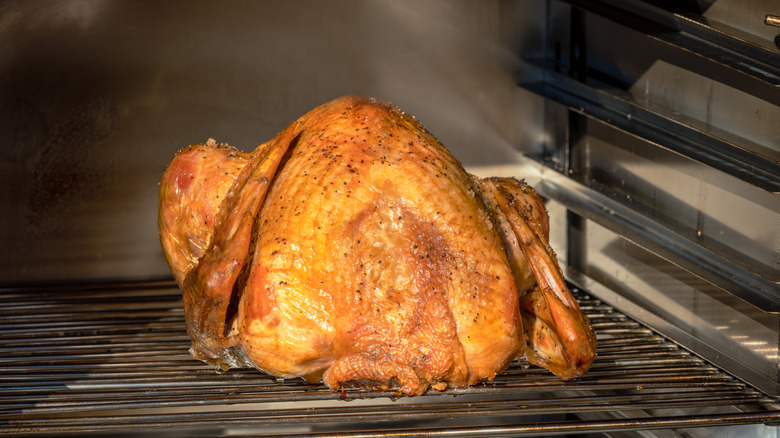
We know, we know — low and slow is the way to go when it comes to cooking many cuts of meat, from beef chuck to lamb shank. But if you try to apply the same logic to smoking turkey, you're likely to end up with a disastrous — and quite possibly inedible — bird; aka, the worst possible thing that could happen on turkey day.
"Lower and slower, especially while smoking, gives the bird an over smoked flavor and the skin dries out," Grant Pinkerton says. So ... not a recipe for success. Instead, aim for a temperature of 275 to 300 degrees Fahrenheit when smoking your turkey. Pinkerton also recommends spatchcocking your turkey. You can expect it to take at least a few hours to smoke, but the exact time will vary depending on the size of your turkey. Make sure to check the temperature regularly to avoid overcooking it.
5. Don't use too much wood in your smoker
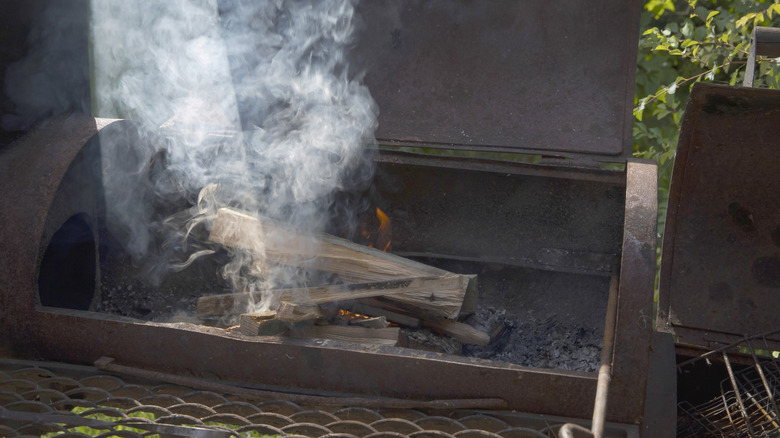
It's not enough to just make sure your smoker is at the right temperature; you also need to consider the wood being used in the smoker. Wood choice is all up to personal preference, but what you definitely don't want to do is use too much of it. When it comes to smoking, more doesn't mean better.
Why? Grant Pinkerton cautioned against using too much wood, saying, "Poultry is delicate and over smoking really overpowers the meat." So while you may be used to using plenty of wood when smoking other cuts of meat, turkey won't behave the same. As far as how much is too much, Pinkerton said that because every smoker is different, it's hard to offer one-size-fits-all advice. "Start small and make sure the wood is preheated and burning clean. You can always add more," he says.
6. Don't over-season your turkey
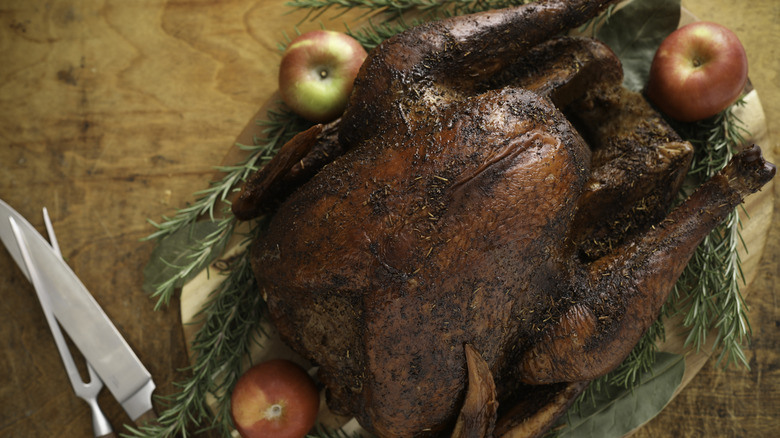
Last but not least, we'd be remiss not to talk about another instance where more doesn't mean better. When it comes to seasoning your turkey, especially when you're smoking it, don't overdo it. Simple is the way to go here; let the brine give your bird most of its flavor, and keep the seasoning on the skin simple. In fact, Grant Pinkerton only uses salt and pepper on the skin of his smoked turkeys.
Once you hear his reasoning for not over-seasoning the bird, this method makes sense. Seasoning the outside of the bird doesn't do much to flavor the meat — all that seasoning just sits on the skin, which Pinkerton says "doesn't flavor the meat, creates a big mess, and makes your bird too dark." If you want that coveted golden skin on your bird with plenty of flavor throughout, let the brine do the work, and keep the seasoning on the turkey's skin simple.