

The Valuable Vintage Porcelain Worth Grabbing If You Spot It In Thrift Stores
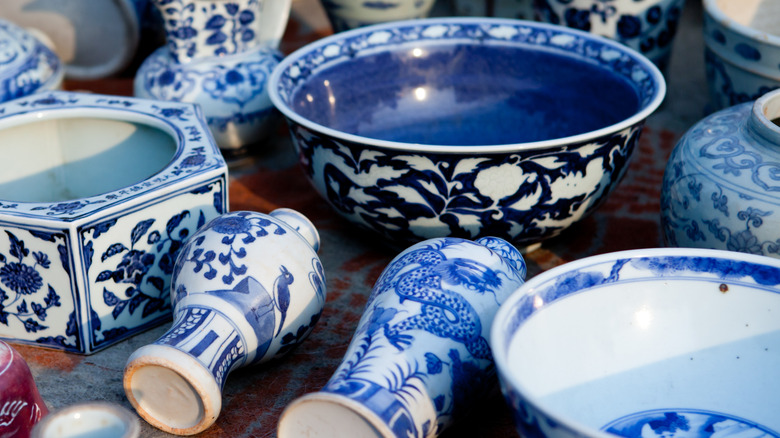
The next time you spot a white porcelain dish decorated with cobalt-blue flowers, landscapes, or traditional Chinese motifs while browsing at a thrift or vintage shop it might be worth taking a closer look. Chinese qinghua, more commonly known as blue and white porcelain, is a centuries-old decorative craft that attracts collectors from around the world.
The technique involves painting designs with a cobalt-blue pigment onto white porcelain, then coating the design with a transparent glaze and firing it in a kiln. Familiar motifs include dragons, peonies, and lotus flowers, which all hold symbolism in Chinese folklore. Look out for plates, bowls, vases, jars, and tea sets, since these were all manufactured in the style.
The tradition of Chinese qinghua dates back to the Tang dynasty (618 to 906) and flourished in the Ming (1368-1644) and Qing (1644-1911) dynasties. The finest of this historical porcelain was produced in the city of Jingdezhen, renowned for its ceramic craftsmanship. Part of the beauty of the pieces lies in the raw materials used in making the fine white clay, which is a mix of kaolin and local feldspar. Further, as each piece is hand-painted, the artisan's skill adds to the rarity and collectability of the pieces. Beginning in the 16th century, international trade brought these pieces to Europe and beyond, where they were prized for their beauty and artistry. The Blue Onion design from manufacturer Meissen (a German company that copied original Chinese designs) is one of the most widely recognized patterns in the style.
How to spot Chinese qinghua porcelain
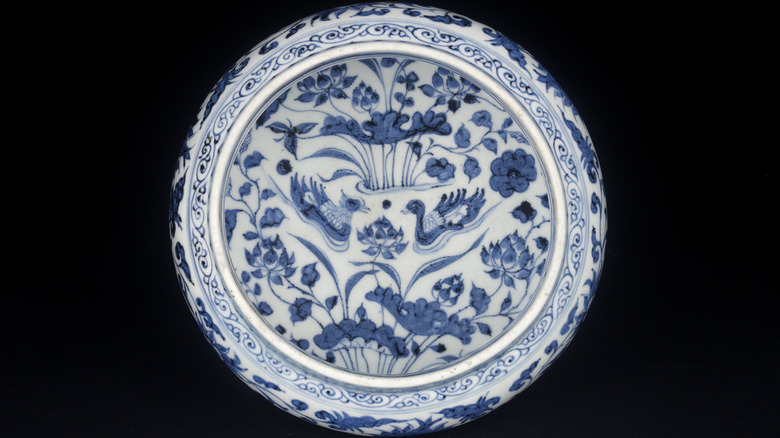
There are many factors that contribute to the value of Chinese qinghua pieces. Age, craftsmanship, rarity, condition, and provenance all play significant roles. Pieces from the Ming and Qing dynasties are particularly valuable, as the materials and craftsmanship saw significant improvement during these times. Those associated with imperial production are also desirable, as pieces became associated with status. When thrifting, examine the bottom or base of a blue and white porcelain piece for a four- or six-character reign mark, often painted in blue, which may date the piece as far back as the Ming dynasty. Though be aware that a mark may not guarantee authenticity as historical reign marks were frequently copied.
Look for qualities that indicate a hand-painted piece, like variations in the cobalt blue pigment and how fine details are executed with variation in line weight and pigment intensity. Other things to note are the footrim finishing and painting styles, which can help determine the age.
For collector-worthy finds, consider the condition, including hairline cracks, chips, and any repairs. Of course, documented provenance will increase the value of a piece, too. If you find something promising, consider taking it to a ceramics expert or compare it with auction results to determine if it's a valuable find. For more secondhand tableware inspiration, see these antique appraiser's tips for valuing collectible plates, and do browse some other vintage plates that might be worth a fortune alongside qinghua pieces.