

An Antique Appraiser Spots The Subtle Difference Between $30 And $10 Collectible Plates At The Thrift Store
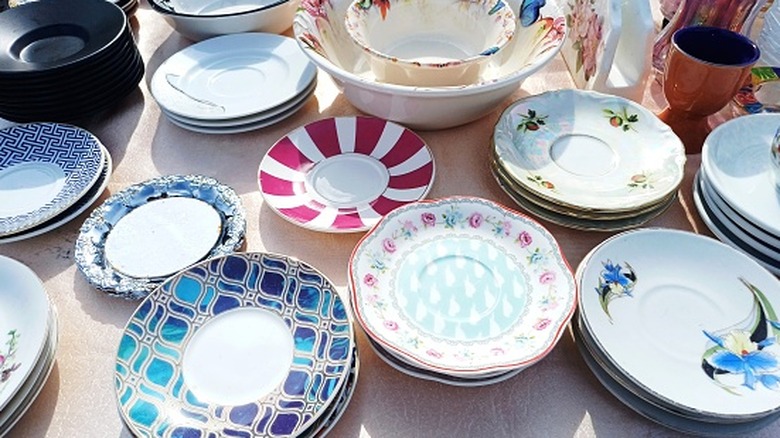
If you love perusing flea markets and secondhand stores for kitchen-upgrading treasures, you know you sometimes just want vintage servingware that adds charm to the kitchen; brands don't matter, it's all about what patterns match the room's aesthetic and will look lovely on a shelf or wall. But you might consider learning especially sought-after brands in case you come across any valuable, collectible pieces. It can be tough to distinguish between brands, but antique appraiser Dr. Lori has offered helpful tips anyone can learn.
In one YouTube video (below), Dr. Lori explains how to tell Royal Copenhagen plates from B&G ones. Royal Copenhagen is one of the ultimate thrift store finds in vintage kitchen brands. The expert appraiser held a B&G plate up next to a Royal Copenhagen plate in a thrift store, and they admittedly look quite similar: deep blue with tonal patterns and a glossy finish. Both are dated as being made in the 1970s and the thrift store is charging $3.99 for both. But while B&G is worth about $10, Dr. Lori notes, the Royal Copenhagen dish is worth $30.
How can she tell which is which? She looks for maker's marks, and you can too. Flip the plates over and you'll find stamped logos. Some plates will have a Royal Copenhagen stamp, depending on when they were made, but on more vintage servingware the brand's signature mark is three blue, wavy lines. Meanwhile, B&G's mark is three little towers. With the flip of a plate, you can learn loads.
The differences between Royal Copenhagen and B&G
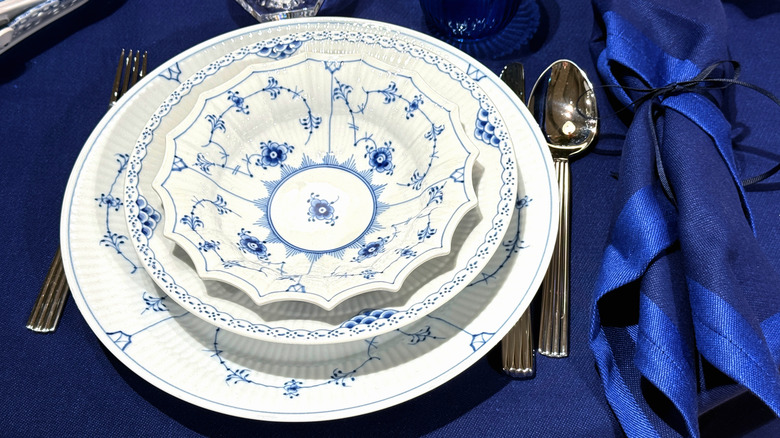
Both Royal Copenhagen and B&G are Danish porcelain producers. Royal Copenhagen was established in Denmark in 1775 with fittingly royal backing, and it's been a prestigious brand ever since. B&G (or Bing & Grondahl) is also Danish, and was founded in 1853. While B&G has been steadily popular, it has never quite reached the same status. In 1987, the two companies merged, and both are still in production today.
Existing for much of the same time in the same country, these two brands share quite a bit of stylistic identity. The plates Dr. Lori compares in the video are decorated in underglaze, meaning their patterns are painstakingly painted on before the pieces are glazed for a high-shine finish. If you encounter Royal Copenhagen and B&G plates somewhere where the former is much more expensive and you just want a lovely, blue vintage plate, B&G is a completely respectable option. But finding them for the same price shows it's worth taking Dr. Lori's mark-checking advice — for not a cent more you could have a piece from a higher-quality brand.
The marks can also reveal when a piece was made. For example, Royal Copenhagen used a simple three waves to mark its goods between 1870 and 1890, then some combination of a crown and the waves until 1923. B&G began using the three towers in 1898, adding "B&G" and "Made in Denmark" throughout the 20th century. There are useful guides online you can reference. Nab any of these RC or B&G treasures and they'll make your kitchen's open shelving a stunning focal point.