

The Gorgeous Antique Plate Manufacturer That Thrills Collectors
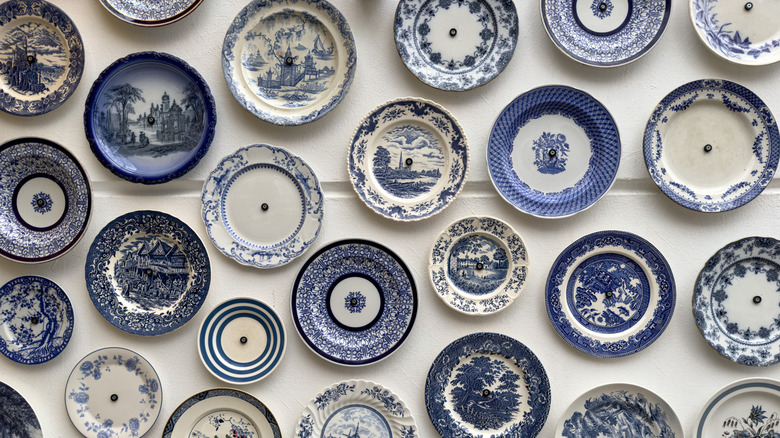
If you've ever been lucky enough to spot china with the iconic pattern of dark blue flowers scrolling across a white background at an antique store or thrift shop, you may have stumbled across one of the most collectible vintage plates ever made — and it could be one of the several vintage plates worth a fortune. Meissen's Blue Onion pattern is one of the most widely recognized in the world.
In 17th-century Europe, imported porcelain from China was so valuable it created a collecting frenzy so Augustus II of Saxony was determined to crack the code on producing it in Europe. After years of experimentation, the first European hard-paste porcelain was made in 1708. Soon after, Augustus founded a royal manufactory in Meissen, Germany, making it a hub of European porcelain production for more than 150 years.
As early as 1720, Meissen painters began copying East Asian motifs styled to European tastes. Meissen's crossed sword logo was introduced for authenticity in 1722, and the Blue Onion pattern was developed in 1739, making it one of the oldest trademarked patterns. The cobalt blue pattern isn't, in fact, onions, but peaches and melons, along with bamboo accents.
Meissen's Blue Onion pattern remains highly collectible even today
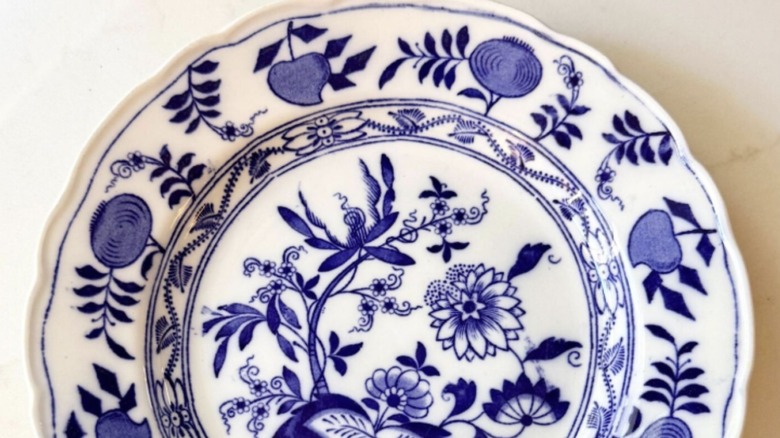
Despite the Blue Onion pattern's antique origins, Meissen is still evolving and producing china with the pattern today. The brand produces a pattern, now called The Original, that is modeled after the Blue Onion design and it's now available in green, red, brown, black, pink, and peach. Even though Meissen is still producing a version of the iconic pattern today, the company's older wares are still valuable vintage kitchen decor items you should look out for.
An authentic contemporary Meissen 12-piece set of Blue Onion china retails for more than $2,200 on the brand's website. But in 2017, an extensive early 20th-century table service, including tiered serving towers and platters, was auctioned off at Christie's and sold for an astounding 27,500 euros. When determining the value of Meissen Blue Onion china, condition is important, and if it's available, the patterns, artists, and documented history of the pieces is important as well because the Blue Onion pattern is often duped by other porcelain manufacturers.
If you're unable to tell if your collectibles are worth anything today, you may want to seek the help of professionals. Collections can be authenticated by reputable antiques dealers, auction houses like Christie's or Sotheby's, or even by Meissen itself.