

Adding This Asian Condiment To Chili Makes It 10X More Flavorful

There truly is no limit to what you can put into chili. Even ingredients that hail from entirely different cuisines have a spot in the simmering pot, especially if we're talking about gochujang. This Asian condiment is a flavor powerhouse in countless Korean dishes, and it can also be your key to much better chili.
Gochujang is a sweet and spicy Korean paste made primarily from fermented soybeans and chili powder. This gives it the most divine and intense flavor profile: It's sweet, spicy, with a tangy undertone that deepens everything it touches. In your chili, gochujang adds a subtle heat that isn't merely spicy or fiery, but rather layered with nuances that blend seamlessly into the spice-laden base. It takes this already complex dish to a whole other level, where every spoonful carries both cuisines' quintessential essence: Tex-Mex's rustic comfort, woven with Korean food's umami warmth.
A little goes a long way with gochujang, so you'd only need about ¼ cup for a whole pot of chili. You can add it right as you're sweating the aromatics and browning the meat so that this condiment's flavors will further penetrate the meat. Alternatively, try mixing the gochujang with other staple chili condiments for a richer, deeper broth.
Make every dinner unexpected with Korean-style chili
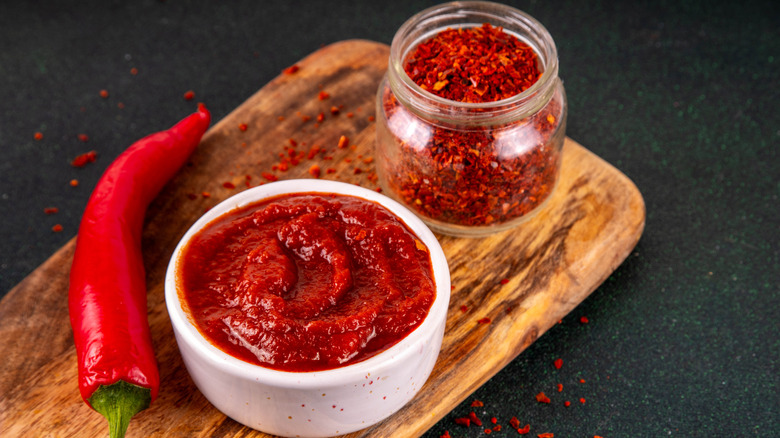
A Tex-Mex chili with Korean influence is a pretty good way to bring an unexpected twist to your familiar dinner night. Other than the classic West Texas chili, you can also try this spin with white chicken chili. You're in for a treat with the gochujang's spicy tang striking a stunning contrast against the creamy flavor base. For folks who can't get enough of that tomato and bean combination, add gochujang to chili con carne – perhaps even with a pinch of gochugaru (Korean chili powder) to really kick things up.
Don't forget, other staple Asian condiments can also join the gochujang in bringing even more umami goodness to your chili. Soy sauce, rice vinegar, and more are all phenomenal options should you want a chili that subtly reminisces of Korean BBQ's sweet-and-savory taste. Going one step further, you can incorporate common toppings from Korean dishes, such as kimchi, yellow pickled radish, shishito peppers, and green scallions. Perhaps even swap out the classic ground beef for tofu, à la the infamous kimchi jjigae (although this stew does taste better with pork belly) or bulgogi beef (marinated Korean barbecue meat). On the table, you can serve the chili with a small portion of banchan (Korean side dishes), or some good ol' rice or rice cake to fill out the meal.