

Do This 24-Hour Step Before You Make Pizza For Double The Deliciousness
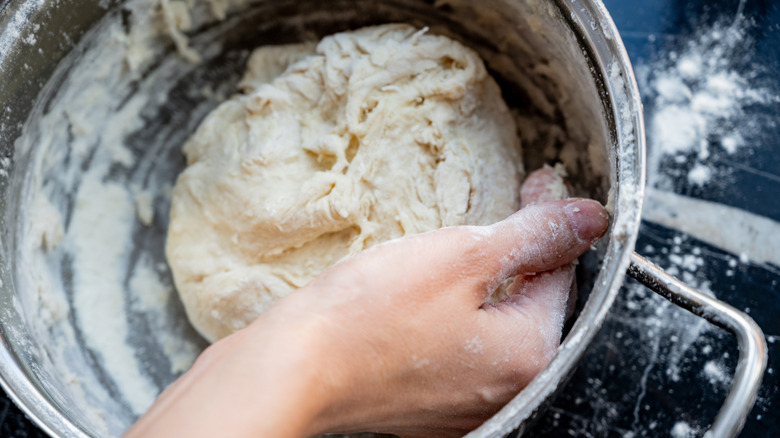
Making pizza at home, you might have perfected the sauce, chosen gourmet toppings, and invested in the most state-of-the-art pizza oven. Yet, your homemade pizza doesn't taste like it's from a pizzeria. Giving the yeast at least 24 hours to cold-ferment your dough could be the missing piece in making a pizza that tastes authentic.
Fermentation is already part of pizza-dough making, as it's the process of allowing yeast to consume sugars and create carbon dioxide gas bubbles that inflate the dough. At the same time, yeast produces the flavor compounds that create the super-sour flavor associated with breads like sourdough. While it's possible to ferment dough for a few hours at a higher temperature, the cold-and-slow phase allows more complex characteristics to develop.
After mixing and kneading, place the dough in a cold environment like your fridge for at least 24 hours. When you pull the dough out, you can form it into balls for the second, room-temperature proof before shaping, topping, and firing. Alternatively, you can ball your dough after the first short room-temperature proof, then rest those balls in the fridge for a day to get those complex flavors.
Patience is the secret ingredient to authentic-tasting homemade pizza
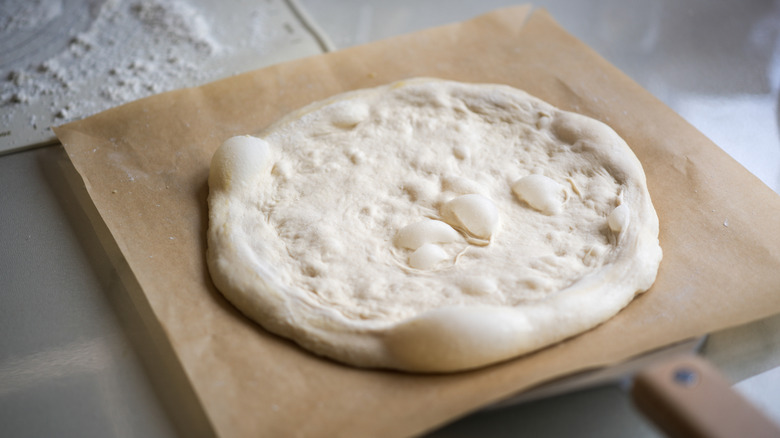
A longer fermentation time also gives the enzymes a chance to carry out autolysis, in which they untangle proteins to prepare them for better gluten formation. This improves the strength and structure of the dough, readying it to be stretched and formed. All the while, the sugars that enzymes avail from the starches fuel a consistent fermentation over time, or otherwise remain in the dough to darken into those attractive "leopard" spots under heat.
24 hours is a great starting point, but if you really want to take advantage of slow fermentation, you can keep your dough in the fridge for even longer. Two or three days will further allow the flavor to develop, and even up to five days can keep the process going. After around five days, you might experience diminishing returns, as the yeast eventually begins to create some less desirable sourness or starts to die off. That means too much funk, and not enough rise.
When it's time to form your dough into actual pizza bases, be careful not to undo all the hard work your yeast has done. A gentle hand is important for stretching and forming the dough without completely degassing it, especially if you're going for the lightest Neapolitan pizza dough.