

7 Top-Shelf Red Wines That Aren't Worth The Money
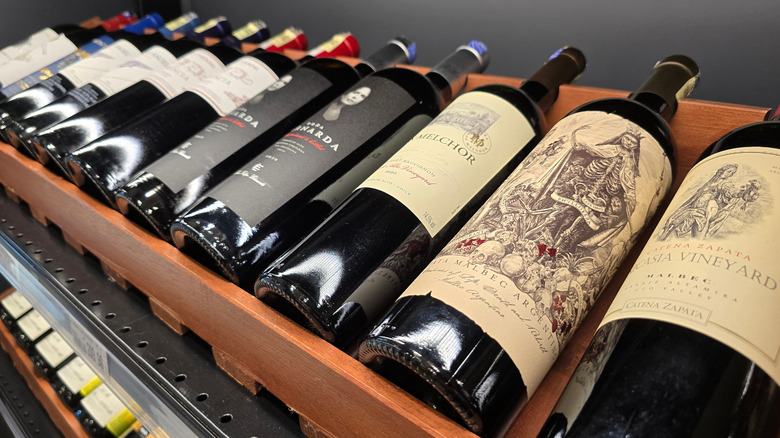
When perusing the wine aisles for a great bottle, whether for a dinner party or a celebratory occasion, many of us may gravitate toward expensive bottles or those with notable name recognition, assuming these attributes indicate higher quality. And in theory, it's not necessarily a bad approach. More expensive bottles often involve costly production methods, additional manual labor, or grapes grown on prestigious vineyard sites where land is limited.
Through my experience tasting wines from producers and regions across the U.S., along with my WSET certification and continued wine studies, I've discovered that not all wines live up to their price tags. Though some expensive red wines are worth the money, others don't always deliver the same value. Whether due to past prestige, name recognition, or exclusivity, some top-shelf red wines have fallen short when it comes to the final taste test. Here's a list of seven well-known, top-shelf red wines that may not be worth the splurge. You can read more about my methodology at the end of this article.
Caymus Napa Valley Cabernet Sauvignon
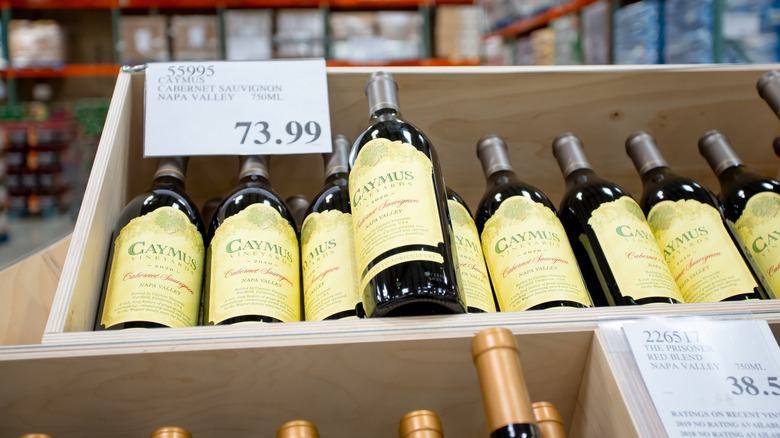
Chances are you've heard of Caymus, one of Napa Valley's most recognizable cabernet sauvignon producers. Founded in 1972, the winery has built a reputation over more than five decades, gaining recognition after receiving a favorable review from California wine critic Robert Finigan, followed by two Wine of the Year awards from Wine Spectator. But some wine professionals question whether its roughly $70 to $85 price tag reflects what's actually in the glass or the power of its name.
This past summer, I had the chance to try a 375-milliliter half-bottle. With high expectations after seeing it on so many restaurant wine lists, I found its dominant fruit flavors ultimately left much to be desired. I typically love the fruit-forward cabernet sauvignons I've tasted from Washington, but Caymus was different. The fruit was simply too overpowering for my taste. I discovered I wasn't alone in my disappointment, with multiple wine professionals criticizing its overly ripe, sweet character. Robert Wilson, owner of Vesper Books and Wine in Detroit, was particularly critical of Caymus in an interview with VinePair, comparing its heavily fruit-driven character to Hi-C fruit punch, a pretty low blow.
While you may turn heads when you bring it to your next dinner party, it may be worth reconsidering. As with other overpriced and overrated red wines, there are alternatives that deliver ripe fruit flavors at lower prices.
The Prisoner Red Blend
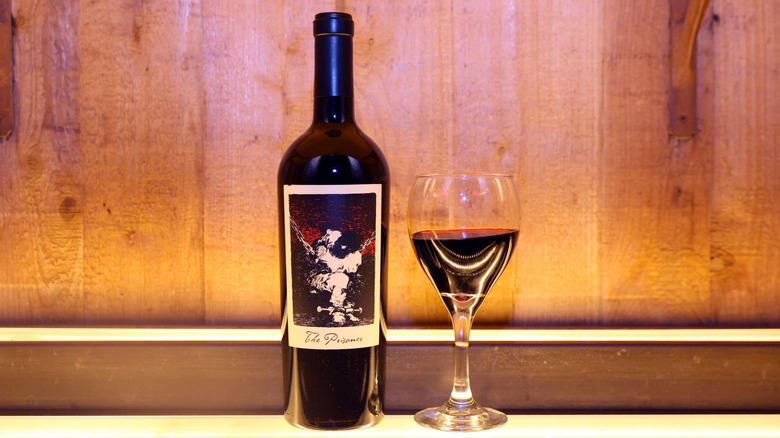
With its distinctive image of a tormented prisoner on the front label, The Prisoner Red Blend has become one of California's most recognizable wines. Now carrying a price tag of roughly $40, the wine was created by Dave Phinney more than two decades ago. Its iconic label was inspired by an etching by Spanish artist Francisco Goya that hung in Phinney's room. The wine lived up to its rebellious label, too, moving away from traditional Bordeaux-style blends with a zinfandel-based blend, an unusual approach for a premium California red at the time. Some loved it, as its popularity suggests, while others had different thoughts.
Having tasted it myself, I found its finish particularly disappointing. On the nose, it could easily be mistaken for a Napa cabernet sauvignon with its overripe, fruit-forward aromas. But upon tasting, there's a distinct difference. The fruit was less pronounced than the aromas suggested, followed by a slightly bitter, stunted finish that left me wanting more. The wine also lacked the complexity I'd hoped to find at this price.
At the end of the day, The Prisoner didn't live up to its roughly $40 price tag for me. Its lackluster finish made it difficult to justify the splurge, especially with popular value red wines on the shelves available at lower price points.
Belle Glos Dairyman Pinot Noir
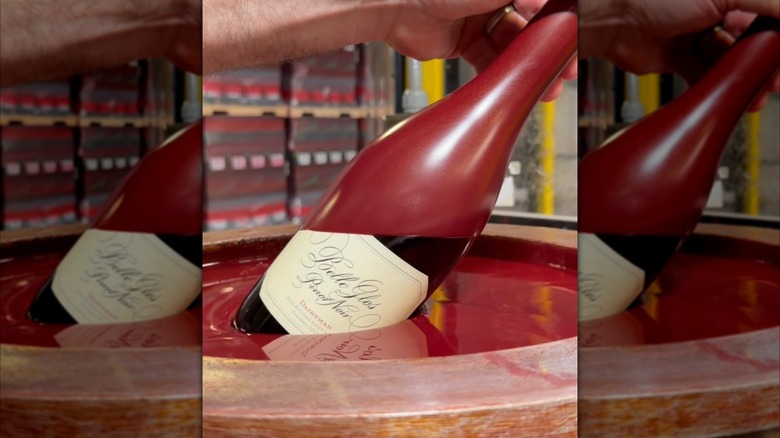
Produced in California's Russian River Valley, this pinot noir is instantly recognizable for its striking wax-dipped bottle. With a price tag of around $50, Belle Glos Dairyman Pinot Noir certainly gives the impression of a high-end wine.
However, the wine's rich, heavily oaked style raises questions about whether it delivers enough value for its price. When I tasted Dairyman, I picked up strong vanilla and tobacco notes, which are certainly nothing to snuff at, but there's a balance to strike. Belle Glos struck me as relying on its oakiness to convey its high-end style, as oak is often associated with premium wines. Its ripe, fruit-forward aromas also reminded me of a Napa cabernet sauvignon.
A Wine Spectator review of the 2024 vintage also noted its dominant toasty character from oak and questioned the wine's overall energy. While pinot noir is typically lighter-bodied, Dairyman offers a richer, more concentrated expression of the grape. That's not necessarily bad, but it's quite different from what I expect at this price. At the end of the day, it's far from a typical pinot noir, and is more akin to a softer, less tannic cabernet sauvignon.
Silver Oak Alexander Valley Cabernet Sauvignon
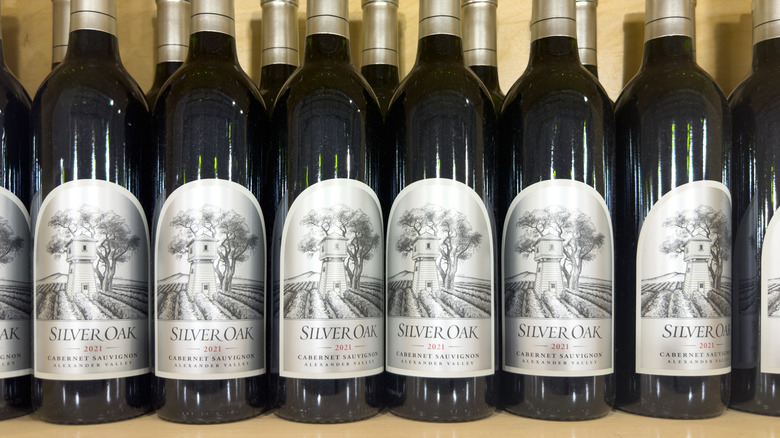
Founded by Ray Duncan and Justin Meyer in 1972, the two collaborated to create one of California's most recognizable wine brands. From the beginning, Silver Oak distinguished itself by focusing on cabernet sauvignon aged exclusively in American oak, an approach that became central to its signature style. The winery built its reputation on cabernet sauvignon from Alexander Valley and Napa Valley, with a strong emphasis on consistency.
Silver Oak's Alexander Valley cabernet sauvignon reflects a region known for producing rich, fruit-forward wines that can also exhibit herbaceous notes. When I tasted it, I found it balanced overall, with softer tannins and oak that wasn't overpowering. The fruit-forward character was certainly there, along with a light vanilla note and a silky texture. While I appreciated its smoother style and medium finish, I ultimately found myself wanting more complexity. With not much more to offer than fruit, vanilla, and a slightly smoother experience, it's hard to justify the roughly $70 price tag.
Wine writer Joe Roberts expressed a similar concern in Palate Press. After tasting Silver Oak's Alexander Valley and Napa Valley cabernet sauvignons, he praised their consistency, complexity, and ability to pair well with food, but questioned whether they justified their premium prices given the competition and the range of cabernet sauvignons available today.
Penfolds Grange Shiraz
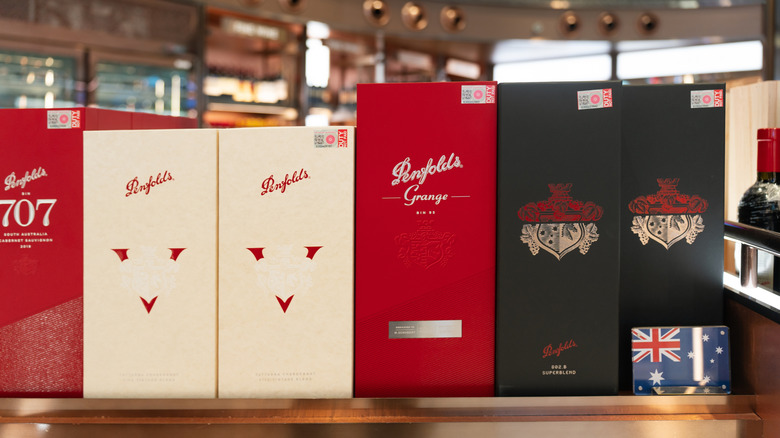
First produced in 1951, Penfolds Grange helped put Australian fine wine on the international map with its powerful, full-bodied shiraz aged in American oak. Inspired by Bordeaux, winemaker Max Schubert wanted to create an Australian red capable of aging for decades. Although ordered to stop production, he continued his experiments in secret. His persistence paid off, with Grange eventually becoming one of Australia's most celebrated wines.
Despite its reputation and consistent quality, there's still the question of whether its price tag, roughly $850, reflects what's in the glass or owes more to its history and prestige. Its concentrated fruit and prominent American oak character aren't necessarily for everyone, either. Wine critic Campbell Mattinson has discussed the wine's dense, heavily oaked style, which may not appeal to every wine lover.
Master of Wine Konstantin Baum explored a similar question when comparing four Penfolds wines at different price points. In his video tasting, he found that the brand's less expensive bottles could offer considerable quality without Grange's enormous price tag, which reinforces the appeal of more affordable alternatives to expensive red wines. While Grange has an impressive story, whether it's worth hundreds more than another quality shiraz is another question.
Opus One

Inspired by the renowned Bordeaux wines of France, Opus One was born from a collaboration between Napa Valley's Robert Mondavi and Bordeaux's Baron Philippe de Rothschild. The wine has since become one of Napa Valley's most prestigious bottles, with expectations to match.
Now, whether or not it's a good wine isn't really in question here. Opus One is widely praised for its balance, complexity, and structure. However, with a price tag approaching $500, the real question is whether the tasting experience justifies the splurge. There are plenty of excellent wines on the market, but what makes this one truly unforgettable?
According to sommelier Luigi Coco in a VinePair discussion of overrated red wines, there's a question as to whether expensive American cabernets should be priced similarly to classic Bordeaux wines. He specifically compared Opus One with the likes of the famed Château Margaux. Wine writer Joe Roberts has also discussed Opus One's past criticisms, including inconsistent older vintages and prices exceeding those of similarly or higher-rated Napa wines. Opus One has undoubtedly earned its prestigious reputation, but that doesn't necessarily mean it's worth hundreds of dollars more than other cabernet sauvignons at a fraction of the price.
Screaming Eagle Cabernet Sauvignon
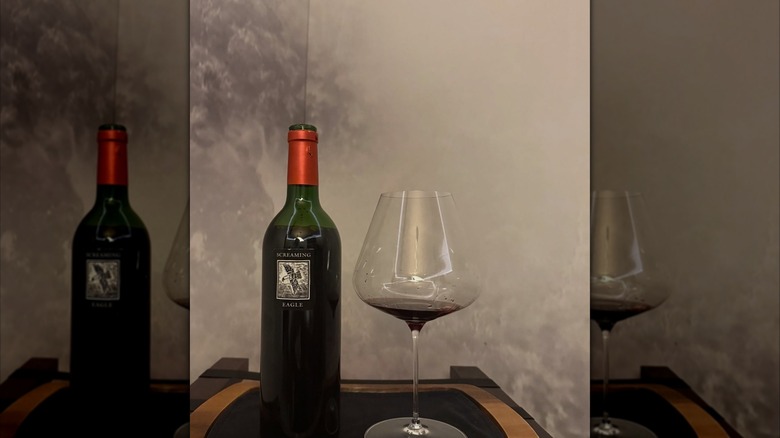
A real splurge at around $2,500 per bottle, Screaming Eagle cabernet sauvignon is a sought-after wine that has garnered a cult following. In the 1980s, real estate agent Jean Phillips began acquiring vineyard plots across Napa Valley. Following advice from Robert Mondavi, together with Heidi Barrett, Phillips decided to fully pursue winemaking. Their first vintage, produced in 1992, received a near-perfect 99-point score from Robert Parker, putting Screaming Eagle on the map.
However, some critics question whether its extraordinary price reflects the wine's quality or owes more to its perfect scores, limited production, or exclusive waiting list. Wine critics Antonio Galloni and Jon Bonné have both questioned the justification for Screaming Eagle's thousand-dollar prices, as reported by The Drinks Business. In an interview for VinePair, Mark Censits, managing partner of Maxwell Alley, recalled Screaming Eagle being an exceptional wine when it first sold for $75. Today, however, he argues that the wine now relies heavily on reputation, becoming more of a status symbol than the value it once represented. While Screaming Eagle has undoubtedly earned critical acclaim, whether it's worth spending thousands of dollars on a single bottle is another question entirely.
Methodology

For this piece, I drew on my firsthand experience tasting several of the wines on this list, incorporating my own observations and knowledge gained through my WSET Level 2 certification. I also researched professional wine reviews, sommelier critiques, and other published sources to identify premium red wines whose quality or value has been questioned by wine experts. In my final evaluation, I considered each wine's price point, reputation, and tasting profile, along with consumer opinions.