

5 Popular Red Wines That Are Overpriced And Overrated
We may receive a commission on purchases made from links.
When it comes to buying red wine, great expectations can set you up for major disappointment. If you're more of an occasional drinker than a full-blown oenophile, it's easy to feel overwhelmed staring at store shelves and trying to select an affordably priced bottle of red that's right for you.
I spent 10 years running a multi-unit specialty wine retail program, which provided the opportunity to taste and compare red wines to one another. This is when I learned that it's often the lesser-known bottles that can have the most interesting flavors and personalities. While some popular red wine brands and bottles are decent, others have little variation from year to year, include other ingredients beyond grapes and yeast, and just don't taste very good. If you're looking for which popular reds are not only overrated but also overpriced, you've come to the right place. You can read more about my methodology at the end of the article.
Avaline Organic Red Blend
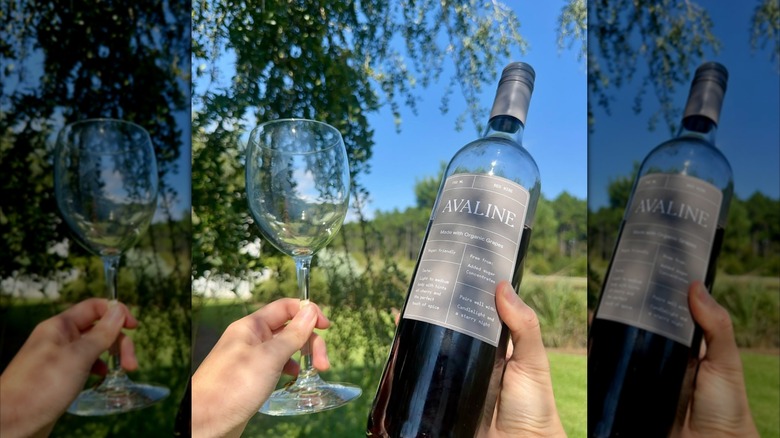
A purportedly healthier brand dreamt up by entrepreneur Katherine Power and actress Cameron Diaz, this "clean" wine line uses no added sugar in its bottles (excluding its prosecco) and organic yeast. It also advertises using just under 100 parts per million of sulfites in its wines, including the Red Blend. This sounds nice but lacks context. Or, if I'm being blunt, it's misleading you on purpose.
Sulfites naturally occur in all wines. Some wineries choose to add additional sulfur dioxide, a wine preservative, that helps to keep the wine shelf-stable for a longer period of time, though it often dulls the flavors and aromas. Most reds have between 50 to 150 parts per million of sulfites, with a legal maximum limit of 350 parts per million. So Avaline adds less sulfites than other wineries, but it's still well below the maximum. With the Red Blend in particular, which is priced around $25 per bottle, I get the impression that the brand adds enough sulfites so that the blend of grapes tastes uniform from bottle to bottle — but that translates to the wine not having much flavor at all — and what's the point of drinking a wine if it's not flavorful?
Celebrity wines may be enticing, but you have to remember that those names are attached for marketing — not as a display of wine quality. And in this case, the wine just isn't good enough to justify buying.
Caymus Vineyards California Cabernet Sauvignon
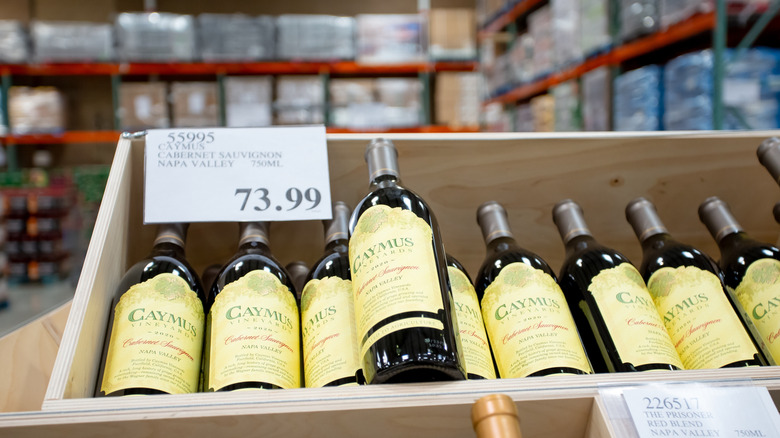
For years now, Caymus Cabernet Sauvignon has been a popular California red found in retail stores and steakhouses across America. This is thanks to the bold and dense flavor profile popularized back in the 1980s and '90s after the Judgement of Paris. Tenured wine critics also generally give it high point ratings.
That said, industry insiders have long speculated that Caymus uses coloring agents and potentially other additives to ensure that its cabernet pours as dark and bold as the night sky. Since wine labels in the U.S. aren't yet legally required to list ingredients, we aren't able to say for absolute certainty if this is the case, but there are extremely reasonable suspicions often echoed by experts in the know, making the concern worth noting.
Though the winery denies using commercial additives, the regularity with which drinkers are left with a mouth full of stained red teeth post-sip is hard to argue with. With an average cost around $70 per bottle and the same bland generic spiced blackberry flavor year after year, Caymus simply doesn't offer quality wine for the cost.
Ruffino 1877 Chianti DOCG
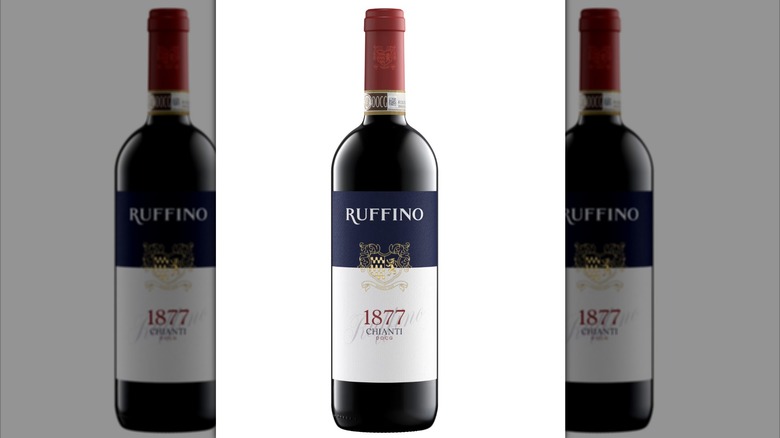
The Ruffino brand offers multiple tiers of Chianti wine from Italy. Many of the labels look roughly the same, but they are priced differently. Ruffino isn't the only winery offering a range of different Chianti wines by any means, but it's one of the larger-scale operations in the country doing so. In the world of Chianti — red wines made from Sangiovese grapes grown in a specific part of central Italy — these tiers are set by the government. So when you see its wines labeled as "Classico," meaning from a specific area located in the hills between Florence and Siena, or "Riserva," meaning it's aged for a couple of years, know that these are correlated to geography and wine laws and aren't necessarily a reflection of flavor or quality.
And the flavor and quality of this wine just isn't adequate for its price. Funnily enough, its base- level 1877 Chianti DOCG, priced around $15, is one of the thinnest red wines I've had from Italy. It had barely any cherry notes, notable leather aromas, or anything special. While this is the most "boring" Chianti it offers, the higher-end Chiantis are similarly nothing special.
Frog's Leap Cabernet Sauvignon
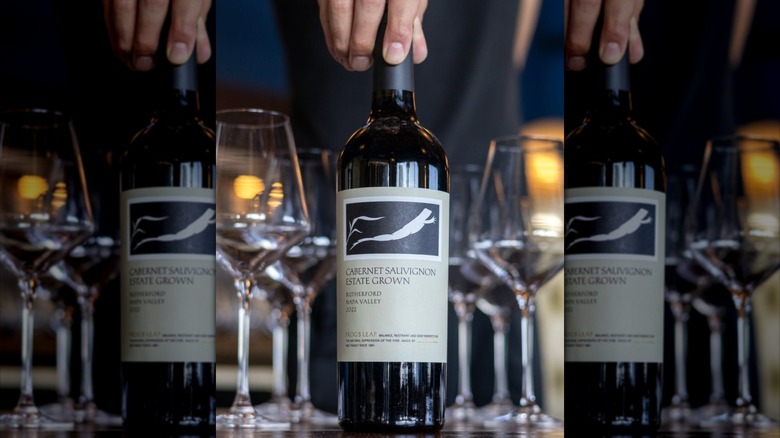
Organic wines are easy to find these days, and there are great selections at a fraction of the price of Frog's Leap. In fairness, the winemaking at Frog's Leap is nothing to sniff at. It's been practicing organic farming since the 1980s and became Napa's first certified organic wine in 1989. It works with a variety of partner vineyards to source fruit, many of which are long-standing relationships following a farming precedent. All of its partners practice dry farming, meaning its vines are dependent on moisture from deep within the soil, rather than resource-intensive irrigated water.
Beyond that? This winery makes a lot of wine that's fine flavor-wise. Its Cabernet Sauvignon, priced around $60, is traditional by California standards, meaning bold with a dark fruit profile. Still, it's nothing particularly delicious. There's minimal variation between vintages, which is odd since organic farming should let the fruit flavors shine. If the vintage was sunny and the fruit was juicy and bright, the wine should be, too. When I've compared different vintages, I've found that they're barely discernible from each other.
Revisiting this bottle feels like buying a new white button-down shirt on an annual basis. It's reliable, but not exciting. There are so many interesting wineries in California offering organic and sustainable bottles for half the price. Frog's Leap wines are absolutely fine, but you'll find better values and more interesting flavor profiles by stepping outside the Napa lines.
Meiomi Pinot Noir
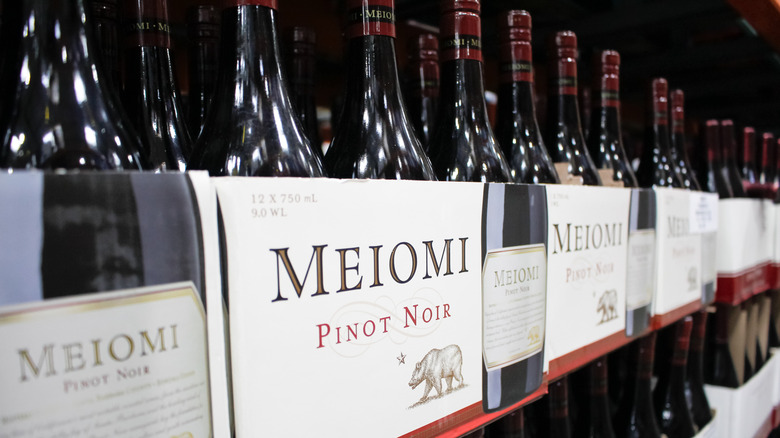
For being one of the bestselling wine lines in the world, Meiomi Pinot Noir is pretty meh flavor-wise. To me, its Pinot Noir tastes like the long-expired spices hiding in the back of your kitchen cabinet. Meiomi self-identifies as an "ultra-premium" brand — which has no actual meaning. It's just marketing jargon. This makes sense, as the brand is now owned by The Wine Group, a company that buys up mass-produced wine brands that are specifically engineered for broad consumer appeal. It seems to care more about sales than quality, and you can taste it.
The Pinot Noir averages around $20 per bottle, which feels to me like double what it should cost. For such a popular wine, it sure would be nice if it had a less chemical-tasting profile. Cherry, spice, and everything nice is definitely not how I'd describe this wine. Cough medicine, perhaps? It reminds me of the medicine my mother gave to me when I was sick child.
Belle Glos Clark & Telephone Pinot Noir
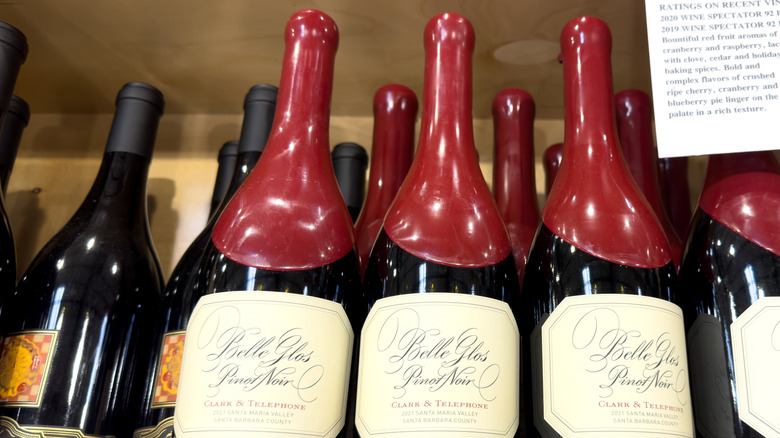
Sure, the drippy red wax that almost fully encases this bottle is visually appealing to some people. That packaging is partly the reason why these Belle Glos Clark & Telephone Pinot Noir bottles average $50 and up. As pretty as the bottles are, you can't drink wax. The Belle Glos Pinot Noir line offers a similar flavor profile as Meiomi, but unlike Meiomi, the Clark & Telephone Pinot Noir is made with grapes grown in the same vineyard. Estate wines like these tend to be more expensive because there is less fruit, which could be one of the reasons for the high price on this bottle. But I don't necessarily think this price is justified.
I find it suspicious that the Bella Glos website offers little explanation for how the different vineyards influence the flavor of each of the wines. The Clark & Telephone Pinot Noir, one of Bella Glos' more popular bottles, is often described as a "pinot noir for cabernet drinkers." But is that because of the vineyard, or is there something different about its winemaking or aging process? I couldn't tell you. Even as one of the lower priced bottles in the lineup, Clark & Telephone is still a prime example of wildly overpriced bland red wine. I wonder what the bottles would cost without that wax exterior.
Methodology
To construct this list of overpriced and overrated red wines, I first compiled a list of popular wines, based on my experience and professional wine reviews. I paid equal attention to trending brands, as well as wineries with more tenured histories.
As far as deciding which of those wines were overpriced and overrated, I primarily relied on my years of purchasing and tasting experience. I considered how good these wines actually taste, and decided which ones had the most lackluster flavor or least uniqueness, compared to other bottles on the market, to include on this list. I've also considered how much information is provided by the brand to the consumer. If a label or brand website does not clearly reference the specific grapes in the bottle or where the winery sources its fruit, or give any information that would help you understand what you're paying for, that's also a red flag.