

6 Restaurant Chains Owned By Private Equity

In some cases, the sale of a restaurant chain to private equity can be the making of it. Just look at Arby's, for example. The late 1900s and 2000s were, quite frankly, all over the place for the fast food joint. There was rapid expansion, but also a failed IPO and a declaration of bankruptcy. The chain lost its identity, and sales dropped. In 2011, Arby's was sold to private equity firm Roark Capital for $430 million. Investors helped turn the brand around, improving menu items and creating a distinct brand voice. After all, who can forget 2014's "We have the meats?"
But unfortunately, Arby's case seems to be the exception, not the rule. Private equity has sent many restaurant chains spiraling. Private equity's mismanagement of Red Lobster, for example, was one major factor that sent the chain into bankruptcy (yep, the endless shrimp fiasco wasn't the only culprit).
Many chains, like Arby's, are still owned by private equity. Here, we're taking a closer look other private equity-owned chains, and examining whether private equity has hurt or helped their reputation. But spoiler alert: For most, the commentary seems to be more on the negative side.
Subway
By the 2020s, Subway had a whopping 37,000 restaurants in more than 100 countries. But despite this footprint, all was not well. The sandwich chain, hindered by multiple closures, rising costs, and controversies (ahem, tuna lawsuit), appeared to be floundering. And so, in 2023, private equity behemoth Roark Capital took over Subway.
It was a surprising move. Subway began in the mid-1960s as "Pete's Super Submarines," the brainchild of 17-year-old Fred DeLuca and his family friend, Peter Buck. DeLuca stayed heavily involved with Subway until his death in 2015, when his sister, Suzanne Greco, took over as president. But with Roark Capital's acquisition, the family's involvement seemingly ended for good. People were skeptical that Roark Capital would be able to turn things around. Instead, many have accused the private equity firm of making things worse.
And indeed, after the acquisition, Subway's decline seemed to continue. In fact, in 2024, TastingTable placed Subway last in a ranking of popular sandwich chains. In 2025, it closed more than 700 locations. The chain maintains the closures were an attempt at "rightsizing" the company, but others fear the writing is on the wall. "The sales are gone, prices went up, they introduced a whole new line of far too expensive subs," said one Reddit user.
Dave's Hot Chicken
Subway wasn't the only chain to receive investment from Roark Capital in the 2020s. The private equity giant also acquired a majority stake in Dave's Hot Chicken in 2025.
Roark didn't get involved with Dave's Hot Chicken because it was floundering. Quite the opposite, actually — it seems it was drawn to the chain's fame and success. The chicken chain was founded by four friends, Dave Kopushyan, Arman Oganesyan, Tommy Rubenyan, and Gary Rubenyan, in 2017 — with just $900 in the glamorous location of an East Hollywood parking lot. But it immediately took off, thanks to the quality of the ingredients and the simple-yet-tasty menu. By 2024, Dave's Hot Chicken had 250 locations, and by the time Roark Capital acquired a majority stake in the chain in 2025, it was turning over around $1 billion every year.
But many speculate that Roark Capital's involvement has since tarnished the chain's reputation. "I remember when Dave's first started it was really good with the chicken having a lot of flavor and generous portions," reads one Reddit post in r/fastfood. "Now [it] is disappointing, tasting very bland chicken and only spices on the outside that add more color than taste." A number of customers agree that quality has declined, and many have pointed the finger at private equity. "This is pretty much the answer to all of the big chains going downhill," one user wrote.
Panera Bread
Of course, Roark Capital isn't alone. The private equity giant has competition from a wide range of firms, including Luxembourg's JAB Holding Co., which acquired Panera Bread Co. in 2017 for more than $7 billion. At the time, the European firm also owned several U.S. coffee companies, including Caribou Coffee, Krispy Kreme, Stumptown Coffee Roasters, and Peet's. JAB Holding Co. is notoriously tight-lipped about its business strategy, but one thing is clear: It really loves caffeine.
Panera, founded in the 1980s as Au Bon Pain Co. before rebranding in the 1990s, had an exceptional time in the 2000s. The people wanted bakery-cafés, it seems, where they could make use of free Wi-Fi and hang out with friends — third-place style. By 2006, there were more than 1,000 Panera locations across the U.S. But by the time the 2010s arrived, Panera was struggling. It had lost its way, and the JAB Holding Co. acquisition didn't seem to help it back on track.
If anything, some say the Luxembourg private equity firm's involvement made things worse. It reduced costs by skimping on the quality of ingredients, cutting back staff, and shrinking portion sizes. Now, some are questioning whether Panera can ever get back to the glory days of the 2000s and whether JAB Holding Co. really cares either way. "The point of private equity is to loot the company like a pirate," said one Redditor in r/Panera.
Pizza Hut
In the 1970s, Pizza Hut was acquired by PepsiCo (which later created a separate company, known as Yum! Brands), and by the 1980s, it was the biggest pizza chain in the U.S. Things were all pretty hunky-dory for a while, but ultimately, Pizza Hut failed to modernize and keep up with changing customer preferences. It was outpaced by Domino's in the 2010s, and things don't seem to have really picked up since; in fact, customers frequently complain about issues like rising prices, declining quality, and shrinkflation.
So, perhaps it's unsurprising that, in 2026, Yum! Brands called it quits for good on Pizza Hut. It sold all operations outside mainland China to LongRange Capital for $1.5 billion. At the time of the sale, the Connecticut-based private equity firm, founded in 2020, claimed it was committed to breathing new life into Pizza Hut with strategic investments in things like food quality and digital operations.
You probably won't be surprised to learn that customers are skeptical about the chain's future. "RIP Pizza Hut," reads one Reddit post in response to the news, with more than 300 upvotes at the time of writing. Another user added, "[It] seems like every time a company is sold, the debt of that company doubles and the death spiral quickens."
California Pizza Kitchen
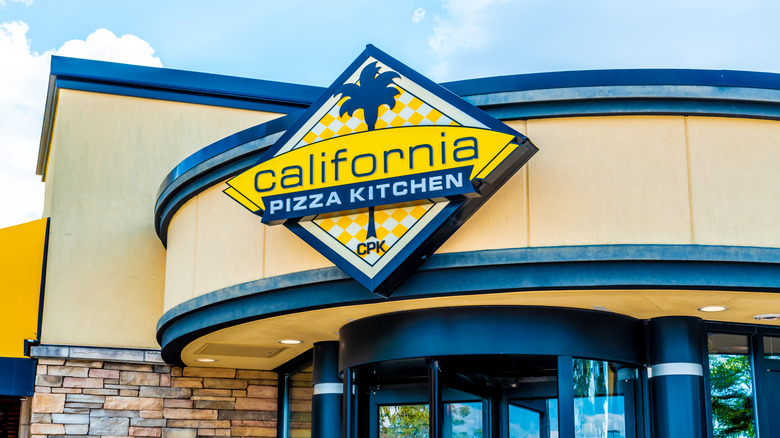
You might assume that a business with a name like California Pizza Kitchen would have been founded by, say, a chef or a restaurateur. But you would be wrong. This Beverly Hills-born chain was actually founded in the 1980s by two criminal defense lawyers, Rick Rosenfield and Larry Flax. Despite their background, the concept was a big success. People loved California Pizza Kitchen's fresh take on pizza, and the chain grew to 200 locations by the early 2010s. But then things started to take a turn.
Golden Gate Capital acquired the chain for $470 million in 2011, and according to Rosenfeld, via an interview with Fox Business, the private equity giant ran it into the ground. And customers seem to agree. After California Pizza Kitchen filed for bankruptcy in 2020, many diners flocked to social media to declare that the chain's food was lacking in quality and was overpriced. "I'm surprised they didn't go bankrupt from serving the world's worst pizza," reads one comment in the r/news subreddit.
In 2025, California Pizza Kitchen sold to Consortium Brand Partners for under $300 million. The owners are more optimistic about the chain's future, but the new deal isn't a break from private equity. Nope, Consortium Brand Partners is a private equity and fund management company based in New York.
Moe's Southwest Grill
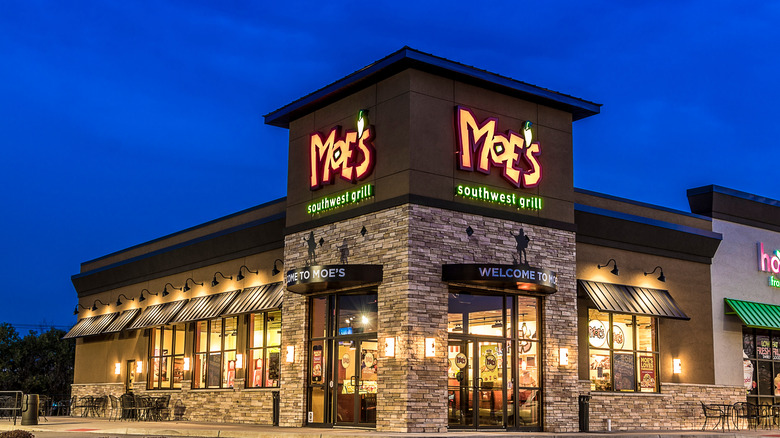
Roark Capital has two major food-focused portfolio companies: Inspire Brands (which was founded after its acquisition of Buffalo Wild Wings in 2018 and may be set for an eventual IPO) and GoTo Foods. The latter was originally launched back in 2001 as a holding company for Carvel, and has since grown to include several food companies, including Cinnabon, Jamba, and the restaurant chain Moe's Southwest Grill.
Moe's, a fast-casual Tex-Mex chain, was founded in Atlanta in 2000, and was acquired by GoTo Foods (then known as Focus Brands Inc.) just seven years later. At first, things went well. In fact, many people remember the restaurant chain's heyday as the 2000s and early 2010s, when you could grab hearty burritos, salads, quesadillas, and more from the chain for affordable prices. By 2012, it had grown to more than 400 locations across the country. But the 2020s haven't been as easy.
In 2026, one of Moe's largest franchisees filed for bankruptcy. And online reviews have become highly critical of the chain. "It's a very sad truth that Moe's just isn't anywhere close to what it used to be," reads one Reddit comment in r/moes_southwest_grill. And once again, people are blaming, you guessed it, private equity. "Private Equity is ruining the brand, which is typical for anything PE touches," adds another Reddit user.