

Forget Pyrex: This American Kitchenware Was Popular Before And Is Still Worth Money Today
We may receive a commission on purchases made from links.
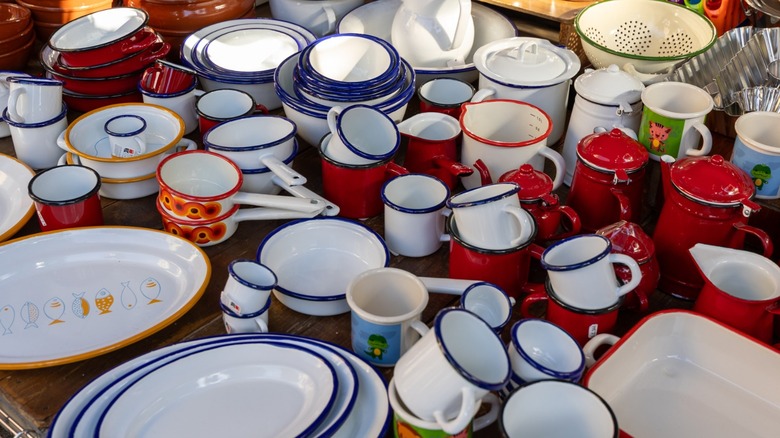
With all the vintage kitchen items that are suddenly trendy again, some people are decorating with them, using them as practical cookware, or as items to hunt down and resell for a profit. That includes Pyrex, with its many rare and valuable dishes that are must-have thrift finds, but there's another kitchenware category that was popular before and is still worth money today: enamelware.
Though enamel has been around for centuries, it reportedly came to America as cookware in the mid-1800s. It was particularly popular because it was lighter weight than previous heavy metal options and it was easy to clean. But by the late 1930s, people were swapping their enamel pieces for Pyrex, plastic, and stainless steel. It was also reportedly common to donate them for scrap metal drives during World War II. Nonetheless, there are still enamel pieces around.
So how much do pieces sell for? Bargain hunters can find items for a few bucks at garage sales and thrift stores. Even vintage enamel pieces on eBay go for as little as a couple of dollars, but they can also get pretty expensive when the vintage or history of the item is known.
Elements to look for when thrifting for enamel kitchenware
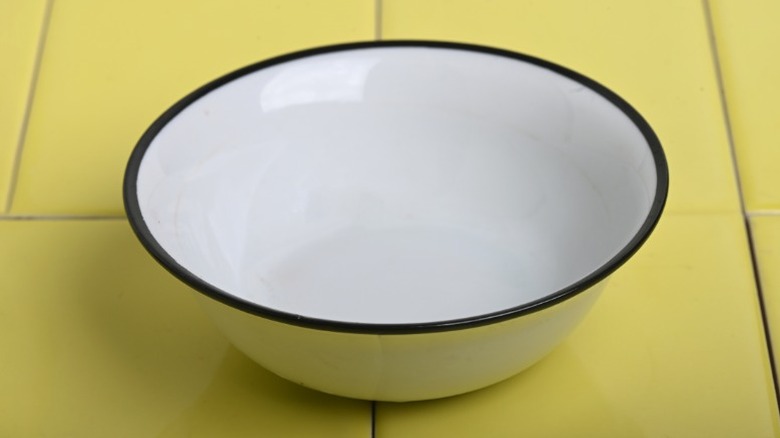
How do you know if that piece sitting on the thrift store shelf is worth anything? There are actually a lot of factors, including where it's from, the condition, and the color. Most enamelware isn't marked with a company stamp or engraving, making it harder to identify. According to vintage expert Adirondack Girl at Heart, the three main producers were Lalance & Grosjean Mfg. Co. (sometimes abbreviated L & G Mfg. Co.), St. Louis Stamping Company, and The Vollrath Company.
Per Antique Identifier, color can also be an indicator of what era a piece comes from. "Mottled gray, blue, brown, and black graniteware finishes are strongly associated with late 1800s and early 1900s." (Graniteware is a type of enamelware.) Speckled items have been popular throughout the 20th century, so it's hard to peg those to a specific era. "Brighter turquoise, yellow, red, orange, and pastel pieces often suggest mid-century or later production, especially when paired with lighter-gauge steel and simplified shapes," explains the site.
Something to keep in mind when thrifting: Unique shapes, colors, and patterns printed or painted on may increase interest and resale value of a piece.
Warnings about vintage American enamel pieces
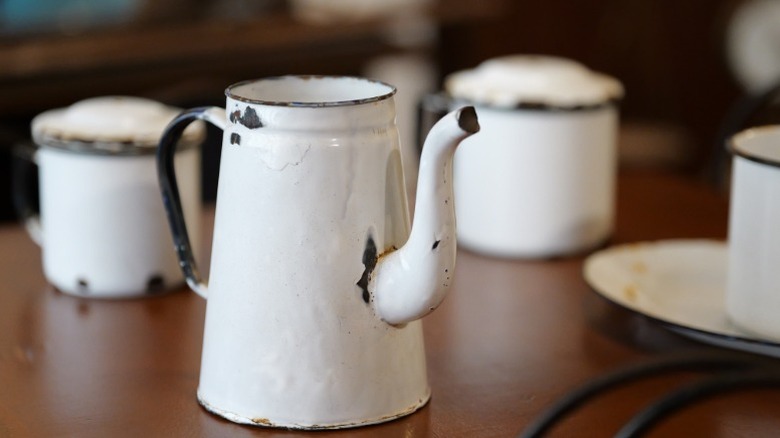
While enamelware can be found around the world, English and French enamelware pieces are noted for being particularly collectible. Here we are focusing on the Stateside finds, which can be found locally at thrift stores, flea markets, and online at retailers like eBay and Etsy without inflated shipping and import fees. But there are things to be aware of with enamelware of any origin, depending on what you want to do with it.
If you're getting an enamel piece to use as cottagecore kitchen decor to give off the cozy charm of grandma's house, then enjoy! If you're thinking of using it to cook with, think again. Oftentimes, older items were made with potentially toxic materials like cadmium and uranium that, if cooked with today, could harm your health. Also, anything with cracks or chips could pose a hazard. As enamel is essentially glass, that's not something you want to be eating. Also, the metal beneath the coating, or the glaze, could contain lead. You get the point: This stuff isn't for cooking with or eating off of.
If you're after enamel pieces because you want to cook with them, pros recommend looking for items that you know were manufactured in the 1980s or later, after regulations were changed. And if you're unsure but still love the look and function, consider one of the thousands of enamel kitchenware items found on Amazon, like this 4-person dining set.