

9 Fast Food Gimmicks That Were Actually Genius
Some of our best memories of fast food aren't of the food itself, but the marketing campaigns behind them. Remember Chick-fil-A's "Eat Mor Chikin" billboards with the life-sized cows, or the little Taco Bell chihuahua that used to say, "Yo quiero Taco Bell"? These classic campaigns weren't just genius; they were great examples of how to use marketing gimmicks. The word "gimmick" often carries a negative connotation, but in marketing, the right gimmick can be the difference between a successful campaign and one that falls flat.
Taco Bell's talking chihuahua wasn't just hilarious; its laid-back delivery made the chain cool, and its catchy slogan was simple enough for anyone to say. Chick-fil-A's billboards were clever and innovative for their time, which made the franchise stand out from other chains. In both cases, the use of gimmicks not only increased foot traffic, but they also added a fun element that helped Taco Bell and Chick-fil-A connect more with customers. If these classic campaigns prove anything, it's that marketing is an art form. To further illustrate that point, here are some of our favorite fast-food campaigns with gimmicks that were actually genius.
Subway's footlong-inspired menu items generate millions of sales
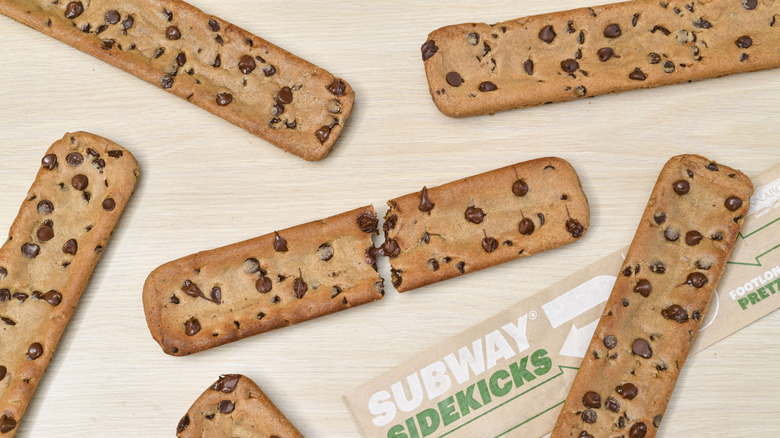
Subway has always been known for its signature footlong sandwiches, and over the years, the chain has released many iterations. One of its newer iterations, however, isn't a sandwich; it's the Footlong Cookie. The cookie first debuted at a Subway popup in 2022 on National Cookie Day with four confection-topped flavors, which ended up selling out in under two hours.
The following year, a footlong chocolate chip cookie was introduced, but unlike the others, it was given a permanent place on the menu. Subway then decided to release a Cinnabon Footlong Churro and Auntie Annie's Footlong Pretzel, which, along with the Footlong Cookie, helped its "Sidekicks Menu" sell almost 30 million items in total. The Footlong Cookie in particular was so popular that it had to be removed from the Subway app due to supply issues.
A collection of savory footlong menu items called Dippers followed that, and in 2025, the chain dropped an Oreo Footlong Cookie. Four years since its debut, the footlong gimmick has become one of Subway's most genius ideas since the legendary $5 Footlong Deal.
Burger King's radical customer feedback initiative helps revamp brand
Ever since Burger King started taking its "Have It Your Way" slogan literally, business has been good. In 2022, the chain launched "Reclaim the Flame," a comeback strategy aimed at recapturing its former glory. Over the next few years, it poured millions into modernizing its operations, with the ultimate goal of enhancing the guest experience. It also adopted a radical, almost gimmicky, approach to customer feedback.
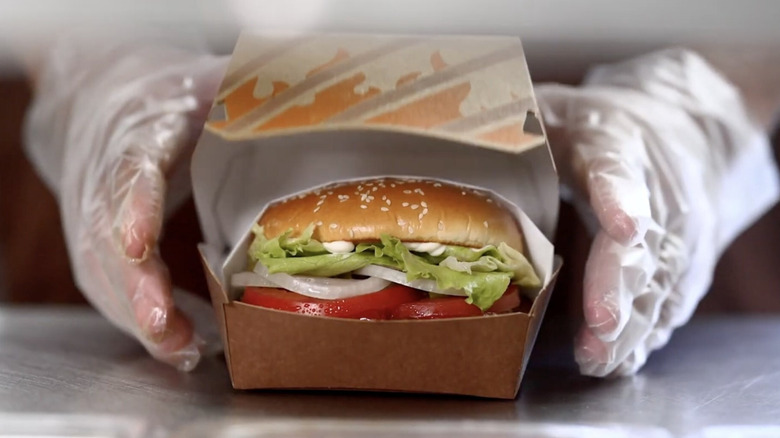
It started with the Million Dollar Whopper contest, which asked fans to submit their dream Whopper recipe. Three fan-made Whoppers were chosen from the submissions and sold for a limited time. Then, in 2026, in an effort to further improve the customer experience, Burger King provided fans with a direct phone number to its president, Tom Curtis, who actually took calls and responded to them.
Two big changes came from that: the first major update to the Whopper in almost 10 years, and the introduction of new 100% white meat chicken nuggets. Taking feedback from customers is nothing new, of course, but fast food chains rarely turn it into an ongoing campaign and actually follow through. As a result, what could've easily been just another gimmick ended up being a genius move.
Pizza Hut's retro locations are viral sensations
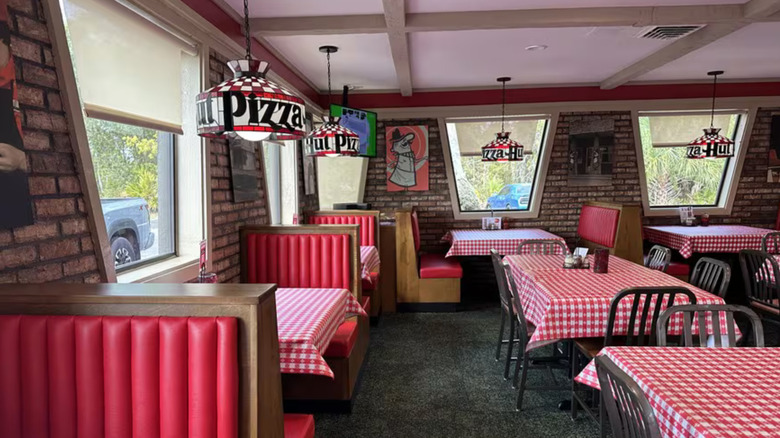
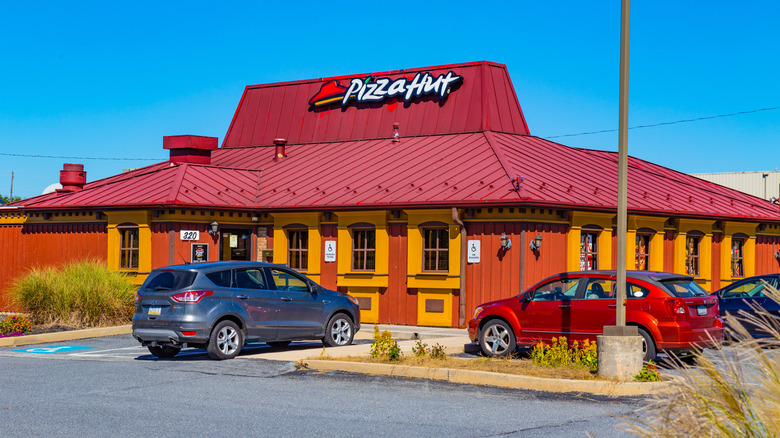
Fast food chains were once places that people enjoyed sitting down and eating at. Pizza Hut, for example, used to have a salad bar and pizza buffet, wooden booths, and warm, stained-glass lamps with its name on them. The irresistible smell of its freshly-baked dough alone was enough to make you want to dine in. That was before its iconic red-sloped roof was replaced with today's carryout-focused design. Pizza Hut's past appeal seemed all but lost — that is, until a franchise owner bet on nostalgia to lure customers back in.
In 2019, Tim Sparks, the president of Daland Corporations, which operates 93 Pizza Hut locations, opened the first Pizza Hut Classic location. Sparks started with 38 locations, re-launching the classic dine-in experience from the 1980s and '90s. Since then, that number has grown to 144. The gimmicky makeover has proven to be a genius one, too, and Sparks has said that the customer response has been overwhelmingly positive. People are driving from hours away just to experience the Classic locations, and some locations are even more successful than current models.
KFC UK's pickle-filled jacket delivers its most successful campaign
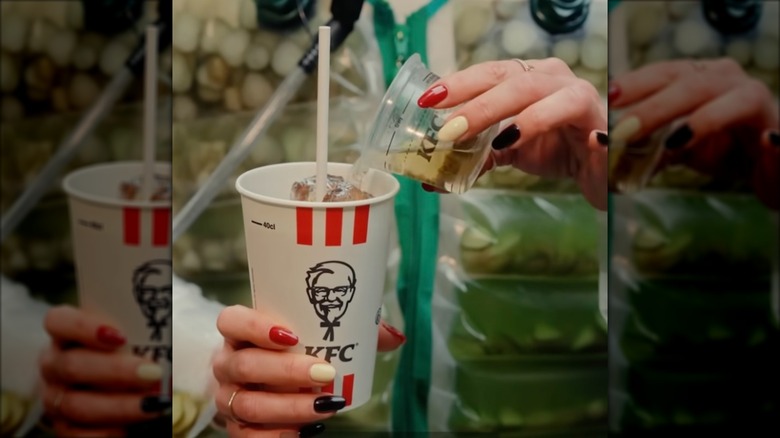
From pickle-flavored snacks and infused beers to Liquid I.V. and lip balm, our pickle obsession has become more than just a trend — it's become a gimmick. One example of pickle overkill was the debut of KFC UK's Pickle Mania menu. Released in early 2026, it featured a pickle burger, a Pepsi with a side of pickle juice, frickles (fried pickles), and pickle-loaded fries. However, the menu was tame compared to the wearable pickle-filled jacket that was created alongside it.
Inspired by a viral, fan-made AI video, the "Pickle Puffer" was a see-through puffer jacket loaded with pickles and brine, with a pickle-shaped zipper and a built-in straw to sip the brine. Only five jackets were made, which were given to press, influencers, and the lucky winner of a contest. Was it a gimmick? Absolutely. But it was also genius, because it helped the Pickle Mania menu become KFC UK's most successful limited-time offer in history.
Burger King earns 35 million media impressions from controversial Facebook campaign
Controversy sells, and that's certainly the case with Burger King's "Whopper Sacrifice" campaign, which presented fans with the moral dilemma of deleting 10 Facebook friends in exchange for a free Whopper coupon. BK posted the campaign application on Facebook in 2009. Facebook was at peak popularity at the time, so the idea of adding, let alone deleting, someone from your friends was a pretty big deal. Nonetheless, thousands of fans filled out the application, eager to turn 10 unsuspecting friends into sacrificial lambs.
The Whopper Sacrifice was one of Burger King's weirdest promotions ever, and so disruptive that when Facebook caught wind of it, it modified the application so that unfriended people wouldn't be notified. The campaign only ran for eight days until BK was forced to shut it down completely. However, in that short period, 82,771 people unfriended 233,906 friends for BK's gimmicky social experiment, and the chain earned 35 million media impressions.
Taco Bell's Doritos-shell tacos became its highest-selling product
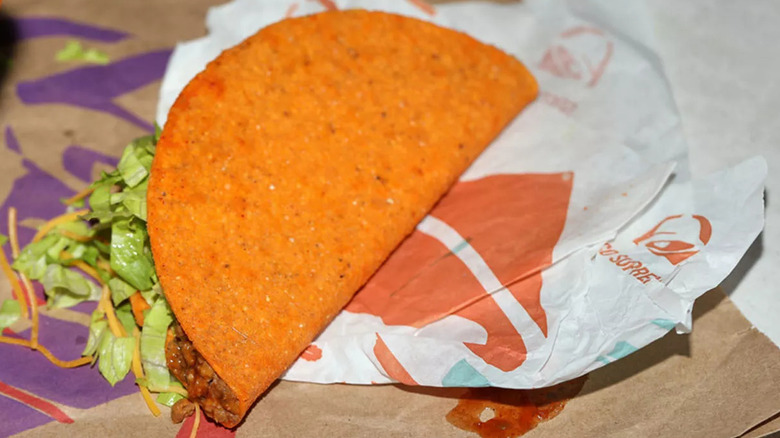
Taco Bell's Doritos Locos Tacos are one of its most successful menu items. The first iteration was released in 2012, following a lawsuit surrounding Taco Bell's seasoned beef. With sales on the decline, the chain needed a huge win to turn the tide. A taco shell made of Nacho Cheese Doritos, filled with seasoned ground beef, shredded lettuce, and cheddar cheese, was the perfect mixture of gimmick and genius. By the end of the year, Taco Bell had sold over 200 million units, and named Doritos Locos Tacos the most successful innovation in its 50-year history.
The chain's steadily increasing sales led to the release of a Cool Ranch flavor the following year. Not only did Doritos Locos Tacos help Taco Bell's sales recover, but the Nacho Cheese flavor has also been on the menu ever since its debut. The Cool Ranch flavor was also popular, but was discontinued in 2019 for reasons unknown. However, Taco Bell brought it back in 2025 for a limited time with its old-school Y2K Menu.
Pizza Hut's Stuffed Crust Pizza was an overnight success
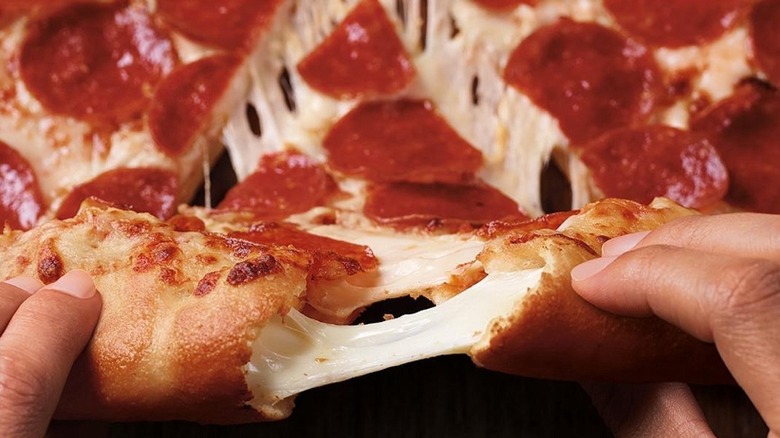
During the 1990s, Pizza Hut was at its creative peak. From The Big New Yorker and The Bigfoot Pizza to the Triple Deckeroni and The Edge Pizza, the chain was cooking up instant classics. Its most legendary '90s creation, however, was Stuffed Crust Pizza, a large pizza with melty mozzarella cheese baked into the crust. To call it one of Pizza Hut's greatest ideas is an understatement, too. Not only did it generate over $300 million in sales in the first year, but it's also been a permanent menu item for over three decades.
Pizza Hut has made several gimmicky attempts to recreate its stuffed crust magic, from 2009's Cheesy Bites Stuffed Crust Pizza with cheese-stuffed pull-apart bread, to 2013's 3-Cheese variety with white cheddar, mozzarella, and provolone, to 2021's Nothing But Stuffed Crust pizza that ditched the pie and only featured the crust. That said, none have been as influential as the original, which has even inspired competitors like Papa John's and Domino's to create copycats.
A Domino's pizza-building game doubles as a clever recruitment tool
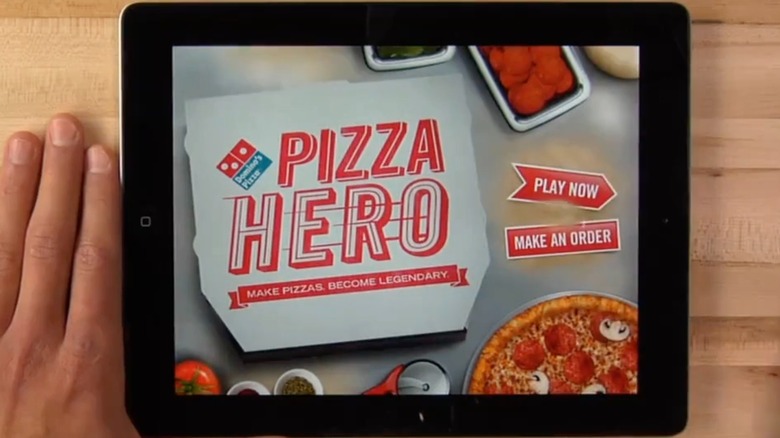
Domino's came up with an interactive way for fans to flex their pizza-making skills. In 2011, the chain released Pizza Hero, an iPad app that allowed you to build your own pie, bake it, slice it, box it up, and have it delivered right to your front door. On the surface, Pizza Hero was a fun, gimmicky way for fans to customize their Domino's experience. Gamers were scored on accuracy, completeness, and speed, and points were deducted if toppings were placed outside of the dough, or if the dough was over- or underbaked.
However, hidden behind the gimmick of virtual kneading and digital toppings was a training and recruitment tool for Domino's. Not only could you learn how to build a proper pizza, but Domino's would also invite top scorers to apply for a real-life franchisee position. Following its release, it rose to number 36 on the iPad App Store's most popular list. By 2012, it had amassed more than 500,000 downloads, and over 12 million virtual pizzas had been baked. Domino's never shared how many people applied for positions through the app, but as a new way to find skilled pizza-makers, Pizza Hero was undeniably genius.
A burger-scented cologne from Burger King sells out in three days
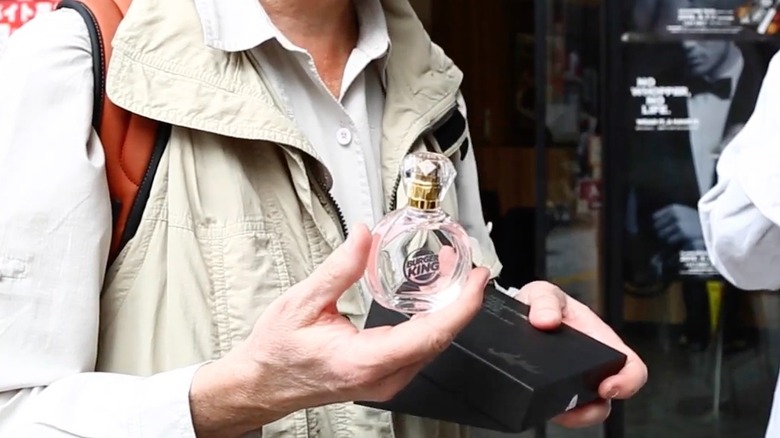
Burger King clearly loves a good marketing gimmick. In 2008, it released "Flame," a limited-edition body spray with a Whopper aroma. For only $3.99, fans could smell like their favorite flame-broiled handheld. Hilariously, the spray's website featured an image of the King mascot with animal fur draped over his bare body, sitting next to a fireplace. Despite it being an obvious gimmick, fans seemed to enjoy BK's playful humor. Flame was a genius marketing move; just three days after its debut, it sold out, prompting BK to bring it back the following year for Valentine's Day.
According to one of the chain's marketing executives, people were selling the fragrance on eBay for over $100. In other words, what started as a gimmick had become a collector's item. That wasn't the last we'd smell BK's signature flame-broiled aroma, though, because in 2015, the chain decided to bring it back. This time, however, it was called "Flame Grilled" and was available in Japan for one day only at 90 locations. The cologne was so popular that by the end of the day, almost half of the retailers had sold out.