

The Hands-Down Best Method For Succulent Caramelized Onions Maximizes Flavor
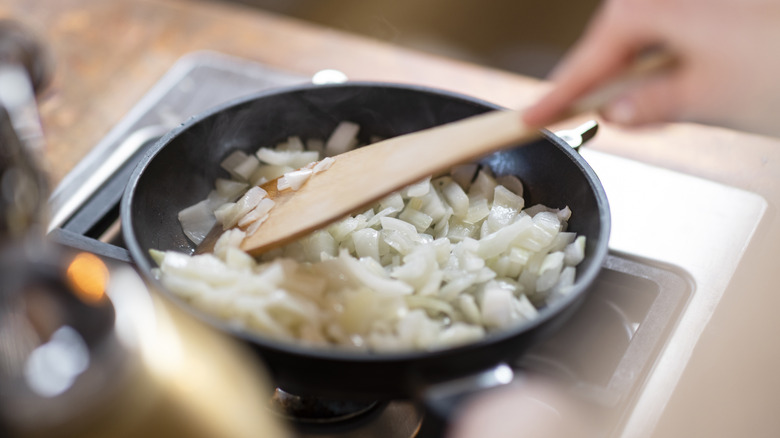
Almost everyone loves caramelized onions. It's the perfect side dish for burgers, steaks, and sausage, but it goes well with cheeses and other vegetables too. However, you have to pay close attention when cooking them, and there are so many different techniques that it's easy to make one simple mistake and ruin the whole dish. That's why Tasting Table tried 6 different ways and elected the best: braising.
First of all, braising is a cooking technique consisting of applying steady heat and moisture to vegetables, meat, or other ingredients for a long time in order to tenderize them. This works perfectly for onions, and the procedure is pretty simple: you need to caramelize them first with just butter and salt, and then add vegetable broth to cover the bottom of the pan and stir until it evaporates.
This will result in moist yet firm caramelized onions, with a perfectly balanced flavor. Not only do you get the perfectly caramelized onions, but you also save time compared to other recipes. In fact, with this technique, caramelized onions will take way less than one hour to cook.
The best practices for caramelized onions
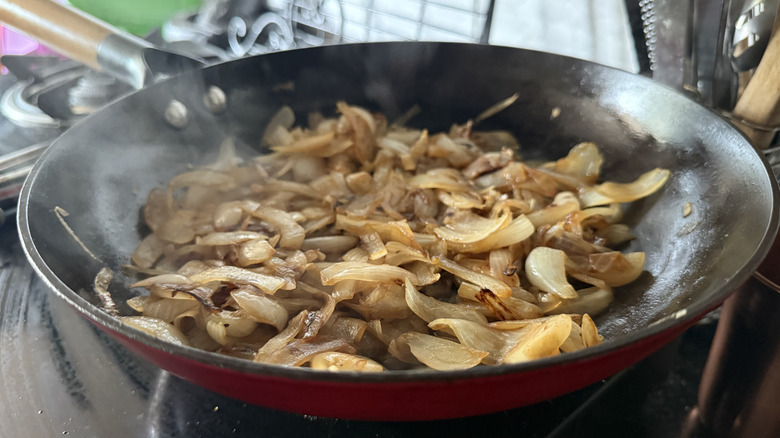
Cooking caramelized onions might seem pretty simple. It's just a few ingredients and a few steps, but how come they are often not as good as you expect? A lot can go wrong (There are 13 common mistakes everyone makes when caramelizing onions). For starters, keep in mind that onions reduce a lot when cooked, so depending on how many people you're going to feed, consider making a little more than you had in mind.
Secondly, the way you cut them matters and can impact the whole recipe. You might think that the thinner they are, the better, but on the contrary, if you cut them too small, you are more likely to burn them — not to mention that you lose texture. Another common mistake is adding sugar. Onions already contain natural sugars, which are automatically released when cooked slowly. Hence, you don't need to add extra; otherwise, the onions may get chewier and taste off.
Last but not least, never underestimate a good pan. For onions, you want a good non-stick pan, so you can easily stir without risking them sticking to it. Speaking of stirring — the best tool is a silicone spatula — since you're required to stir quite a bit, you don't want to ruin your pan.