

For A High-Quality Glass Of Whiskey, Skip Buying This Type
A walk down the whiskey aisle reveals a wide variety from single-malt Scotch to blended bourbon and pot still whiskey. On top of that, there's a proliferation of flavored whiskeys — like honey, apple, and cinnamon. Yet, despite its name, flavored whiskey may not actually be whiskey after all. That's why, in our beginner whiskey guide, we advise against buying flavored whiskeys. Our writer notes, "Flavored whiskey can be fun, but it's a different product." Technically, true whiskey must have at least 40% alcohol by volume (or 80 proof). Many flavored whiskeys fall below this level, so they're often called spirits or liqueurs instead. For example, the popular Jack Daniel's Tennessee Honey has 35% alcohol by volume and is labeled a whiskey-based liqueur.
Further, many types of high-quality whiskey don't have any coloring or flavors added at all except for water. Nonetheless, the waters can get a bit muddy depending on the particular type of whiskey involved. For example, in the U.S., certain categories like blended bourbons or American single malts are allowed to have additives, like coloring, as long as they're 2.5% or less of the volume. Regulations also vary by country, and some regions, like Ireland and Scotland, generally permit caramel coloring in their whisky.
Despite that fall from whiskey purity, flavored whiskeys can still be an enjoyable product. For example, they may appeal to newbies venturing into the whiskey world. Plus, with their lower amount of alcohol, they fit perfectly into 2026 cocktail trends for lower ABV drinks.
The world of flavored whiskeys
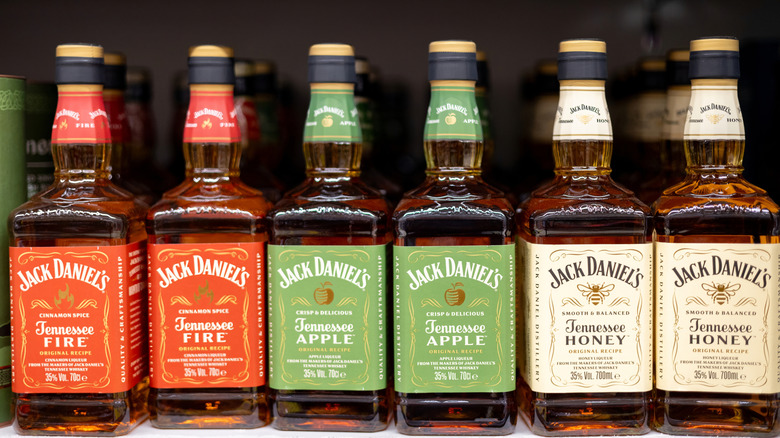
As it turns out, flavored whiskeys are enormously popular and have been growing rapidly in sales over the last couple of years. And that trend is predicted to continue — with honey whiskey leading the way as the top flavor, currently making up over a third of the market. That being said, there are many more popular flavored whiskeys to try, like cookie dough, pumpkin, chocolate, maple, and even Tabasco and chipotle.
However, like any product, quality can vary widely, and there are a few things you may want to look out for. To start, pay attention to the nose, or how the liquor smells, since much of our sense of taste relies on what we smell. Once you taste it, notice if the flavor actually matches the description. For example, does a cherry-flavored whiskey taste like the actual fruit or more like cloying cough syrup?
Last, note the finish, or what flavors remain on your tongue after you've swallowed the drink. Do the flavors switch into something pleasant, like a hint of smoke or sugar, or just a burning alcohol taste? Paying attention to these final effects can tell you a lot about the quality of the whiskey or liquor. Last, if you want some guidance before buying, check out some of the Tasting Table's guides for cinnamon whiskeys and peanut butter whiskeys. Cheers!