

The Adorable 1950s Puppy Cookie Jar To Search For At Thrift Stores
We may receive a commission on purchases made from links.
Modern kitchens look vastly different from the way they did in the mid-20th century. They're generally more minimalistic, prioritizing a uniform look with built-in appliances. Even so, there are some vintage kitchen items people still swear by decades later, thanks to their retro charm and functionality. Ornate cookie jars are one such example, and a particularly coveted item among vintage collectors is the Lefton Puppy Pal jar.
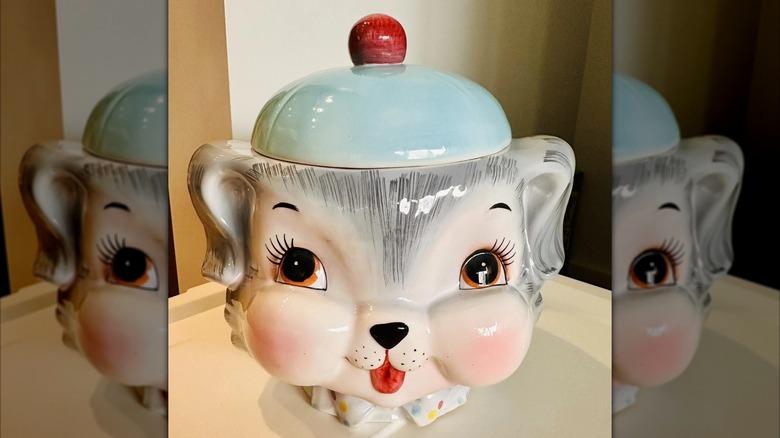
This trinket comes in the shape of a cartoon-like pup, with floppy gray ears serving as the handles on the jar and a neatly painted blue hat with red bobble as the lid. Puppies are always adorable, but this design takes the cake — er, the cookies. What's a little less adorable, however, is the price, which is set between $800 and $1,000 on reselling sites. So if your grandma collected cookie jars, take a closer look — some could be worth hundreds.
Lefton's Puppy Pal collection includes more than the cookie jar. There's also a butter dish, a teapot, a milk pitcher, and a set of two smaller jars for cream and sugar, all designed in the same style. These are generally priced lower than the cookie jar, but they're still in the hundreds. You might also be interested in the Poodle Chef line, which also has a pup-inspired cookie jar; this one with pink curly "fur" and a white chef's hat.
Lefton china was originally made in Occupied Japan
The Lefton Company, focused on importing porcelain gifts and keepsakes, was founded in Chicago in 1941 by George Zoltan Lefton, a Hungarian immigrant who came to America in 1939. After World War II, he developed a close business relationship with Japanese manufacturers and so began a decades-long collaboration. The first Lefton china pieces were imported in 1946 — all of them carried the "Made in Occupied Japan" stamp and continued to do so until 1952. Aside from being stunning collectables, these pieces are part of an important historical era, and you can still find many on reselling sites.
Lefton china continued being made exclusively in Japan until the '70s, when production moved to other Asian countries; the company was later sold to OMT Enterprises in 2005. Throughout its history, Lefton creations were immensely popular in the United States and are still a regular sight at thrift stores. For those looking to add Lefton pieces to the retro kitchen of their dreams, an important thing to learn is how to identify authentic Lefton porcelain and the era it was made in. The identification marks (found on the bottom of pieces) went through a lot of changes over the decades, featuring crown stamps, stickers, and different scripts, but a few websites for vintage collectors have published detailed guides that can help you out.