

3 Premium And Specialty Meats To Always Buy At A Butcher Shop
We may receive a commission on purchases made from links.
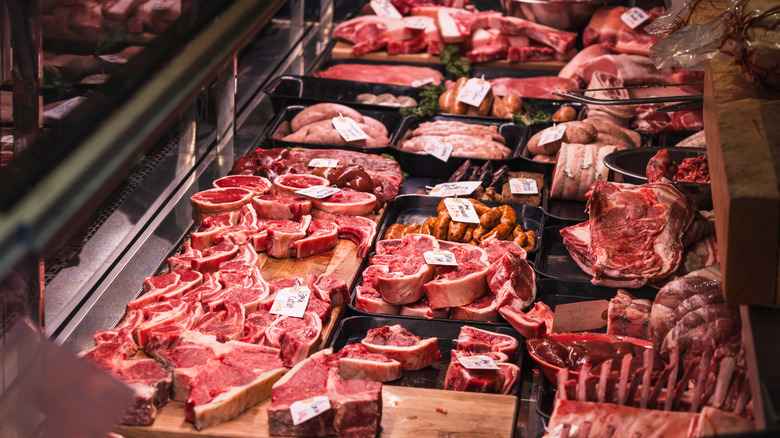
Not everyone is lucky enough to have a local butcher shop. But if you do, they're the place to go for premium meats. While popular grocery stores can have good meat departments, butcher shops offer a level of choice and craft that big supermarkets don't. They also give you advice and prepare the meat to your specifications. So Tasting Table reached out to Chris DeLisle of Chris Cooking Nashville, author of "Eat Your Meat, Love Your Life," to ask what specialty meats to always buy at a butcher shop.
Before revealing his choices, DeLisle shared his criteria for what makes a cut worth buying from a butcher: "A specialty cut should come with a conversation," he said. DeLisle explained that the reason to buy from a butcher is access to an expert who can explain the cut, customize the order for a cooking method, and do trimming you can't get elsewhere. For DeLisle, that means three cuts: the ribeye cap, a hanger steak, and a well-marbled pork collar.
While hanger is a well-known cut of steak, these are all cuts you won't find precut at your grocery store. DeLisle has unique reasons for preferring all three from a butcher, showcasing the range of reasons you may want to seek one out for yourself, and he also told us exactly how he would prepare each cut.
The ribeye cap
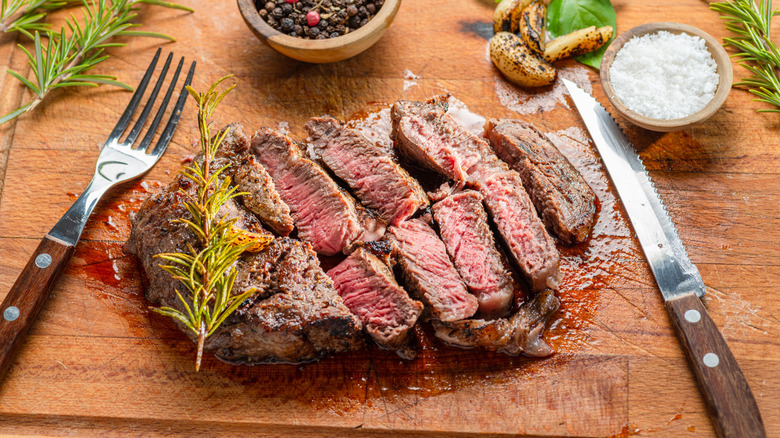
Chris DeLisle called the ribeye cap, a steak cut also known as the spinalis, "an exceptional splurge: richly marbled, tender, and full of beef flavor." The ribeye cap is part of the larger ribeye cut and is the outer muscle that curves around the top, often separated from the rest of the meat by a thick line of fat. "Ribeye cap is what you order when your favorite part of the steak deserves to become the whole steak," he explained.
DeLisle said you can ask a butcher to cut just the cap and trim it for you. He suggested asking the butcher to leave it flat instead of rolling it into a steak, because it gives you more surface for browning. He also said you should ask, "Can you remove the tough membrane and excess seam fat while keeping the meat intact?"
The marbling and tenderness of the cap make it like an ideal ribeye — and such an expensive, flavorful steak should not be messed with much. "Salt it, dry the surface thoroughly, and sear it in cast iron or over a grill with a cooler zone available ... Watch it closely: a thin cap cooks differently from a thick ribeye," said DeLisle. After that, all the ribeye cap needs is a rest, and then to be sliced along the grain and finished with some flaky salt, and maybe cultured butter.
Hanger Steak
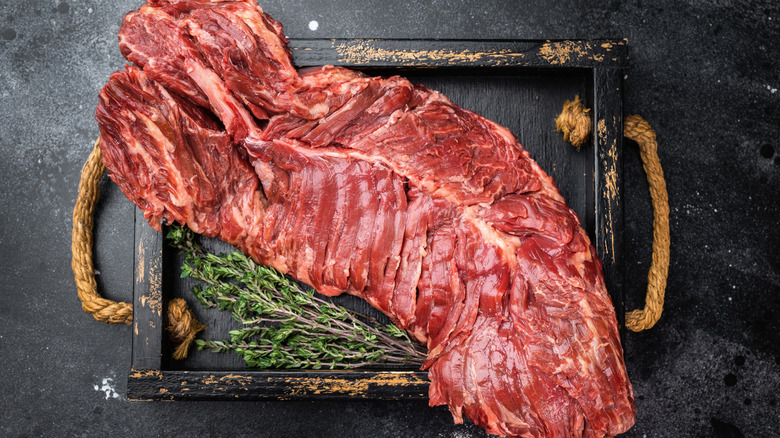
Hanger steak is a cut of beef that comes from the belly of the cow under the ribs, in a primal portion beef cut called the plate. There's only one section per animal, which is why it is rarely found at supermarkets. Chris DeLisle said, "Hanger has a deep, assertive beef flavor, but the trimming matters enormously." He explained that, despite being a tender cut, hanger steak has a tough central connective tissue that helps to have a butcher take out. It's the kind of cut where a butcher's skilled prep can make all the difference. Beyond asking for the center membrane removed, DeLisle also suggested asking, "Can you show me the direction of the grain in each piece?"
Like the ribeye cap, a hanger steak has the kind of impressive flavor that doesn't need much embellishing. DeLisle's recommendation was simple: "Pat it dry and sear over strong heat, working in batches if necessary." If you want a sauce, he suggested a shallot pan sauce, or brown butter with a dash of vinegar. And don't forget about that grain. DeLisle suggested you "check each piece individually rather than assuming the grain runs the same way throughout," and then thinly cut the steak against the grain after resting. As he explained, "With hanger steak, the butcher's knife and your carving knife are both part of the recipe."
Pork Collar
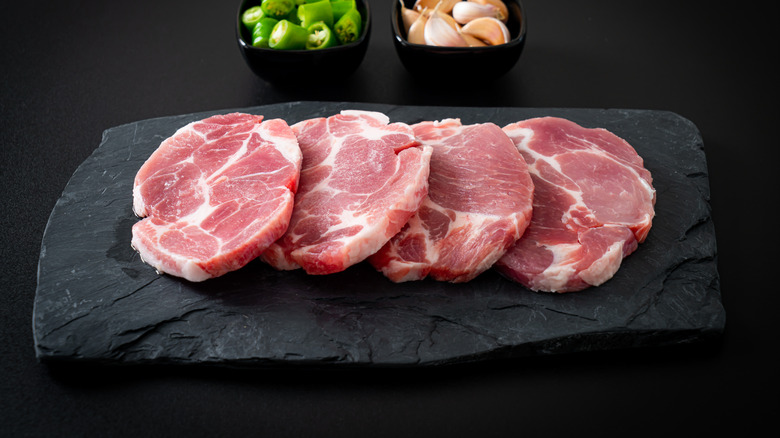
Chris DeLisle's choice for pork comes from the neck and upper shoulder area of the pig, and he said it's a versatile cut that can be "roasted, braised, smoked, or made into steaks." It's less common and can be inconsistent in definition. Pork collar is sold under other names like pork butt, even though it really comes from the shoulder. That's why DeLisle said, "I would seek out a well-marbled piece from a butcher who can tell me about the producer and explain exactly what they are selling as collar." If the specifications of a cut of meat can vary, that's when a conversation with a butcher becomes even more valuable. He suggested not only finding out what they consider collar, but whether it's fresh and uncured, or even what breed it's from. He also said to ask, "Can you show me the marbling and trim it for a whole roast?"
When preparing pork collar, DeLisle suggested slow cooking. "Season with salt, black pepper, and crushed fennel, then braise gently with garlic and a modest amount of stock until a skewer slides in easily," he explained. Once the meat is tender, DeLisle said to sear and brown it, then serve it with reduced cooking liquid and sharp mustard. He noted that this is a place where you want to check your pork as it cooks for tenderness, rather than relying on time alone. But it's worth it, as DeLisle said, "Pork collar is the dinner-party cut for people who want their guests talking about the pork."