

The Steak Cut You've Probably Had But Never Ordered On Its Own (Here's How To Do It)
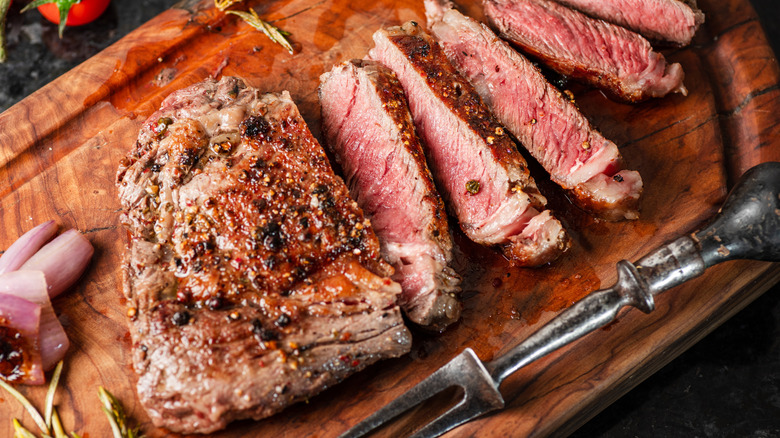
Almost every ribeye steak you've ever eaten is actually two cuts served as one. There's the large eye of meat that has everyone oohing and aahing the moment it arrives, and then, a slightly thinner, more marbled part that curves around it, often separated by a strip of fat. That's not just the outer rim of the ribeye, nor is it something to overlook unless you want to make some big mistakes when cooking ribeye steak. This cut has its own name — quite a few for that matter: ribeye cap, deckle, spinalis. Regardless of what you call it, it is undoubtedly the best thing on the plate.
Different cuts of steak offer different things, but the ribeye cap gives you everything you could possibly want when eating steaks. This boneless, well-marbled cut is just pure melt-in-your-mouth tenderness that rivals a good filet mignon or tenderloin. Except it might even be better thanks to a meaty richness that amplifies the satisfaction of each bite. Naturally, the flavors are also unparalleled, with an umami-rich, buttery depth punctuated by crispy caramelized edges.
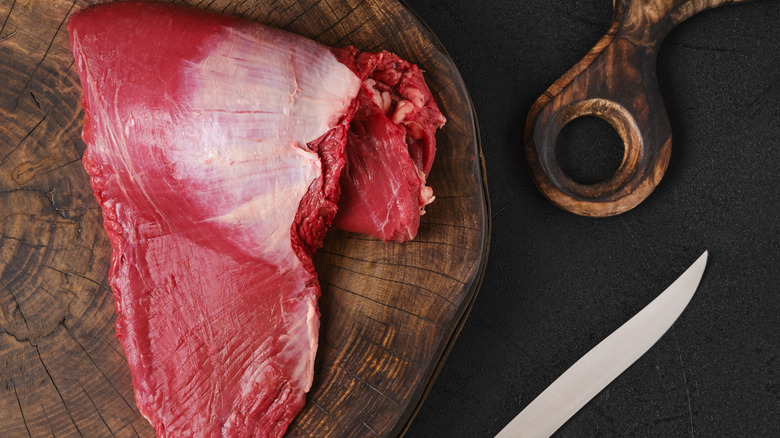
At reputable butcher shops, you can get the cap trimmed off the ribeye as a 16-inch long piece of muscle. It might also be rolled and tied into a round, pinwheel-like shape. If possible, pick a ribeye cut that's large but not too fatty, with the cap visibly wrapping all around it. Expect a higher price point than typical steaks due to its high value and rarity. Certain high-end restaurants and steakhouses also offer it as a stand-alone cut should you directly ask for "ribeye cap or spinalis". It should arrive at your table as an 8-ounce piece, priced up to $64 for the Wagyu variety.
How to cook a ribeye cap at home
High-heat cooking will bring out the best in your ribeye cap. This can be a hearty grill on the charcoal or a sizzling sear on the skillet with frequent flips in between. In the oven, a 10 to 15 minute broil should do the trick for a 1-inch-thick cut. That said, a reverse sear or hour-long smoke can give you the desired juiciness as well. Maybe even use it in substitution of the typical filet mignon in a classic Surf and Turf. No matter what you choose, cook it to medium-rare to enjoy this steak cut's juicy, tender texture and enticing flavors at their finest. This means waiting for it to reach an internal temperature of 130 to 135 degrees Fahrenheit, although with carryover cooking, it should be good to leave the heat at 130.
Since ribeye cap is already plenty flavorful, even a simple sprinkle of salt and pepper will do, but nevertheless, your favorite store-bought steak rubs can still yield some magnificent results. Once you're ready to get creative, bring compound butter and sauces into the equation. Spoonfuls of garlic herb or caramelized onion butter can make for a real restaurant-worthy dish. Alternatively, a butter baste also enriches the taste profile while still highlighting the meat's natural richness. As always, a mushroom sauce certainly doesn't disappoint, not when it adds ample umami goodness to your ribeye cap. Beyond classic steak plating, also consider seasoning the cap with Cajun seasoning for a po' boy sandwich, or letting it elevate a too-familiar bowl of ramen.