

Why Cream Cheese And Mascarpone Aren't Actually The Same
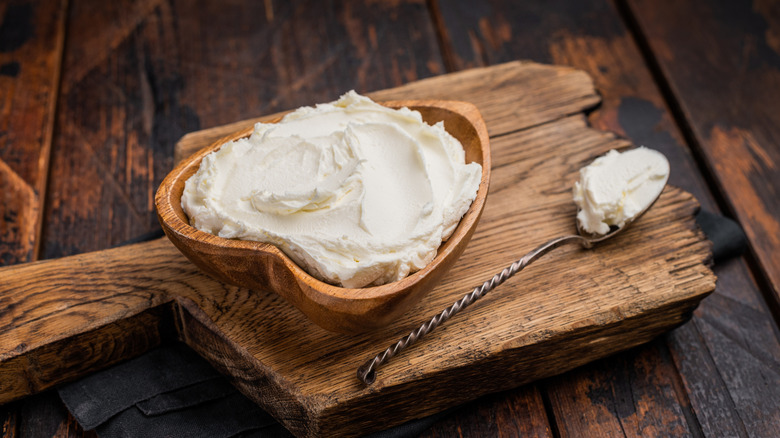
Cream cheese and mascarpone are sisters but not twins. These two soft, spreadable cow's milk cheeses may appear similar to the eye, but the tastebuds will spot the difference right away. Both ingredients feature a relatively mild flavor, but their respective tastes — and subsequent uses in the kitchen — vary greatly.
Mascarpone is made by adding tartaric acid or citric acid to heavy cream. Texturally, it's notably richer and more velvety than cream cheese due to its higher butterfat content (60-70% fat total). Cream cheese, by comparison, is made from a combination of heavy cream and whole milk, packed with lactic-acid-producing bacteria responsible for the ingredient's signature tangy taste. Compared to mascarpone, cream cheese is significantly firmer due to its lower fat content (between 30-40%). FDA regulations require that cream cheese has at least 33% milkfat and no more than 55% moisture content by weight. As a result of its different ratio makeup, mascarpone arrives sweeter, buttery, and subtly nutty on the palate. By contrast, cream cheese features a tangier, milder, more acidic-leaning taste.
Historically, foodies have been cooking and baking with mascarpone far longer than they've been smearing cream cheese on their bagels. Mascarpone hails from Northern Italy, where it was created during the Renaissance era, sometime between the late 1300s and early 1600s. Cream cheese is a far younger American creation, invented by William A. Lawrence of New York. Per the lore, Lawrence landed on the product during an attempt to recreate French Neufchâtel around 1873.
Nuanced differences separate rich, sweet mascarpone from tangy, acidic cream cheese
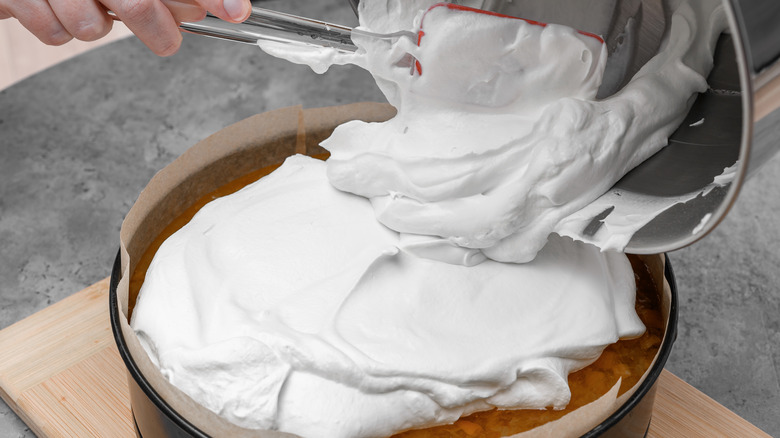
More than their respective origins, home cooks know these ingredients best for their uses in the kitchen — which overlap less often than it may seem. In the confectionery realm, mascarpone is the foundation of creamy Italian tiramisu, while cream cheese is a cornerstone of cheesecake and cream cheese frosting. Cream cheese and mascarpone generally cannot be used interchangeably, but a few exceptions apply. In fact, substituting one for the other can also be a fun way to experiment with different results in a classic recipe, such as cheesecake. Sometimes these ingredients are even combined for certain recipes (tiramisu cheesecake, anyone?).
Mascarpone and cream cheese can be perhaps most easily interchanged in their savory applications, such as pasta sauces, risotto, mashed potatoes, omelets, and rich party spreads like Buffalo chicken dip. Here, the milky ingredients deliver a creamy textural note, and their tastes are largely masked by other flavorful elements. However, in dishes where the ingredients' respective flavors stand out more, interchanging mascarpone and cream cheese isn't such a good idea. Using cream cheese in recipes that call for mascarpone yields a firmer, tangier result. In a pinch, however, it's possible to create a substitute for mascarpone by combining cream cheese and heavy whipping cream. The added cream helps loosen its texture into the fattier, satiny consistency for which mascarpone is known.