

Spaghetti And Meatballs Gets 3X The Fiber Boost When You Swap A Main Ingredient
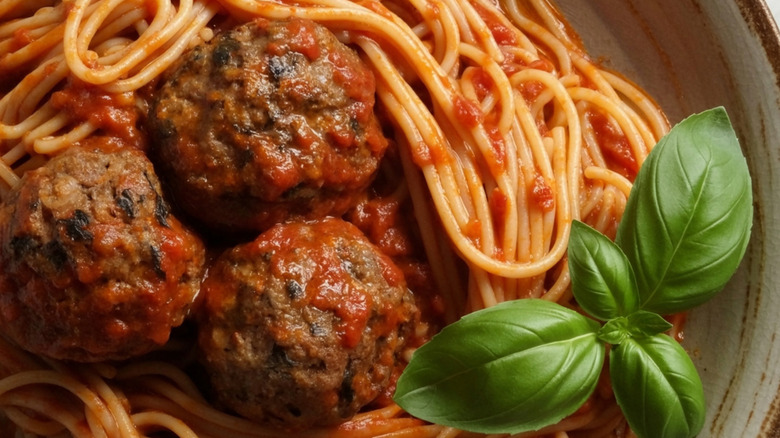
Spaghetti and meatballs has to be one of the most iconic Italian American pasta dishes ever, and it's as comforting as it is delicious. Rich, filling meatballs offer the main protein to round out the carbs in the pasta, but conventional white pasta isn't known for a very high fiber content. And fiber is as trendy and important to health enthusiasts these days as protein. Luckily, pasta companies have caught on to the fiber trend by offering pasta made with more fiber-rich ingredients. So, if you're desiring more fiber in your spaghetti and meatballs, you should swap white pasta for whole wheat pasta.
Pasta is, after all, made of wheat flour. However, white flour and wheat flour have vastly different fiber and carbohydrate contents. Whole wheat is a whole grain, and swapping simple carbohydrates like white pasta for a whole grain like whole wheat is one of the best ways to incorporate more fiber into your diet. A 2-ounce serving of white pasta contains 43 grams of carbs and 3 grams of fiber, while the same serving of whole wheat pasta contains 39 grams of carbs and 7 grams of fiber. So, you're getting over twice the amount of fiber with whole wheat spaghetti. Whole wheat pasta has a nuttier flavor that will pair beautifully with the bold flavors of umami-rich meatballs and stewed tomato sauce. Furthermore, whole wheat pasta has become a fashionable variety that fancy restaurants now offer on their menus.
More tips for bringing fiber to whole wheat spaghetti and meatballs
Making pasta from scratch results in the ultimate freshness — both in flavor and texture. (We have a simple recipe for you to try at home.) However, many famous pasta brands, as well as store brands like Trader Joe's, sell whole wheat pasta for your convenience. As for meatballs and sauce, you also have an opportunity to introduce more fiber. We have many different recipes for meatballs to fit all kinds of dietary preferences, from a classic blend of pork and beef to more unconventional recipes like a French onion chicken meatball.
However, the less conventional recipes offer nuanced flavors as well as the opportunity for more fiber. For example, this recipe for eggplant balls features the fiber-packed nightshade as the main ingredient; serving these plant-based balls on top of whole wheat pasta will definitely fulfill your fiber needs. Of course, carnivores can still enjoy traditional meatballs while bringing additional fiber alongside whole wheat pasta by incorporating more veggies into the sauce itself.
The traditional red sauce we pair with spaghetti and meatballs has fiber, as it has tomatoes as its base. However, you can bring more veggies and flavor to the mix by starting your sauce with a mirepoix or an Italian soffritto. You can also add baby spinach or chopped kale to the sauce right before serving it over whole wheat spaghetti.